
For the good of the people?
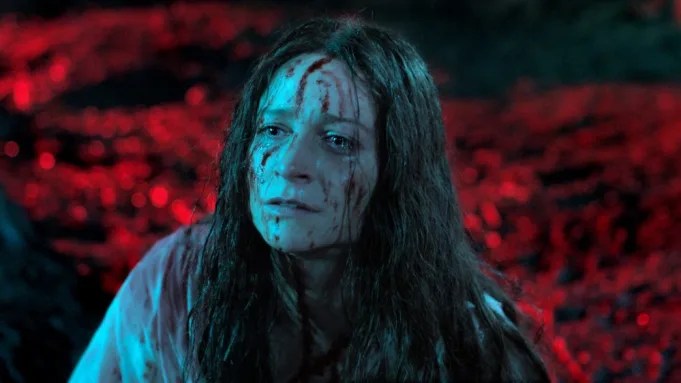
I’ve always been bizarrely fascinated with censorship codes. Maybe it’s living in America, where we don’t have that sort of legal control over media unless it’s like, abuse material (historical examples notwithstanding). Of course, it’s not like America’s own censorship board doesn’t wield a large amount of control over theatrical releasing; think about how the NC-17 – supposedly for more “adult” movies that weren’t porn – ended up becoming near exclusively associated with sexual content to the point that it basically doesn’t exist. All this is done in the name of protection, but who is it really protecting? How does one even determine the right amount of vein slashing and rape that’s acceptable for a motion picture? It’s all very technical stuff.
As you can imagine, Prano Bailey-Bond’s Censor was catnip for me, following – as it does – a censor for the BBFC during the 1980’s video nasty moral panic. In brief, “video nasties” were extremely violent (often sexual) exploitation films that burst in popularity when VHS became popular. The credits show that they included everything from more “classy” pictures like Abel Ferrara’s The Driller Killer to infamous faux-snuff film Cannibal Holocaust; it falls in part to Enid (Niamh Algar, in the titular role) to determine if the film is releasable, and what cuts could be made to allow it in. She takes her job extremely seriously; as she tells her parents, she’s not doing it for entertainment but to “protect people”, as much a product of Thatcherite conservatism as it is lingering guilt over the disappearance of her sister. That deeply repressed guilt starts to bubble back up after viewing a film that strongly resembles the circumstances of that disappearance, throwing her off kilter and beginning a descent into mental collapse.
Bailey-Bond’s film is first and foremost about “vibes”, specifically in capturing the specific era of 80’s Britain in the midst of a moral panic. The BBFC offices here are all drab washed out lighting betrayed by the recurring screams from the women in the films the censors watch. These films themselves are shot in a squarer aspect ration complete with VHS grain to recreate that exploitation aesthetic. Interspersed are hallucinatory sequences reflecting her own fractured state of mind, awash in neon lighting, consciously returning back to the scene of the crime. Although it’s critical of the idea that exploitation movies caused a rash of violent, Bailey-Bond and Anthony Fletcher’s script doesn’t argue that they’re totally harmless. After all, the censors themselves have to expose themselves to some truly awful scenes day in and day out, fake though they might be. Enid professes to not be affected by them, treating it purely as a job, but the film suggests she’s internalized more than she wants to admit.
It all comes to a head in a brilliant final act, in which her two worlds collide and her denial comes spilling out. All this time, Algar has become convinced – without much in the way of evidence – that her sister is actually the actress in the film, and without spoiling, it becomes a cutting statement on conservative hypocrisy and the need to convince oneself that they’re the good guy here. Censor could’ve been a touch longer – I personally would’ve loved to see more of the censorship process itself – if only for Bailey-Bond and Fletcher to expand on their ideas more. Still, this is an audacious debut, one that establishes Bailey-Bond as a filmmaker to watch and Algar as candidate for Best Actress.
 Life of the Mind