Prior plans bring lighter days.
We’re officially more than halfway through the festival and surprisingly I don’t feel as run down. A lot of that can be chalked up to the length of so many of this years entries beyond even The Brutalist; less films overall means not as many days get filled up, which is good for me because as of yet I haven’t done a 5-film run at all year (saving that for the weekend).

I suppose that can only benefit something like Freedom Way (Grade: B-/B), a Nigerian hyperlink drama of the sort that was popular in the 2000s. Never saw Crash, Babel, or the other famous ones, and I don’t have a huge familiarity with Nollywood, let alone the country as a whole. The big theme of the film centers on corruption as it pertains to Nigerian society, cutting between the founders of an Uber-For-Motorbikes startup, a motorbike rider, a police officer, and various other characters that intersect in one way or another. It can feel a little like a parable at times – especially in a twist at the end – but it’s a vibrant portrait of the country, firmly rooted in that universal feeling that things just keep getting harder for the little guy. Didactic as it may be at times, Olalekan Afolabi is decently skilled with the camera and that’s really all you can ask for.
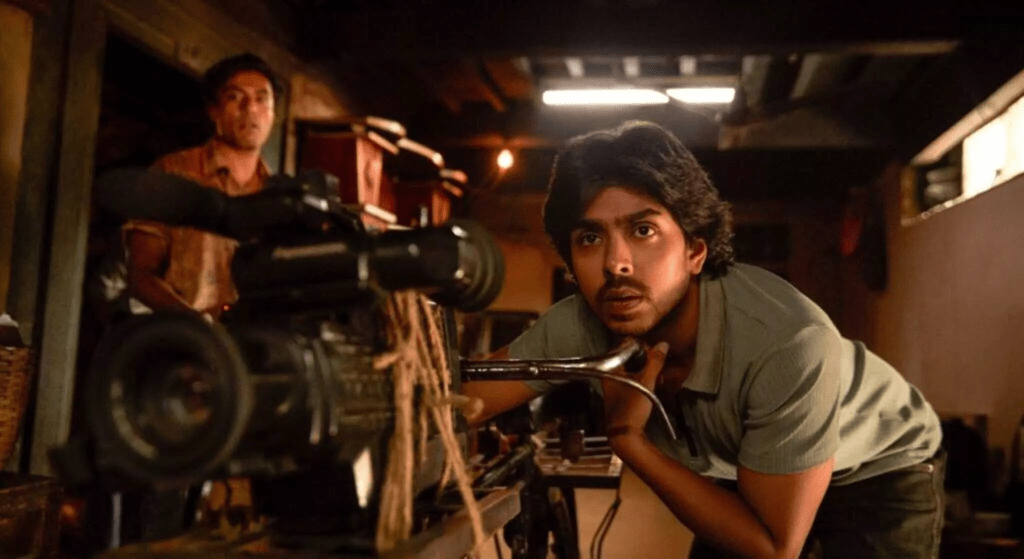
Much better skilled at the camera is Reema Kagti, one of the three women directors in this year’s Focus On India section. Her Superboys of Malegaon (Grade: B+/A-) sounds like fodder for “The Magic of The Movies”, something I don’t tend to be very interested in, let alone “love letters” to movies more generally. This one, though, packs a real wallop that managed to win over even my cold, dead heart. Starting in 1997 (my birth year!) and moving through decade, Kagti’s ode to the cinema follows Nasir (Adarsh Gourav), a movie theater worker attempting to share his love of Jackie Chan and Buster Keaton to mostly indifferent audiences, finding success in editing them together. A shutdown from the authorities inspires him to make his own films, recruiting his buddies and people around town to create their own version of Bollywood classic Sholay (a film I’m ashamed to say I don’t think I’ve seen. Blame my family.)
Kagti locates the heart of the film early on in the ragtag mix of Nasir’s friends – all largely Muslim, which feels like a rarity for Bollywood-adjacent cinema. One of its simplest pleasures is just hanging with these guys as they finagle a bike rig, rehearse lines, poke fun at each other. Those relationships are so finely drawn by both actors and scripts that the inevitable breakdown is a shocking stab to the heart. As the film moves through decades it continues to lean on those relationships, wringing every bit of emotion from betrayal and heartbreak without once seeming anything but clear-eyed. So assured and rooted is it that the final scene threatened to bring tears from my eyes; that Kagti manages it without succumbing to the temptation to go the most obvious and manipulative route highlights how much that moment is earned.
There’s also, yes, the various love letters and shout-outs to Bollywood classics, and I would be remiss if I did not point out the Khabi Kushi Khabi Gham poster featured in the background, because I wore that shit out as a child. You really can’t help but fall in love with a movie like this. Even more surprising? Apparently it’s all based on real guys, something I didn’t know till the credits (the documentary Supermen of Malegoan is thanked in the credits). Sometimes all you need is $2 and a dream.

And sometimes, all you need is two old guys squaring off at various stages of maniacal glee. The Rule of Jenny Pen (Grade: B+) is the kind of horror flick I love finding at festivals, and on Shudder (which, of course, is distributing. Trey Shields if you’re reading this please for the love of God put the distributors back in the program, you’re killing me here): simple, a little weird, highly entertaining.
Geoffrey Rush is one of the old guys, Stefan, a judge admitted to an eldercare facility and confined to a wheelchair in the aftermath of a stroke. He believes this is just temporary – his instincts still sound – and he treats most people with the contempt of someone who really really does NOT want to be here. His adversary becomes Dave Crealy (John Lithgow, having the time of his life), who appears to be a strange, withdrawn man constantly wielding a hand puppet named Jenny Pen. What Stefan learns very quickly is that Dave is a sadistic psychopath essentially giving free reign over the place thanks to his performance of a doddering dementia patient, which he uses to enact torture both psychological and physical when he isn’t traipsing around the place at night.
The battle of wills that follows is darkly hilarious and often twisted, thanks to Lithgow’s performance. He plays Crealy as a man indulging in the power he lords over others thanks to his relative health, free because no one will ever be able to convince the nurses of what’s really going on. Director James Ashcroft replicates Stefan’s worsening brain through some evocative editing – occasionally dipping into the ridiculous with a big baby doll – emphasizing more strength difference rather than implying that none of it is really happening. It may not be “scary”, unless the thought of being totally at the whims of a sicko or the prospect of aging terrify you. What it is is entertaining, enough that I want to check out Ashcroft’s previous film Coming Home In The Dark. There’s refuge in audacity here, whether it be a man accidentally setting himself on fire in a wheelchair or a cracked out ritual Crealy engages in. All you need is someone to do something about all this.
Tomorrow: Jude Law and Nicholas Hoult play cop vs. terrorist in Justin Kurzel’s white nationalist thriller The Order.

 Life of the Mind