
Except for one, I suppose
Not too bad of a day. Found yet another late-breaking surprise; I guess I haven’t been too stingy with the high grades.
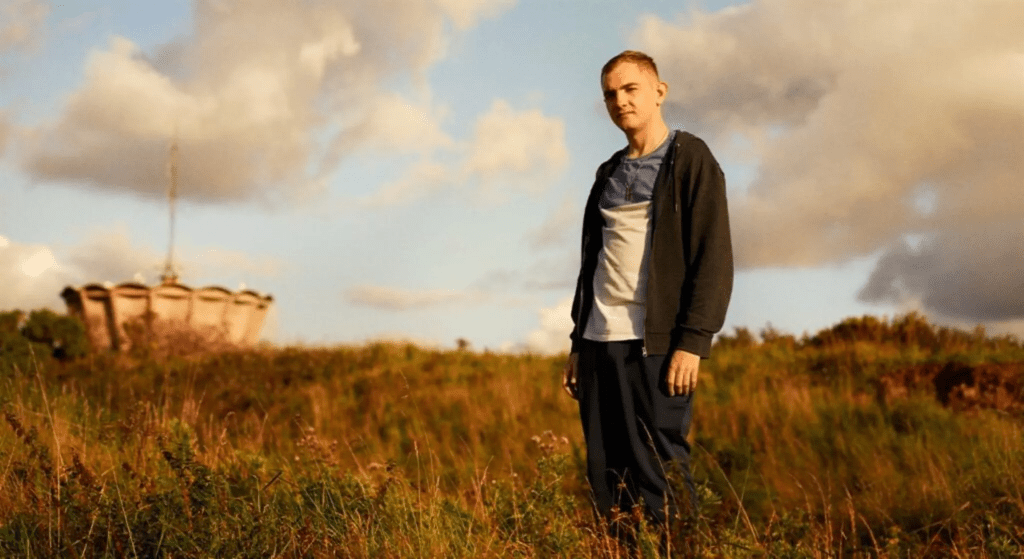
Christy (Brendan Canty): B
AKA: Christy (Ireland), as presented in the guide to distinguish it from the Sydney Sweeney Christy (US). Similar in some ways to Urchin in that they’re both slice-of-life portraits of a downtrodden man in the British Isles, though despite Canty’s direction not being quite as showy as Dickinson’s I think I kind of liked this a little more. Spent a good portion wondering if it was going to spring some sort of twist regarding either the title character, his half-brother Shane, or both; dunno if it’s better that it declines to do so and it might be that I misunderstood an earlier Instagram video not as a Pedo Hunter one but of a fight Christy was in. The best scenes come courtesy of Jamie Ford’s Robot, so named because he’s in a wheelchair. He’s just a ton of fun to listen to as he banters back and forth, I could’ve watched an entire movie centered around him. Really as a whole it shines when it’s just hanging with Christy and the people of the Council he finds himself with, not so much when it’s leaning into typical social issue patterns. Thoroughly pleasant watch with lots of beautiful boys.
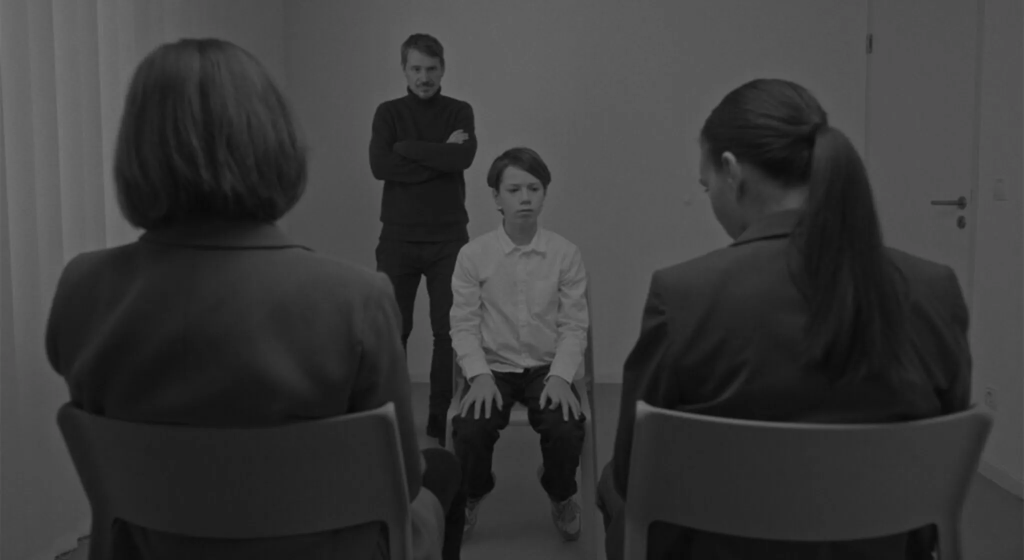
Growing Down (Bálint Dániel Sós): B+
Bit shocked I hadn’t heard more about this before now, although a quick Wikipedia check shows me it was in the Perspectives section at Berlin (for feature debuts). Grabbed me practically from the beginning, with its overwhelming sound over the title card before a quick cut to a camera sailing into a car window. Sós demonstrates a pretty stellar grasp of technique, from the precise edits to the stark black-and-white cinematography, not to mention distance. He and screenwriter Gergő V. Nagy craft a rather knotty ethical dilemma: widower Sándor (Szabolcs Hajdu) – at a critical moment in his relationship with his girlfriend and fellow single parent Klára (Anna Háy) – witnesses a potentially life-threatening accident involving his son Dénes (Ágoston Sáfrány) and her daughter Sári (Zonga Jakab-Aponyi) and in a split second choice, decides to lie for his son. It’s austere and tense as several relationships, not to mention a human life, threaten to completely crumble under the weight of parental love and/or selfishness… and then Sós occaisionally throws a lifeline, like a scene – shot from afar – involving a birthday gift that in lesser hands could be derail the whole thing but instead comes off as a facet of life that keeps going on even in the face of complete tragedy. The kind of utterly singular and controlled vision you want from a debut, and simply beautiful to look at too.

Blue Film (Elliott Tuttle): A
Yet another singular debut, this one even more spectacular and quite possibly the best thing I’ve seen at the fest. All I knew going in was it involved a camboy, Aaron Eagle(Kieron Moore), hired for the night by a mysterious stranger Hank (Reed Birney); what I only got hints of from my friend – hi Zoe – was that sexual abuse was involved but still, I don’t think anything could’ve prepared me for how gripping and unsettling this would be. Tuttle has crafted a two-hander (always at risk of being too stagey) interrogating the nature of desire and the reasons why people turn out how they do. In a way, it’s a good pairing with Springfest entry Predators, another film asking why someone would do such a heinous thing. Moore and Birney are simply astonishing together, the former alternating between the highly guarded Straight Masc Dom persona and the latter layering on a regretful older mentor. Like a lot of my favorites, the two play around with the idea of performing and truer personality, captured especially in a deeply uncomfortable yet strangely erotic scene involving age-play, shot in the kind of consumer grade video that resembles a porno you’d find on some tube site (I wish I’d written down some of the comments from the livestream that opens the film, both it and Moore’s dialogue are perfect encapsulations). Both the producer at the Q&A and the introduction stressed that it will be controversial; it’s circling distribution but had trouble even finding a festival that would accept it. That’s entirely understandable given the way it extends Birney’s character understanding. But that’s not the same as excusing, and the constant back-and-forth is where the film derives the most power. It’s perhaps the most honest film I’ve seen about taboo, kink, and responsibility, one that might be a difficult sit but is the kind of thing queer filmmakers should be getting full support for.
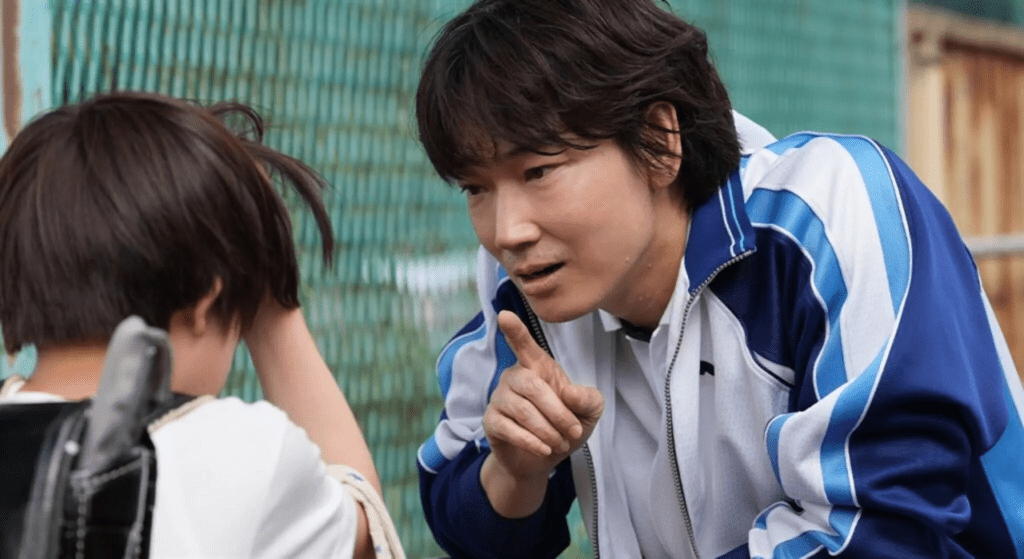
Sham (Takeshi Miike): B-/B
For all that Miike’s prolificacy is harped upon, rarely do we ever get to see that range beyond the outre and the most violent or wacky. After all, when you’ve directed over 100 films across genres and demographics you’re gonna have to be able to adjust to fit the material. Sham might be Miike’s most restrained film but for those who associate restraint with something like Audition are probably going to be disappointed. Not so much because of the lack of violence or whatnot, but more that this ripped-from-the-headlines story chooses the wrong track to focus on, at least at first. That opening features some of the Miike we know, as middle school teacher Yabushita (Go Ayano) goes off on a highly xenophobic rant about mixed-race Japanese to Ritsuko Himuro (Ko Shibasaki), then proceeds to subject her son Takuto (Kira Miura) to such an extreme regiment of bullying it’s almost impossible to believe. Which is kind of the rub, as from what I can tell; screenwriters Hayashi Mori and Masumi Fukuda (who wrote a book about the case) fashion something like a Rashomon story and in Miike’s hands, it’s suitably gripping and well acted, but the actual case seems to be far more definitive then you would think. Although its tempting to compare it to Hirokazu Kore-Eda’s Monster – what with the bullying and the split narratives that circle back – at its heart it’s much more similar to Thomas Vinterberg’s The Hunt. Had it just been a courtroom drama and a film about a wrongly accused teacher or even just about bullying, it could’ve been stellar. Unfortunately, despite the 2-hour runtime it never digs into the circumstances around the case, like the media frenzy (now there’s an interesting one, a film about an alleged bully being himself bullied by the media) or the histories of the parents, or even the Japanese school system. None of this might bother you in the moment while watching – except when questions arise that could be related to Japanese legal proceedings or the like. I wouldn’t go as far as to call it a Lifetime/TV Movie – it’s a little too well constructed for that. If anything it’s proof that we’ve been sorely deprived of Miike’s true skill and range but still we get some stuff like a great title drop.
Tomorrow: I look for things to fill in my schedule.
 Life of the Mind