PFF33 Day Eleven: Baseball and Stolen Artifacts Close Out A Great Fest

Plus: the 10 Best Films seen.

My viewing habits finally caught up with me, as did the looming specter of joblessness. As I’ve mentioned before, in the past I’d usually become rundown by this point, powered as I was by caffeine and black-and-white cookies before the ownership changed. I think part of it was the nature of the scheduling as well: given how long a lot of the films were this year, there’s not a whole lot of time left, which in turn limits what’s programmed. Even if I hadn’t been able to do another 5-film-day, I still ended with a couple decent to pretty good films.
Eephus. Credit: Music Box Films

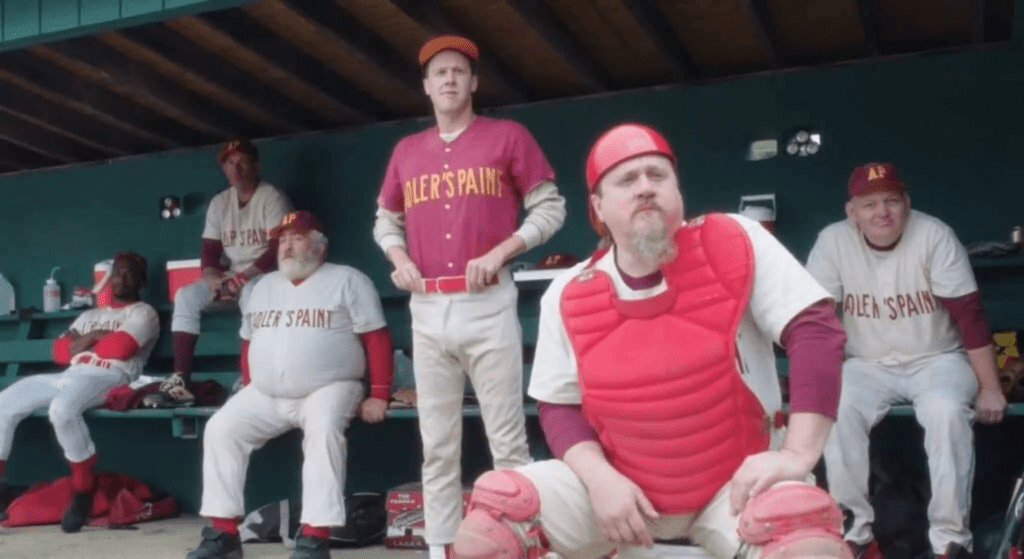
Starting off with the good was Carson Lund’s Eephus (Grade: A-). I probably wouldn’t have seen it if one-time editor Vikram Murthi hadn’t praised it on Twitter; sports are not really my thing, and I only really started watching them at all once I realized I could see them in the gay bar (because, you know… Men™). Turns out you don’t really need to know much of anything about baseball. The mechanics of the game aren’t as important as the fact that it gives the men an excuse to gather and memorialize their preferred field before a school is built on it. Lund is best known as a cinematographer, most notably with No-Budge stalwart Tyler Taormina. He caries the same sort of relaxed, slightly deadpan energy one associates with such films.

Which isn’t to say it isn’t screamingly funny, ie a man hitting a pitch and then immediately faceplanting on the ground. Much of that humor comes through in the banter and background dialogue as the men razz each other, complain about the drive to Duster’s Field, and overall mourn the passing of time. As the game stretches on, you get the sense that none of them really want to stop playing, if only because that means the friendship gets dissolved. Truth be told, you also start to feel the length of the game as it goes on. Lund keeps it easy-going, cutting between people around the ballpark and the players in free-flowing plot, so when actual tension starts to rise up it harshes the mellow a bit. What remains is the pleasure of seeing these men interact with each other, their good-nature camraderie, the sheer love of the game even if they aren’t very good at it. Like the pitch that gives the film its title, time seems to be suspended for a bit before it starts up again. And hey, like a wiseman once said: everything dies baby, that’s a fact. But maybe everything that dies, some day comes back.
Dahomey. Credit: MUBI

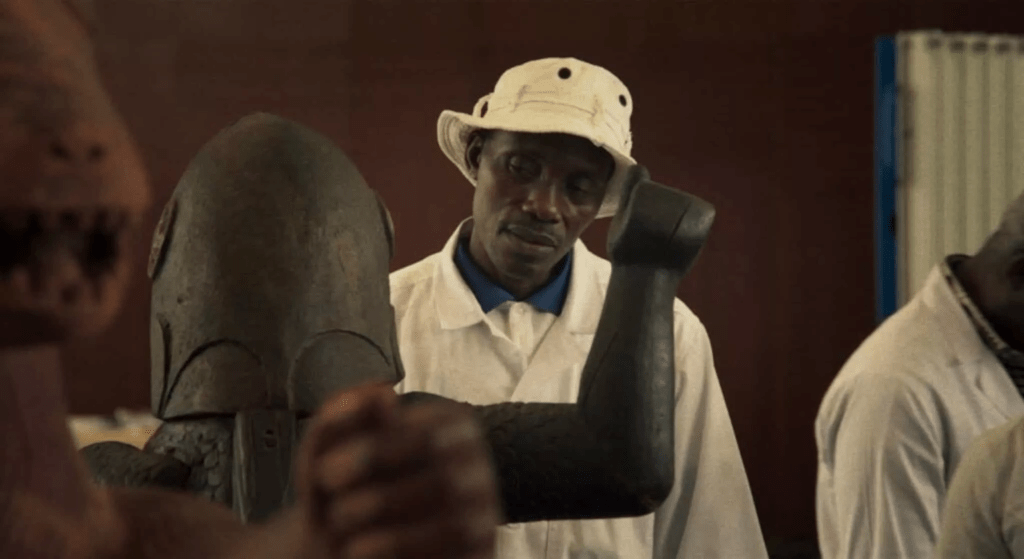
“Things coming back” is the ostensible subject of the last movie I saw at the Festival, Mati Diop’s Berlin-winning documentary Dahomey (Grade: B-). The name refers to the African kingdom – now the Republic of Benin – that has recently repatriated 26 artifacts taken during French colonial rule. Part of the documentary is a fictionalized narration of the objects themselves, telling the story of their theft and return. The other half revolves around a debate with university students, in which they discuss the fact that 7,000 objects reside in the Paris museum, and they’ve only gotten this many back through years of diplomacy.

I saw Diop’s first film – Atlantics – back at the 29th Fest when I was in college; I think it closed my festival experience then too. Maybe I need to stop doing that, because much like that one, this just kind of washed over me. It’s not without its pleasures (the music, from Wally Badarou and Dean Blunt, for instance), and Diop does have talent. But I would’ve preferred the narration for every object, or at least a greater focus on their travel from France to Benin. As enlightening and lively as the university discussion is, it takes up quite a bit of a 67-minute movie. I could feel myself getting on the wavelength for it before it dissipated. Perhaps more exposure to this type of thing is needed.

And with that, the 33rd Philadelphia Film Festival has come to a close. By my count, I saw the most I’ve ever seen at one of these, at 38. Having an entire week off will do that to you. I can’t forget my badge situation as well though; not having to pay for Centerpiece tickets meant that I took a lot more chances on entires I would have otherwise ignored. This year still felt strange to me, in that the schedule somehow felt lighter than it had in years past. Not sure if that’s because there were more films here, longer runtimes, less from the vaults, however you wanna play it. Hard to remember how you felt or what you were doing 2 years ago, after all.

What I can confirm is what many of the programming staff said about this being the best one yet. By quality alone, I saw some truly stellar productions, most of my most anticipated films living up to the lofty festival hype. The biggest regret is that I had to miss The Seed of The Sacred Fig, and am now at the mercy of NEON to play it in Philly; I also had to miss Sister Midnight, the last entry in the Focus On India section, so I hope that gets a release somewhere. As I tabulated the list, I found a lack of surprise. Most everything I loved was something I’d heard of before or had put on my watchlist ages ago. There was no Red Rooms, no Tremors, or Rose Plays Julie, ie something that came from out of nowhere to completely knock my socks off. I don’t know if that was just a testament to the year or my own evolving critical tastes (or at least an attempt to hold back on crowning something just as I come out of the theater). All that said, making a top 10 was somewhat difficult. Many of these will be strong Best of The Year contenders, if not this year than the next. There are still quite a few I saw at the full list, which you can check out at Letterboxd. With the caveat that these could shift on later viewings, here’s The 10 Best Films of the 33rd Philadelphia Film Festival:

  1. All We Imagine As Light
    Still currently my favorite thing I’ve seen all year. Payal Kapadia’s rapturous feature debut is the kind of movie you just want to sink into, absorb every sensual texture and image. She turns the landscapes of Mumbai into something like a dream and in the process enhances the loneliness present everywhere. At the risk of cliche, it’s pure poetic cinema.
    Opening 11/15 in NY and LA via Sideshow and Janus, expansion likely
  2. Nickel Boys
    Out of the story of two boys at a Florida Reform School, RaMell Ross crafts a stone cold stunner. More than anything, he crafts what it feels like to hold back memories, the associations one creates from disparate moments and references that bind themselves to your trauma. Evocative but not explicit, it’s a major accomplishment and a fine work of adaptation.
    Opening 12/13 in limited release via MGM and Amazon
  3. Flow
    Easily the best animated movie of the year on sheer visual spectacle. But it’s a triumph of visual storytelling, utilizing the full scope of body language and tone to give animals character without making them human. Makes you wish you could show it to every Hollywood studio and force them to be better.
    Opening 11/22 in limited release via Sideshow and Janus, 12/6 in wide release
  4. Anora
    The most borderline one, but the late act sells it for me. Whatever Sean Baker’s politics, there’s no denying he sees such a wide vein of empathy in his title character; all he’s ever wanted was for us to understand them, and he does through his typical mix of the profanely funny. Mikey Madison is going to change gay speech patterns for years to come. Just watch that trailer and try to say “a FRAUD marriage?!” any other way.
    Out now in limited release, expect an expansion
  5. No Other Land
    “Important” is the among the lowest forms of praise you can give a movie, but if anything deserves it, it’s this. Shamefully, there’s still no legal way to see it in the US, more than likely because it refuses to act as though people can’t come to conclusions for the things they see in front of their eyes. To quote the man outside my screening: “The people that need to see this won’t.” Upsetting, harrowing, yet undoubtedly the work of filmmakers wishing for the world to see the beauty of their humanity.
    No US distributor as of this writing.
  6. Dead Talent’s Society
    Sometimes, you just have a lot of fun with a movie. I’ll admit to being a little seal-like in my joy of seeing an extended Perfect Blue reference. It helps that the rest of the movie is committed to goofy, cartoony jokes and fairly clever in using scares as a metaphor for filmmaking. A little heart goes a long way.
    Current international plans unknown. Expect it to come over next year, if not on streaming
  7. The Brutalist
    Adrian Brody, Guy Pierce, and Felicity Jones turn in fantastic performances but the true star is Brady Corbet. He effortlessly corales power, the fantasy of America, Jewish alienation, the Holocaust, and so much more into a surprisingly brisk, There Will Be Blood style epic on one man’s quest to stake his name. The fact that a movie that looks as good as this – from the sets to the costumes, down to the camera movements and compositions – for $10 million is an indictment to every actor and producer working in Hollywood today. Utterly overwhelming, and yet intensely compelling.
    Opening 12/20 in limited release
  8. Birdeater
    Truth be told I’m a little nervous to revisit this, for fear the spell will be broken. I still don’t want to give too much away from this singularly demented creation, still the most insane thing I saw at this festival. Utilizing editing and framing almost as an attack, Jack Clark and Jim Weir plunge you deep into a singularly anxious mind and then constantly pull the rug out, veering from surreality to comedy back to relationship drama and horror. Maybe the substance isn’t quite there. I gotta hand it to them for making what feels like the most unstable movie I’ve ever seen (and I mean that entirely as a compliment).
    US release unknown. Out in Australia
  9. The Order
    It might boil down to standard “cops and robbers” but what well-wrought cops and robbers these are. For whatever lack of depth (and copaganda, if you feel it) may be present on the cop side, the robbers – in this case, white supremacist terrorists – get an utterly chilling treatment that their charisma can’t hide. As much as we tell ourselves it’s done, the words of Quiz Kid Donnie Smith ring-out over the climax of The Turner Diaries: “we may be through with the past, but the PAST ain’t through with us”.
    Opening 12/6 in limited release
  10. Night Call
    The more I’ve talked about it, the more I’ve come around to this taut thriller’s ending. Michiel Blanchart wrings every bit of tension he can from his setpieces, but notice the protagonist’s relationship with the BLM protestors. Uncommonly smart when it comes to its character’s actions, ultimately unsparing as the circle closes in around him. It might be the movie I’m most looking forward to revisiting, and I hope it captures more attention when it releases.
    No date set, acquired by Magnet Releasing, should be limited within the next year
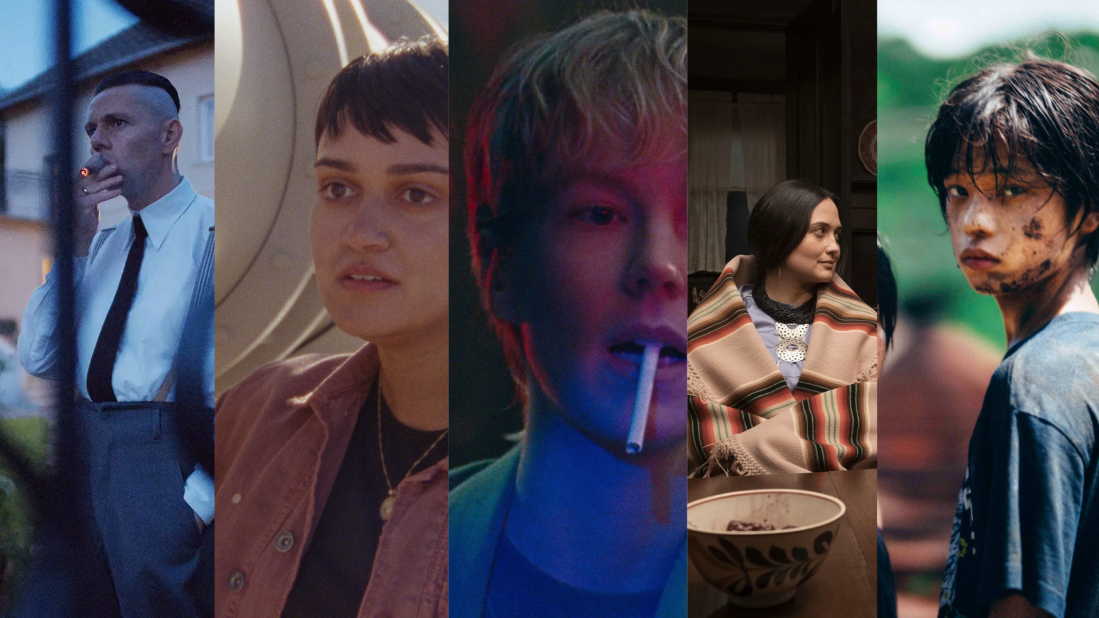
The Best Films of 2023

A (belated) roundup of a pretty great year

For a while, it was looking a bit touch and go there. I’ve been trying to do one of these since I first started this site back in 2021, but always held off thanks to something either not coming near me or still feeling like something was just missing. Hollywood seemed to be going downhill and anything not bought up by the majors was getting shunted right to streaming. Sometimes even the big ones from the majors ended up being forgotten on some platform somewhere, lost in a nebulous space. Was this it? A future where big screens surrendered to the Big Movies while everything else withered on the vine?

If the past 2 years felt like post-COVID blues, 2023 was the year when it seemed like things started getting back to normal. The MCU began to flop. A 3-hour epic about the creator of the atomic bomb made Titanic money and a Titanic reputation. Festivals were overflowing with choices and gems. Somewhere along the way, Hayao Miyazaki even managed to best Disney.

Making a list this year turned out to be murder, even with a spot reserved for my eventual #1. It felt like the first time since possibly 2019 when I didn’t have to scrape to find something to fill out the bottom ends, where cutting something was painful. Even the ones I didn’t love as much as expected still held a wealth; it’s very possible some of them could creep up on a rewatch. At the moment, these are what I’ve committed to, and it reflects how I felt at the time. First a couple rules: I go by Academy rules, which in this case means “it received a theatrical release in New York or LA long enough to qualify for awards”. That means I get to push some contenders to next year, but it does mean some unreleased or late breaking ones might get left off. In any case, if it’s been making enough lists and it’s on Mike D’Angelo’s Commerical Release Master, it counts. There will also be some honorable mentions and superlatives after. In any case, it’s been wonderful to remember the wealth last year gave, and only raises anticipation for the coming year.

15. Priscilla – dir. Sofia Coppola

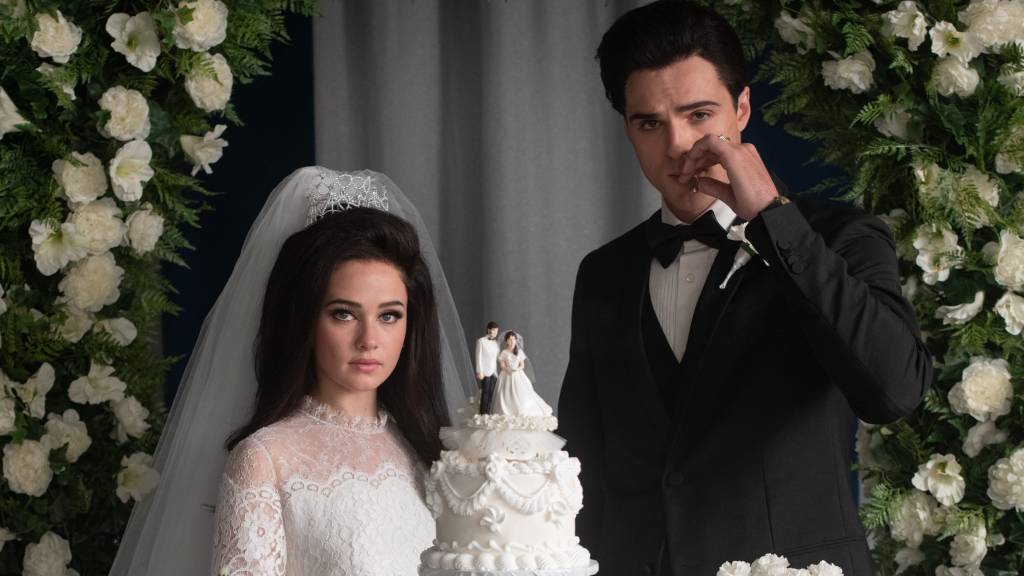
A counterpiece of sorts to the big self-titled one released last year, though by no means dependent. Through Cailley Spaney’s carefully observed performance, Coppola captures how it feels to have Elvis Fucking Presley courting you and the boredom that sets in once you realize what that entails. Jacob Elordi – having something of a breakthrough year – may not look like The King, but he embodies him to get to the feeling of him. It’s a gauzy, hazy memory, both the good and the bad.

14. Bottoms – dir. Emma Seligman

Bottoms': Horny, Queer 'Fight Club' Is the Comedy Movie of the Summer

It’s tempting to focus on the Ayo Edibiri post-Emmy win and People’s Princess crowning. But I would regret not mentioning her insane roller coaster of an opening monologue that spins out a wild, anxious fantasy about your life going to shit and is truly unpredictable. That quality describes a lot of the humor of Bottoms – Rachel Sennott and Seligman’s script indulges in the teen movie cliches you expect but takes them to out-of-pocket, delirious places in its story of two gay losers who form a fight club to get chicks. More than most ironic Millenial/GenZ comedies, you either get it, or you don’t, and if you can’t laugh at the way Sennott asks “Has anyone here been raped before???”(a reading that almost made me spit out of my drink) then God help you.

13. Godzilla Minus One – dir. Takashi Yamazaki

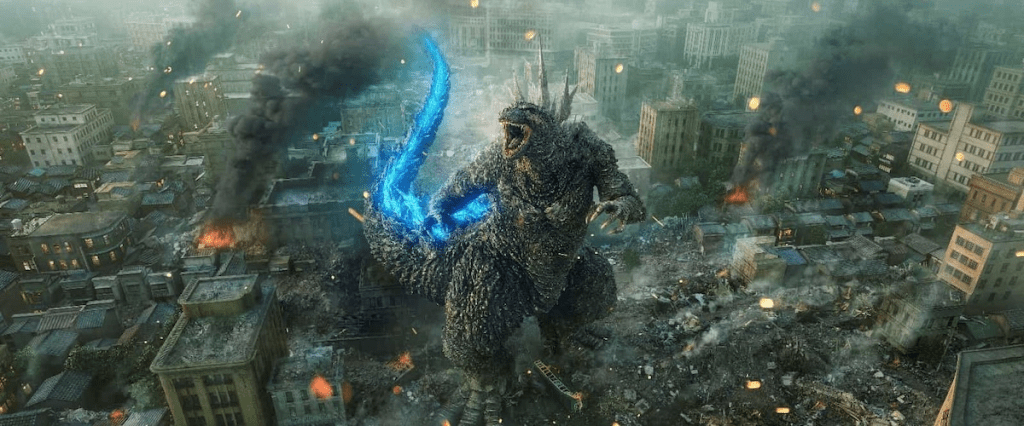
Much has been said about the human focus: a kind of wholesome found family story, a bit of romance, the question of “How much PTSD can we shove into one guy?” And that’s still all very true. But don’t forget it’s also a pretty great Godzilla movie; when he gets to stompin’, those debris fields seem more dangerous than the Heat Breath. Sakura Ando will appear later in this list. She’s had a good year!

12. The Boy and The Heron (aka How Do You Live?) – dir. Hayao Miyazaki

The Boy and the Heron: Hayao Miyazaki and Studio Ghibli at their best - Vox

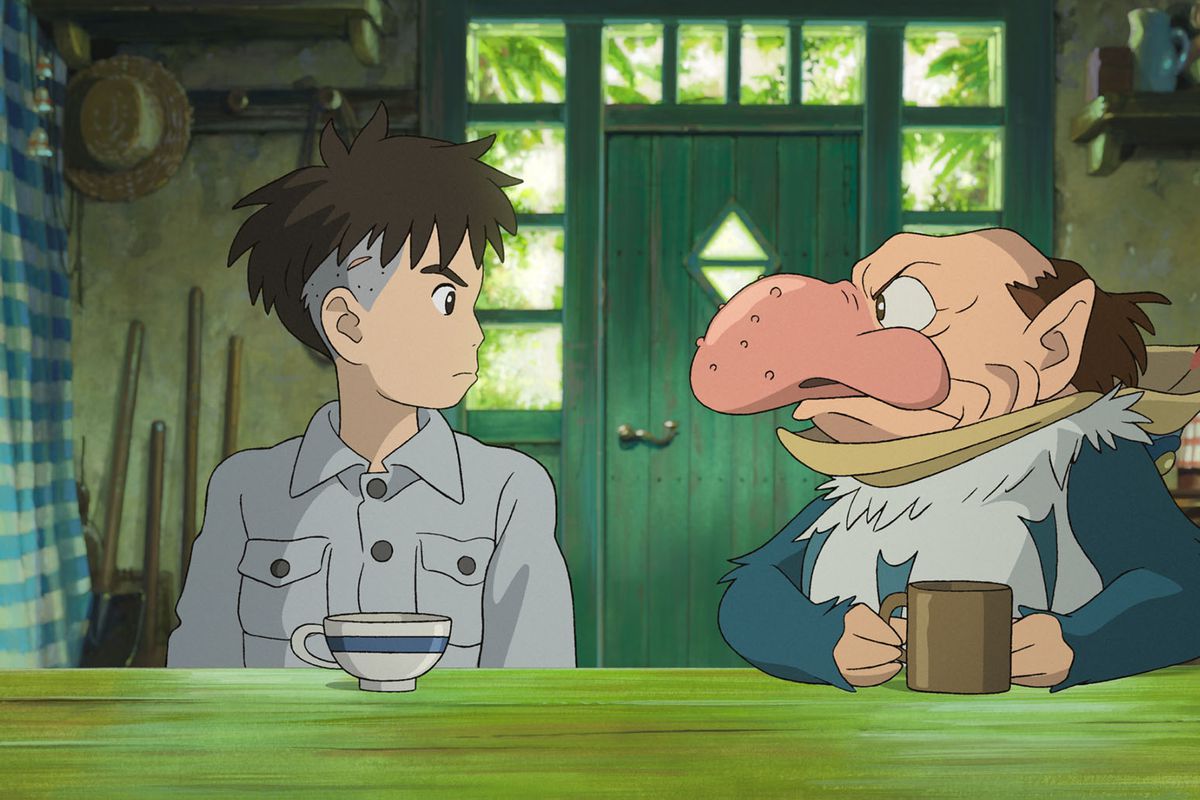
Not at all what you’d expect, maybe exactly what we deserve. Possibly Miyazaki’s most complex on a pure narrative and symbolic level (don’t quote me on that) yet still managing to carry forth a wave of emotion. Just watch someone run, or a bird fly, and you’ll remember you’re in the hands of a master. He may not really be retired but if he is, what a way to go.

11. Falcon Lake – dir. Charlotte Le Bon

Falcon Lake' Review: Pack Water, Sunscreen and Palo Santo - The New York  Times

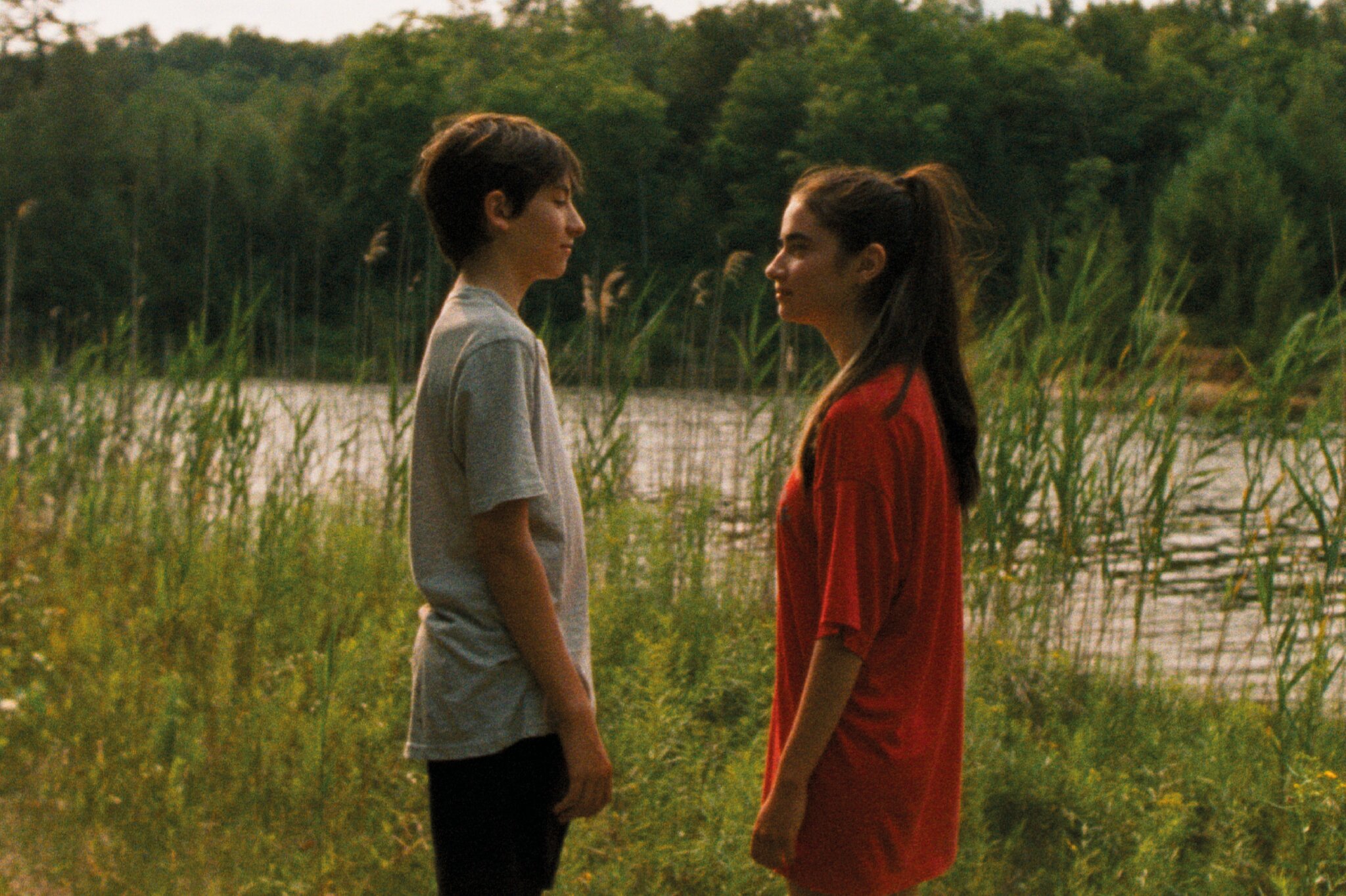
Sometimes, a movie just comes out of nowhere and burrows into your head. Like Scott Tobias, I also probably wouldn’t have seen this had Mike D’Angelo not spoken so highly of it, and it becomes clear within the first mysteriously beautiful minutes. What could easily have been the banal coming-of-age somewhat romance between a teen boy and an older girl he meets on vacation instead becomes haunting and ominous, building up to an ending that feels inevitable yet crushing. It should be so simple, yet the results are nearly indescribable.

10. Passage – dir. Ira Sachs

Passages' Review: Ira Sachs' Brutally Self-Destructive Love Triangle –  IndieWire

The year’s sexiest movie by far should frankly put an end to the exhausting sex scene discourse. As the World’s First Bisexual Demon Twink, Franz Rogowski crashes through multiple lives, pulling people in, throwing them out, absorbing all of their attention until you can visibly feel them getting sick of his shit in real time. Sachs captures all of this in a very European sense: both in setting, and from the blocking. Never before has a back been so erotic on screen.

9. All of Us Strangers – dir. Andrew Haigh

Andrew Scott and Paul Mescal on diving into the great gay sadness of All of Us  Strangers | CBC Arts

Gay sex scenes are having their moment in all their explicit glory, and Haigh makes a pretty cute one. He also turns in a devastating rumination on grief, of things unsaid and things you wished you’d done. Andrew Scott and Paul Mescal have beautiful chemistry together, enough that it makes an ending that shouldn’t quite work land full force. More than anything, here’s a film that taps deeply into a generational gay experience and suggests those lines aren’t as full as you’d think.

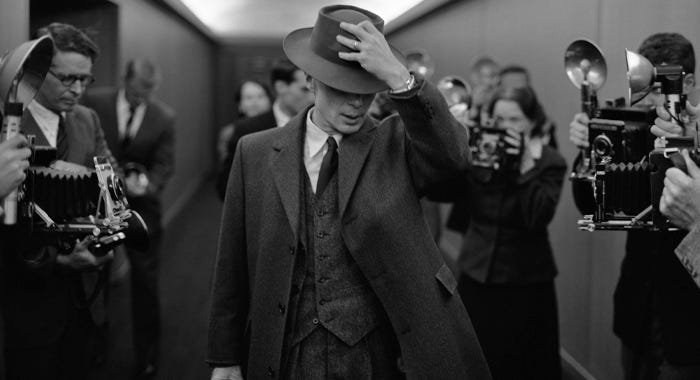
8. Oppenheimer – dir. Christopher Nolan

In Review: 'Oppenheimer,' 'Barbie'

This should probably be higher. I don’t know what much else there is to say about it. Propulsive, entertaining, walloping. It’s a director working close to the heights of his very considerable powers, effortlessly merging past and present, history and reality, guilt and loathing, all into a complete package. Who else would make us excited for getting the band together only to then sit with the weight of our actions for an hour?

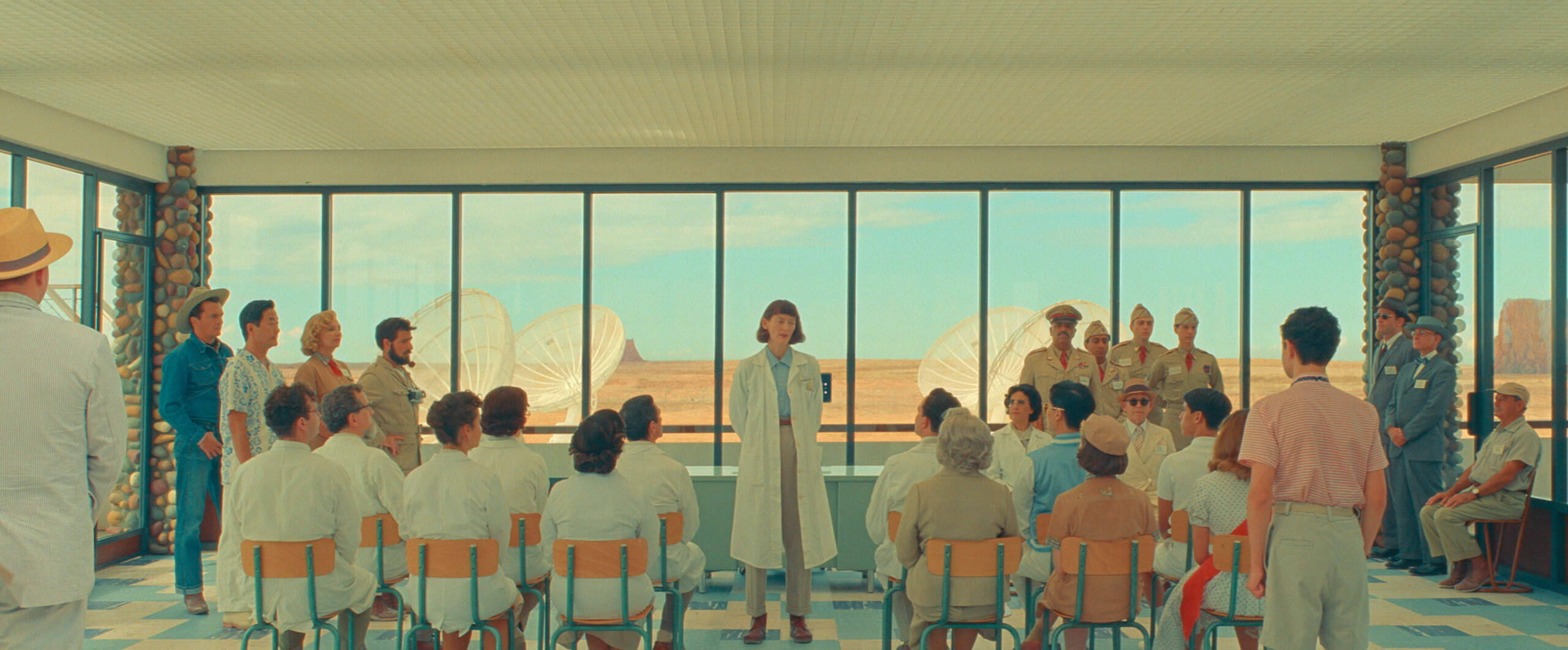
7. Asteroid City – dir. Wes Anderson

Wes Anderson's 'Asteroid City' is one of his most philosophical films, and  one of his very best | WBUR News

The longer Wes Anderson goes on, the freer he gets. The freer he gets, the more he devastates. In Asteroid City, he brings his signature artifice full circle into a movie about the making of a play, wrapped around the making of said play. It’s frequently very funny, maybe even a little chaotic. And in that chaos, we get glimpses of clarity like Maya Hawke and Rupert Friend giving heed to the wind and dancing to “Dear Alien (Who Art In Heaven)” (song of the year). No one’s better at hitting you when you least expect it; there’s lots of those moments here, but none I can explain more than having “Freight Train” recontextualized as an existential sigh of acceptance. “I don’t know which train he’s on / Won’t you tell me where he’s gone?”

6. May December – dir. Todd Haynes

May December trailer: Natalie Portman, Julianne Moore uncover truths. Watch  | Hollywood - Hindustan Times

The conversation surrounding Haynes’ latest has perhaps exposed just how much there is to explore. Brilliantly thorny, uncomfortably off-kilter, this story of an actress coming to shadow a woman who 30 years ago married the teenager she statutorily raped unfolds new layers with every second glance at its carefully composed images. Natalie Portman and Julianne Moore may have been the stars on the poster, but it’s Charles Melton who proves to be the soul and heart. He practically steals the picture from them and in a way, Samy Burch and Alex Mechanik’s screenplay suggests that’s the only moral way to tell this sordid tale.

5. Monster – dir. Hirokazu Kore-Eda

Monster” Contains a Mini-Masterwork About the Lives of Children | The New  Yorker

Maybe this is just projecting, but it feels like in some corners this has been received as somewhat of a disappointment, especially compared to Kore-Eda’s other (belated) release from this year. Personally, I think it’s as good as Shoplifters and perhaps in line with his other work. The unfolding perspectives read a bit like Farhadi but more localized; it starts as an engrossing mystery, transitions into rage at institutions, before settling in at how little adults know and how much children observe. Sakura Ando – in her second big role from this year – is wonderful, Kore-Eda wrings devastating performances out of SĹŤya Kurokawa and Hinata Hiiragi. It’s one of the finest depictions of the contradictions and anxiety caused by the closet, and the push-pull between doing the right thing and fitting in.

4. Killers of the Flower Moon – dir. Martin Scorsese

Movie Review: 'Killers of the Flower Moon'

An American Tragedy, immense in its scope and rooted in a toxic love story. The machinations and skullduggery being so out in the open only enhances the rage and despair at this horrible moment of history, punctuated by Lily Gladstone’s screams of anguish and pain that will never leave my head. For a brief moment, Scorsese even makes you believe that justice might be done for once, before the ending reminds you that no, this is still America, and this is still a story we will never understand. Gladstone radiates starpower, commanding the screen with simply a look, a tone of voice. It’s an unshakeable piece that reckons with its very making.

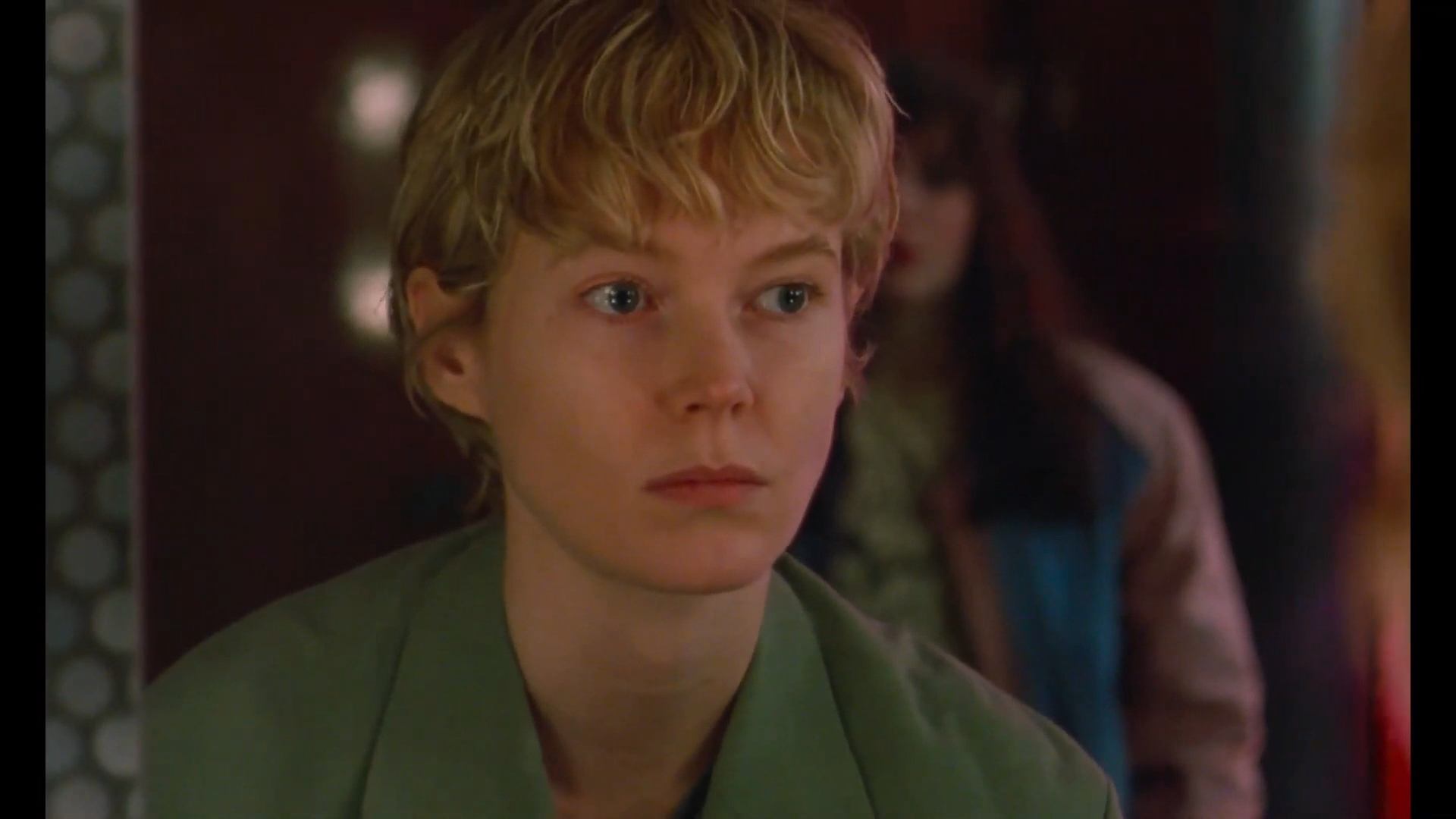
3. Blue Jean – dir. Georgia Oakley

Blue Jean (2022) - IMDb

We may be through with the past, but (unfortunately) the past isn’t through with us. Oakley’s sadly relevant debut may be following a PE teacher in Thatcherite England, but Don’t Say Gay bills are little more than Section 28 rehashes. Rosy McEwan deftly portrays the moral dilemma being closeted puts people in: when a student seems to get clocked and bullied for being a lesbian too, how can she help without putting her career and herself on blast in the process? Oakley maintains something of a suspense tone throughout, effortlessly depicting the cruelty of the situation, yet never quite letting her protagonist off the hook. As bad as things may be, the joy Jean experiences in the gay bar shows why it’s worth fighting.

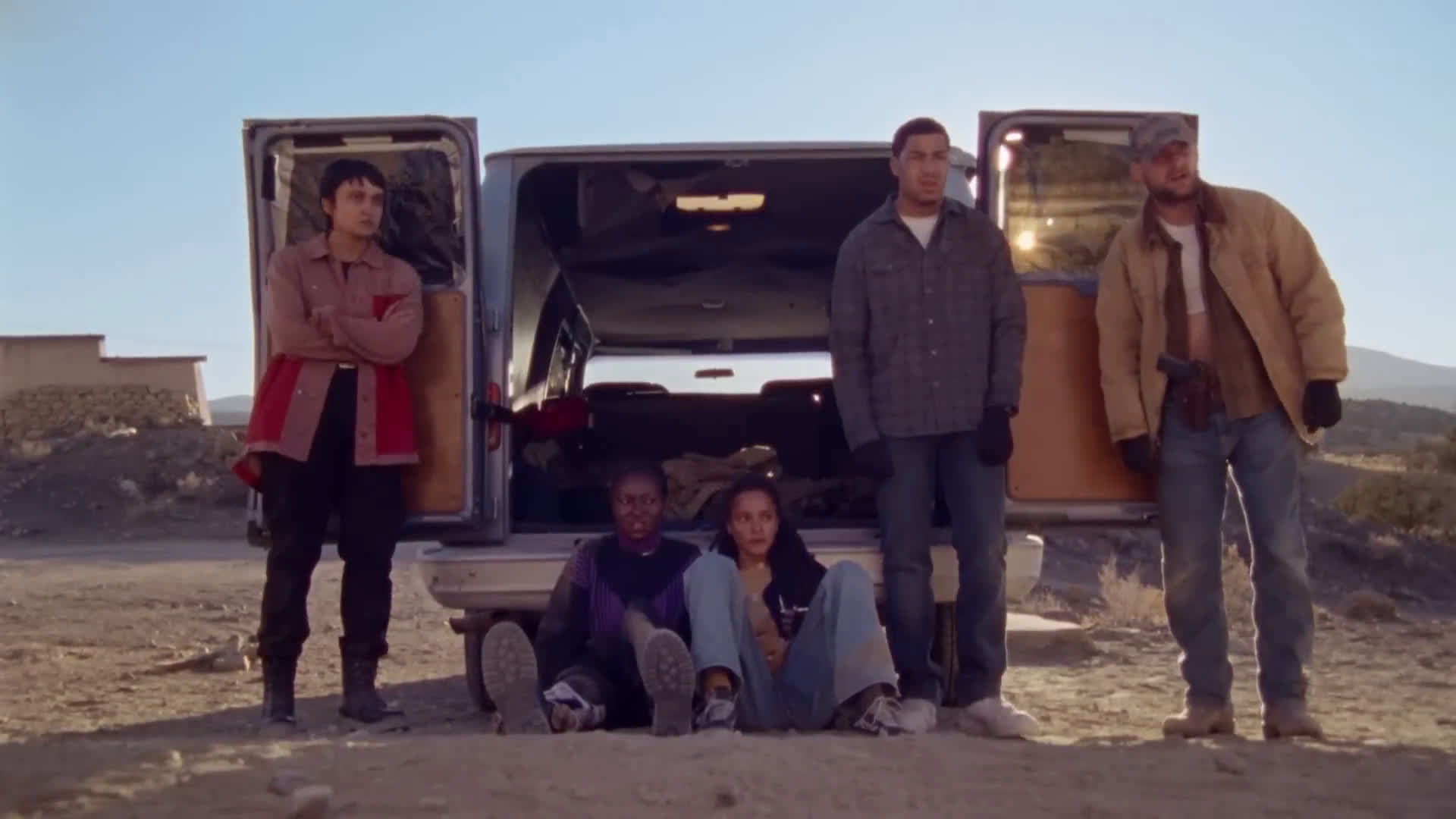
2. How To Blow Up A Pipeline – dir. Daniel Goldhaber

How to Blow Up a Pipeline (2022) - IMDb

If anything deserves to get slapped with the meaningless descriptor of “urgent”, it’s this call to action. Goldhaber – along with star Ariela Barer and Jordan Sjol – turn Andreas Malm’s nonfiction book of the same name into a tense heist-like movie about a group of climate activists committing the titular act. Whatever didacticism or preaching it may offer is offset by how purely entertaining and tightly edited it is (the money shot: a cut to a flashback right as a strap breaks and everything seems to go to hell). Each member gets enough back story to understand them, and no one is shortchanged in the ensemble whether it be their jobs or their prescences. Fitting that it’s credited as “A film by Daniel Goldhaber, Ariela Barer, Jordan Sjol, and Daniel Garber”: here’s a movie the power of the collective with complete and utter faith in their beliefs and the actions needed to accomplish them.

1. The Zone of Interest – dir. Jonathan Glazer

The Zone of Interest' review: Jonathan Glazer's new masterpiece - Los  Angeles Times

I’ll admit, I had been anticipating this since the reviews at Cannes dropped. I had a spot reserved for it and everything. It got to the point where I wondered if I’d end up disappoiting myself through hype. Well, it’s one thing to read about the form; it’s another to actually experience it. Glazer throws out most of Martin Amis’ book and turns it into 105 minutes of a panic attack through sheer wrongness. Less the banality of evil and more how comfortable one can be in it. You can never stop thinking about the bodies over the fence; every word said carries menacing notes. Despite never setting foot in Auschwitz, it’s all you can think about. Perhaps the most chilling parts are how we see this evil seeping into the children, the soil, the entire environment of the place. These things happen because they become banal; they become banal because it contributes to someone’s idea of a “perfect” world. Make no mistake: everyone’s aware of it. Their inhumanity comes from believing it’s right. I can’t remember the last time I’ve been so shaken leaving the theater. Here’s a film that sits in your brain, turning over with every realized implication.

(And now, based in part off old AV Club formatting, some superlatives and extras!)

Honorable mentions: The Royal Hotel (Kitty Green), TĂłtem (Lila Aviles), The Taste of Things (Tráş§n Anh HĂąng), Anatomy of a Fall (Justine Triet), The Iron Claw (Sean Durkin)

Performance Charles Melton, May December: Not so much a “revelation” as a “break-out”, as I’d seen him before on Poker Face. The former Riverdale star emerges as a force with his hunched over body language, his nervous yet sweet demeanor. Melton makes him feel like he’s just play acting at being a dad, while at the same time not fitting in with the younger kids. The tension between not wanting to be a victim and being victimized for so long emerges in bursts, as in the much talked about scene on the roof, and it brings us back to the real person behind the stories.

Underrated – Rye Lane (Raine Allen-Miller): Many have decried the death of the studio rom-com, fated to be stuck with streaming fare like Red White and Royal Blue or The Kissing Booth. Here comes this charmer, a riff on Before Sunset with a wealth of style and energy to shock complacency. David Jonsson and Vivian Oparah exude wonderful chemistry together, with Miller providing a tour of South London fit to rival any classic Brit-com. It’s enough to make you believe love is real again.

Overrated – Barbie (Greta Gerwig): The big movie of the year has gotten more than it’s share of praise, criticism, rebuttals, and whatever else you want to call it. Gerwig’s movie has many charms for sure but despite that, it still ends up something of a mishmash, unable to fully shake off its corporate mandate or become a true “feminst” statement. But mostly: I just wish it was funnier.

Biggest Disappointment – Skinamarink (Kyle Edward Ball): When I first saw the poster online, I was all in. The trailer looked like the perfect mix of surreality and analog horror, and who could shake “In This House?” I don’t know whether watching a screener in my house deflated some of it when I went to the theater but alas: despite loving the look and the concept, I just found my mind wandering too much. I so desperately wanted to lock-in, and I can feel a successful version for me somewhere if it were just a little more active. Here’s hoping Ball’s next one fulfills his potential.

Most Pleasant SurpriseNight of the Hunted (Franck Khalfoun): All relative, since I don’t really tend to watch widely hated movies or things I think I’ll dislike because I’m currently doing this all for free. Which is to say: a thriller directed by the guy who did the Maniac remake may not seem all the fruitful. I found a rather tense single-location thriller, gory and brutal, and fairly plausible in keeping its heroine isolated. It may not be much more than that – and your mileage may vary as to the sniper’s ultimate political ranting. But it’s executed with a sure enough hand to stand out above a lot of Shudder exclusives.

The Best Horror Series of the Last Decade Is About A Game That Doesn’t Exist

Launching a humble little blog with a humble little webseries.

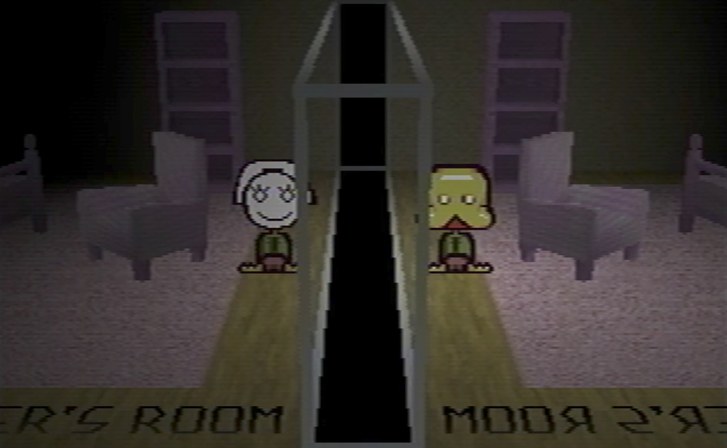
Mirror Room

A repost of an entry I wrote for a Best Television of the Decade series in a Facebook group.

Believe it or not, 2017 had two surreal horror adjacent series that gained a deep following and acclaim from many. The first, of course, was Twin Peaks: The Return. The second was a little thing called Petscop. Although it spawned more from the annals of creepypasta and haunted video games as a lot of horror web series, Petscop distinguished itself almost immediately despite an erratic release schedule and virtually no solid information. It might be the most Lynchian thing David Lynch didn’t direct himself.

Summarizing Petscop is difficult, so we may as well start from the beginning. The first video was uploaded on March 11, 2017 (a few months before The Return would air); a month later, an account named paleskowitz posted a link to the channel in /r/Creepygaming and other than a post in 4Chan’s /x/ (Paranormal) board, this would be the most interaction the creator would have with the outside world. From the opening frame, the series commits full-heartedly to the bit, showing the PlayStation start up sequence, and the boot up of the titular game. The conceit is that the uploader found a copy of the unreleased game Petscop, and can’t seem to find any indication that it, or its developer Garalina actually existed, but there’s some freaky stuff in it. The community calls him Paul after the name he gives the profile. At first, it appears to be a fairly normal – though unfinished – pet collection game. But once Paul inputs a sequence, suddenly it shifts to a new, darker place.

The crux of the series is Paul’s exploration through this place and suffice it to say, there’s a lot of mythology. I won’t even begin to try and untangle the mess of the Newmaker Plane, the various references to adoption and child neglect, various other characters like Care. Petscop‘s refusal to explain itself lends a mysterious air, as if viewing a transmission from another plane entirely. Every question answered raises more questions, even towards the end of the series when it starts giving more solid answers. Combined with the total lack of interaction from the creator (who eventually revealed himself a few months after the last upload), it sent the community into overdrive. But somehow, it never feels frustrating. Instead, the lack of concrete answers makes everything all the more unsettling.

It’s these lack of answers combined with the style that truly makes it worthy of a Lynch comparison. While other creepypastas feed off nostalgia by using famous properties, Petscop is an entirely original thing. Additionally, it is entirely devoid of jump scares in the traditional sense; there’s barely even any blood, gore, or creepy monsters. True to the master himself, Petscop draws unease out of long periods of silence and ellipsis alternated with droning, thumping sound. Most of the series takes place in total darkness, only illuminated by the player character. It makes me think a lot of Lost Highway, in that there’s nothing really all that scary happening on screen, but it combines to make you feel uncomfortable. And although it deals in a lot of heavy themes, Petscop never gets graphic or exploitative (helped by the fact that no one in it is actually real, despite some references). Confusing as it is, there’s nonetheless a sense of logic underpinning every episode, the idea that there are rules for this world that we can’t quite grasp, familiar as they are. It’s the same sort of grounding that runs throughout the original Silent Hill trilogy, this idea that you know you’re in a waking nightmare but that it all feels normal. All of this is combined with an analog horror style (even going so far as to start with the original PlayStation bootup), largely adhering to the stylistic constraints – low quality polygons, rudimentary movements, etc – with just enough deviation that it could be what you remember those games being.

While some of the mystique may have left once the creator revealed himself, there’s no denying that Petscop is an accomplished piece of work. Time will tell if it becomes influential on other series, or if the creator goes on to new things. If nothing else, I admire a single person for creating such an accurate feeling, singular product that made me excited every time a new notification came to my phone. Something tells me this creator has a long career ahead of himself.