PFF34 Day 10 and 11: End of the road

Should we even do a list this year???
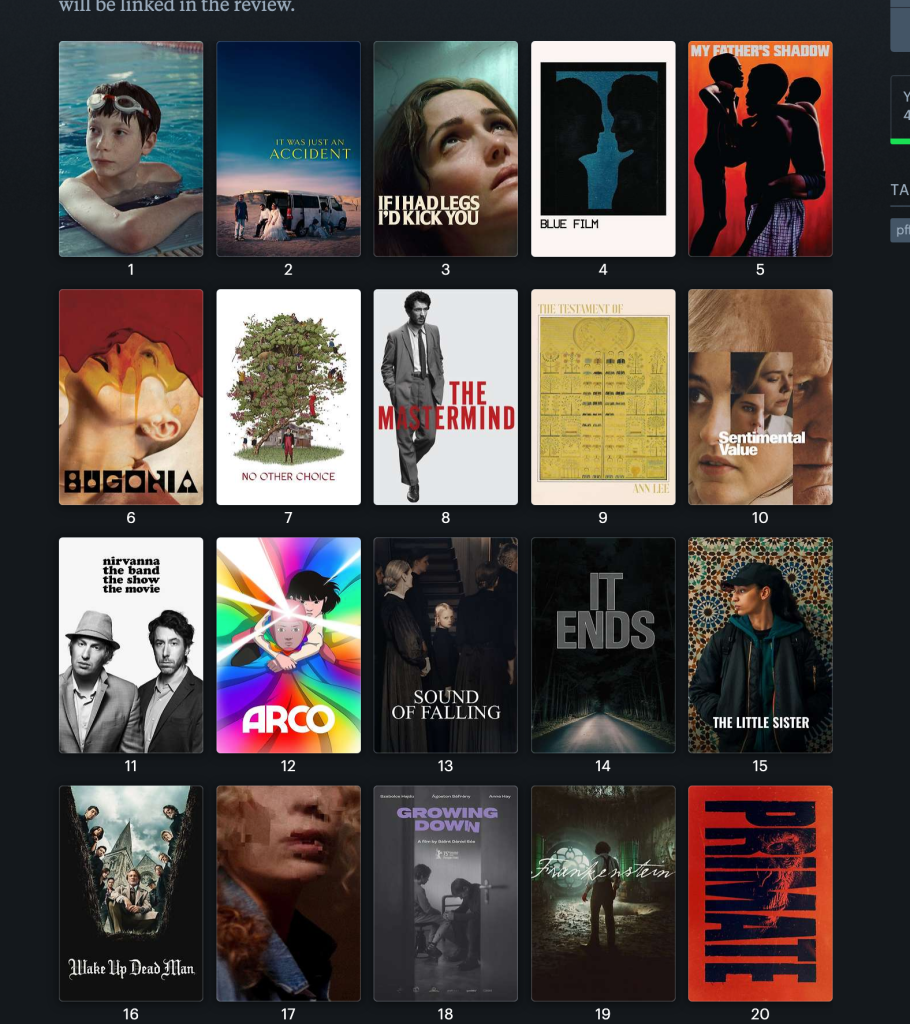
The list, as it were.

As mentioned previously, because of a hectic schedule and less films than expected on the final day, I’m just going to combine both days into one and end with a summary.

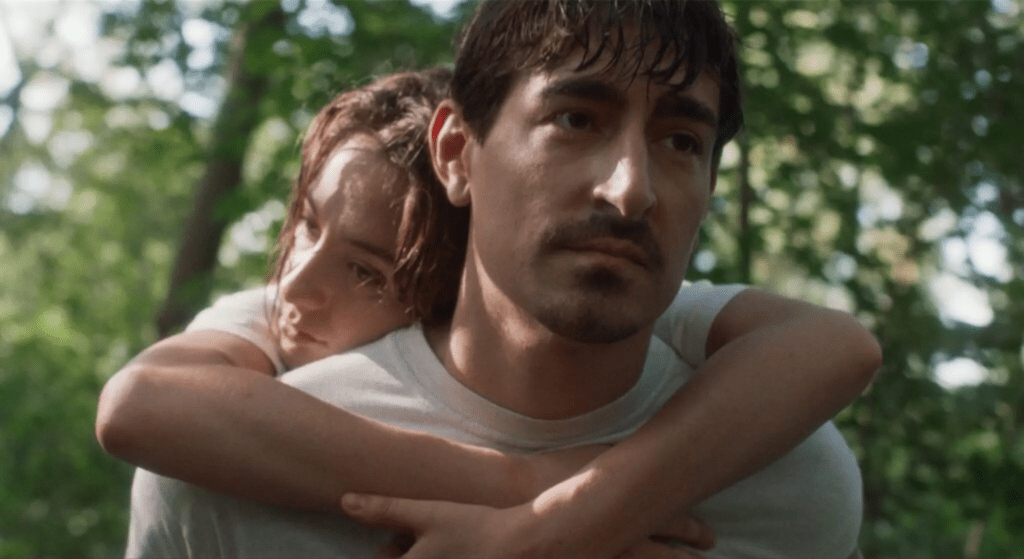
Silent Friend (Ildikó Enyedi): B

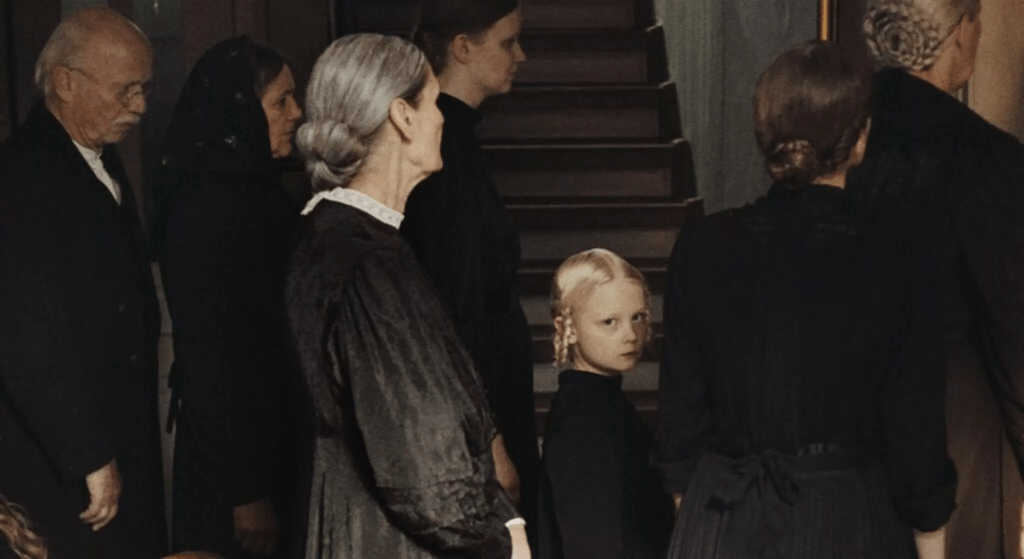
If ever there was a vibes movie, this one’s it. Most of the time I enjoyed the imagery; it gets real interesting somewhere around the second act with the student in the 70s taking care of the houseplant that may be able to communicate with some sort of language. The rest of the stories have different resonances (the Turn-Of-The-Century one most prominently) and there’s the connecting thread of the tree and history, but Enyedi keeps it thematically loose for the most part. So deliberate I started to get restless during it, and while I see it reaching for grand emotion, I don’t think it gets there.

The Secret Agent (Kleber Mendonça Filho): B+

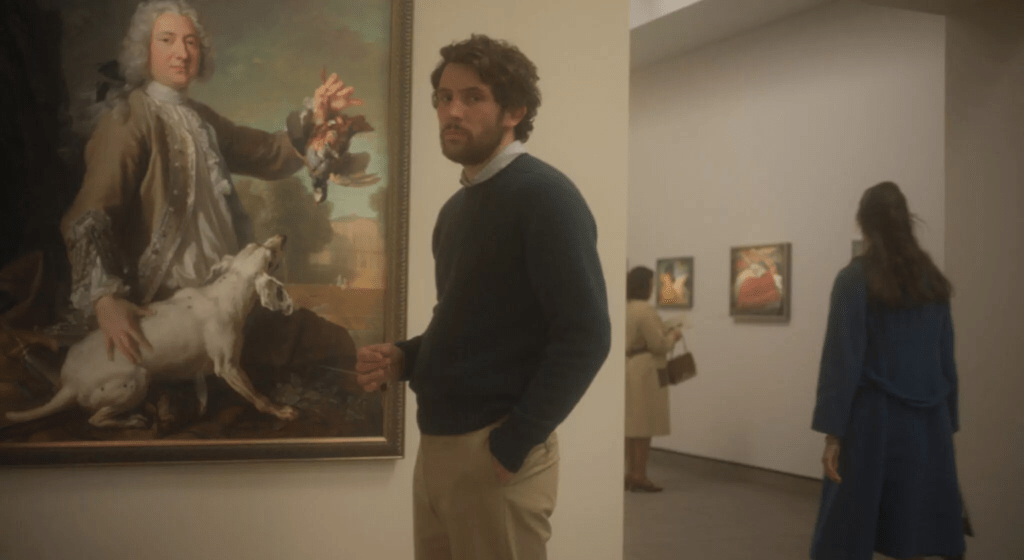
Probably should’ve expected something from the director of Bacarau to get wild. Filho shows great creativity in the sequences involving the leg but the meaning of it as it relates to the story feels way more elusive unless it’s something that actually happened around the same time (he keeps panning to a portrait in some scenes, which I assume is the current ruler of Brazil). Wagner Moura does an excellent job, and there’s some resonance with our current times; I do think it could’ve done a slightly better job at situating it in context given the overall complexity of the story.

Nirvana the Band the Show the Movie (Matt Johnson): A-

Had meant to watch at least some of the webshow before going into this and now having seen it, I think going in blind was the best possible choice. Seeing it with an enthusiastic crowd most definitely helped – the energy was truly electric – though Johnson and McCarroll don’t lean too much on running gags and if they do, they’re easy to pick up on. Lots of laughs to be had from the truly outrageous “How the fuck did they do that?” stunts to stupid background gags to the perfect use of a passerby. Made me want to check out the show in earnest, and it’s probably the best thing the Canadian government has spent money on in the last few years.

Primate (Johannes Roberts): B/B+

You know exactly the reason why you’re going into this movie, and so do the filmmakers luckily. Roberts slices basically everything extraneous down to the bone, which on one hand means it gets to the goods pretty fast. On the other, that means there’s barely any actual character development or much of a plot but honestly, who needs either of those things? It’s a good slasher flick with all the right tensions and some very good monkey VFX to be a fun time, not to mention some truly gnarly gore. When the biggest complaint is that it’s lit too dark, I guess you aren’t doing too bad.

The Plague (Charlie Polinger): A

About an hour and a half of detailing why 12-13 year old boys are some of the most evil sociopaths on this planet and doing it with sharp direction. Body horror elements are overstated to the point where it might’ve been better to lose them entirely, but then again the scariest part is really the arbitrary nature of childish cruelty. Everett Blunck is fantastic as a realistically awkward pre-teen while Kayo Martin is a demon sent from hell; you know exactly who this kid is, you have met him. Polinger films beautifully eerie underwater footage, often cutting off the heads of the subjects to leave just dangling torsos, and he ends it with a startling abstract image. For all that might be familiar about it, I don’t know another film that gets how unintentionally useless adults can be in bullying situations and how that peer pressure extends until you can’t even recognize yourself anymore. Difficult to shake; could give you flashbacks.

Dead Man’s Wire (Gus Van Sant): C+

Spent the entire runtime thinking that Bill Skarsgard looked distractingly like Michael Shannon and I have no idea if that was part of his acting choices or just a result of it being the 70s despite him not looking like the guy at all). In any case, reasonably compelling even if he’s the most annoying man alive; it doesn’t help that Van Sant layers in references to Dog Day Afternoon, a far better film in basically every aspect. Never really bought into the attempt at sympathy through an Evil Bank, which is perhaps among the biggest failings. Any movie that features My’hala this prominently – and thus reminds one that Industry will be coming back – can’t be wholly negative; she’s a great reporter.

Is This Thing On? (Bradley Cooper): B

Braced for cringe faildad, ended up with a kind of nice romantic comedy. Much better direction than writing, though apparently it’s based on a real story so some of the events can’t be blamed. Arnett isn’t too bad as a standup – and it also gives him a Bojack reunion with Amy Sedaris. Not really much going on but not entirely unpleasant. I should really check out A Star Is Born one of these days.

Sentimental Value: A-

Immensely moving, knotty family drama. Attention will deservingly be on the trio of Renate Reinsve, Stellan Skarsgard, and Elle Fanning but I want to bring attention to Inga Ibsdotter Lilleaas as Agnes, not the most central character but in a way the more difficult role having to reconcile the more difficult feelings. Main reservation is what purpose the flashbacks – though affecting – serve in relation to the story of the film. They seem to be narrated by the same actor as in The Worst Person In The World but they’re so infrequent they come across as a little jarring. I’m sure I’ll be able to parse that connection when I haven’t spent 11 days straight watching movies.

And so we’ve finally come to the end. Including Lesbian Space Princess (which I didn’t actually see at the festival), I watched a total of 40 films. Had I been able to get into Hamnet I might not have gotten that much. Would I advise doing that? Not really, unless you have an exorbitant amount of free time and/or can take off the time to do so. I at least have the benefit of not being jet-lagged or expected to crank out words, which has been helpful in avoiding regret on takes. Overall, the slate this year was mostly highs; nothing really disappointed me, nothing made me want to sprint for the exit, and there weren’t any huge disasters. At most I would only criticize NEON for holding back on several high profile screenings, which just isn’t very good for anybody and in general leads to a shitshow. All I know is making a year-end list is going to be absolute murder, and because I’m going to be submitting ballots this year, I’m not doing an actual writeup. However, you can go check out the full list of everything I saw here. I will do my best not to change it too much but know that I make no promises. Till next time, ie whenever I have a take I can’t pitch anywhere or something extremely dumb.
PFF34 Day 9: Testify

Not quite a full day.

Decided against doing a full day, since I missed Kika due to a couple running over, and I wanted to transcribe an interview so I could condense and file next week. Don’t anticipate any of those issues today. Apologies on this one coming out late, just had too much going on.

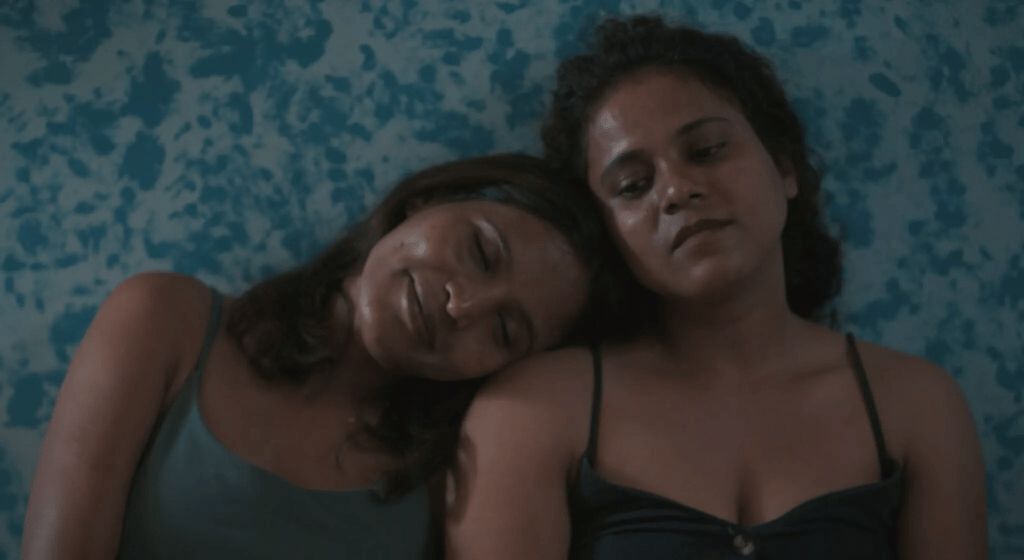
Songs of Forgotten Trees (Anuparna Roy): B/B+
Deserving winner of the Orizzonti directing prize, even though thinking back on it I don’t know that it really contains that much in it. Thought for a while it was trending in a love story direction, and while the vibes are there it’s more an enigmatic friendship. Roy doesn’t dive into how these two women met or how long they’ve known each other, and the whole recurring bit with the trees and forgetting is poetic, but seems to lack something. Another pretty good debut that deserves at least a few more eyes.

Keep Quiet and Forgive. Credit: PBS Films

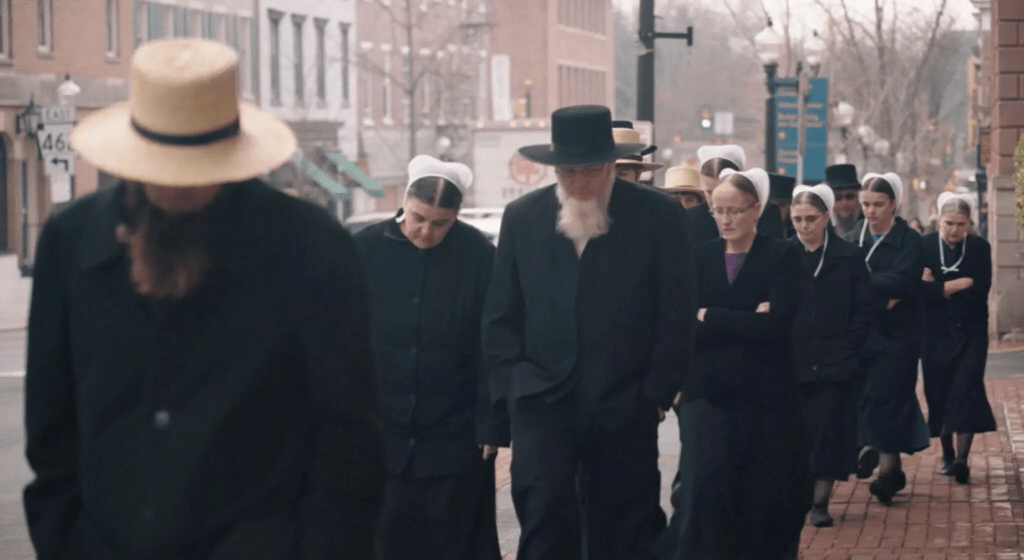
Keep Quiet and Forgive (Sarah McClure): C+/B-

Powerful stories, functionally directed. The focus seems mainly to be on Lizzie’s book and Voices Of Hope but there’s a surface level examination of both. If you’ve read the ProPublica and other stories on sexual abuse within Amish communities, you basically know the gist here and while there is value in hearing their words straight from them, McClure doesn’t really offer much else other than reiterating the systemic nature of the abuse as well as tying it into similar Mennonite cases. A full history on both sects would probably be unnecessary but you won’t really get much info out of them. Decent as a piece of journalism, some questions about when it was filmed notwithstanding and it does contain some very disturbing moments (like the drawing). Good intentions only take you so far.

The Testament of Ann Lee. Credit: Fox Searchlight

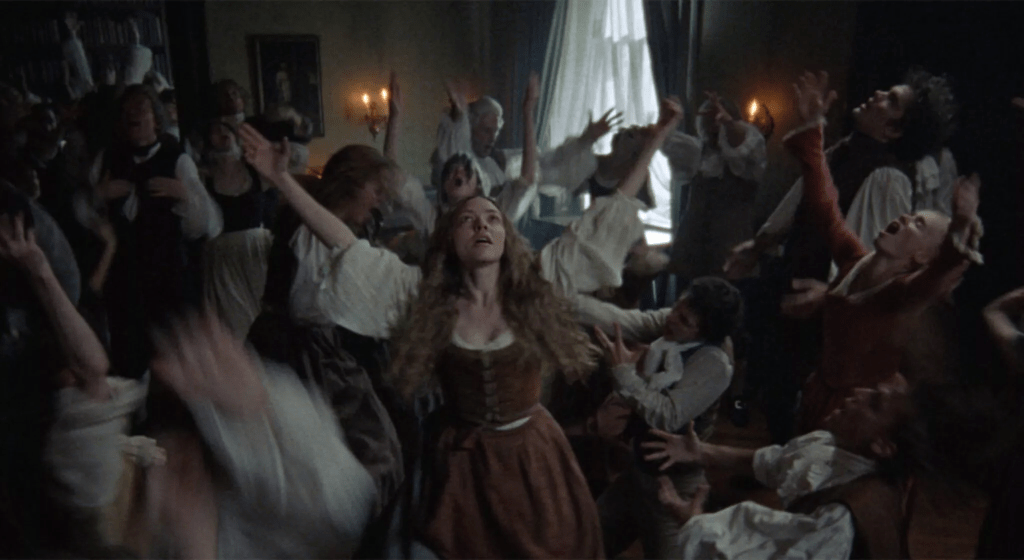
The Testament of Ann Lee (Mona Fastvold): A-

Ecstatic and feverish but oh so earnest. Ann’s faith is never much in doubt – which is somewhat refreshing – and Seyfried’s truly magnificent performance shows why people would choose to live in celibacy to follow this sort of odd Mancunian woman. Reports of it being a musical might be slightly oversold, though there are a few song sequences that appear to be separate from others; one of Fastvold’s best choices is to have all the songs be diegetic, so the sailors on the boat yell at them to shut up while they’re trying to worship. Those worship sequences are absolutely mesmerizing in their coordination, the rise and fall of the music with its occasional pieces of anachronism (an electric guitar coming in right as an eclipse fills). Of course it’s not as reachingly thematic as The Brutalist but in some way, there’s a tighter emotional core in the story of a woman who wants to do her best for God; it might be a little too hagiographic of her as well, though I don’t recall the Shakers ever having some of the worst bits of American Cults, but the whole modesty part of it can raise a few eyebrows. Moment I knew it was something special was “I Am Running, I Am Mad”.

Man Finds Tape. Credit: XYZ Films

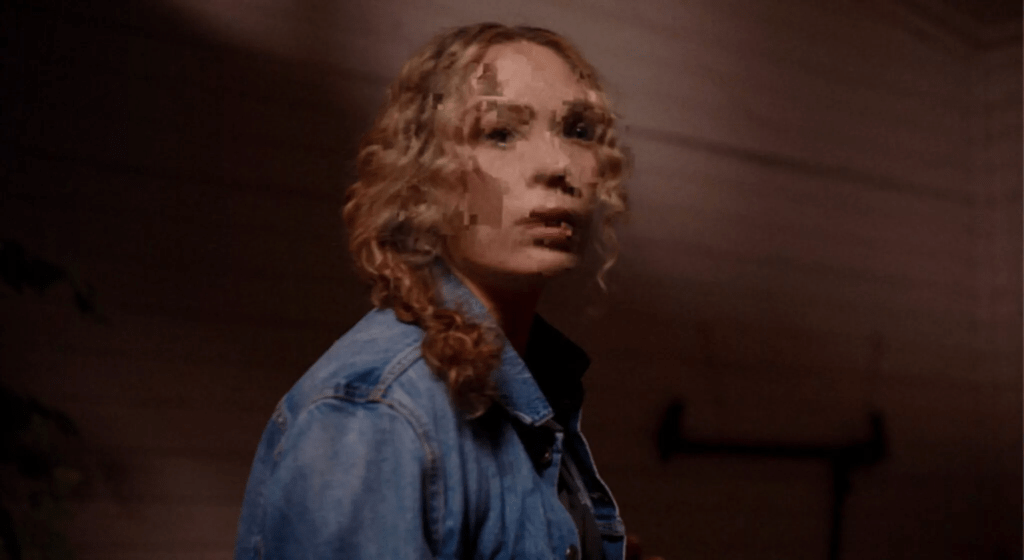
Man Finds Tape (Paul Gandersman and Peter S. Hall): B+

Rating’s a little lower than expected but being completely honest, I cannot justify putting it in the same tier as Noroi: The Curse or even my beloved Red Rooms. Which isn’t to say it’s shallow so much as shifts focus slightly in a way that lets some things fall by the wayside, and while it’s gripping, I wouldn’t exactly call it scary (save for a couple of moments towards the end). Really dug the faux doc aesthetic, especially as someone who enjoys watching Nexpo vids on creepypasta; Gandersman and Hall deeply understand those communities and the way things spiral out of control not only in “real life”, but also eventually in the story itself. Not a movie that ends up explaining much, which might all be for the better. In any case, though it might not have been about snuff as I’d expected, it swerves in interesting ways to scratch that horror itch for me.

Tomorrow: Combining Saturday and Sunday into one because I can feel myself slowing down, and this is already behind.

PFF34 Day 8: Is This All There Is?

A grabbag before the rush.

Going to try to keep these short going forward, since I’m anticipating a full weekend of 5 movie days. At some point I’ll also go back and fix some of the formatting and captions as well.

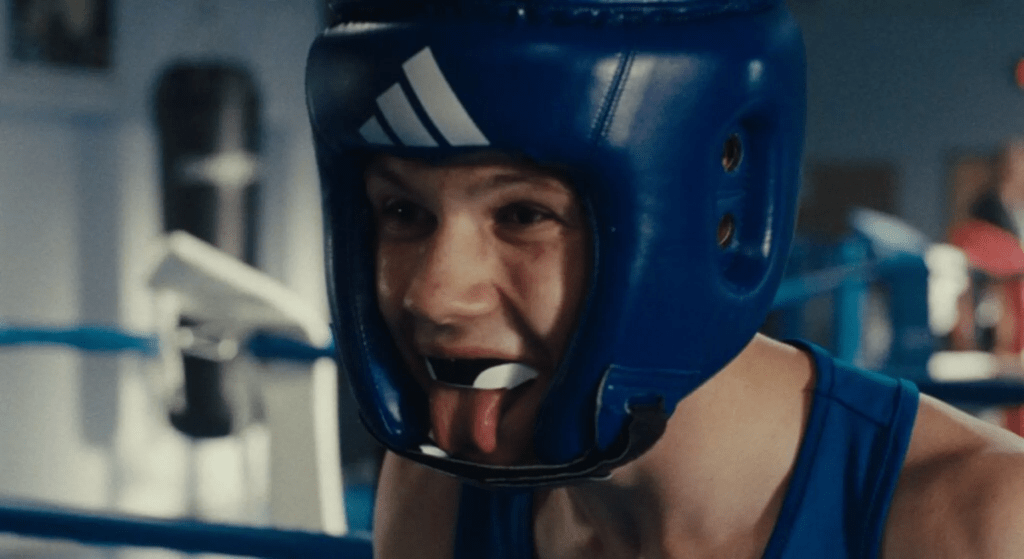
Wild Foxes (Valéry Carnoy): B-/B
Fairly standard coming-of-age with a dash of boxing for that extra “punch”, if you will. Carnoy freshens it by making Camille (Samuel Kircher) already the best in his class, outgoing and gregarious up until a bad fall sets him back. Couldn’t quite figure out the connection between the plural of the title and whether the foxes – which Camille feeds and ends up kickstarting the plot – relate as a whole to the testosterone fueled teenage antics of his friends. I admit to also finding it a tad bit frustrating with regards to the treatment of the character’s fear and especially how it impacts his friend Matteo (Faycal Anaflous), which isn’t even beginning to get into racial or class disparities. Dunno whether his ornamental girlfriend’s interests figure in at all, though it seems for a minute he might switch sports. Calling it inspirational is a stretch but in the end it fulfills the requirements of its genre.

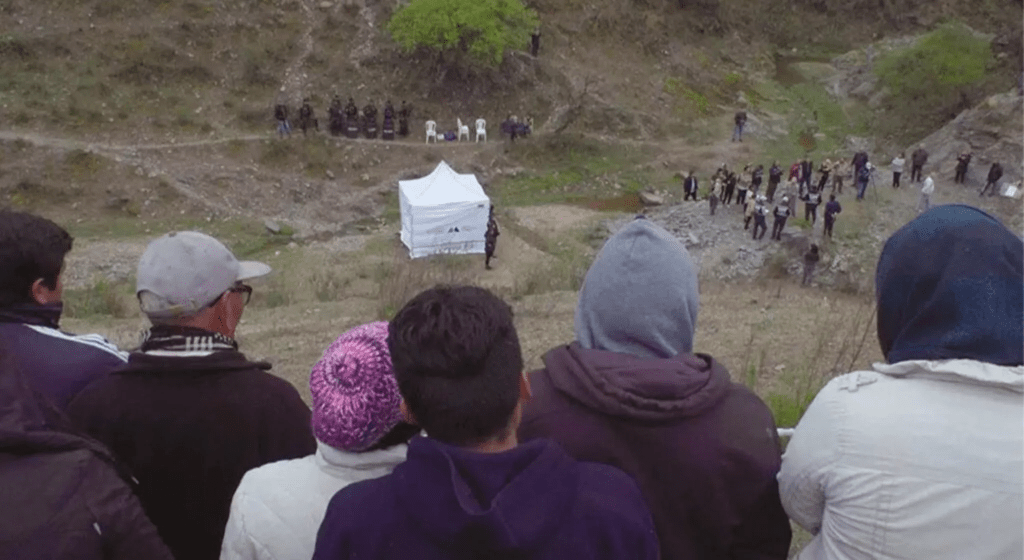
Nuestra Tierra (Lucretia Martel): B/B+

If you want an indication of how much I’ve slacked when it’s come to Venice and sundry coverage this year, I didn’t realize this was a documentary until looking up bits on Letterboxd before the screening. I’ve only seen The Headless Woman (Zama is forever on the list) so I’m not particularly equipped to say whether this fits into Martel’s overarching style or interests. What I can say is it features some rather cool usage of drones, including one shot where a bird flies into it and sends it tumbling to the earth, perhaps in synergy with the falling camera from the video detailing the shooting of Javier Chocobar. He was the leader of the Chuschagasta, an indigenous Argentinian community that had existed for centuries before they were brought into conflict with a mining operation. More than a little connection to last year’s No Other Land though obviously there’s less footage to comb through and less immediacy, since this was a settled court case. Martel largely gives voice to the Chuschagastas, showing their archival photos, playing their stories and forming the fabric of a community still trying to get recognized by a country overwhelmingly influenced by Europe. At times I could feel my attention drift a bit which isn’t necessarily its fault, though it does seem to detour a bit from the case itself in trying to sculpt a history. When it focuses, it’s incredibly damning, but often times beautiful and vibrant; as much as the history of violence is important, so is the history of the people themselves.

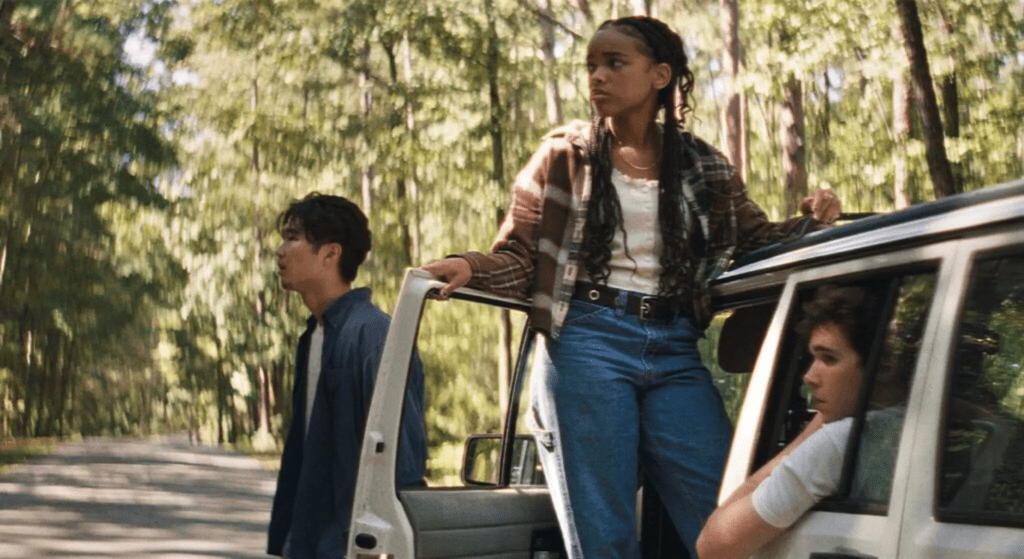
It Ends (Alexander Ullom): B+/A-

Come for the horror inflected logline about four friends trapped in a loop of Florida highway; stay for the gradual shift to existentialist drama. Spent a bit of the opening wondering if the dialogue was going to try to hard to be current, eventually relaxed into it as Ullom establishes a rhythm and a routine of driving, stopping, exploring, then getting back in. All four actors are uniformly excellent, establishing who they are and what they mean to each other within a few scenes and always coming across as realistic youths. Ullom also makes a smart choice to remove all of the survival barriers including the need to sleep, meaning that the conflict turns increasingly philosophical as the foursome debate whether they’re dead and if there’s any meaning in their situation. It’s not the most controlled script – though Ullom shows a deft hand at editing – but it’s never tedious. You could easily view it as a metaphor for life, bolstered by the hopeful ending. For all that it feels targeted to GenZ, it’s pretty cross-generational and maybe even eternal. At the very least it’s a trumph of low-budget filmmaking, reminding me the most of James Ward Bykirt’s Coherence without the sci-fi thrills.

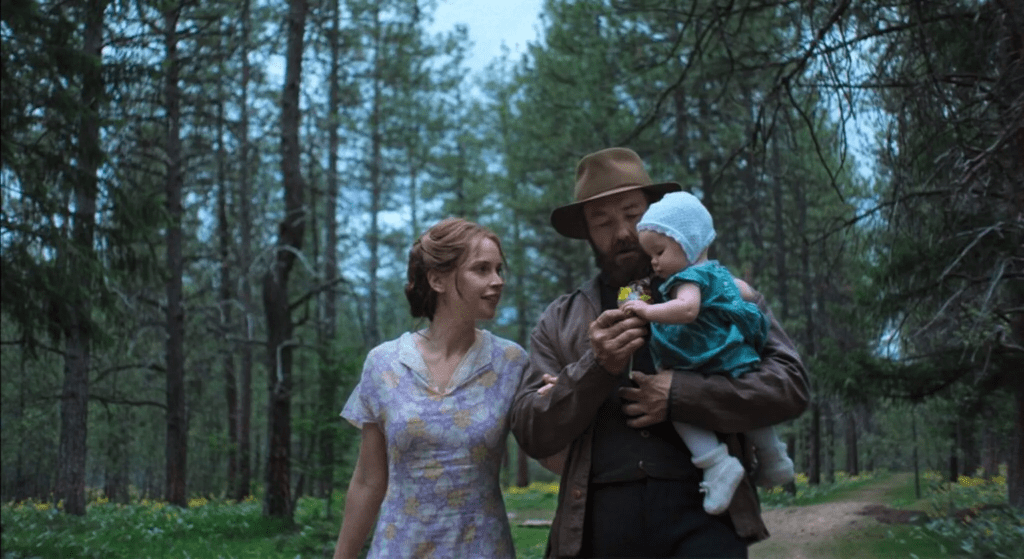
Train Dreams (Clint Bentley): B

Perfectly fine, occasionally moving. Joel Edgerton’s reserved yet warm, nailing the emotional scenes as required and doing a pretty good job of it. I think part of the problem for me is the amount of voiceover narration; that probably would’ve told me it’s an adaptation even if I hadn’t gone in knowing and really it just made me want to read the book. At its best when it’s focusing on the relationship between Robert and Gladis (he has great chemistry with Felicity Jones), could’ve used at least a tad more focus on the experience of immigrants given how much it haunts the movie. Confirmed from a couple review scans that it does, indeed, feel Malickean what with all the nature shots and the sunsets and the love. Of course the camera is largely static and as much as I’ve felt bored by Malick, he does have the capacity to stun. Perhaps I’m being a little too hard on it. Not Oscar Bait by any means and all the parts are there, it just never quite gets to transcendence. I almost wish I’d gone to Reflections In A Dead Diamond.

Tomorrow: Attempting the first of a few full days, including Amanda Seyfried’s Christian Musical and a movie that might be about snuff.

PFF34 Day 6: Investigations

More than halfway there.

With The Mastermind today, I’ve basically seen all of my most high profile choices (only Sentimental Value and The Secret Agent are left). So far haven’t really had much in the way of disappointment or misses barring Hamnet and Sirât so hopefully those come around sooner rather than later. Here on out it’s all new to me.

The Good Sister (Sarah Miro Fischer): C-

Inert MeToo drama that barely gets to what it even promises. I was intrigued by the idea of having to reckon with your own sibling committing an act of sexual violence, but there’s no indication that lead character Rose even understands why she’s being called to testify and barely seems to struggle with it at all. The movie itself struggles to provide any sort of drama or intrigue, merely gesturing to themes without really doing a whole lot beyond that. Couldn’t bring myself to work up all that much ire; more on the side of failure but not anything to really be bothered about.

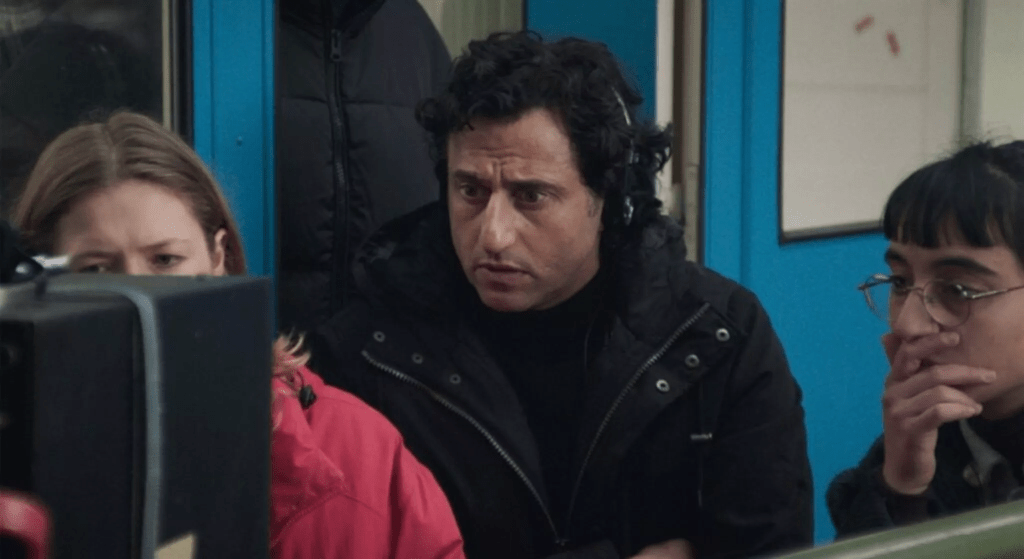
Hysteria (Mehmet Akif Büyükatalay): B

Now here’s something with a thorny dilemma. Grabbed me from the starting premise, in which assistant director Elif – amidst an incident involving a burned Qu’ran on the set of a historical film – loses the keys to a producer’s apartment she’s staying at, and subsequently the tapes she was responsible for. Büyükatalay uses the burning as a jumping off point to ask questions about artistic integrity and representation, early on featuring a character noting how Europeans tend to make films about racism in their countries to absolve themselves. It’s self-aware enough to see that Elif has a lot less to lose than the extras accused of theft and while the two threads don’t always feel cohesive, they come together in a confrontation scene that gives a great jolt. Not quite sold on the ending but I appreciate the swings it takes without fully biting the hand.

The Mastermind (Kelly Reichardt): A-

Talk about someone who knows how to end a film. I really have not kept up with Reichardt as I should, though given the rumblings about Showing Up I know she’s capable of being quite funny. Screen Unseen Attempt The Mastermind is indeed quite funny for much of its run time; the centerpiece art theft (calling it a “heist” feels like giving it too much credit) got a big laugh from me out of one line as did the prep and the aftermath. Reichardt’s editing is sublime, swift and lean, very pleasing on the jump cuts but lingering just as long as it should. Josh O’Connor remains magnetically watchable, enormously charismatic in the beginning but still with that deep well of sadness that only grows as his competence and arrogance dims. Like his performance in La Chimera (a movie I must revisit), he’s skilled at revealing the depths of a silence and simply staring. The political thread running throughout the background is part of what makes the ending so good, and I really dug the jazzy score from Rob Mazurek. I perhaps blanked out only a couple times (late in the day and all) and I do wish Alana Haim was afforded more to work with. As funny as it all is, it never loses sight of the depths of O’Connor’s failures as a father, a husband, and all around person.

Resurrection (Bi Gan): B+

Must a film be coherent, thematically or narratively? Is it not enough to watch 6 discrete, lusciously filmed mini-movies about the senses as well as Chinese cinema history? Yes, actually. It’s been almost a decade since I’ve seen Long Day’s Journey Into Night and this is definitely a film from the director behind that. The whole thread about “deliriants” and “other ones” and “dreaming” barely felt like a thread, to be honest, or even a frame story. Not that I particularly minded as somewhere within the second story I started treating it more like an anthology of metaphor and just kind of rocked with the mini stories happening. Occasionally dull and not all that emotionally involving, but every so often Gan provides the razzle and dazzle, and that can be enough for the vibes.

Tomorrow: Some under-the-radar picks, and I check in with what Takeshi Miike is doing.

PFF34 Day 4: There’s Some Holes In This House

A day of straight bangers

Sound of Falling. Credit: MK2

Today was pretty much the rest of my most anticipated. I’ll be seeing The Mastermind and Sentimental Value later in the festival, so after that it’s things I’m either taking a chance on or haven’t had much interest to begin with, which can sometimes feature surprises in itself. Of course, there’s always a chance that some of the other popular showings could have late screenings but given the way distributors have been acting this year, I’m not holding my breath. Pretty much all of the ones below I anticipated giving high scores, a couple can be more acquired tastes.

Sound Of Falling: A-

In which you simply must surrender yourself to some absolutely beautiful shots. I’ll be honest, a few of the timelines weren’t exactly clear to me and it’s perhaps a bit too elliptical; the unifying theme appears to be death and its seductive pull between 4 generations of women. Recurring bits like each of them remarking on something being “warm”, the buzzing of flies, and gazes into the camera provide some form of linkage but it really is one you just kind of vibe with or you don’t. Mascha Schilinski was the co-winner of the Jury Prize at Cannes this year (third place basically) for her second feature, the first German woman since Maren Ade to be in Competition. Very easy to see why, and it’s just as easy to imagine it taking a deeper hold in my mind or simply evaporating away like so many memories and traumas.

No Other Choice. Credit: NEON

No Other Choice: A-

I expected the score on that one to be higher and it very well could rise. That was almost certainly because as someone who’s been unemployed for almost a year now, I was expecting this to hit like a truck. While it didn’t quite do that, it is highly relatable and in some way reassuring to see that job hunting remains the same basically everywhere in the world (there’s no one to talk to, no way in). Park layers on the comedy much more than usual, almost teasing us with the prospect of our main character going on a killing spree in order to make himself the most viable candidate. And when it does come, it’s both satisfying and sad as you’d expect, sympathies going up and down. It’s less of a movie about class rage than inevitability, where everyone’s insistence that they have no control in the matter is really just a means of avoiding discomfort or humiliation. As bleak as it may seem, it’s still incredibly entertaining and stylish as the Park Chan-Wook we know and love (all the match cuts, dissolves, transitions etc), with a little less of the emotional gutpunching but more of the bloody laughter.

If I Had Legs I’d Kick You. Credit: A24

If I Had Legs I’d Kick You: A

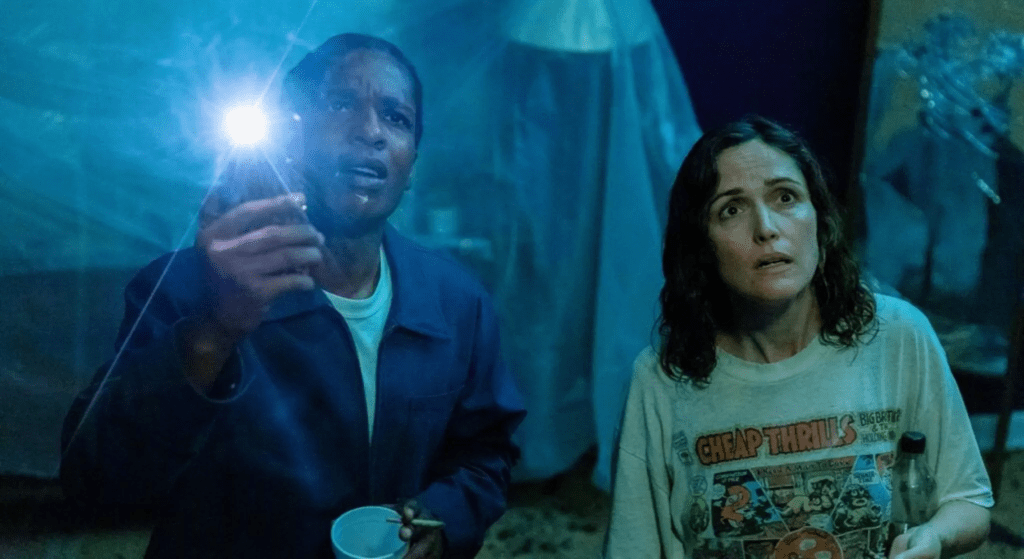
Easily the most stressful experience I’ve had at this festival and I mean it entirely positively. Mary Bronstein’s second film (hadn’t heard of her until this was announced at Berlin, because Yeast came out when I was a child) feels incredibly personal as so many portraits of motherhood do, but bracingly there’s seemingly zero upsides. Rose Byrne deservingly won the Silver Bear for Best Lead Performance, portraying a woman overwhelmed and under the influence, only just holding herself back from going completely apeshit. And she would be entirely justified: on top of her job as a therapist, she’s got a child with a feeding tube who isn’t hitting her weight goals to the constant judgement of her doctor (Bronstein), a husband overseas who could not be less helpful, her own therapist (a very welcome Conan O’Brien) who’s becoming more and more antagonistic, and a giant hole in the ceiling of her apartment. Bronstein’s husband Ronald is a frequent collaborator of the Safdies – with Josh on board as a producer – and that’s absolutely felt in the sound design and occasional mystical glimpses into jewel-like tunnels. Those parts don’t feel as connected thematically but if anything, they offer a small reprieve from the absolutely demonic screeching of the child, who’s unnamed and unseen except for the broadest of outlines. A$AP Rocky drops by as well for another excellent supporting turn after Highest 2 Lowest, as the manager of the hotel Linda’s forced to relocate to and proving to be something of her only actual friend, even if she can’t seem to recognize it. For me, If I Had Legs was first and foremost about the visceral experience, and it can absolutely be overwhelming. Byrne holds it all together magnificently – as she’s done in basically everything she’s ever been in. This is a frequently funny movie on top of being creepy, and her skill alone should be seen in the way she screams “giant FUCKING HOLE!!!” over the phone before calmly approaching a pharmacy counter. Lots of movies have shown “bad” women and mothers, there’s vanishingly few that have been willing to ask if someone should even be one in the first place.

Frankenstein. Credit: Netflix

Frankenstein: B+

Exactly what you’d expect from “Guillermo Del Toro’s Frankenstein” and luckily for me, that’s all positive. I couldn’t tell you if it’s a completely one-to-one from the book since – like everyone else – my knowledge comes from cultural osmosis and general summaries. What I can say is that it’s handsomely crafted, fully Crimson Peak mode with the graphic gore to match (though without being too excessive). Oscar Isaac is very sexy on top of delivering a good performance, and Jacob Elordi holds his own rather well, even when he’s just being tall as hell. All the usual themes of man playing God, nature vs. nurture, etc. are there and I don’t know that it really adds all that much to centuries of analysis. There is, however, a lot of queerness both in the bodies depicted and in the Monster Of It All, which may also be in the book. Del Toro’s big gooey heart comes in at the ending and it fits in perfectly. I had a pretty good time, and it’s solid craft all around. This being a Netflix joint I can’t tell if the cinematography is a little washed because of them or something else, but it doesn’t at least look especially flat to me. I’m kinda glad we got a guy making freaky goopy gothic flicks, you can tell he loves it all.

Tomorrow: Bit of a lighter day but we’ll see if we can’t squeeze a few more in.

The Best Horror Series of the Last Decade Is About A Game That Doesn’t Exist

Launching a humble little blog with a humble little webseries.

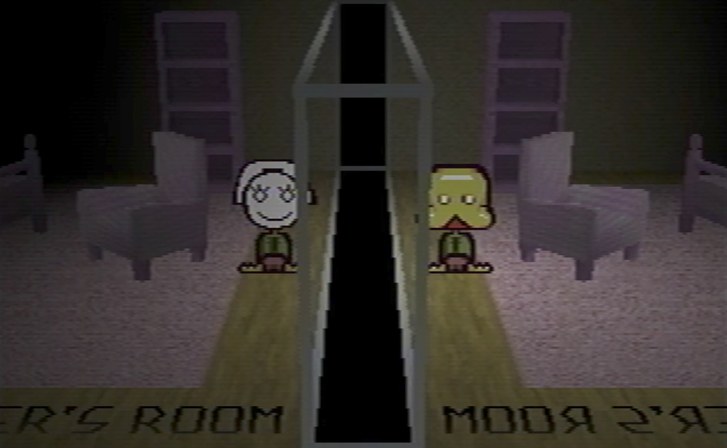
Mirror Room

A repost of an entry I wrote for a Best Television of the Decade series in a Facebook group.

Believe it or not, 2017 had two surreal horror adjacent series that gained a deep following and acclaim from many. The first, of course, was Twin Peaks: The Return. The second was a little thing called Petscop. Although it spawned more from the annals of creepypasta and haunted video games as a lot of horror web series, Petscop distinguished itself almost immediately despite an erratic release schedule and virtually no solid information. It might be the most Lynchian thing David Lynch didn’t direct himself.

Summarizing Petscop is difficult, so we may as well start from the beginning. The first video was uploaded on March 11, 2017 (a few months before The Return would air); a month later, an account named paleskowitz posted a link to the channel in /r/Creepygaming and other than a post in 4Chan’s /x/ (Paranormal) board, this would be the most interaction the creator would have with the outside world. From the opening frame, the series commits full-heartedly to the bit, showing the PlayStation start up sequence, and the boot up of the titular game. The conceit is that the uploader found a copy of the unreleased game Petscop, and can’t seem to find any indication that it, or its developer Garalina actually existed, but there’s some freaky stuff in it. The community calls him Paul after the name he gives the profile. At first, it appears to be a fairly normal – though unfinished – pet collection game. But once Paul inputs a sequence, suddenly it shifts to a new, darker place.

The crux of the series is Paul’s exploration through this place and suffice it to say, there’s a lot of mythology. I won’t even begin to try and untangle the mess of the Newmaker Plane, the various references to adoption and child neglect, various other characters like Care. Petscop‘s refusal to explain itself lends a mysterious air, as if viewing a transmission from another plane entirely. Every question answered raises more questions, even towards the end of the series when it starts giving more solid answers. Combined with the total lack of interaction from the creator (who eventually revealed himself a few months after the last upload), it sent the community into overdrive. But somehow, it never feels frustrating. Instead, the lack of concrete answers makes everything all the more unsettling.

It’s these lack of answers combined with the style that truly makes it worthy of a Lynch comparison. While other creepypastas feed off nostalgia by using famous properties, Petscop is an entirely original thing. Additionally, it is entirely devoid of jump scares in the traditional sense; there’s barely even any blood, gore, or creepy monsters. True to the master himself, Petscop draws unease out of long periods of silence and ellipsis alternated with droning, thumping sound. Most of the series takes place in total darkness, only illuminated by the player character. It makes me think a lot of Lost Highway, in that there’s nothing really all that scary happening on screen, but it combines to make you feel uncomfortable. And although it deals in a lot of heavy themes, Petscop never gets graphic or exploitative (helped by the fact that no one in it is actually real, despite some references). Confusing as it is, there’s nonetheless a sense of logic underpinning every episode, the idea that there are rules for this world that we can’t quite grasp, familiar as they are. It’s the same sort of grounding that runs throughout the original Silent Hill trilogy, this idea that you know you’re in a waking nightmare but that it all feels normal. All of this is combined with an analog horror style (even going so far as to start with the original PlayStation bootup), largely adhering to the stylistic constraints – low quality polygons, rudimentary movements, etc – with just enough deviation that it could be what you remember those games being.

While some of the mystique may have left once the creator revealed himself, there’s no denying that Petscop is an accomplished piece of work. Time will tell if it becomes influential on other series, or if the creator goes on to new things. If nothing else, I admire a single person for creating such an accurate feeling, singular product that made me excited every time a new notification came to my phone. Something tells me this creator has a long career ahead of himself.