PFF33 Day 10: Penultimate Day Brings “The End”, But Not The End

A couple highlights, one dud, a disapointment, and a throwback.
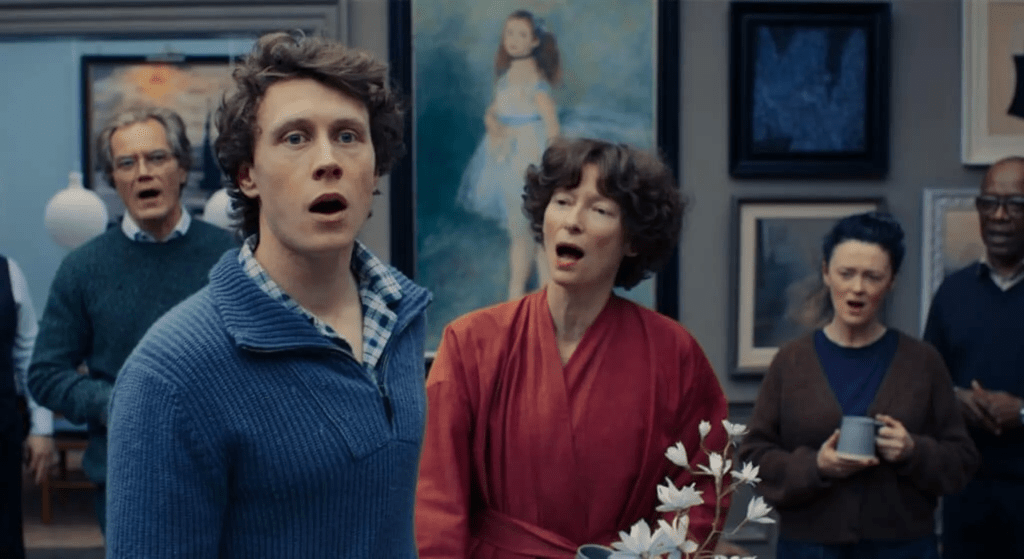
The End. Credit: Neon

Years ago – when I was clocking time at UPS before college – I was listening to an episode of Filmspotting, where they talked about director’s they’d give blank checks too. One of them was Joshua Oppenheimer, director of Indonesia genocide documentaries The Act of Killing and The Look of Silence (movies I both need to see and revisit, my younger self be cursed). They mentioned that one of the things the MacArthur Grant recipient was shopping around was a post-apocalyptic musical, a very leftfield choice and understandably one that was having difficulty getting funding. I subsequently forgot about it over the years as his documentaries placed on numerous decade lists, right up until it was announced to be showing at both Telluride and TIFF.

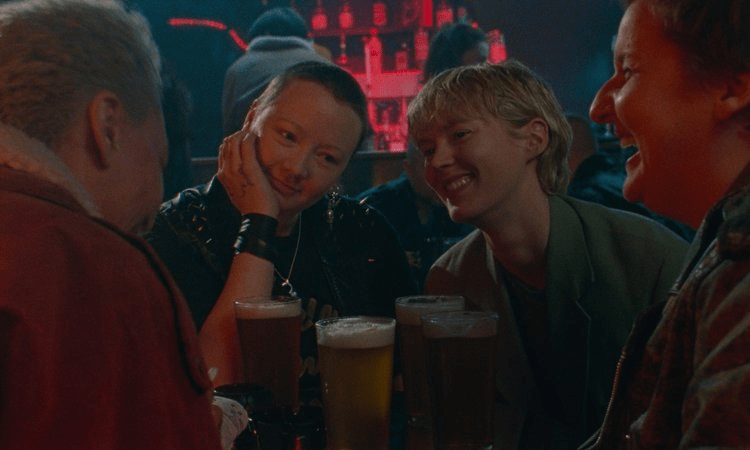
That musical is The End (Grade: A-), starring Tilda Swinton, Michael Shannon, and George McKay as characters known only as The Mother, The Father, and The Son. They live in an giant underground bunker nestled among salt flats with their few staff and friends; it resembles more of an art museum than it does an actual home. From the start it’s clear that in some ways, everyone is telling themselves stories to live, whether they’re aware of it or not. Father worked in the oil industry yet denies that his actions had anything to do with the disaster. The Son – only knowing the bunker – is prepped for the future but how long that future is going to last is never clear. Their routines are jarred with the arrival of Moses Ingram’s Girl, conflicting with their general pronouncements in song that the outside world is full of danger.

What happens is perhaps less important than how everyone feels about it. Oppenheimer’s script with Rasmus Heisterbeg tends towards the anticlimactic but it never feels overly concerned with plot. The Son becomes much more concerned with the “why” of things, why his parents are alone in the bunker, why they decided on their only friends, why they’re writing a history book this particular way. In the grand nature of Hollywood musicals it so often resembles, the characters break into song when their emotions become too complex for any other method. Their movements are less dancing and more the need to express, to shake out the nervous energy. Performance wise, they mostly do good; MacKay and Ingram are the two best singers, while Swinton and Shannon sound unprofessional but not unlistenable. It could’ve used some more musical numbers just to break up the pacing, despite the dialog scenes being arresting. This is the definition of a big swing, admirable in its audacity, made by someone with a deep appreciation for what movie musicals can do and fully embracing all the odd emotional rhythms that come. Of all the films here, you owe it to yourself to at least check this one out; we may never get another one.
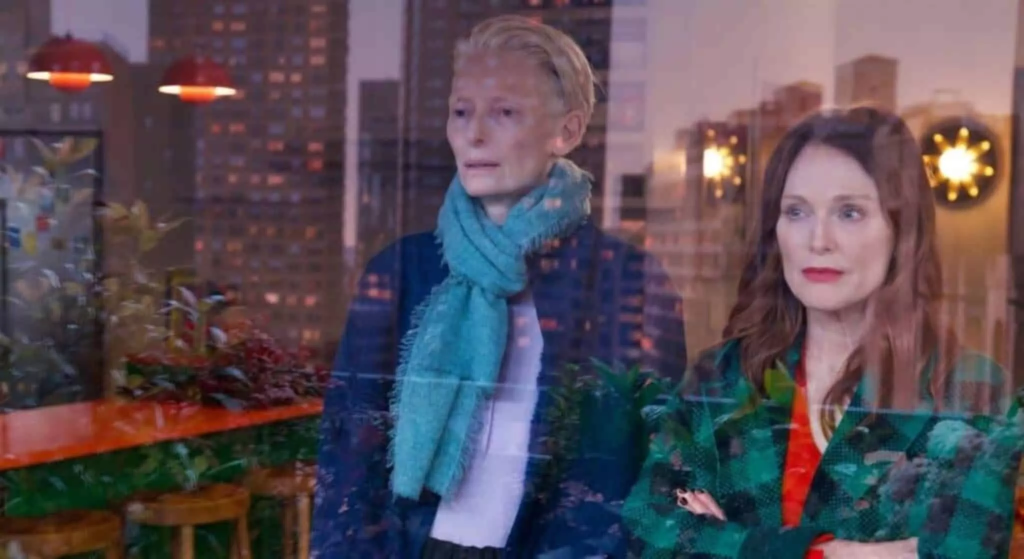
The Room Next Door. Credit: Sony Pictures Classics

In a plesant coincidence (thanks to moving schedules around), Swinton featured prominently in the other big get of the festival, Pedro Almodóvar’s Golden Lion winner The Room Next Door (Grade: B), also starring Julianne Moore. I’ve been trying to catch up on his work, having rewatched and loved All About My Mother and Talk To Her earlier this year; Pain and Glory and Parallel Mothers were two of my favorite films from the past 5 or so years, the latter possibly one of his best works (certainly one of Penelope Cruz’ finest performances).

Unfortunately, as you can tell by the rating, I have to concur with most critics in finding this to be a relative disappointment. All the ingredients for a classic Pedro are here: the enigmatic performances from two fine actresses, the beautifully colored decor, the melodramatic flourishes. But his English language debut is somehow more sedate and subdued than his past work. Swinton and Moore do fine work, as a woman dying of cancer asking her friend to accompany her on a trip so she can end her life, though strangely reserved much of the time. My audience seemed to be laughing at things that didn’t seem like they were supposed to be funny at all, even if some of that excess presents itself (like a scene with a personal trainer). Maybe it’s also that there seems to be little debate over the topic of euthanasia itself, a lack of struggle or buried emotion to burst out. His eye remains as strong as ever, as does Alberto Iglesias’ score. And yes, the rhythms of the dialog do feel slightly awkward and even repetitive at times but honestly I don’t know if it usually sounds this way to a native Spanish speaker. That Golden Lion win was the first time the major festivals have ever given him the big prize; he’s made several much better than this. Still, it’s not without its many pleasures. Maybe he can get Swinton back in Memoria mode and film her in Spanish.
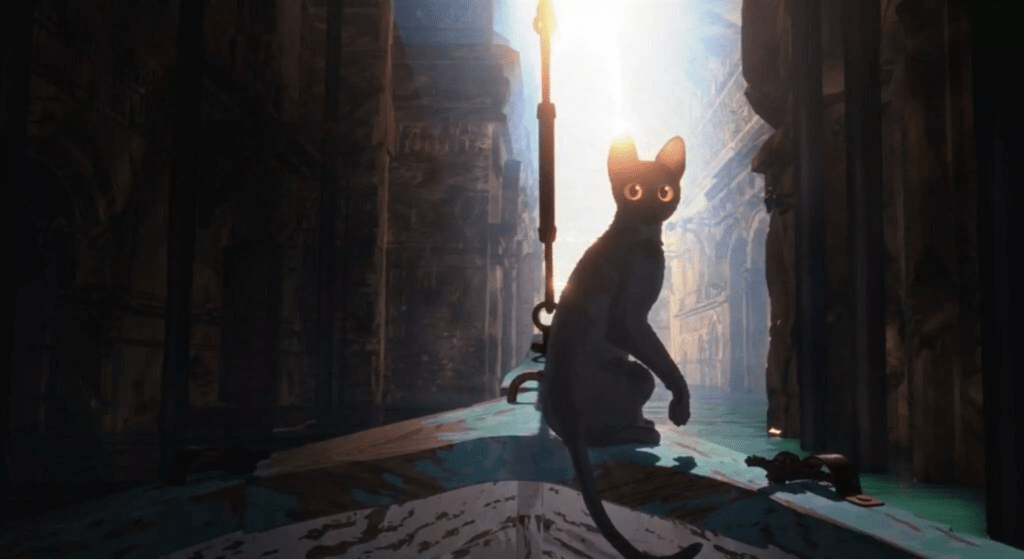
Flow. Credit: Janus/Sideshow

Dialog is not a problem in Flow (Grade: A), because there is none. Latvia’s pick for International Feature is an animated tale of animals traveling on a sailboat in the midst of a massive flood, communicating only via their normal sounds and body language. “Communicating” is putting it a bit strongly, because they all act like normal animals, those innate traits giving them bursts of character in response to each other’s actions, though with some leeway to – say – steer the boat. Our primacy focus is a black cat, acting as cats do as it gets knocked about by all series of torrents and creatures. Joining it are a capybara (very chill), a lemur (obsessed with a basket of shinies), an unidentified bird (injured, acting high and mighty), and a dog (pure of heart, dumb of ass). If this were made by a major animation studio, it’d be a candidate for the most annoying movie alive. Instead, it’s awash in painterly textures, content to sit in silence and calm as it observes the boat move through water. The world feels heavily inspired by games, everything from Ico to Breath of the Wild to Myst and Stray, yet it’s distinctly cinematic, the camera roving through the world and at times adopting a handheld style. What’s more impressive is that a clear narrative emerges, as do conflicts and traits, and by the end you’re rooting for them all to be friends. Can’t say I know for certain what some of the more surreal imagery might be representing, if it does at all. All I know is that I’ll be shocked if I see a better animated feature this year.
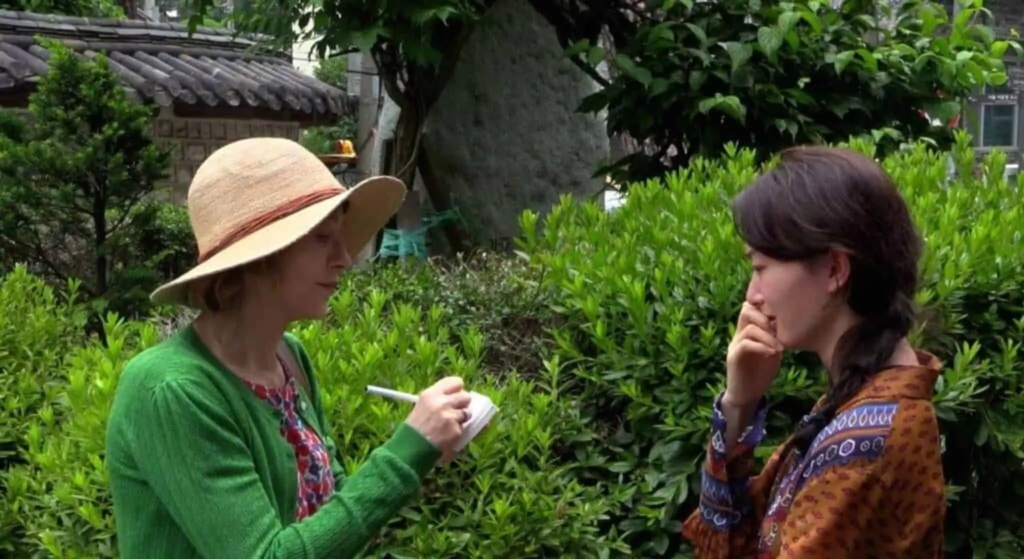
A Traveller’s Needs. Credit: Cinema Guild

I had been planning on seeing Bound In Heaven but due to overrun from both the bumpers and introduction to The End, it started as I was getting out. My backup choice with friends was Hong Sang-Soo’s A Traveller’s Needs (Grade: C), which I probably wouldn’t have seen otherwise. I like Right Now, Wrong Then, so far the only Hong I’ve seen; it’s felt like he’s become a bit of a meme in online circles after that, with his increase in productivity and seeming decrease in actually making a regular movie. If you follow Mike D’Angelo (as I do, check out his website and Patreon), you will be familiar with a lot of his complaints about a lot of Hong’s work lately. Gotta say I agree with him.

Isabelle Huppert’s second team-up has her as a French teacher in Korea with a unique method: having people write down sentences in French that speak to their feelings and practicing those to learn the language. I doubt that’s very effective. The movie itself is mostly in English and it feels like they’re flailing to improvise or the script is so banal it hardly matters otherwise. There doesn’t seem to be much of a plot or really any character build up, just conversations about language and how playing instruments make people feel that go on too long without saying much of anything interesting. Occaisionally he does have some funny moments, like when Huppert leaves one client and they look back to see she’s already gone, commenting on how fast she walks. A later scene involving her boyfriend/roommate and his mom lends itself to some actual conflict and some interest into who she is and why she’s in Korea. It all just comes across as so arbitrary to me, down to the framing and the length of shots. I’ve known that he’s largely doing everything himself now but the image quality itself frequently looks like a home movie. I don’t want to rag on it too much because he has made at least one movie I do like and frankly, he’s made so many others in that time that I’m sure I’ll find another. As it is, it’s just kind of boring, and I’d prefer at least a little more structure and baring that, something interesting or amusing. You can make it look however you want in that case but you can’t have it both ways.
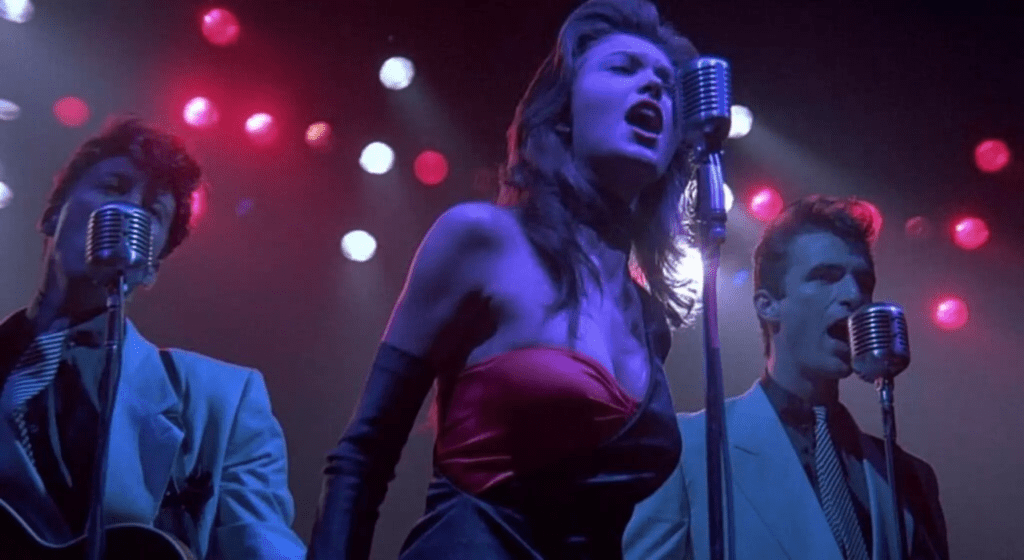
Streets of Fire. Credit: Universal

Like most other film festivals, PFF also does retrospective screenings. Usually I don’t go to them, in the past because I could find them elsewhere (and my time was limited), nowadays because chances are they’ve played it before or will play it again. I did, however, decide to go to Streets of Fire (Grade: A-) because I’d already missed it once, and my friend Evan had said I should watch it. I’m so glad I did. Walter Hill’s musical fantasia is pure cinema, exactly as the opening describes: “Another Time, Another Place”. I’ve heard the opening section of first number “Nowhere Fast” a bunch because PFS used it as the bumper for August last year, and I went a ton. The full thing still hits, and kicks off a fantastic sequence in which rock goddess Ellen Aim (Diane Lane) is kidnapped from her band The Attackers by Raven Shaddock (Willem Dafoe, extremely young & incredibly hot), leader of the biker gang The Bombers. It falls to her old flame Tom Cody (Michael Paré), lesbian-coded mechanic and ex-solider McCoy (Amy Madigan), and dweeby manager Billy Fish (Rick Moranis, very surprising) to go and rescue her.

During the beginning and the end, I thought I was watching my new favorite film. Hill fuses the culture and look of the 50s with the hard edge style and talk of the 80s, creating something fully unique in the process. No other film will give you a stripper doing a vigorous Charleston to a bar full of leather-clad bikers giving straightened up Tom Of Finland while a rockabilly saxophonist wails, and frankly the fact that America let it flop is the reason we got Regan a second time. The music – from the operatic pop stylist Jim Steinmann of Bonnie Tyler, Celine Dion, and Meat Loaf – hits hard and hits quick. Once again, I could use so many more numbers. I must admit that my friend was right about the middle. By no means is it bad but it stalls a bit, and Paré isn’t as up to the task of talking, no matter how cool his lines are. But when he’s blowing up bikes with a shotgun… Goddamn is he the coolest motherfucker alive.

Tomorrow: PFF33 comes to an end, with a couple last entries and my favorite 10.

PFF33 Day Three: A Slew of Centerpieces (Including One of the Best of the Year)

And also Maria is here

All We Imagine As Light. Credit: Janus/Sideshow

Payal Kapadia’s All We Imagine As Light (Grade: A) is a frontrunner for my favorite film I’ve seen all year. Don’t know how to start this off other than just to put it plainly. There may have been no other film I’ve been anticipating all year, at least since the reviews and the Grand Prix award started coming in and it’s clear we’ve got a major talent on our hands. At turns luscious, dreamy, and poetic, Kapadia’s crafted a thing of true beauty, a grand claim for the female voice in Indian cinema.

Her previous film – 2021’s controversial documentary A Night of Knowing Nothing – featured fictional love letters read in voice over between film students interspersed with footage of protests against the Modi government, something which I’m told has gotten the film banned in a few states (and probably had something to do with why the selection committee passed it over at the Oscars, all man board notwithstanding). Here the voiceover returns and paired with the evocative nighttime shots of Mumbai, it’s transcendent – beginning first with a survey of Mumbai’s many languages describing the city, and then featuring everything from poetic dialog to text conversations.

The former centers around nurse straight-laced Prabha (Kani Kusruti). Her husband is away in Germany for work, unseen, represented by a foreign rice cooker she receives one day in the mail. In the thorough of loneliness she starts to fall into some sort of connection with a doctor at the hospital (Azees Nedumangad), though it’s clear to both that as much as they may want it, this is an impossible thing.

She lives with Anu (Divya Prahba), the source of the aforementioned text conversations. Those are for Shiaz (Hridhu Haroon), a handsome man who – more crucially – is Muslim; the forbidden nature of their romance would seem to point more towards her parents but given Modi’s current Hindu nationalist leanings, it’s not hard to read that as a comment on the country at large.

Kapadia’s political leanings don’t stop there either. The scene most reminiscent of A Night of Knowing Nothing features Parvaty (Chhaya Kadam), an older woman being threatened with eviction from her home of 22 years to make way for luxury condos, as she gathers with a group of activists. Her trip back home to her seaside village provides the ostensible plot, and it’s where the film ends in a particularly stunning shot. It can’t be overstated how beautifully shot the film is, awash in the life of the city, capturing its essence. Kusruti’s radiant performance provides the biggest emotional hook, but it’s the interplay with the actresses that provides the film with its beating heart. Here’s one that knows better than to lean into trite female celebration, instead drawing out the much deeper connections between them all, and from us.

Maria. Credit: Netflix

The same can’t really be said about Maria (Grade: C), Pablo Larraín’s capper to an impromptu trilogy about the fraught lives of famous divas. In this case, the diva is Maria Callas, a woman I admittedly know next to nothing about besides the Opera and that one clip of that old queen saying he’s never heard a bad performance from her. Unfortunately you’re not going to learn much of anything about who she was or her life from this.

I rather enjoyed Jackie a lot, Spencer a little less but I still think fondly of it and Kristin Stewart’s performance. Despite also being scripted by Steven Knight, this one is rather inert, almost boring. As La Callas, Angelina Jolie captures what I assume the mannerisms of her are (and looks the part in footage shown in the credits). She never gets into a big screaming match or throws things across the room which I suppose is a small blessing for this kind of biopic. But something about the dialog just kept rubbing me the wrong way; extremely blunt and sounding performative, but with no real insight as to whether she really believes any of that or not. It’s straining to be clever in a way that the last two never reached, with so much emphasis on the distinction between Maria and La Callas but without anything in the sense of differentiation. Larraín introduces a newer stylistic track here from Jackie‘s TV special shooting and Spencer‘s haunted house perfume ad, in this case sequences of a drug-induced hallucination (?) of Kodi-Smit Mc-Phee interviewing Callas and getting precisely zero out of her. There’s lots of clips of Jolie singing and if that’s really her voice she must be commended. At worst, Maria resembles a more traditional biopic, something that could never be said about the others. It’s as if it relies too much on the audience knowing anything about Callas’ past and expecting that to carry through. A late scene featuring her sister shows the better movie hiding in there, but it’s just not enough.

The Brutalist. Credit: A24

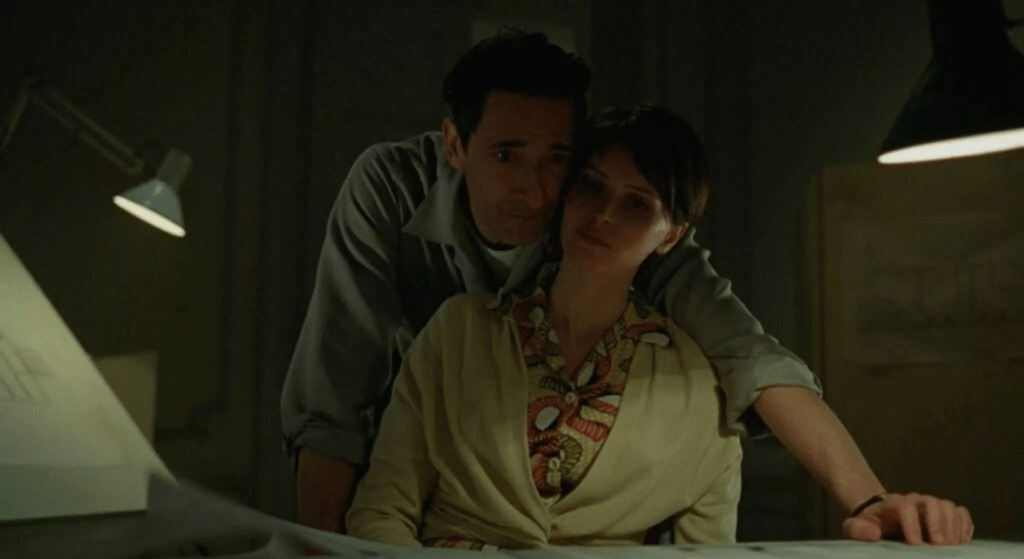
“Too little” is not a word anyone would use to describe The Brutalist (Grade: A-) – all 215 minutes + intermission of it. Brady Corbet’s – erstwhile European arthouse actor turned cold, provocative director of The Childhood of a Leader and Vox Lux – film has been described as an attempt at the Great American Novel and there’s really no other way to describe it in its epic sweep. The brutalist of the title is one László Tóth (Adrien Brody), a Hungarian architect fleeing the Holocaust to come to a little town called Doylestown in Pennsylvania (trust, that got a lot of reaction from the crowd).

Split into two acts covering roughly a couple decades, Corbet and co-writer Monica Fastvold have a lot on their mind: foreignness, Jewish people’s precarious place in society, the promise of America. Largely they mange to pull it off, and moving at quite a clip. By the time we hit the built in intermission I was certain we would be getting more chapters. Guy Pearce – as an industrialist who hires Tóth to construct a community center – injects a big dose of mid-century energy into the proceedings, pulling at threads of power and those who wield it over others. I’m not fully convinced the film has the necessary emotional power befitting of such an epic, and admittedly it does lag a bit in the interminable battle to get the center built. Still, the massive achievement of pacing itself cannot be denied, and I’m sure it will only rise in estimation once I get back around to it.

Finally, quick detour for some behind the scenes info: a big part of scheduling involves looking up US distributors, info that used to be on the program but for a few years now has not been there. If it’s from an A24, a Neon, a Mubi, etc. chances are that it will be coming to Philly, and so I feel much safer about skipping. This is part of how I found myself at the late night screening for Cloud (Grade: B+), a movie I likely would’ve seen eventually but frankly, did not want to take the chance that it would be coming a full year from now.

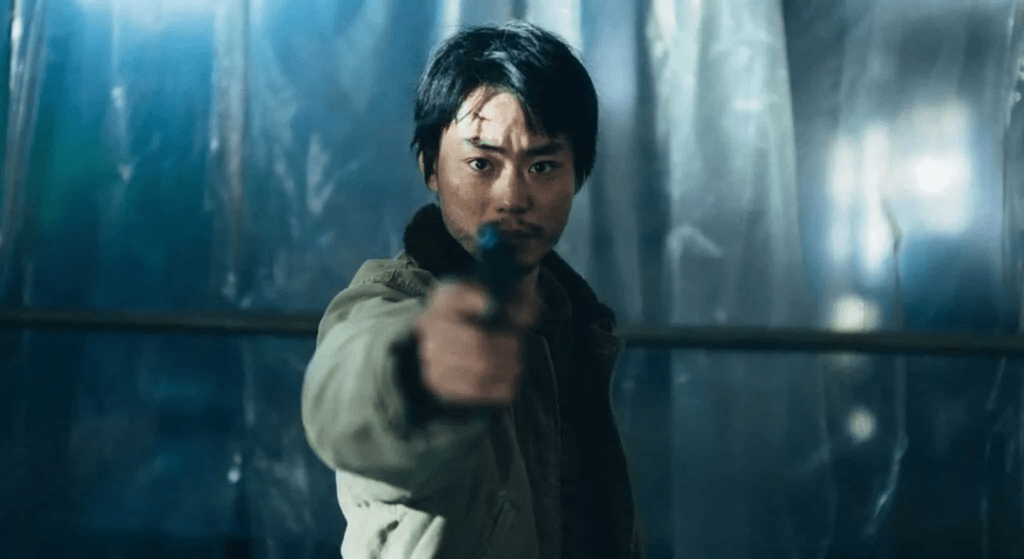
That aside: this is one of three or so Kiyoshi Kurosawa films in the pipeline this year (one of them, Chime, is on a Web3 platform or something) and Japan’s surprise choice for Best International. It follows Ryôsuke (Masaki Suda, the titular boy of The Boy and the Heron), a factory worker more concerned with his side hustle of reselling goods on the internet. What he’s not too concerned about is whether those goods are legitimate or whether the price he charges is fair. Naturally, this does not endear him to those he does business with, giving Kurosawa the chance to go back to the mode of Cure and Pulse that made him famous in the West. I don’t want to give away too much as to where it goes, other than to say it feels sort of like a Yakuza substory at times, perhaps one where Kiryu has to beat the shit out of someone scamming people. It may take a bit to get to the good parts, and the analysis of internet behavior may not be more than “anonymity (and money) breeds conflict”. But it’s a cracking thriller, uninterested in trying to garner sympathy for the lead but not too concerned with overly punishing him. If anything, it features a gunfight that suggests Kurosawa could make a pretty good action pivot.

Tomorrow: Mike Leigh reunites with Marianne Jean-Baptiste, Jesse and Kieran Go To Europe, and I try to make these things shorter for my own sake.

PFF33 Day Two: Sean Baker’s Grand Return

Plus the first of many Indian films, and the craziest of the festival so far

That one screenshot from Anora. Credit: NEON

There was probably no film more anticipated this year than Sean Baker’s Anora (Grade: A), at least judging from the packed house I barely made it into. That would still be the case even if it hadn’t won the Palme D’Or this year (incidentally: pretty sure this is the first time the Palme winner has been in a Centerpiece slot and not in a side section in a hot minute); since breaking through with 2015’s madcap iPhone-shot Tangerine, Baker has only gained in prominence and in filmmaking prowess. The Florida Project and Red Rocket were both previous PFF entries, as well as movies I like to love a whole lot for both their sunbleached visuals and the uproarious laughs.

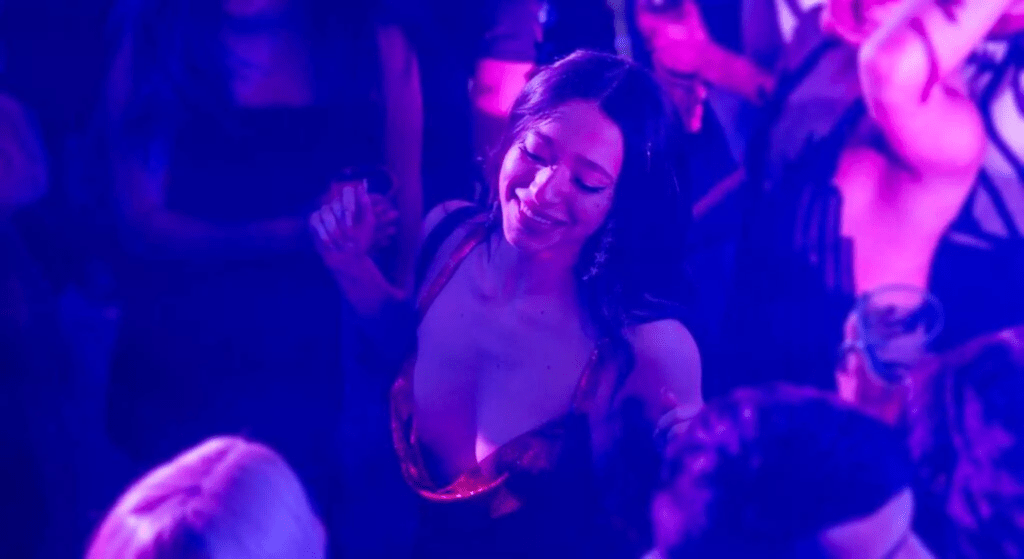
Anora is much of the same in some ways. For one, it’s the fourth in an unintentional series of films spotlighting sex workers, in this case the titular Ani (Mikey Madison), who works at a New York strip club. The shift to a relatively more dreary environment hasn’t stopped Baker from drenching the screen in color, awash in the neon lights as we follow Ani dance and hustle through a regular night of lapdances and parties. At first that seems like it’ll be the routine when Ivan (Mark Eydelshteyn) – or Vanya – walks in. Over a series of the quick-cut montages reminiscent of Red Rocket’s many sex scenes it moves into a private meet up, and then a girlfriend experience, until suddenly the two are married in a Vegas church (entirely sober, mind you). This is depicted less as a sort of romance than it is a bit that both decided to get into because why not? Ani scoffs at the initial proposal but we’ve seen her enchanted by Vanya’s luxurious lifestyle courtesy of his (potentially) oligarchical father and hey, they do seem to have fun together. That is not how Vanya’s family sees it and reality comes crashing in with the arrival of some Armenian associates (Karren Karagulian and Vache Tovmasyan, plus Yura Borisov), hellbent on annulling the marriage.

The film is by no means boring or lackluster in its first act. Eydelshteyn makes some particularly hilarious physical choices (ie, a backwards somersault on a bed) that – combined with his boyish charm – make you see what Ani might. But it’s once things all go to hell that Madison lights off the firecracker of her performance, turning into something of a hellcat. She’s effortlessly funny throughout, exasperated and confused, dropping off “fucks” like it’s her job. And yet there’s also some fear (of who these randos are and what she’s gotten herself into), and something like a desperation to hold onto the fairytale of a life with Vanya. Like all of Baker’s protagonists, she’s a real, flawed person, trying to make her way through this mess of a life, clawing her way out of desperation. I don’t know if I’d say it’s his best yet (I need to rewatch Tangerine and The Florida Project); what I can say is that Baker’s successfully controlled the chaos that’s often popped up into something more entertaining than stressful. He also lets the audience have a big cheer moment, before immediately undercutting it in truly devastating fashion. For whatever faults he may have – inside and outside filmmaking – here’s someone dedicated to showing the full spectrum of humanity, warts and all.

Armand. Credit: IFC Films

I didn’t plan it but today was a pretty women-centric day, at least onscreen. One of those women was Renate Reinsve, most famous for her Cannes winning role in The Worst Person In The World (a PFF30 entry!). She’s had something of a productive year in both Handling The Undead (Sundance, unseen by me) and A Different Man (one of the year’s best). Her third – that’s made it to the U.S. at least – is Armand (Grade: B/B+), Camera D’Or winner at Cannes (aka: best debut). In a shift from the younger focus of some of her characters, she plays Elisabeth, a single mother and actress called to a meeting at her son’s school where she learns he’s been accused of committing a heinous act against another child.

The details of said act are sketchy; only one child’s side is known, and no one else appears to have actually seen what took place. Further complicating things is her relationship to the parents of the other child (Ellen Dorrit Petersen and Endre Hellestveit), as well as her own struggles and issues, most clearly seen when she uncontrollably breaks into laughter for several minutes before segueing into sobbing.

If Elisabeth’s name and occupation didn’t raise any eyebrows, then knowing that director and writer Halfdan Ullmann Tøndel is the grandson of Ingmar Bergman and Liv Ullmann certainly raises the spector of Persona (not unfounded, thanks to the focus on two women and encroaching psychological breakdown). Tøndel possesses some definite technical brilliance at least, contributing to very recent subgenre of “movies shot like horror that are not horror”. He wrings tension out of a malfunctioning fire alarm (ignored warning signs?) and deeply unnerving sound design that seems to emphasize every step that echoes in the empty school. Unfortunately, he decides to take it into a more surreal direction, not quite verging into explicit horror but diverging enough from the drama template to break the spell a little. At almost 2 hours, it’s maybe a bit too long, but Reinsve is an absorbing screen prescence, and there’s at least some meat on the bones for a good while.

This year, PFF is spotlighting Indian film through a whole section, and my goal is to try to catch all of them at the fest. The first of these is Girls Will Be Girls (Grade: B-/B), a coming-of-age story directed by Shuchi Talati. It follows Mira (Preeti Panigrahi), a girl who’s just been made head prefect at her boarding school in the Himalayan Hills, as she begins a tentative romance with Sri (Kesav Binoy Kiron), a new boy from overseas. The main conflict comes in the form of her more traditional mother Anila (Kani Kusruti, also from this year’s All We Imagine As Light) forbids the relationship but has no issue becoming close to Sri herself.

Talati’s camera makes good use of the landscapes, but I found the film itself rather slight. There’s the seedings of themes of womanhood, of the patriarchy in India, of the changing times (it appears to be set in the 90s) and a later scene makes a slight tonal twist that emphasizes what being a girl means for Mira, for the most part it’s rather understated. The plot as a whole is sort of meandering, unified mainly by the romance which is rather cute. It’s pleasant – which, there are worse things to be – but missing some kind of spark perhaps. Maybe I’m just being too harsh on it.

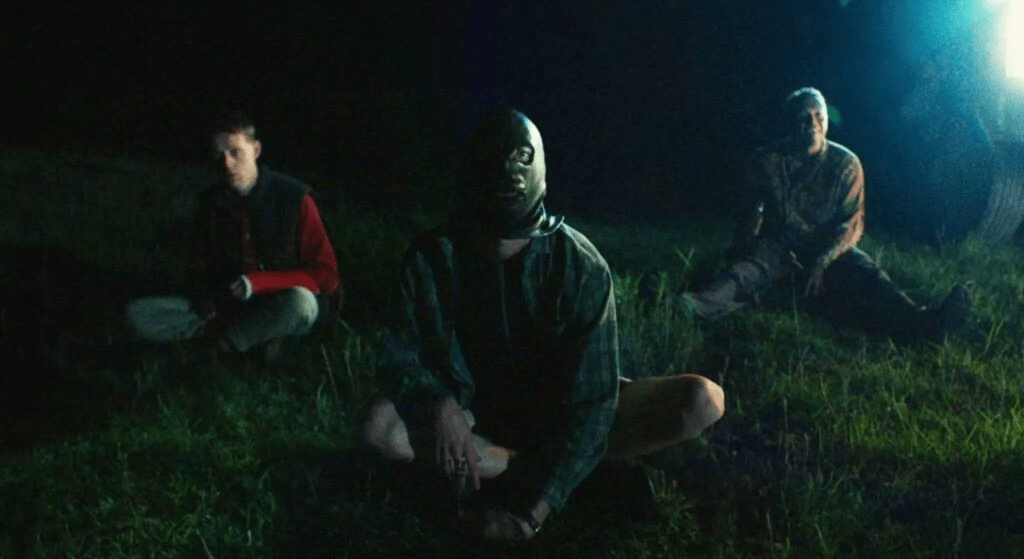
“Harsh” may as well be one of the words to describe Birdeater (Grade: B+/A-), so far the most “girl what the FUCK is happening????” film I’ve seen at the fest so far. “Unclassifiable” is another one. Jack Clark and Jim Weir’s debut has a simple enough premise – a man invites his fiancee to his bachelor party in the Australian wilderness – that gives one a certain impression of how things might go; Clark and Weir certainly do, judging from the prominence of a poster for Wake In Fright, perhaps the most famous “bad things happen in Australia” film next to Wolf Creek.

It’s not so much what happens, though a dinner scene features a revelation so out-there it sends the entire party into a tailspin. No, Birdeater is a truly demented construction of almost jazz-like editing – with score to match! – and a tone that occasionally feels like an Aunty Donna sketch. There’s some truly dread-inducing shots, like a truck driving off into the vast darkness, but it’s never quite “scary”. “Dread-inducing” feels proper, as it reveals itself to not so much be about toxic masculinity (though of course, that features in) so much as it appears to pull at the fragile stability of straight relationships. It’s telling that the one person who seems completely normal is the lone bisexual out of the cast. I may just be easily wowed by technical prowess and pretty images, of which there are plenty. Birdeater deserves marks for sheer audacity if anything else. You kind of have to respect something this destabilizing on a such a formal level, as fractured as the psychologies of the characters.

Tomorrow: One of my most anticipated movies of the year, Payal Kapadia’s All We Imagine As Light, plus Brady Corbet’s Great American Epic The Brutalist, Pablo Larraín’s Maria, and the latest from Kiyoshi Kurosawa

A Roundup of the 32nd Philadelphia Film Festival

In the midst of ever chaotic times

When the lineup for this year’s fest was announced, I confess to feeling pretty disappointed. It’s been a pretty good year for movies – at least as I observed from the outside – and this fall especially was looking to be jampacked. So you can understand my eagerly opening the page and feeling some of that enthusiasm deflate: no Ferrari, no May/December, Priscilla. Anatomy of a Fall and The Killer both ended up at the Ritz Five during the fest, and Killers of The Flower Moon was already out. Which isn’t to say it was a bad festival mind you; PFS managed to snag the latest from Hirokazu Kore-Eda, Ryuichi Hamaguchi, and Aki Kaurismaki among others, and the more obscure picks still managed to surprise me. But one does have to stare in jealousy as their friends at other fests get to see The Zone of Interest early after convincing yourself it’d be there.

I managed to see a lot more movies this year than almost any other, thanks in part to taking time off. Because of personal issues, I unfortunately had to miss some (The Holdovers, Dream Scenario) and I missed American Fiction due to a concert. With such expanded viewing, it felt as though my scores tended to become more even; call it growing older and wiser, or perhaps trying to be more evenhanded. I still managed to find quite a few that blew me away, and at least a couple to watch out for later. Making a top 10 actually felt hard for the first time in a long while; I can only imagine that the year end list will be murder. A few of those will end up on that list, some will be pushed to next year. As always, everything listed here is worth checking out, and a sign that PFS can still push beyond the crowd-pleasers to find something more unique.

1. Riddle of Fire – dir. Weston Razooli

Michael Lehrmann’s description of “if the kids from The Florida Project made a movie for $2 and it was fucking hilarious” might sound like a warning to some. I fell completely and totally under the spell of this wild blend of kids fantasy, S/NES RPGs, and Adult Swim style deadpan that had me laughing pretty much constantly. The key is a total control of its tone: taking place in Wyoming in some anachronistic vision of today as it follows 3 hellions on a quest to get their sick mom the perfect slice of blueberry pie so they can play video games. So many ways it could go wrong, but Razooli wisely dials back the anarchy to something a little more placid and avoiding easy intrusions of the adult into the fairy tale (not that it doesn’t happen). I can’t articulate it any better than how much the sight of them running through a grocery store in a silly pose had me guffawing; three perfect child performances in their occasional stumbling and crack timing, and a willingness to just go for it.

2. Monster – dir. Hirokazu Kore-Eda

The other side of a film starring children. Kore-Eda’s first Japanese film since Shoplifters unfolds at first as a mystery surrounding a conflict between a young boy and a teacher at his school. Shades of Asghar Farhadi creep in as more layers are revealed, more sides to the story shown. Where it truly shines is in its depiction of burgeoning gay love, the terror that it will be revealed, the need to destroy it despite that being the last thing you want. It’s a wonderful showcase for the child actors and a great mystery that blossoms the more context you receive.

3. The Settlers – dir. Felipe Gálvez Haberle

Chile’s submission for Best International Feature is a haunting revisionist Western drained of almost any thrills. Across a beautifully desolate landscape, three men – a Scottish soldier, an American cowboy, and a mixed-raced indigineous worker – trek on a mission to eliminate any native they see at the behest of the landowner. Haberle captures the various contradictions of colonialism: the hypocrisy, the need to consume everything despite “worth”, the rigidly enforced order no mater how much you give yourself to the empire. Bleak, brutal, and absolutely scathing towards the Chilean national mythmaking.

4. Red Rooms – dir. Pascale Plante

A techno-thriller that dangles a sordid little hook at the start: the trial of a serial killer who filmed himself torturing and murdering three young girls and sold the videos online, and a mysterious woman with an interest bordering on the obsessive. Plante’s film is horror in the way We’re All Going To The World’s Fair is, in that the subject matter itself is horrific but the director is far more interested in the type of person who chooses to follow it. Similarly, it’s smart about technology, not just in its depiction of process and things like ArchLinux, but in how the Internet can turn people into abstractions to be fanned over. Rather than sounding an alarm, it admits that there is something alluring about staring into the void, but warns that some things are unspeakable for a good reason.

5. Evil Does Not Exist – dir. Ryusuke Hamaguchi

It may be the shortest of Hamaguchi’s recent films, but by no means is it the lesser. While the title suggests something more sinister, the conflict between a remote community and the developers who want to build a glamping site falls in line with the director’s emphasis on quiet moments and relationships. Not to mention it’s unexpectedly one of the funniest films of the year (sample, after one of the developers compliments an udon cook for the soup warming him up: “That’s got nothing to do with taste.”) At it’s heart, it’s a film about how there really isn’t malice involved, but incompetence and impatience; things that can’t be applied so easily to nature, no matter how much control we think we have.

6. Tótem – dir. Lila Avilés

Another submission for Best International Film – Mexico’s in this case – follows a family as the gather together to throw a celebration for a gravely ill family member. Avilés presents small slices of life as seen through the eyes of a young girl coming to terms with the idea of death, captured with warmth and, yes, love. A wealth of animal imagery and superstitious elements lends an air of the mysterious, as if to highlight their importance to children whether they’re aware of it or not.

7. The Taste of Things – dir. Tran Ahn Hung

Cooking and food as an act of the deepest possible love. Tran Ahn Hung’s culinary fable has been the delight of critics since it premiered at Cannes (where he also won Best Director) and it’s easy to see why. The kitchen sequences alone are well worth the price of admission: vegetables sizzling, decadent lamb roasts, mouthwatering baked alaska. France chose it for submission at the Oscars and for the food alone, it should probably win, but it’s the love story between Juliette Binoche and Benoît Magimel that raises it beyond simple food porn.

8. The Breaking Ice – dir. Anthony Chen

Stark, beautiful winter landscapes form the backdrop for Chen’s story of three disaffected youth in China on the border of North Korea. A sort of romance, sort of friendship story, it has the power to sneak up on you if you aren’t careful. At its heart, it’s a tale of three lonely people coming together to share company and bond amidst personal and economic ruin, when living can be so hard. Simplistic, yet deeply affecting and in the end, hopeful.

9. The Green Border – dir. Agnieszka Holland

Extremely controversial in Holland’s home country of Poland, and for good reason: here’s an absolutely unsparing portrait of the hell faced by migrants coming into Europe, lured by promises of asylum then subjected to the world’s worst game of ping pong by guards and countries that see them as little more than bargaining chips and annoyances at best. It’s an angry film, and that anger at times threatens to dip into impotent rage at seeing a person who didn’t do anything get dragged through the mud. But Holland ultimately issues a call to arms of sorts, reminding us that we all have choices to make in this system, and pointing to something of a brighter future for those willing to fight for it.

10. This Closeness – dir. Kit Zauhar

Philadelphia native Zauhar’s second film is as claustrophic as its title, taking place in one single, nondescript apartment. She also plays one half of a couple, staying at an AirBnb for the weekend so her boyfriend can attend a high school reunion. Tensions are already high enough thanks to their rocky relationship, but they rise even higher once they learn that their awkward host will also be staying with them. Zauhar showcases a deft hand at composition, framing some exceptionally off-kilter and unique shots that nonetheless bring a sort of – if not beauty, than aesthetic pleasure – to the single space. Amidst jokes about getting prix fixe in Philly (side note: girl fuck you!!!!) and sequences of ASMR emerges a narrative about vulnerability and what it means to actually get close to someone, exploring whether staying in a relationship to not be alone is worth it in the end.

A few honorable mentions (because I can’t help myself): Upon Entry, Late Night With The Devil, Fallen Leaves, Sleep, Smoking Tigers

Review: The Past Looks A Whole Lot Like The Present in Blue Jean

A stunner of a debut following a lesbian teacher in Thatcherite England

We like to think that we’re better than the past. It’s just the way of the world: as time goes on, we make progress. Things improve and we learn to be more tolerant. Films about minorities tend to fall under this a lot, and it’s understandable to want to show someone fighting for their rights, or there being one person who was on the right side of history, so that the viewers can walk out of the theater shaking their heads and chattering about how awful it was back then and isn’t it nice we’re not like that anymore?

What I’d like to suggest is… maybe we’re not?

Blue Jean, the debut film from Georgia Oakley, is set during the late 80’s in the midst of Thatcher’s England. Section 28 – which banned the promotion of homosexuality within schools – has just become law. Characters will talk about this but otherwise it hangs over the movie like a cloud, a warning. The titular character of Jean Newman (Rosy McEwan) is a high school PE teacher who also coaches a girls netball team. She is also a lesbian, and at nights she transforms into the proper attire and hangs out at a gay bar with her friends and especially lover/girlfriend Viv (Kerrie Hayes), a leather butch in contrast to Jean’s more androgynous appearance (it’s a wonder she doesn’t get more rumors behind her back).

There’s some suggestion that Jean’s sexuality is a somewhat new development for her; while she doesn’t have that self-loathing that so many queer films gravitate to whenever they take place pre-1995 or so, Jean is rather happy and seemingly carefree in her carefully regimented life. Despite this, there’s a sense she’s still a little bit afraid to embrace herself, hiding Viv from her sister when she makes an impromptu visit in an early scene, and shying away from bonding with co-workers (who chitter about the law during lunch).

All of it threatens to come crashing down when she gets outcast and loner Lois (Lucy Halliday) to join the team, then subsequently sees her in the same bar where she finds such freedom. It’s here that Oakley shifts the tone to something akin to a horror film, though it never fully tips over. A terrible dilemma begins to present itself: both student and teacher know about the other. One desperately wishes that Jean could be something of a mentor to Lois, perhaps even shield her more from the bullies. But as an earlier scene makes clear – in which Jean tells Viv how she pretended to be her boss when calling a parent about one of the girls – she can never show anything that could be construed as favoritism. Not only that, but anything that could even remotely suggest she might be forming a relationship with a student beyond what’s appropriate. What the film lays bare is that laws like Section 28 create a cycle of oppression and more fear in both the adults and the youth. These moral panics about groomers discourage teens from seeking help, and adults from standing up for them and themselves. Because it’s not just her job that’s at stake for Jean, it’s everything. But what tilts it into greatness is the ease at which Oakley also expresses Lois’ point of view, depicting an understandably angry youth caught in the worst sort of rock and hard place.

Blue Jean‘s final moments bring a note of grace and understanding for both characters, while doing its best not to put too neat a bow on things. There are perhaps moments when it feels a little too blunt, too tuned into what feels like contemporary moments. At its very best, Oakley reminds us that the struggle is forever ongoing and what seems like a new low has really always been here. Those in power do their best to stamp out queer history, to make mentorship a liability and keep us at each others throats. In balancing this joy with dread, it reminds us why the fight is worth it, and who it’s all for.

The Best Films of the 31st Philadelphia Film Festival

"31st Philadelphia Film Festival" text imposed over red theater seats, with "SEE SOMETHING YOU'LL NEVER FORGET, OCTOBER 19-30" in the bottom right corner.

Back at it again.

It feels so good to be back at a festival. For about 5 years or so – pretty much since I started college – I’ve been attending the Philadelphia Film Festival in some form or another; a small blip occurred in 2017 for the 26th edition because of my co-op schedule. And of course, the 29th edition was remote thanks to COVID, while I missed the 30th because I had moved back home temporarily.

But finally, things have come back to some semblance of normality and looking back, it was a pretty great festival. I didn’t really find any new or off-the-radar picks, and there wasn’t a Tremors or a Thoroughbreds – aka, something that really knocked my socks off – but the established greats were still pretty great. Like every year previously, I’ve probably seen enough to formulate my end of year list but that of course will be held off until the other heavy hitters see fit to come to this city. At least one – Nanny – I missed due to technical issues on my first screening, and then the second and third overlapping with ones I’d bought tickets to (Women Talking) or decided to prioritize due to unsure distribution (Huesera).

For now, here’s a rough ranking of the best films I saw at the fest. Some of these are coming out imminently, other the next year. All of them are my definite recommendations.

1. How To Blow Up A Pipeline – dir. Daniel Goldhaber

The second film from Goldhaber (technically a film by Goldhaber, Ariel Barrer, Jordan Sjol, and Daniel Garber) makes good on his promise from Cam to marvelously entertaining effect. Their adaptation of Andreas Malm’s 2021 nonfiction expands it into a heist movie while still retaining the core message of direct action. Like all good heist movies, the cast is distinct and filled out. And Garber’s editing keeps things moving at a steady clip while deftly inserting flashbacks in often thrilling ways. But most importantly, it’s just a damn good film, adaptation or no.

2. Aftersun – dir. Charlotte Wells

One of those films that’s so deceptively simple yet powerful that trying to capture what makes it special in words feels futile. In short: it follows a father and daughter (Paul Mescal and Frankie Corio) on a vacation to Turkey, as filtered through the eyes of the daughter looking back on old camcorder footage. Wells mixes those camcorder segments along with slow-motion footage of the father at an otherworldly rave to capture the feeling of peering through memories trying desperately to understand one’s parents. Mescal is simply stunning, while Corio makes a promising debut, nailing that edge between adolescent and teen. This is a film of deep, emotional power, and when it connects, it hits like a hurricane.

3. Glass Onion – dir. Rian Johnson

While the novelty may have worn off a little bit compared to the first (and – admittedly – some of the satire can be a little cringe), Johnson’s much-anticipated sequel proves to be every bit as good. Riffing off the locked-room mystery, it’s suspenseful but much more of a comedy, and thankfully the hits are high. Most importantly, I’m thankful Janelle Monae finally has a role worthy of the talent she showed off in Moonlight, while Daniel Craig confirms he’s having an absolute blast as Benoit Blanc.

4. All The Beauty And The Bloodshed – dir. Laura Poitras

What could’ve been a standard (yet righteously angry) advocacy doc about the Sackler family’s art world reputation laundering becomes a devastating memoir when combined with Nan Goldin’s own photoslides and voice over. Goldin’s activisim itself is wonderful to see, but it’s this added context – this merging of past and present, of the things she’s lived through and fought against – that give her crusade its overwhelming power. It’s also a marvelous work of queer history, giving a personal look at one person while remembering everyone lost along the way.

5. The Banshees of Inesherin – dir. Martin McDonough

As if McDonough saw the doubts scattered in the wake of Three Billboards Outside Ebbing, Missouri and decided to remind everyone that, no: he is, in fact, the real deal. Returning to his playwright roots and to his home country of Ireland proves a much needed reset, as does the reunion of Colin Farrell and Brenden Gleeson (the former giving what might be a career best). This deeply allegorical tale of a disintegrated friendship is emotional, yes; but it’s also by far one of the funniest films of the year, padded out by wonderful supporting performances from Kerry Condon and Barry Keoghan.

6. Return To Seoul – dir. Davy Chou

Kim Jee-Min is an absolute force as a Korean-born Frenchwoman reconnecting with her biological family in Davy Chou’s second film (inspired by a real life anecdote). She communicates so much with her face alone and flips on a dime while remaining intensely charismatic and watchable throughout the various timejumps of the film. Wanna know what’s crazy? This is her debut performance. Chou’s script – with it’s mix of awkward comedy, luscious nightlife, and split cultures – ain’t too bad either.

7. All That Breaths – dir. Shaunak Sen

Sen’s documentary follows a group of brothers in India who run a makeshift hospital for New Delhi’s black kite population. Frequently lyrical and poetic, with lots of shots of birds flying, garbage strewn around the streets, mosquitos floating above water, it’s as much a sensory experience as it is a portrait of dedication. More that that, it connects India’s political struggles to environmental damage to give a grander picture of a nation itself at odds. Worth it alone for that magnificent bird footage.

8. Burning Days – dir. Emin Alper

Slow burn Turkish political thriller following a prosecutor assigned to a remote village in the midst of a trial over a water crisis. It takes its time setting up the dominoes but once in motion it’s gripping and morally complex, diving into aspects of corruption and toxic masculinity as scandals emerge and the pressure on him increases. A complicated film for sure, with an enticing thread of ambiguity running throughout.

9. Holy Spider – dir. Ali Abbas

I seem to be a bit of an outlier in liking this serial killer/jounrnalism movie so much; which is just as good, considering that I was a bit of an outlier in disliking Abbas’ last movie, the troll fable Border. This one is based off a real life Iranian serial killer and follows a journalist (Zar Amir Ebrahami) as she investigates along with the killer himself, proclaiming he is on a holy mission. It’s blunt about the misogyny at play, but perhaps even more potent is the idea that for the journalist, every man could be just as dangerous as the killer, especially in a society that largely believes he’s done nothing wrong since he’s killing prostitutes. It’s damning, but in more places than some would like to believe.

10. Next Exit – dir. Mali Elfman

My favorite part of film festivals is getting to discover those hidden gems, especially in the genre space. So in lieu of Decision To Leave (Park doesn’t need any help from me), I wanted to spotlight Mali Elfman’s debut feature. Opening a few months after the ghosts are proven – in a similar logline to Charlie McDowell’s The Discovery – the film follows a mismatched pair (Katie Parker and Rahul Kholi) traveling from New York to San Diego to take part in an experiment that will allow them to peacefully commit suicide. There’s a small bit of indie quirk to the proceedings, and it’s a little predictable at times. I was caught off guard by how deeply I’d become invested into the characters by the end, and before you know it, it’s become a slow burn romance that earns it. Can’t say I wouldn’t have liked a more philosophical film, or scenes like one reminiscent of The Leftovers, but it’s a rather promising debut. If anything, see it for Kholi to prove his range.

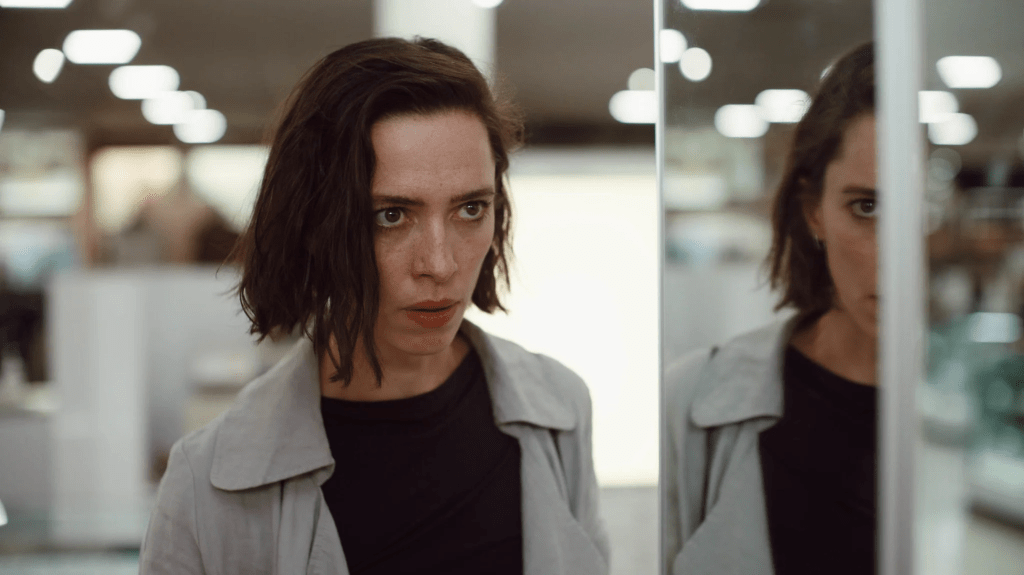
Rebecca Hall Self-Destructs in the Tense, Wild “Resurrection”

The second film from Andrew Semans, available on VOD

Hall gives one of the year’s best performances.

“Trauma” – alongside “grief” – has become something of a trend lately within culture. It comes up in interviews about Marvel properties, it’s the main theme “elevated” horror movies or a new reboot of an 80s property. None of this is new of course: horror is especially fruitful for examining loss or processing something that happened to you. But there is a sense that it’s a little sanitized. The victim is strong; they build defenses and ultimately overcome it.

In Andrew Semans’ Resurrection, the trauma of Rebecca Hall’s character manifests itself in a physical reaction. Her character – Margaret, a pharmaceutical executive – is attending a conference, looking bored. She fidgets, attempts to stay awake, turns her head and catches sight of a man sitting a few rows down. Suddenly, her eyes widen and as she stumbles out of the room, she takes off at a run that turns into a sprint. We don’t yet know who this man is but immediately we can tell he’s bad news.

As the movie starts, Margaret is the quintessential image of the high-powered executive. Steely, determined, there’s an intimidating air to her but with a hint of warmth shown as she gives an intern relationship advice. She has a daughter – Abbie (an excellent Grace Kaufman) -17, and about to head off to college. Her love life consists of calling up a married co-worker for no-strings sex that always happens at her place. Hall plays her as a woman in complete control over every aspect of her life, dominant but not domineering. Naturally, this brief moment of panic sends her spiraling as the man (Tim Roth) reappears around her, always from a distance. Something bad has clearly happened to Margaret in the past, but is it going to happen again?

Resurrection follows a similar path of woman-on-the-verge films like Repulsion or Possession by staying ambiguous about Roth’s character. In a stunning 7-minute monologue in which the background slowly fades to black, Hall details a shocking history of violence, gaslighting, and abuse that sounds too insane for anyone to make up. Her performance in this moment is a tour-de-force: completely absorbing and impossible to turn away. That she’s giving this to her intern who reacts in horrified confusion is what turns the movie on a dime. Semans puts us directly into Margaret’s increasingly paranoid headspace through some savvy camera work and an unnerving score from Jim Williams as Hall’s perfect composure crumbles throughout. It’s a gripping performance, matched perfectly by Roth. He plays David as chillingly polite, almost rational; we know he’s a madman but his reserved tone almost makes us fall for his gaslighting as Margaret regresses more and more.

Perhaps the most devastating plot point – and, in my mind, the key to the film – is through Abbie. Margaret exerts more and more control over her as a means of protection, going as far as to do whiskey shots with her to keep her from leaving their apartment. Logically, she should tell her daughter who this mysterious figure from her past is and explain herself, but she can’t. Her behavior manifests as irrational and frightening, for all intents and purposes looking like a complete mental breakdown. Semans doesn’t turn either side into a villain so much as portray how this unexamined trauma can manifest cyclically; it’s heartbreaking because Abbie clearly sees her mother is suffering but in the process is making her unsafe.

For some people, this movie may not hold together. The ending takes a gigantic leap that – although set up – shifts things into an entirely new direction that clashes with the tone of realism from before. Admittedly, there are some scenes I wish were slightly different, if only to keep it on a more symbolic or psychological level. But there’s something to be said about a movie that fully commits to its premise, logic and sense be damned. Hall is the stand-out, of course: it doesn’t work if we don’t believe her, and I believed her. This is a bold feature, a tightly coiled work of anxiety and tension up to its startling climax. When the filmmaking is this good, what do a few flaws matter?

A Mea Culpa for The Master

The Master
Surrender to it

When you’re too young to comprehend a film.

I didn’t “get” Paul Thomas Anderson’s The Master the first time I saw it. Or rather, I don’t think I really possessed the skills to appreciate it. My first time was in high school, circa 2014 or so, which was right around when I was really getting into film seriously and checking out lists. I remember drafting an email to Filmspotting because I’d heard them talk enough about it, and asking what it all meant (they were kind enough to respond, so shoutout to them); it wasn’t so much that I thought it was pretentious but that it felt like an series of scenes disconnected from each other, without much meaning. Teenage me really struggled to put it together – and separating it across two nights probably didn’t help much either.

Perhaps it’s one of those movies you need to watch a second time. Perhaps going through college – and also watching quite a lot more films – exposed me to more similar structures. Maybe I just went in with a much open mind, not high off the refrains of “masterpiece” and “Best of the decade”. It might even be that I was mistakenly primed to expect a movie about Scientology, or a two-hander featuring a villainous Philip Seymour Hoffman. Whatever the reason was doesn’t matter anymore. Because now? I get it.

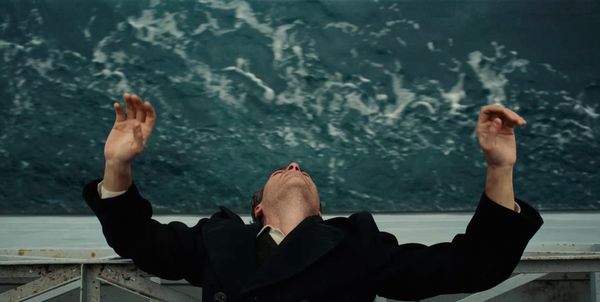
The Master is – in my mind at least – best thought of as a character study of one very specific, very damaged man, Freddie Quell (Joaquin Phoenix). It’s a lot more linear than I remembered it being; while there are some flashbacks (and one moment that takes place solely in his mind), everything you see on screen appears to be pretty much exactly what’s occurring. At first, I actually thought it was about World War I and was going to slot it into the grand theory that “All Works Involving World War I Are About How Fucked Up It Was” before being reminded that no, it’s about the Second one; specifically, the immediate aftermath. One of the key scenes takes place just after we here the announcement of the surrenders on a radio: all the soldiers lining up in formation, traveling up some stairs to hear a speech from a commander. He essentially tells them that the war is over, and they’re going to be reintegrated into society. Civilians will not understand what they’ve been through; it’s possible no one ever will. Crucially, there is no offer of help for these men. These are the ones without prominent injuries, the “normal” ones. They have been through drastic reshapings of their entire personalities, turned into killers, and yet the military expects them to become normal functioning members of society despite having seen the absolute worst that humanity is capable of. Ironically, that’s not too far off from the treatment of veterans in World War I, or even the treatment of veterans today. How can anyone be expected to be normal when your entire state of being has been so altered?

For Freddie, this may have been an impossible task even if he hadn’t been on the frontlines. His first on-screen appearance sees him mimicking sex with a sandwoman, discussing how to get rid of crabs; during a psych eval, he sees every single Rorschach image as genitalia. Soon it will become apparent that he is likely not joking about that. Even if you don’t fully connect with the film as a whole, Phoenix’s performance is still a wonder to witness, with his peculiar way of talking out the side of his mouth, his jerky movements. As charming as he’s capable of being, there’s always the feeling that Freddie is just moments away from violence. This – combined with his habit of borderline poisoning himself – gets him fired from one job and chased off of another.

He quite literally stumbles across salvation in the form of Lancaster Dodd, who’s daughter is getting married on a boat Freddie drunkenly runs to after accidentally poisoning a farmworker. While Dodd – of course – is based off L. Ron Hubbard, I think going in with that knowledge may warp your understanding of who he is. Philip Seymour Hoffman’s performance isn’t menacing, per say, nor does it appear to be overly indebted to the father of Scientology. On some level, he’s performing, yes. But watching it again, I feel that Dodd isn’t anything less than completely genuine about his beliefs, or at least his desire to help people. Does he really believe he met Freddie in a past life, as he claims? Does it necessarily matter? Either way, Freddie’s addition to their party comes not from a desire for conversion, but rather because Dodd wants more of his noxious concoctions.

None of that means that Dodd isn’t also an extremely harmful and manipulative presence. The much praised initial Processing scene shows Freddie subjected to a series of questions that soon begin falling into disturbing and highly personal details (much like the way Scientology collects blackmail material). It’s perhaps telling that Freddie at first finds the process “fun”: at first they merely consist of odd questions like “do you linger at bus stations for pleasure” and “are you thoughtless in your thoughts”. In their article proclaiming it the best scene of the year, the AV Club describes it as “designed to break down a subject’s psyche and offer a kind of euphoric relief from his or her problems.” That part comes when Dodd starts asking him about where his parents are (dead and institutionalized), if he’s killed anyone (Japanese in War and possibly the worker), and – most shocking – if he’s had sex with any of his family members (his aunt, 3 times). At the end, Freddie’s crying, perhaps finally having gotten the burden of his sins off his chest. It’s telling that Dodd doesn’t offer him judgement on any of this; he doesn’t ever bring it up even in the climactic jail scene fight. As questionable as these methods are, does it really matter if people find a sense of healing through them?

As great as this scene is, there’s actually a later moment that I found to be the key to unlocking the film for me. The Cause is at a house in Philadelphia (owned by Laura Dern!); Freddie’s “therapy” has begun in earnest through an exercise in which he walks across the room and touches the wall, describing it, then walks to the window and repeats. Dodd makes him do this over, and over, and over. This is about when Freddie has begun to disturb other members of The Cause including Dodd’s wife Peggy, and his daughter Elizabeth through sexual overtures and violent outbursts. Doubt seems to be spreading within Freddie as well, even though he remains devoted to The Cause. The exercise stretches on as Freddie gets more and more frustrated, until the members break for lunch and he ends up slipping into describing the conditions of the frontlines with each pass from the window to the wall. In this moment, it becomes clear that The Master is pretty much all about the various traumas Freddie has been repressing to his overall detriment. It’s the start of when Peggy begins to seed the idea that Freddie is beyond the help of The Cause, maybe even beyond help in general.

That’s the most fascinating idea in the whole film, the thing that keeps it from being a straight up Scientology take down. Lancaster’s efforts are genuine – even if he claims that they can cure leukemia, among other things. He can see that Freddie is in turmoil. But even a sketchy pseudo-religious movement has to recognize when to cut their losses. In the rapidly changing society of post-war America, people are fumbling around for any sort of authority, any meaning out of the violence that’s been done to them. But how do you move on from this trauma when violence and dysfunction is the only thing you’ve ever known?

The world has changed a lot since 2014. I’ve changed a ton. I wasn’t fully aware of how much the military is about forcing someone to change their entire socialization. I hadn’t yet learned about how traumatized WWI left everyone. Perhaps most relevant, I hadn’t experienced films that were content to let you puzzle out their meaning, extract symbols from shots, let the explicit be implicit. The Master, more than anything, asks a lot out of you simply by following it’s own rhythms, its own psyche of sorts. It’s a mood that can feel impenetrable at first, but reveals a wealth of substance once you open up. I have a feeling I’ll be revisiting There Will Be Blood soon. Having acknowledged they’re both character studies rather than battles – and without the latent contrarianism – feels freeing, like a new period of growth. I can’t wait to experience it.

Some Thoughts on YorHa: Dark Apocalypse

Perhaps Final Fantasy XIV raids should stick with Final Fantasy

Examining a Pod

I have a feeling Yoko Taro never particularly wanted to do the Nier crossover. I’m sure, going back through his statements, you could find some typically blunt thing saying that it was a cash grab or Square Enix told him to, yadda yadda yadda. And at the beginning of the raid series (which i came to late), that probably just sounded like Yoko being Yoko. After all, he was the director of Nier: Automata! This would be incredible.

Curiously, there seems to be some grumblings within the Final Fantasy XIV community over the raids as the final patch released and the story winds down. Namely, there’s the fact that the story doesn’t really have much of an ending, instead locking off the rest of it in a weekly quest series that gives you more logs which explain things. To be fair, much of Yoko Taro’s work has been somewhat ambiguous, or at least willing to seem disappointing at first glance (as some on Reddit have argued). And of course, the second and third parts of the raid were developed smack in the middle of COVID, which affected development all around and lead to a severe curtailing of priorities and content.

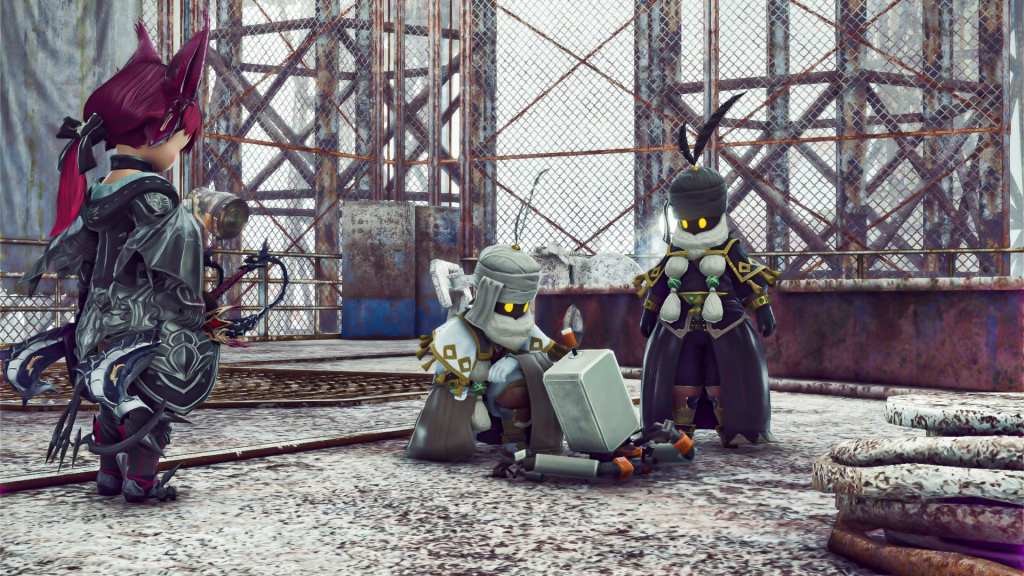
All that being said – the story is definitely one of the weaker elements of the raid overall, if perhaps not the biggest reason it’s fallen in esteem. For refreshment, the main plot follows twin dwarves Anogg and Konogg as they investigate the strange bunker near Komra, leading to all your favorite Nier: Automata characters showing up. It’s hard not to notice how much of it feels like a rehash of that game, down to Anogg losing his mind when his sister appears to be dead. Of course, there’s also the cheeky connection to Devola and Popola, the twins from that game and its prequel who end up sacrificing their lives at the end of Automata. In fact, much like the other raids FFXIV has done, there’s a ton of throwbacks all over the place to Automata, the better to directly advertise a Square Enix property. The problem is that they feel more like copy-pasted amalgamations of things people already played in those games, a bit haphazardly strung together.

It doesn’t help that the conclusion has been shunted off to weekly quests that involve fetch quests around the environments, rather than doing the raids like previous ones. Now, full disclosure, I have not completed these quests, nor have I read all the info provided in the collection. It all just seems like way too much at the time, and a stop gap to learning the conclusion. I’m sure they’ll provide some form of closure if I ever get to it. But all the other raids have concluded their stories once the quest cycle is over. Perhaps players expected the same here.

The final complaint I’ve noticed the most is how disconnected it feels overall, especially the way previous crossovers have been handled. There’s the recently begun FFXV one, for example, which basically consists of Noctis finding out how to get out of Eorzea. More appropriate is the Monster Hunter: World event, which gave us two duties in the form of The Great Hunt and its Extreme counterpart. Similarly, that was presented as something of a side show: not a trial required for the main story, but also not part of The Four Lords series either. It’s entirely self-contained, which, to be fair, the other alliance raids outside of The Crystal Tower have been. However, although they may not directly affect the story, they do still expand the lore of the world or tie back into Final Fantasy‘s history in some way or another. They also integrate themselves into Eorzea somewhat seamlessly, or at least try not to appear to inconspicuous.

YorHa doesn’t really do that. Instead, it really feels as if another game has invaded FFXIV, with a story that doesn’t do a great job of explaining who all these people are, why we should care, or what the impact on the world could be. I have no idea if Square Enix is gonna try this again for another alliance raid, and honestly I wouldn’t be opposed. I guess it’s really more a mismatch between creator and product, something that’s probably not gonna be thought of as highly in comparison to the old ones.