
Elsewhere, Real Pain in multiple senses

My goal for attending PFF has usually come down to shoving as much cinema in front of my eyeballs as humanly possible. The majority of the time, it’s the most acclaimed films I’ve been following throughout the year, and as you can imagine, that’s not always conducive to brain power. Sometimes, you do need something a little light, a little more normal, if only to reset the paradigm. A pallette cleanser, if you will.
Said cleanser came in the form of A Real Pain (Grade: B), the most quintessential sort of crowd-pleasing comedies festivals love to program. It’s got Jesse Eisenberg and Kieran Culkin playing on their most associated character types – anxious nerd and More Psychologically Stable Roman Roy – as the two of them go on a Jewish history tour of Poland in honor of their recently deceased grandmother. This is ostensibly inline with the recurring theme this year of Jewish identity and responses to the Holocaust, which to be fair the movie (written and directed by Eisenberg), does dive into. Specifically, it’s most interested in memory and remembrance, how much trauma a person should have to hold on to and live out. On top of that is a comedy that often veers towards cringe; Culkin is doing his quippy asshole schtick and for the most part it is pretty funny. For me, it passed a time early on from “oh you” Comedy Type to “ohhhhh you” Deeply Damaged, far sooner than the movie wants us to get there. Thankfully, the requisite emotional scenes carry the necessary power to forgive the somewhat standard journey. It’s the nicest movie you’ll see about generational Jewish trauma, no more no less.

Today was an unexpectedly trauma-filled day, though filtered through distance and abstraction of sorts. Perhaps the most thrillingly unexpected of these was Nickel Boys (Grade: A), a movie I didn’t know much about except Colson Whitehead book, the director of Hale County This Morning, This Evening, and reformatory school. Cue trepidation when the opening POV style shots didn’t shift over to regular camera style, leading me to write down “Is it going to be like this the whole time?” Yes, and no. RaMell Ross’ main “gimmick” here is shooting everything from first-person, sort of like the sitcom Peep Show (or Hardcore Henry, for those less cultured), observed totally through the eyes of the main character. Once it introduces the other lead – Turner (Brandon Wilson) – the gimmick becomes less blatant and more like a normal movie, easing whatever dissonance or annoyance may be wrought.
Still, nothing can quite prepare you for the sheer overwhelming power Ross accumulates. The story was inspired by the Dozier School For Boys, a reform school in Florida (shout-out Tallahassee) home to unimaginable horror; unmarked graves were still being found as late as 2019 (the school closed in 2011). While the great temptation is to show us in unflinching detail what happened to these boys that made them want to flee, Ross withholds but in no manner does he shy away. Cutting freely between time, across memories, filled with detours to old films, MLK speeches, and impressionistic montages, Nickel Boys has the feeling of reliving memories, the random bits that get imprinted and conflated, how those times get chopped up and covered up to avoid looking at it directly. Here’s a movie that only needs to show us a fragmented scene of a whipping room and give us hints at boys being disappeared to know that when a boxer accidentally wins a match he’s supposed to throw, whatever becomes of him is going to be terrible (that part, with the camera held close and just off-centered on his face and outstretched arm, his pleas of “I didn’t know!” are stomach churning). By the time it hits a scene later in a bar of a reunion between students, before a montage of such powerful emotional clarity that shines through any abstraction, I knew I was seeing something major. The fact that a major Hollywood studio is willing to fund something so bold and downright experimental is heartening, as is such a beautiful expression of Black art. It will definitely not be for everybody – especially with the POV shots – but it deserves to be seen (and I will be cracking open my Criterion of The Underground Railroad as soon as humanly possible).
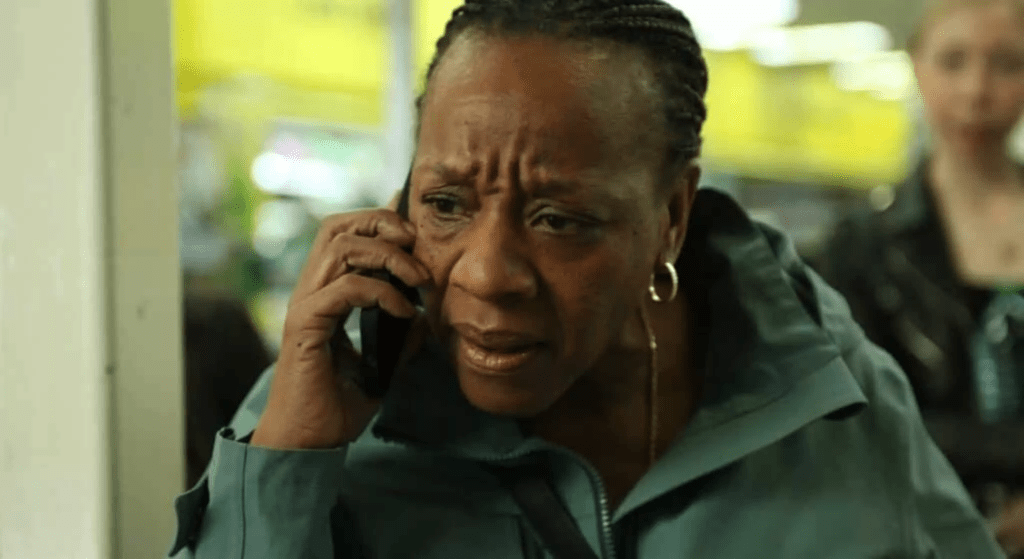
Finally, speaking of studio funding: Mike Leigh! The great filmmaker has always had trouble finding funding thanks in part to his famous method (in short: assemble a group of actors, have them create characters, improvise a series of scenarios and backstory, then write a screenplay) but the situation has been a lot more dire in recent years. His latest got rejected from several big festivals despite having won the main prize at two of them, something that usually guarantees you an out-of-competition slot. Given that Hard Truths (Grade: B+/A-) centers around a black cast – including a reunion with Secrets & Lies star Marianne Jean-Baptiste – it’s not hard to imagine majority white boards from passing on a character as venomous as Leigh’s most infamous creations (ie, Johnny).
Then again, Pansy is an extreme difference from even that Naked lead; at least Thewlis gave him a modicum of charm that suggested why people would put up with his shit. Jean-Baptiste does a near complete 180 from her previous character, draining any and all warmth and even joy to portray a woman so remarkably unpleasant she causes winces from everyone she comes into contact with. She lives in a sterile house, obsessively cleaning when she isn’t sleeping or berating her quiet son Moses (Tuwaine Barrett) and put-upon husband Curtley (David Webber). One of the often celebrated aspects of the Leigh Method is how the actors can really make you feel that hidden backstory the years of these relationships; Barrett and Webber’s faces during an early dinner scene show the strain of having dealt with her all these years.
By contrast, her sister Chantelle (Michelle Austin, aka Hortense’s friend in Secrets & Lies) is much better adjusted – single, but with two daughters each dealing with their own unique strife. It’s enough to make you wonder why Pansy turned out the way she did; in a pivotal scene, Chantelle even asks and the only response is “I don’t know”. Jean-Baptiste’s outbursts are often very funny (when asked if she’s ok, she snaps back “I’m at the doctor’s office!”) but she unveils an awareness that something is wrong within her. Whether it’s a lack of control, some type of childhood trauma, deeper mental illness… Leigh resists giving deeper answers. I think I would’ve appreciated if it had been longer; at 97 minutes its shorter than both Naked and Secrets & Lies and though the former is similarly plotless, there’s a sense of greater development of all the characters. Specifically, I would’ve loved to see more of Moses – a small moment when a girl shares candy with him could’ve powered its own movie, frankly. Lower key Leigh is still masterful, or close to it at least. It’s criminal that no one seems to want to give him money – the hardest truth of all may be the current state of the film industry.
Tomorrow: Palestinian documentary No Other Land, and a thriller about the Pope(s)[?]
 Life of the Mind