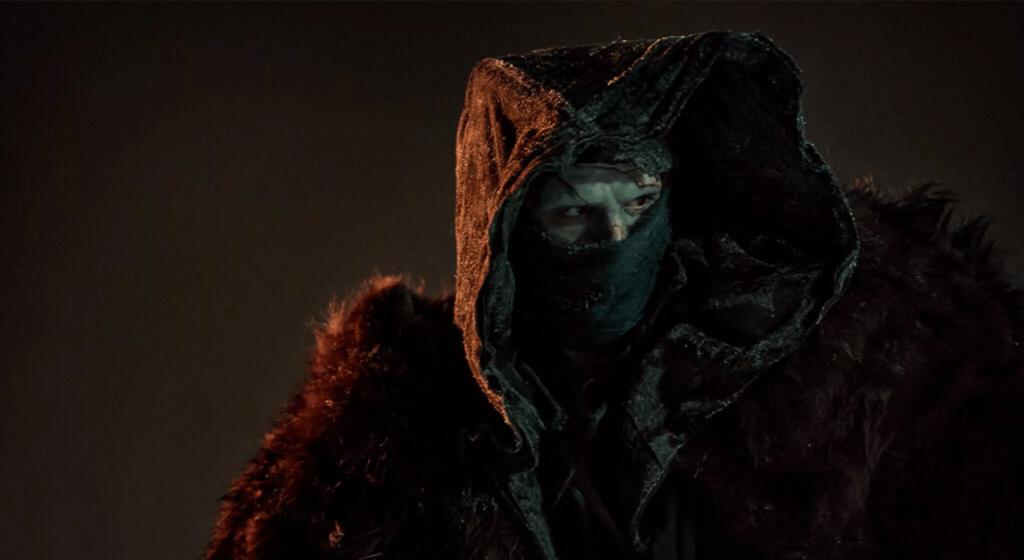
PFF35 Day Four: Heavy Hitters

(Mostly) Bangers, (Most of) The Time
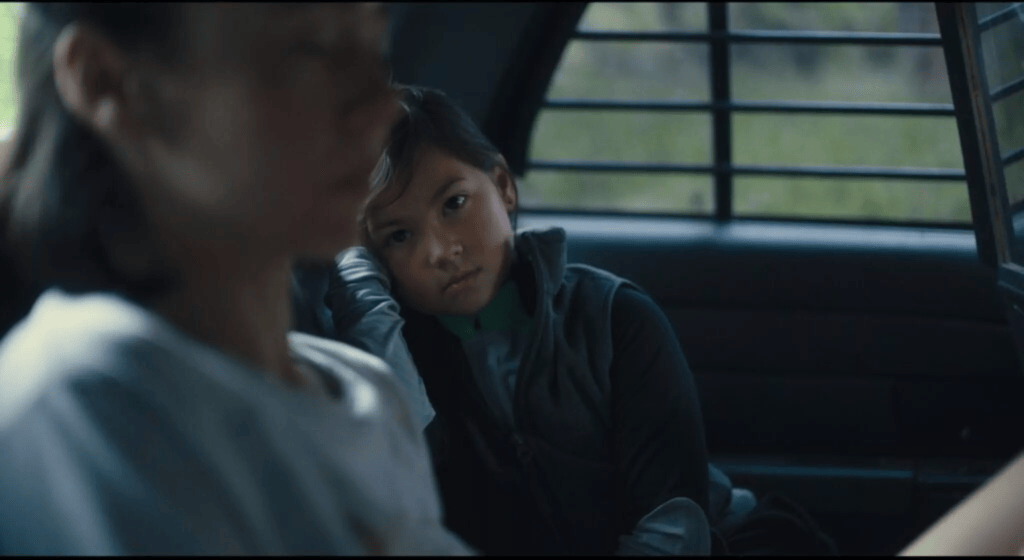
Credit: Sumerian Pictures

So far among the best days I’ve had at the fest, with only one I’m more mixed on. I think by now all my Centerpieces are just about finished except for Closing Night, which feels a tad strange but perhaps appropriate. Schedule will remain fluid based on what I hear from people.

Tender Loving Care (Mike Leigh): A-

Allow me to join the chorus singing the praises of Leigh’s potential last feature. Had expected Kate O’Flynn to be great of course (haven’t been fully aware of her dramatic work, I didn’t recognize her in Widow’s Bay after seeing Happy-Go-Lucky) but hadn’t expected to fall so in love with Alice Bailey Johnson (also a Leigh veteran, from Mr. Turner and Hard Truths). Sometimes a bit blunt but it expands in some really lovely and heartbreaking ways, retaining his core sense of humor; one of the funniest scenes of the year consists of Paul Jesson sitting in a chair reading an Atlas thanks to the editing. Don’t think it’s necessary to have seen Career Girls to pick up on some of the quoting of his past work but it adds just a little spice to proceedings. More than anything it’s just such a joy to hang out with these girls and the parents, they feel so lived in like the best of his work with a hint of darkness hanging around the margins, and ultimately kind of a hopeful, if mournful, final message. A worthy film to end on. Someone please put Kate and Alice in a million more parts together.

Fjord (Cristian Mungiu): C+/B-

It’s Fjine. Not an inherently despicable track to take with this story, apparently based on a real life event from 2016 (which explains the extremely jarring presence of a brand-new PlayStation Vita in one scene). I agree with others that the deck is pretty stacked in favor of the family, even though I still came out feeling like they shouldn’t be doing that to their kids. One thing to dispute on the nature of a “slap” and the language barriers that could make discerning seriousness difficult; another to have a child stand up in class and say homosexuality is a sin (plus having Sebastian Stan leering in the background of his maybe-closeted daughter, as well as a gender identity poster in a school). Maybe it’s unrealistic for that to happen but in my mind it doesn’t really reckon with what type of things we should be tolerating under “religious views”. The fact that both Stan and Renate Reinsve seem to be pretty decent parents all things considered feels like a missed opportunity, given how annoying at best Evangelicals can be, not to mention the ideas swirling around of the far-right using this for their own ends even if they are kind of right. Stuff about the real problems being at home also kind of landed flat for me, just seemed disconnected no matter how many Norwegian flags are in the background. Beautiful landscapes but you’d have to try real hard to make those look ugly. Wouldn’t have given this any award at Cannes, much less the Palme, but I guess court room scenes are the big draw now.

Behemoth! (Tony Gilroy): B+

Didn’t know much about this going in beyond Pedro Pascal as a cellist directed by Tony Gilroy, which is probably the best way to experience it. He talked in the Q+A about the title coming about as a code name for another project and really liking it as well as it being inspired by his life in the biz, and I wouldn’t disagree with those who say it’s a bit messy and all over the place. That element is kind of what made it work for me though: as slippery as the timeline can get, it does feel unique to dive into memories inspired by specific tracks that function as diagetic music, and Gilroy seems to have had as much fun flipping through tones and genres as the numerous composers did riffing on scores. Pascal is good in the main role for the most part but doesn’t particularly stand out to me as owning the screen, but he does have a way with a one liner and he’s very pretty to look at. Olivia Wilde isn’t in it as much as you’d think from her second billing but she plays such a chaotically funny demon that I totally get why she’s there; I actually said “Oh god” when I realized she was coming up in one scene and I honestly could’ve used more of her or at least more backstory. A fascinating oddity and as diplomatic as Gilroy is, it feels like the kind of thing you deserve from Disney after making the only Star Wars piece widely considered “good” by the vast majority in ages. Hope he gets more.

Josephine (Beth de Araújo): A-/A

Brutal and unsparing but remarkable in its sensitivity. Channing Tatum and Gemma Chan have gotten and will receive much praise for their performances (easily the former’s best work) and justly so but don’t let Mason Reeves get lost in the weeds either. It’s the kind of movie that lives and dies on the strength of a child performance and she handles it with such aplomb. Never saw de Araújo’s debut Soft and Quiet though I have been intrigued; her work here is completely assured, making great use of dissolves and transitions as well as the San Francisco fog on a visual level, but she excels at trapping the viewer in Josephine’s state even when she isn’t using a POV camera (it does break once or twice from that, and I’m not sure that was totally needed), often cutting back to her face for key moments. I’ve seen a lot of reviews quibble with the parents for not taking her to therapy in the aftermath and being horrible parents generally but putting aside the fact that there’d likely be no movie (or at least not an interesting one): both genuinely believe they’re doing what’s in the best interest for her, unable to get outside their own feelings on the horrible event. Pynchon has a line in Vineland comparing something difficult to explain as “explaining rape to a child” and this is basically that extended to an entire film, reckoning with how much she should know about both the incident and themselves, while the girl herself struggles with the sudden crushing reality that the world is unsafe and a gender may not be able to be trusted. My praise is tempered a little mainly from some moments that feel a little like “owns” – specifically in the very well-done court scene, which I’m sure has happened before even if it’s a little overboard – and I did wish it ended slightly earlier even though it finds the perfect grace note to land on. A small distributor named Sumerian Pictures has it, and I highly urge anyone interested to check it out. It’s a real reckoning with childhood trauma and the ways parents accidentally hurt their kids, and a major work.
PFF34 Day 8: Is This All There Is?

A grabbag before the rush.

Going to try to keep these short going forward, since I’m anticipating a full weekend of 5 movie days. At some point I’ll also go back and fix some of the formatting and captions as well.

Wild Foxes (Valéry Carnoy): B-/B
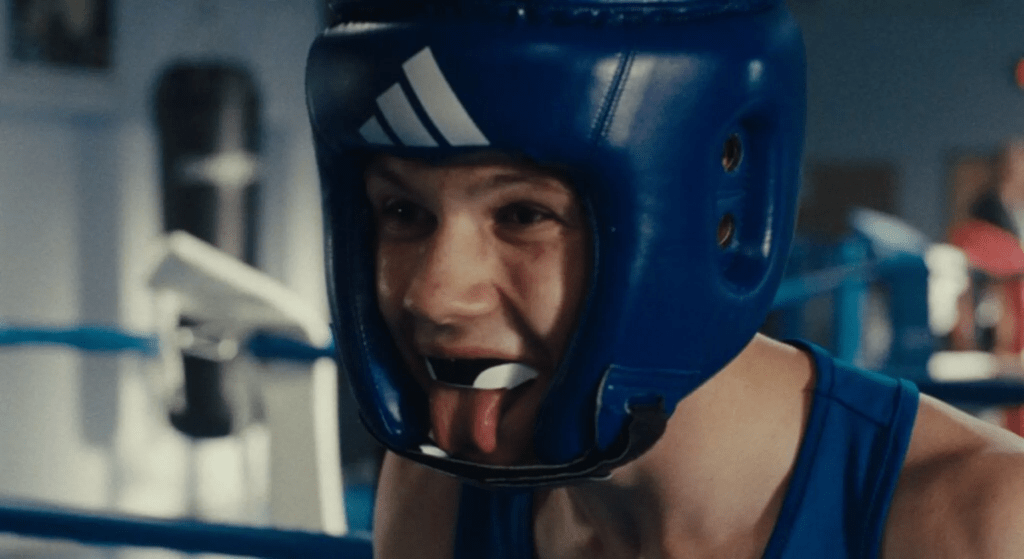
Fairly standard coming-of-age with a dash of boxing for that extra “punch”, if you will. Carnoy freshens it by making Camille (Samuel Kircher) already the best in his class, outgoing and gregarious up until a bad fall sets him back. Couldn’t quite figure out the connection between the plural of the title and whether the foxes – which Camille feeds and ends up kickstarting the plot – relate as a whole to the testosterone fueled teenage antics of his friends. I admit to also finding it a tad bit frustrating with regards to the treatment of the character’s fear and especially how it impacts his friend Matteo (Faycal Anaflous), which isn’t even beginning to get into racial or class disparities. Dunno whether his ornamental girlfriend’s interests figure in at all, though it seems for a minute he might switch sports. Calling it inspirational is a stretch but in the end it fulfills the requirements of its genre.

Nuestra Tierra (Lucretia Martel): B/B+

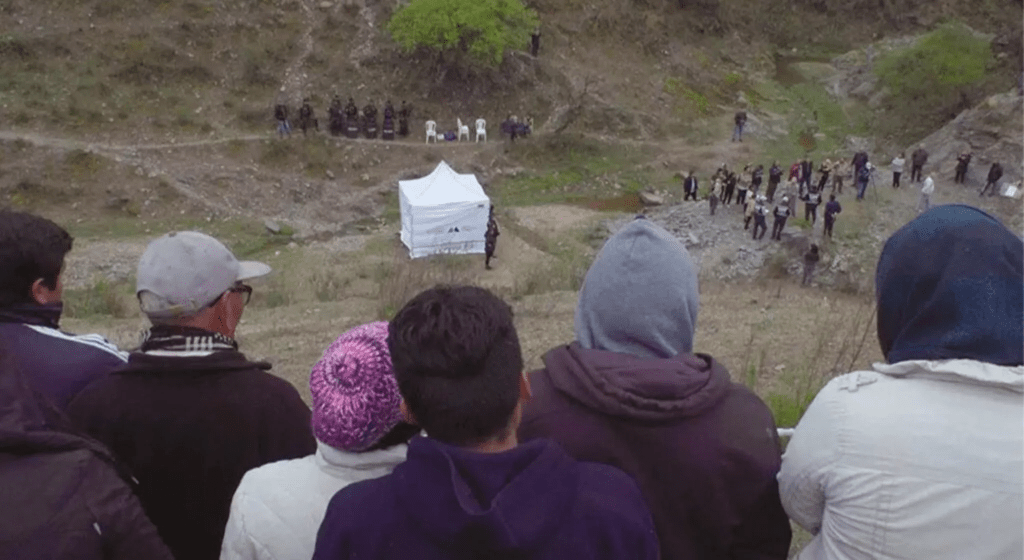
If you want an indication of how much I’ve slacked when it’s come to Venice and sundry coverage this year, I didn’t realize this was a documentary until looking up bits on Letterboxd before the screening. I’ve only seen The Headless Woman (Zama is forever on the list) so I’m not particularly equipped to say whether this fits into Martel’s overarching style or interests. What I can say is it features some rather cool usage of drones, including one shot where a bird flies into it and sends it tumbling to the earth, perhaps in synergy with the falling camera from the video detailing the shooting of Javier Chocobar. He was the leader of the Chuschagasta, an indigenous Argentinian community that had existed for centuries before they were brought into conflict with a mining operation. More than a little connection to last year’s No Other Land though obviously there’s less footage to comb through and less immediacy, since this was a settled court case. Martel largely gives voice to the Chuschagastas, showing their archival photos, playing their stories and forming the fabric of a community still trying to get recognized by a country overwhelmingly influenced by Europe. At times I could feel my attention drift a bit which isn’t necessarily its fault, though it does seem to detour a bit from the case itself in trying to sculpt a history. When it focuses, it’s incredibly damning, but often times beautiful and vibrant; as much as the history of violence is important, so is the history of the people themselves.

It Ends (Alexander Ullom): B+/A-

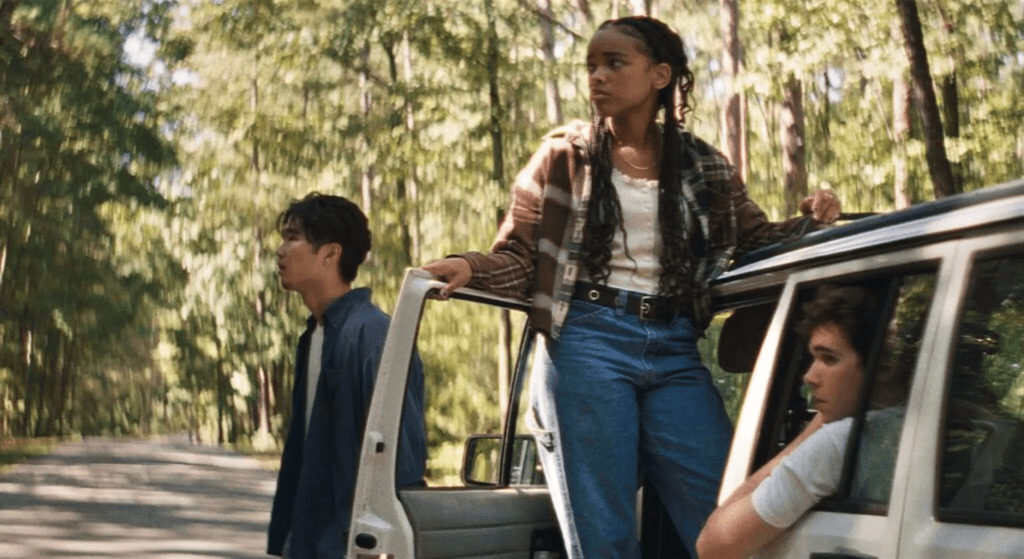
Come for the horror inflected logline about four friends trapped in a loop of Florida highway; stay for the gradual shift to existentialist drama. Spent a bit of the opening wondering if the dialogue was going to try to hard to be current, eventually relaxed into it as Ullom establishes a rhythm and a routine of driving, stopping, exploring, then getting back in. All four actors are uniformly excellent, establishing who they are and what they mean to each other within a few scenes and always coming across as realistic youths. Ullom also makes a smart choice to remove all of the survival barriers including the need to sleep, meaning that the conflict turns increasingly philosophical as the foursome debate whether they’re dead and if there’s any meaning in their situation. It’s not the most controlled script – though Ullom shows a deft hand at editing – but it’s never tedious. You could easily view it as a metaphor for life, bolstered by the hopeful ending. For all that it feels targeted to GenZ, it’s pretty cross-generational and maybe even eternal. At the very least it’s a trumph of low-budget filmmaking, reminding me the most of James Ward Bykirt’s Coherence without the sci-fi thrills.

Train Dreams (Clint Bentley): B

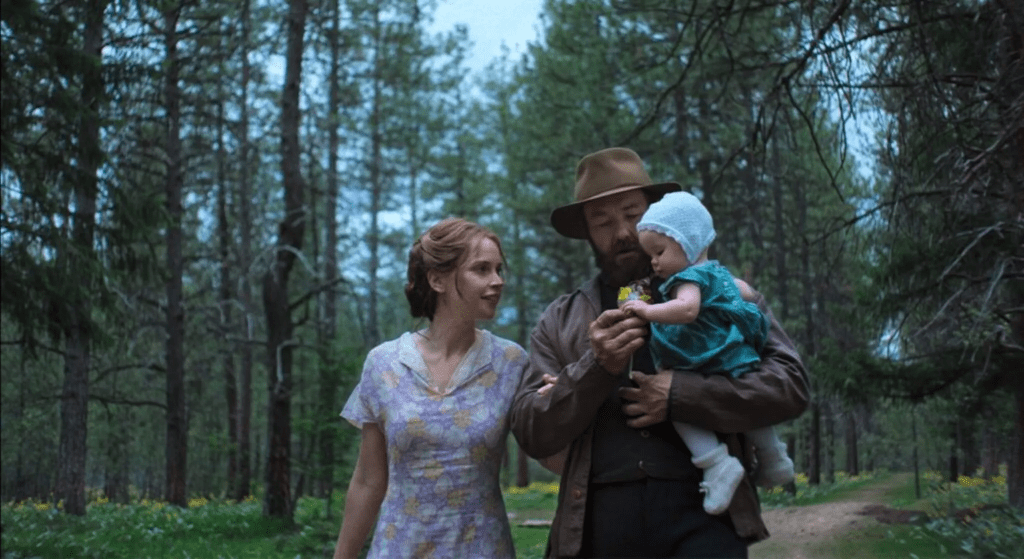
Perfectly fine, occasionally moving. Joel Edgerton’s reserved yet warm, nailing the emotional scenes as required and doing a pretty good job of it. I think part of the problem for me is the amount of voiceover narration; that probably would’ve told me it’s an adaptation even if I hadn’t gone in knowing and really it just made me want to read the book. At its best when it’s focusing on the relationship between Robert and Gladis (he has great chemistry with Felicity Jones), could’ve used at least a tad more focus on the experience of immigrants given how much it haunts the movie. Confirmed from a couple review scans that it does, indeed, feel Malickean what with all the nature shots and the sunsets and the love. Of course the camera is largely static and as much as I’ve felt bored by Malick, he does have the capacity to stun. Perhaps I’m being a little too hard on it. Not Oscar Bait by any means and all the parts are there, it just never quite gets to transcendence. I almost wish I’d gone to Reflections In A Dead Diamond.

Tomorrow: Attempting the first of a few full days, including Amanda Seyfried’s Christian Musical and a movie that might be about snuff.

PFF34 Day 4: There’s Some Holes In This House

A day of straight bangers

Sound of Falling. Credit: MK2

Today was pretty much the rest of my most anticipated. I’ll be seeing The Mastermind and Sentimental Value later in the festival, so after that it’s things I’m either taking a chance on or haven’t had much interest to begin with, which can sometimes feature surprises in itself. Of course, there’s always a chance that some of the other popular showings could have late screenings but given the way distributors have been acting this year, I’m not holding my breath. Pretty much all of the ones below I anticipated giving high scores, a couple can be more acquired tastes.

Sound Of Falling: A-

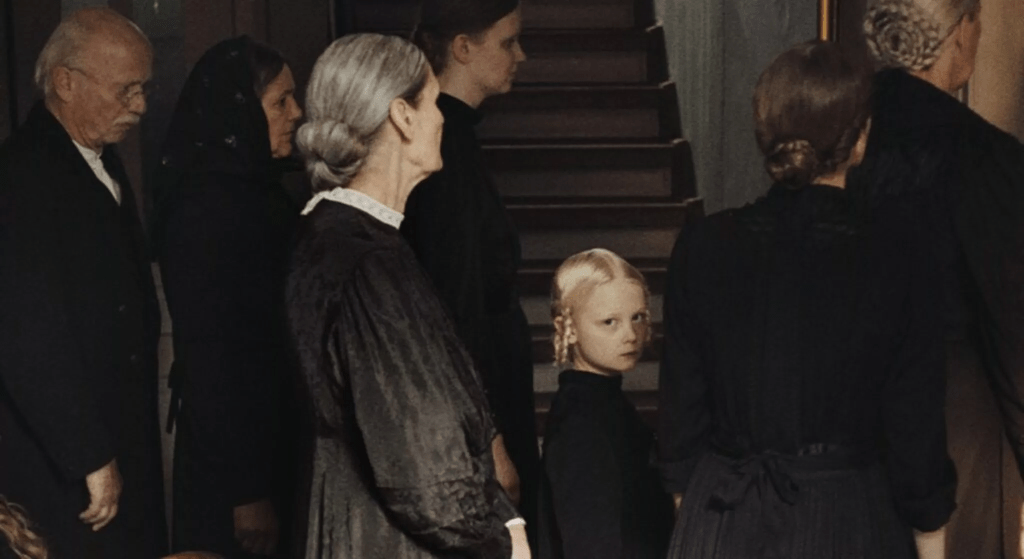
In which you simply must surrender yourself to some absolutely beautiful shots. I’ll be honest, a few of the timelines weren’t exactly clear to me and it’s perhaps a bit too elliptical; the unifying theme appears to be death and its seductive pull between 4 generations of women. Recurring bits like each of them remarking on something being “warm”, the buzzing of flies, and gazes into the camera provide some form of linkage but it really is one you just kind of vibe with or you don’t. Mascha Schilinski was the co-winner of the Jury Prize at Cannes this year (third place basically) for her second feature, the first German woman since Maren Ade to be in Competition. Very easy to see why, and it’s just as easy to imagine it taking a deeper hold in my mind or simply evaporating away like so many memories and traumas.

No Other Choice. Credit: NEON

No Other Choice: A-

I expected the score on that one to be higher and it very well could rise. That was almost certainly because as someone who’s been unemployed for almost a year now, I was expecting this to hit like a truck. While it didn’t quite do that, it is highly relatable and in some way reassuring to see that job hunting remains the same basically everywhere in the world (there’s no one to talk to, no way in). Park layers on the comedy much more than usual, almost teasing us with the prospect of our main character going on a killing spree in order to make himself the most viable candidate. And when it does come, it’s both satisfying and sad as you’d expect, sympathies going up and down. It’s less of a movie about class rage than inevitability, where everyone’s insistence that they have no control in the matter is really just a means of avoiding discomfort or humiliation. As bleak as it may seem, it’s still incredibly entertaining and stylish as the Park Chan-Wook we know and love (all the match cuts, dissolves, transitions etc), with a little less of the emotional gutpunching but more of the bloody laughter.

If I Had Legs I’d Kick You. Credit: A24

If I Had Legs I’d Kick You: A

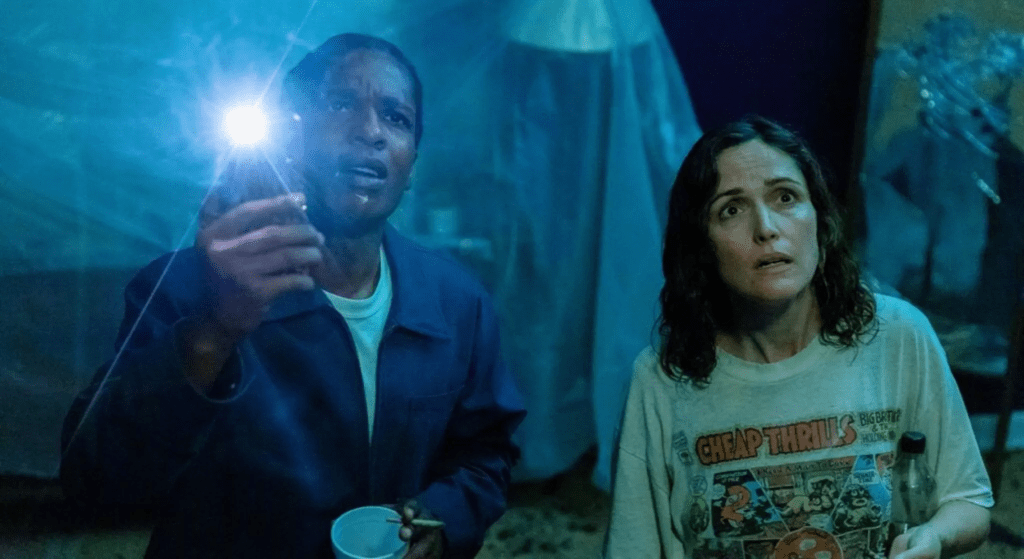
Easily the most stressful experience I’ve had at this festival and I mean it entirely positively. Mary Bronstein’s second film (hadn’t heard of her until this was announced at Berlin, because Yeast came out when I was a child) feels incredibly personal as so many portraits of motherhood do, but bracingly there’s seemingly zero upsides. Rose Byrne deservingly won the Silver Bear for Best Lead Performance, portraying a woman overwhelmed and under the influence, only just holding herself back from going completely apeshit. And she would be entirely justified: on top of her job as a therapist, she’s got a child with a feeding tube who isn’t hitting her weight goals to the constant judgement of her doctor (Bronstein), a husband overseas who could not be less helpful, her own therapist (a very welcome Conan O’Brien) who’s becoming more and more antagonistic, and a giant hole in the ceiling of her apartment. Bronstein’s husband Ronald is a frequent collaborator of the Safdies – with Josh on board as a producer – and that’s absolutely felt in the sound design and occasional mystical glimpses into jewel-like tunnels. Those parts don’t feel as connected thematically but if anything, they offer a small reprieve from the absolutely demonic screeching of the child, who’s unnamed and unseen except for the broadest of outlines. A$AP Rocky drops by as well for another excellent supporting turn after Highest 2 Lowest, as the manager of the hotel Linda’s forced to relocate to and proving to be something of her only actual friend, even if she can’t seem to recognize it. For me, If I Had Legs was first and foremost about the visceral experience, and it can absolutely be overwhelming. Byrne holds it all together magnificently – as she’s done in basically everything she’s ever been in. This is a frequently funny movie on top of being creepy, and her skill alone should be seen in the way she screams “giant FUCKING HOLE!!!” over the phone before calmly approaching a pharmacy counter. Lots of movies have shown “bad” women and mothers, there’s vanishingly few that have been willing to ask if someone should even be one in the first place.

Frankenstein. Credit: Netflix

Frankenstein: B+

Exactly what you’d expect from “Guillermo Del Toro’s Frankenstein” and luckily for me, that’s all positive. I couldn’t tell you if it’s a completely one-to-one from the book since – like everyone else – my knowledge comes from cultural osmosis and general summaries. What I can say is that it’s handsomely crafted, fully Crimson Peak mode with the graphic gore to match (though without being too excessive). Oscar Isaac is very sexy on top of delivering a good performance, and Jacob Elordi holds his own rather well, even when he’s just being tall as hell. All the usual themes of man playing God, nature vs. nurture, etc. are there and I don’t know that it really adds all that much to centuries of analysis. There is, however, a lot of queerness both in the bodies depicted and in the Monster Of It All, which may also be in the book. Del Toro’s big gooey heart comes in at the ending and it fits in perfectly. I had a pretty good time, and it’s solid craft all around. This being a Netflix joint I can’t tell if the cinematography is a little washed because of them or something else, but it doesn’t at least look especially flat to me. I’m kinda glad we got a guy making freaky goopy gothic flicks, you can tell he loves it all.

Tomorrow: Bit of a lighter day but we’ll see if we can’t squeeze a few more in.