PFF34 Day 10 and 11: End of the road

Should we even do a list this year???
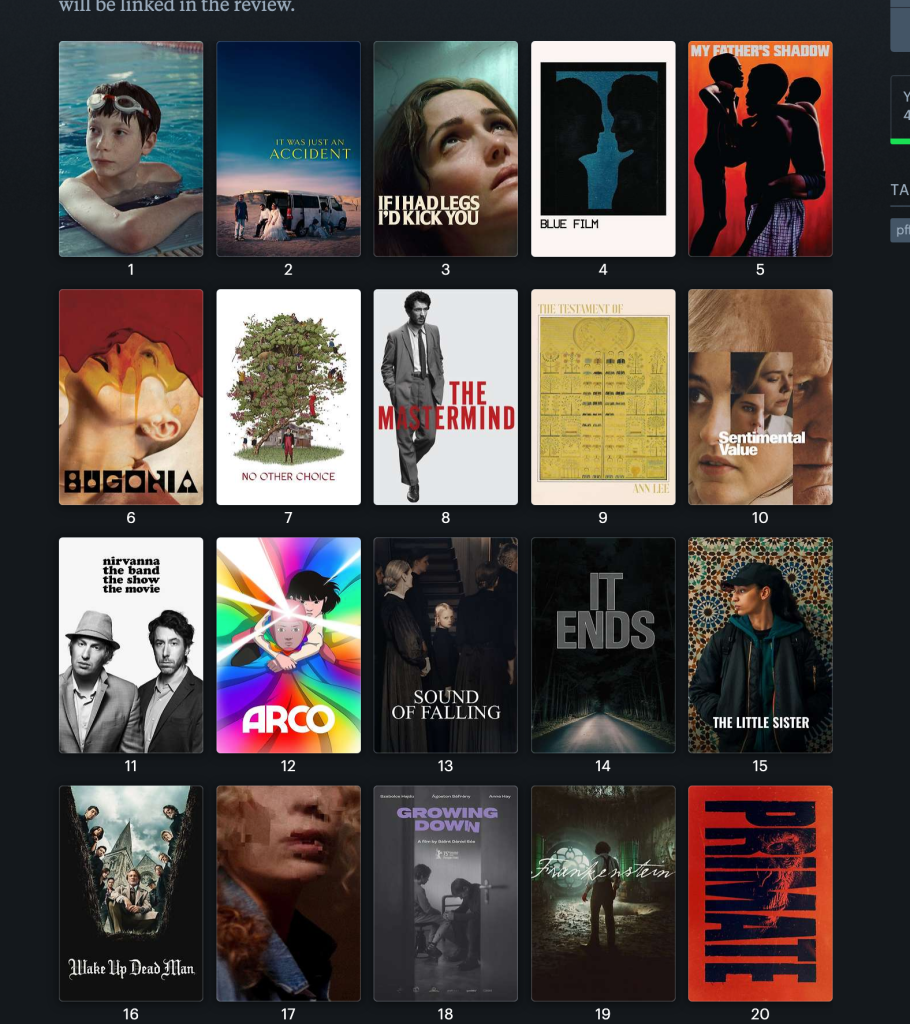
The list, as it were.

As mentioned previously, because of a hectic schedule and less films than expected on the final day, I’m just going to combine both days into one and end with a summary.

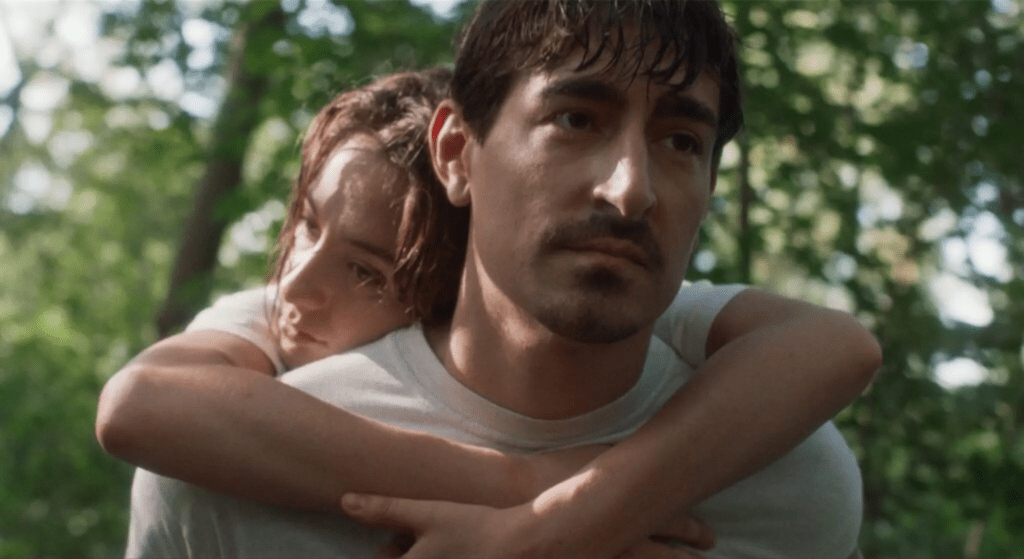
Silent Friend (Ildikó Enyedi): B

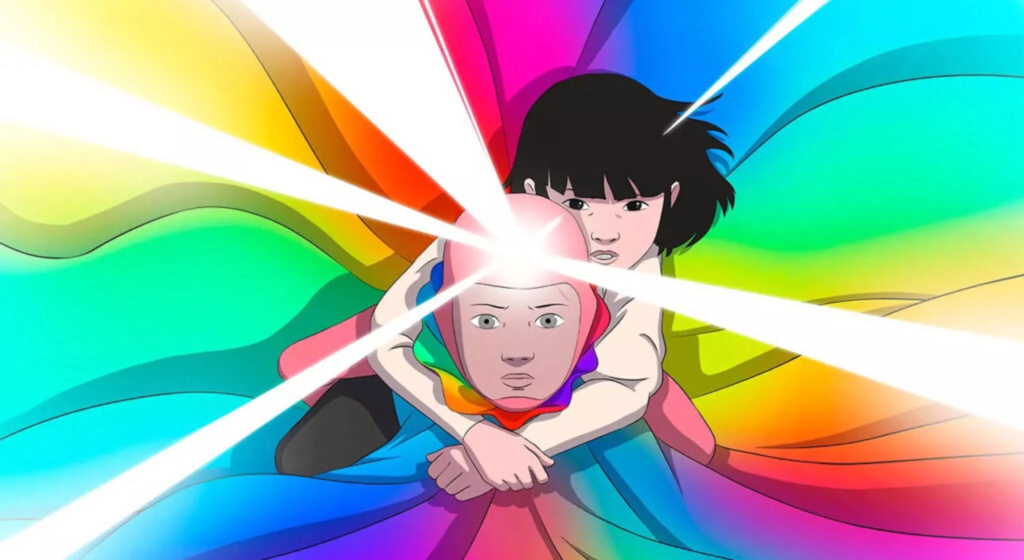
If ever there was a vibes movie, this one’s it. Most of the time I enjoyed the imagery; it gets real interesting somewhere around the second act with the student in the 70s taking care of the houseplant that may be able to communicate with some sort of language. The rest of the stories have different resonances (the Turn-Of-The-Century one most prominently) and there’s the connecting thread of the tree and history, but Enyedi keeps it thematically loose for the most part. So deliberate I started to get restless during it, and while I see it reaching for grand emotion, I don’t think it gets there.

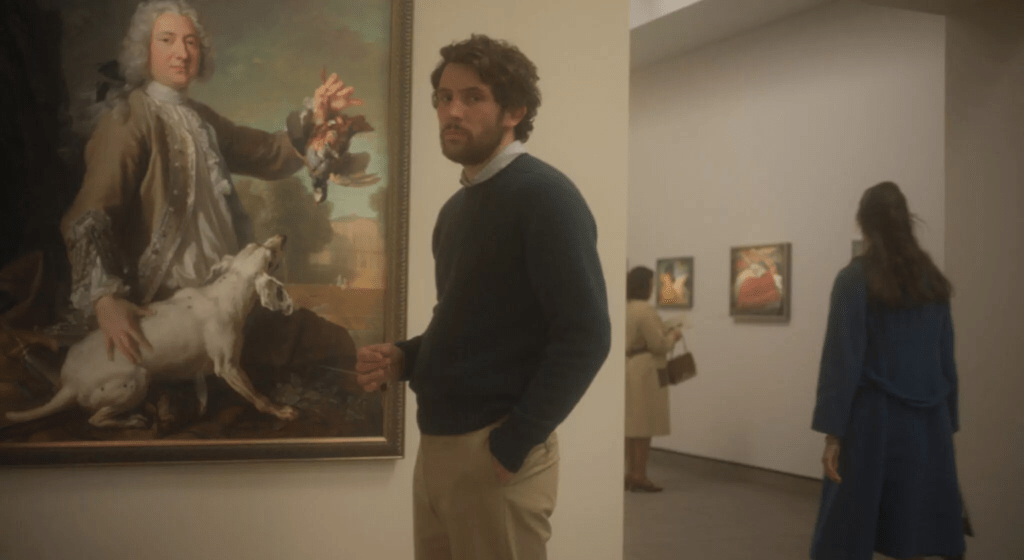
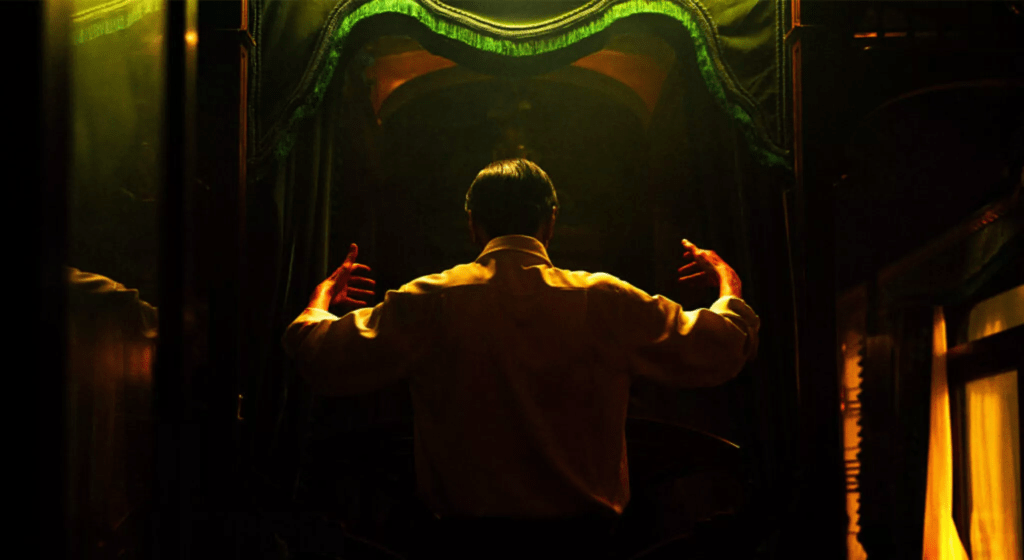
The Secret Agent (Kleber Mendonça Filho): B+

Probably should’ve expected something from the director of Bacarau to get wild. Filho shows great creativity in the sequences involving the leg but the meaning of it as it relates to the story feels way more elusive unless it’s something that actually happened around the same time (he keeps panning to a portrait in some scenes, which I assume is the current ruler of Brazil). Wagner Moura does an excellent job, and there’s some resonance with our current times; I do think it could’ve done a slightly better job at situating it in context given the overall complexity of the story.

Nirvana the Band the Show the Movie (Matt Johnson): A-

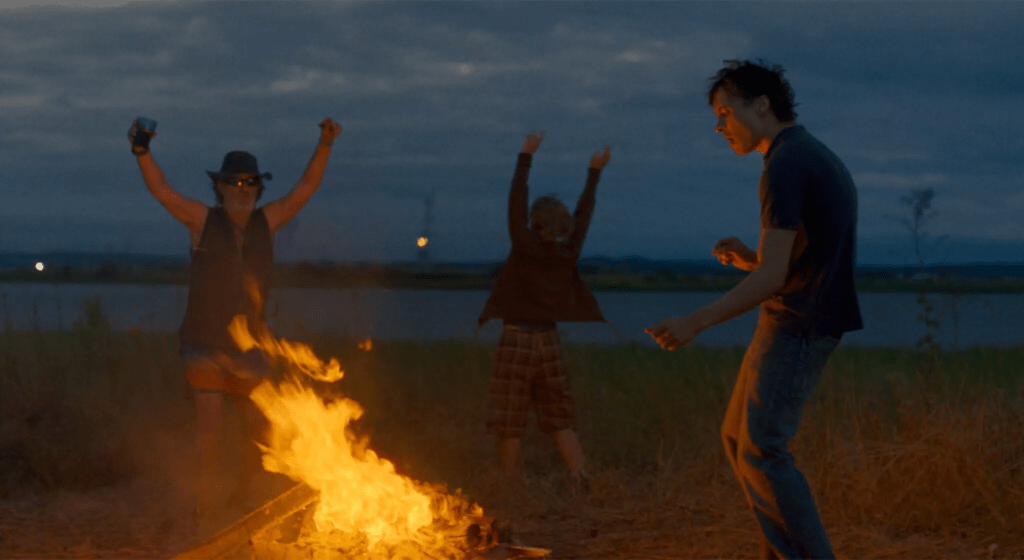
Had meant to watch at least some of the webshow before going into this and now having seen it, I think going in blind was the best possible choice. Seeing it with an enthusiastic crowd most definitely helped – the energy was truly electric – though Johnson and McCarroll don’t lean too much on running gags and if they do, they’re easy to pick up on. Lots of laughs to be had from the truly outrageous “How the fuck did they do that?” stunts to stupid background gags to the perfect use of a passerby. Made me want to check out the show in earnest, and it’s probably the best thing the Canadian government has spent money on in the last few years.

Primate (Johannes Roberts): B/B+

You know exactly the reason why you’re going into this movie, and so do the filmmakers luckily. Roberts slices basically everything extraneous down to the bone, which on one hand means it gets to the goods pretty fast. On the other, that means there’s barely any actual character development or much of a plot but honestly, who needs either of those things? It’s a good slasher flick with all the right tensions and some very good monkey VFX to be a fun time, not to mention some truly gnarly gore. When the biggest complaint is that it’s lit too dark, I guess you aren’t doing too bad.

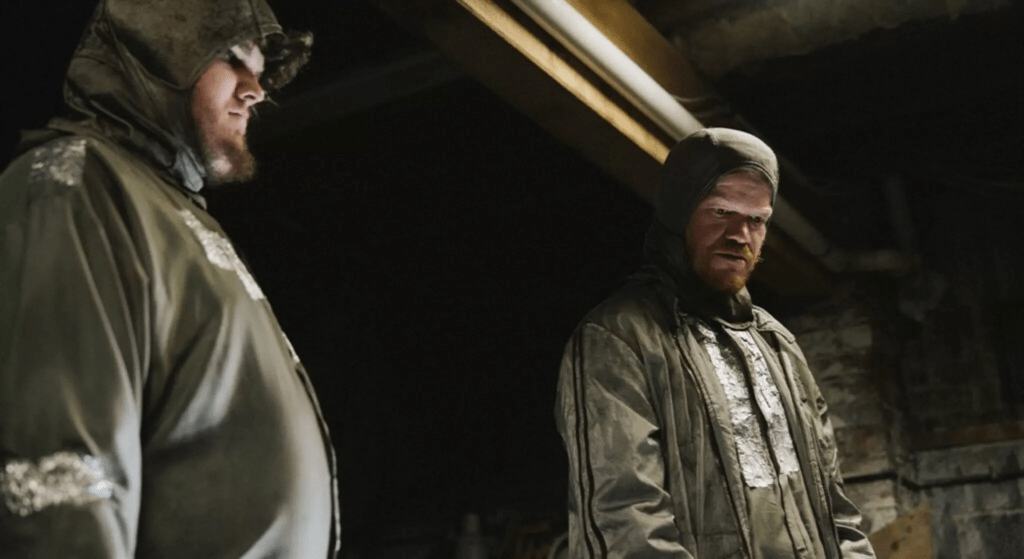
The Plague (Charlie Polinger): A

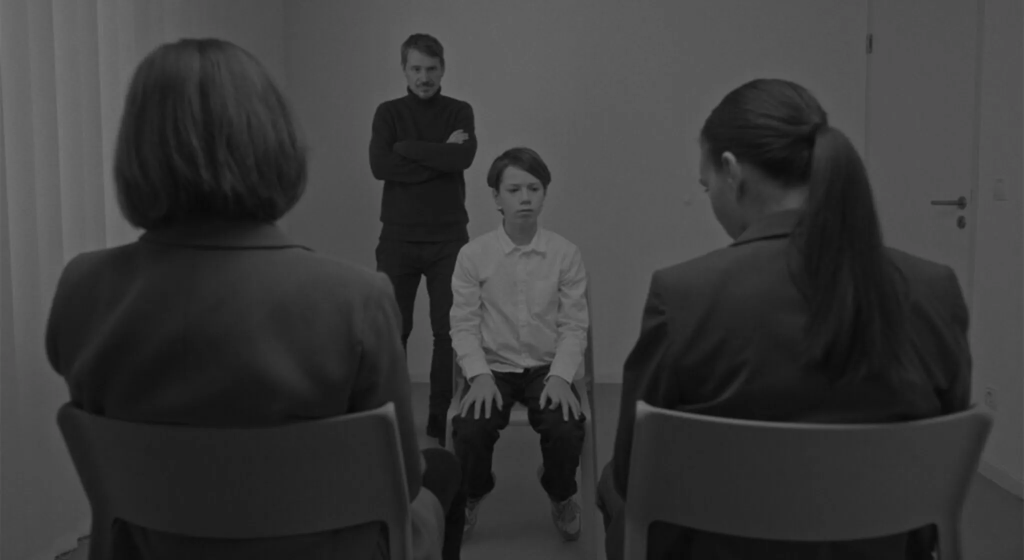
About an hour and a half of detailing why 12-13 year old boys are some of the most evil sociopaths on this planet and doing it with sharp direction. Body horror elements are overstated to the point where it might’ve been better to lose them entirely, but then again the scariest part is really the arbitrary nature of childish cruelty. Everett Blunck is fantastic as a realistically awkward pre-teen while Kayo Martin is a demon sent from hell; you know exactly who this kid is, you have met him. Polinger films beautifully eerie underwater footage, often cutting off the heads of the subjects to leave just dangling torsos, and he ends it with a startling abstract image. For all that might be familiar about it, I don’t know another film that gets how unintentionally useless adults can be in bullying situations and how that peer pressure extends until you can’t even recognize yourself anymore. Difficult to shake; could give you flashbacks.

Dead Man’s Wire (Gus Van Sant): C+

Spent the entire runtime thinking that Bill Skarsgard looked distractingly like Michael Shannon and I have no idea if that was part of his acting choices or just a result of it being the 70s despite him not looking like the guy at all). In any case, reasonably compelling even if he’s the most annoying man alive; it doesn’t help that Van Sant layers in references to Dog Day Afternoon, a far better film in basically every aspect. Never really bought into the attempt at sympathy through an Evil Bank, which is perhaps among the biggest failings. Any movie that features My’hala this prominently – and thus reminds one that Industry will be coming back – can’t be wholly negative; she’s a great reporter.

Is This Thing On? (Bradley Cooper): B

Braced for cringe faildad, ended up with a kind of nice romantic comedy. Much better direction than writing, though apparently it’s based on a real story so some of the events can’t be blamed. Arnett isn’t too bad as a standup – and it also gives him a Bojack reunion with Amy Sedaris. Not really much going on but not entirely unpleasant. I should really check out A Star Is Born one of these days.

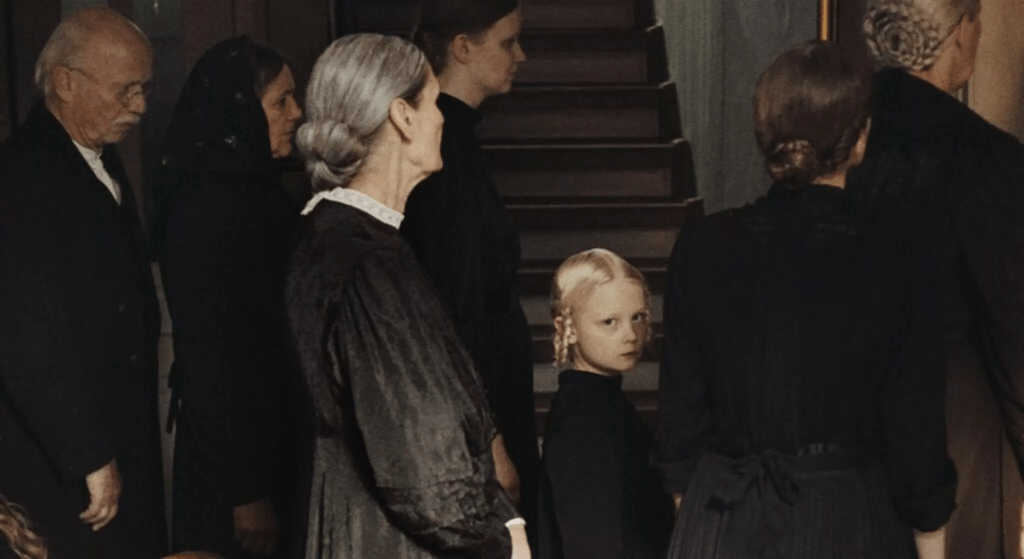
Sentimental Value: A-

Immensely moving, knotty family drama. Attention will deservingly be on the trio of Renate Reinsve, Stellan Skarsgard, and Elle Fanning but I want to bring attention to Inga Ibsdotter Lilleaas as Agnes, not the most central character but in a way the more difficult role having to reconcile the more difficult feelings. Main reservation is what purpose the flashbacks – though affecting – serve in relation to the story of the film. They seem to be narrated by the same actor as in The Worst Person In The World but they’re so infrequent they come across as a little jarring. I’m sure I’ll be able to parse that connection when I haven’t spent 11 days straight watching movies.

And so we’ve finally come to the end. Including Lesbian Space Princess (which I didn’t actually see at the festival), I watched a total of 40 films. Had I been able to get into Hamnet I might not have gotten that much. Would I advise doing that? Not really, unless you have an exorbitant amount of free time and/or can take off the time to do so. I at least have the benefit of not being jet-lagged or expected to crank out words, which has been helpful in avoiding regret on takes. Overall, the slate this year was mostly highs; nothing really disappointed me, nothing made me want to sprint for the exit, and there weren’t any huge disasters. At most I would only criticize NEON for holding back on several high profile screenings, which just isn’t very good for anybody and in general leads to a shitshow. All I know is making a year-end list is going to be absolute murder, and because I’m going to be submitting ballots this year, I’m not doing an actual writeup. However, you can go check out the full list of everything I saw here. I will do my best not to change it too much but know that I make no promises. Till next time, ie whenever I have a take I can’t pitch anywhere or something extremely dumb.
PFF34 Day 9: Testify

Not quite a full day.

Decided against doing a full day, since I missed Kika due to a couple running over, and I wanted to transcribe an interview so I could condense and file next week. Don’t anticipate any of those issues today. Apologies on this one coming out late, just had too much going on.

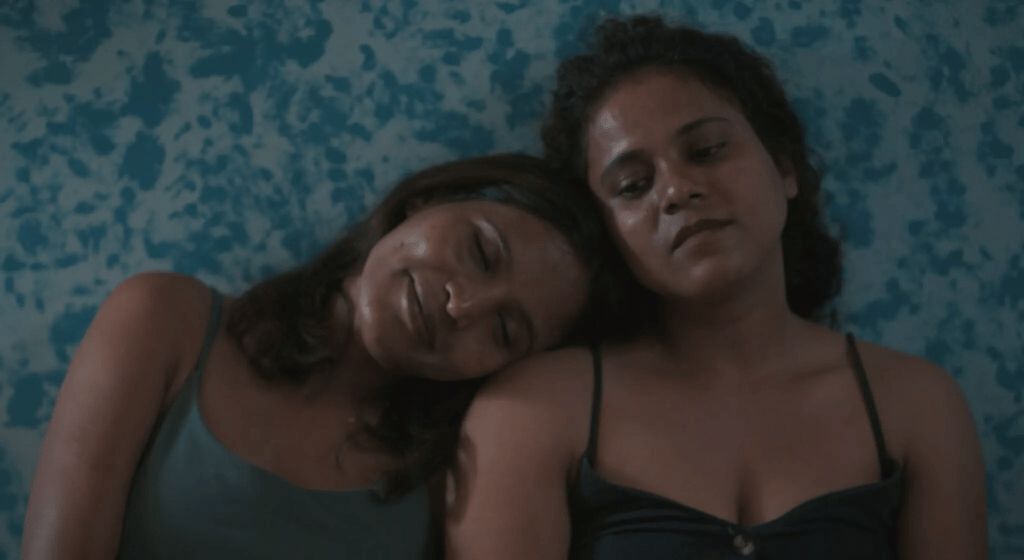
Songs of Forgotten Trees (Anuparna Roy): B/B+
Deserving winner of the Orizzonti directing prize, even though thinking back on it I don’t know that it really contains that much in it. Thought for a while it was trending in a love story direction, and while the vibes are there it’s more an enigmatic friendship. Roy doesn’t dive into how these two women met or how long they’ve known each other, and the whole recurring bit with the trees and forgetting is poetic, but seems to lack something. Another pretty good debut that deserves at least a few more eyes.

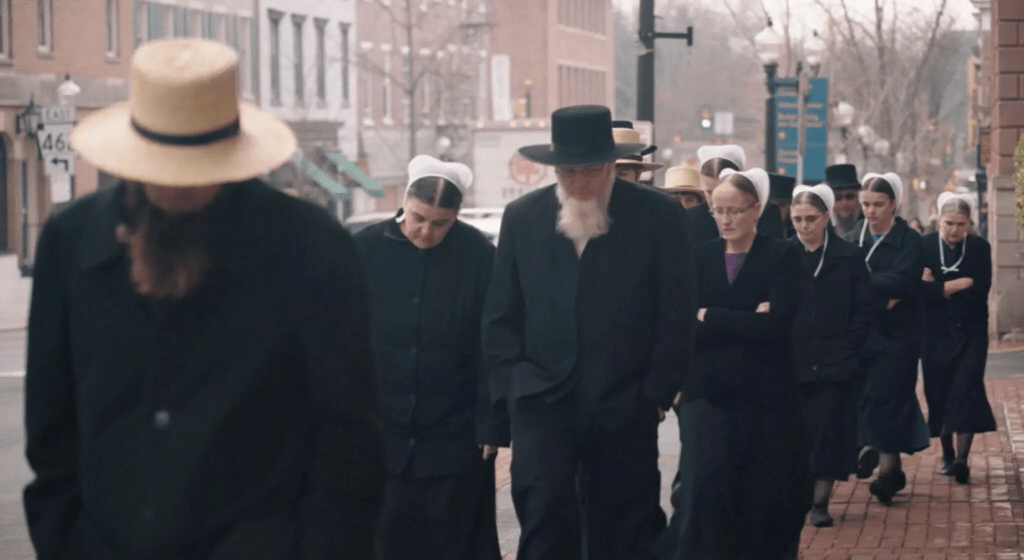
Keep Quiet and Forgive. Credit: PBS Films

Keep Quiet and Forgive (Sarah McClure): C+/B-

Powerful stories, functionally directed. The focus seems mainly to be on Lizzie’s book and Voices Of Hope but there’s a surface level examination of both. If you’ve read the ProPublica and other stories on sexual abuse within Amish communities, you basically know the gist here and while there is value in hearing their words straight from them, McClure doesn’t really offer much else other than reiterating the systemic nature of the abuse as well as tying it into similar Mennonite cases. A full history on both sects would probably be unnecessary but you won’t really get much info out of them. Decent as a piece of journalism, some questions about when it was filmed notwithstanding and it does contain some very disturbing moments (like the drawing). Good intentions only take you so far.

The Testament of Ann Lee. Credit: Fox Searchlight

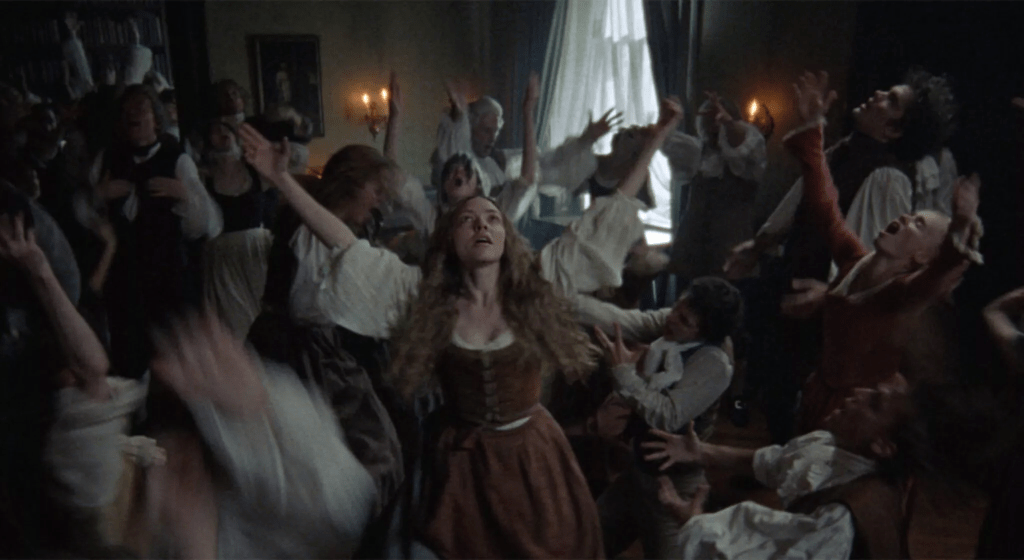
The Testament of Ann Lee (Mona Fastvold): A-

Ecstatic and feverish but oh so earnest. Ann’s faith is never much in doubt – which is somewhat refreshing – and Seyfried’s truly magnificent performance shows why people would choose to live in celibacy to follow this sort of odd Mancunian woman. Reports of it being a musical might be slightly oversold, though there are a few song sequences that appear to be separate from others; one of Fastvold’s best choices is to have all the songs be diegetic, so the sailors on the boat yell at them to shut up while they’re trying to worship. Those worship sequences are absolutely mesmerizing in their coordination, the rise and fall of the music with its occasional pieces of anachronism (an electric guitar coming in right as an eclipse fills). Of course it’s not as reachingly thematic as The Brutalist but in some way, there’s a tighter emotional core in the story of a woman who wants to do her best for God; it might be a little too hagiographic of her as well, though I don’t recall the Shakers ever having some of the worst bits of American Cults, but the whole modesty part of it can raise a few eyebrows. Moment I knew it was something special was “I Am Running, I Am Mad”.

Man Finds Tape. Credit: XYZ Films

Man Finds Tape (Paul Gandersman and Peter S. Hall): B+

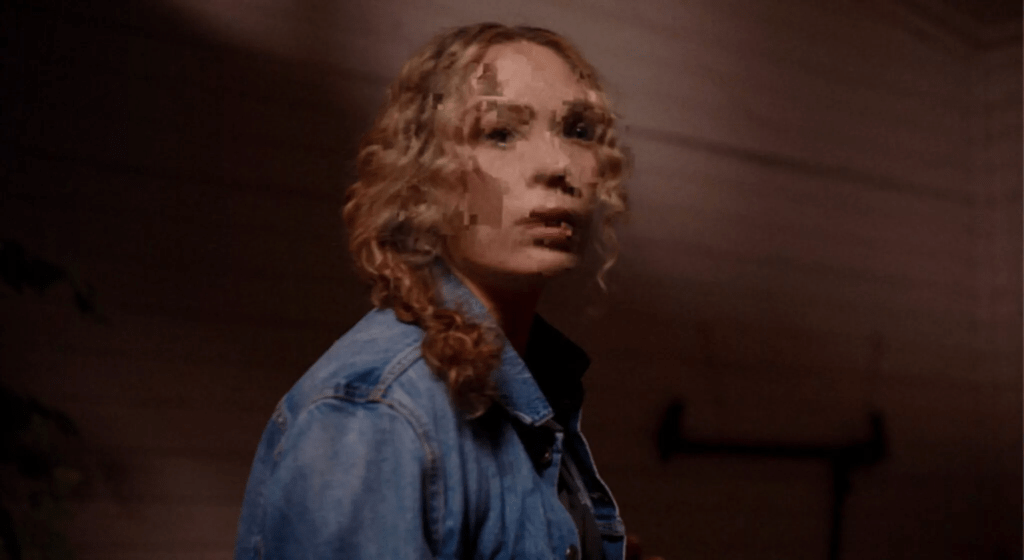
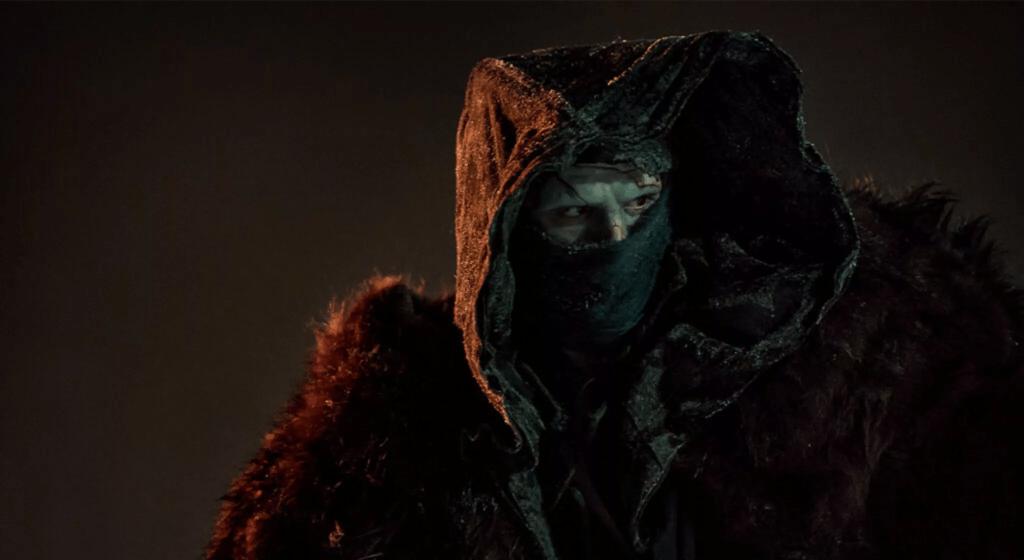
Rating’s a little lower than expected but being completely honest, I cannot justify putting it in the same tier as Noroi: The Curse or even my beloved Red Rooms. Which isn’t to say it’s shallow so much as shifts focus slightly in a way that lets some things fall by the wayside, and while it’s gripping, I wouldn’t exactly call it scary (save for a couple of moments towards the end). Really dug the faux doc aesthetic, especially as someone who enjoys watching Nexpo vids on creepypasta; Gandersman and Hall deeply understand those communities and the way things spiral out of control not only in “real life”, but also eventually in the story itself. Not a movie that ends up explaining much, which might all be for the better. In any case, though it might not have been about snuff as I’d expected, it swerves in interesting ways to scratch that horror itch for me.

Tomorrow: Combining Saturday and Sunday into one because I can feel myself slowing down, and this is already behind.

PFF34 Day 8: Is This All There Is?

A grabbag before the rush.

Going to try to keep these short going forward, since I’m anticipating a full weekend of 5 movie days. At some point I’ll also go back and fix some of the formatting and captions as well.

Wild Foxes (Valéry Carnoy): B-/B
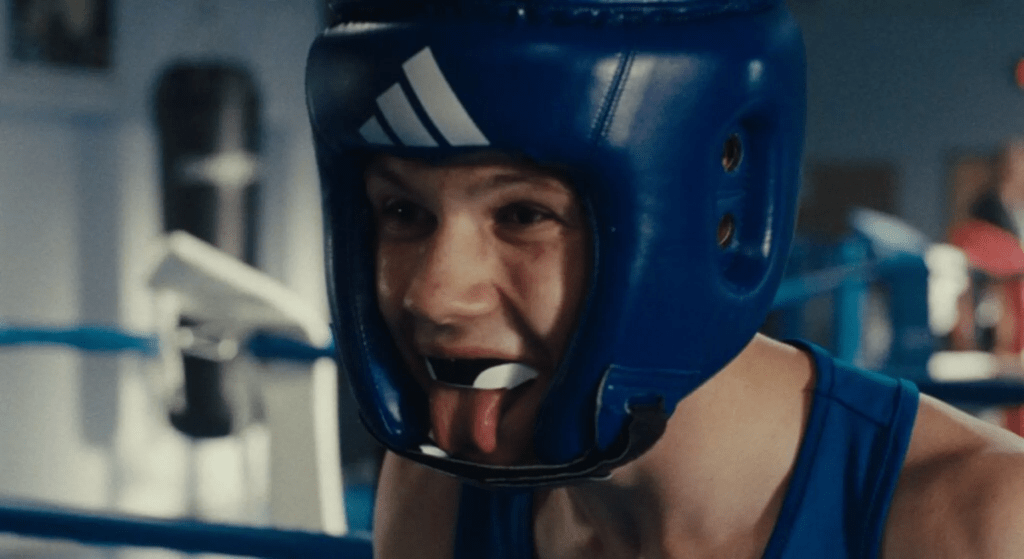
Fairly standard coming-of-age with a dash of boxing for that extra “punch”, if you will. Carnoy freshens it by making Camille (Samuel Kircher) already the best in his class, outgoing and gregarious up until a bad fall sets him back. Couldn’t quite figure out the connection between the plural of the title and whether the foxes – which Camille feeds and ends up kickstarting the plot – relate as a whole to the testosterone fueled teenage antics of his friends. I admit to also finding it a tad bit frustrating with regards to the treatment of the character’s fear and especially how it impacts his friend Matteo (Faycal Anaflous), which isn’t even beginning to get into racial or class disparities. Dunno whether his ornamental girlfriend’s interests figure in at all, though it seems for a minute he might switch sports. Calling it inspirational is a stretch but in the end it fulfills the requirements of its genre.

Nuestra Tierra (Lucretia Martel): B/B+

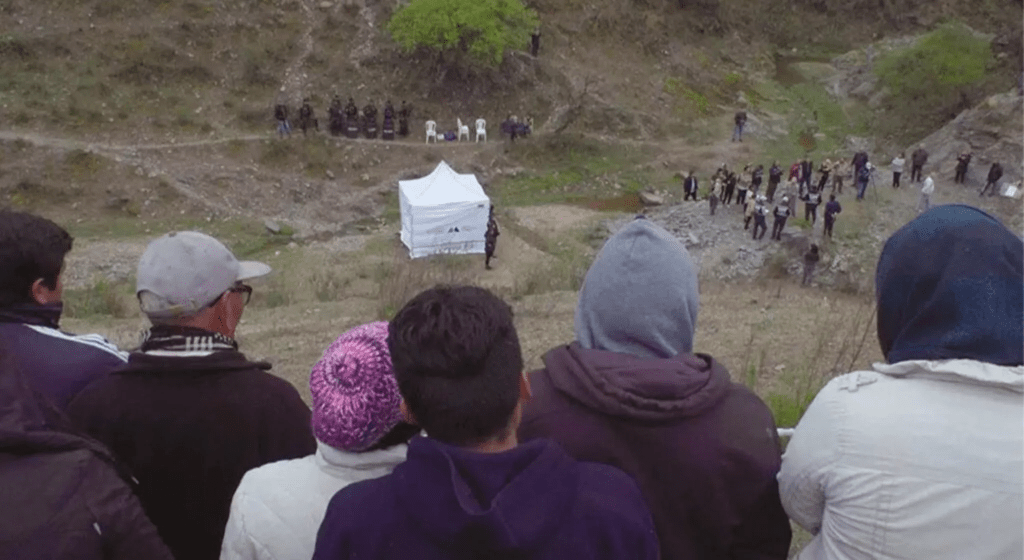
If you want an indication of how much I’ve slacked when it’s come to Venice and sundry coverage this year, I didn’t realize this was a documentary until looking up bits on Letterboxd before the screening. I’ve only seen The Headless Woman (Zama is forever on the list) so I’m not particularly equipped to say whether this fits into Martel’s overarching style or interests. What I can say is it features some rather cool usage of drones, including one shot where a bird flies into it and sends it tumbling to the earth, perhaps in synergy with the falling camera from the video detailing the shooting of Javier Chocobar. He was the leader of the Chuschagasta, an indigenous Argentinian community that had existed for centuries before they were brought into conflict with a mining operation. More than a little connection to last year’s No Other Land though obviously there’s less footage to comb through and less immediacy, since this was a settled court case. Martel largely gives voice to the Chuschagastas, showing their archival photos, playing their stories and forming the fabric of a community still trying to get recognized by a country overwhelmingly influenced by Europe. At times I could feel my attention drift a bit which isn’t necessarily its fault, though it does seem to detour a bit from the case itself in trying to sculpt a history. When it focuses, it’s incredibly damning, but often times beautiful and vibrant; as much as the history of violence is important, so is the history of the people themselves.

It Ends (Alexander Ullom): B+/A-

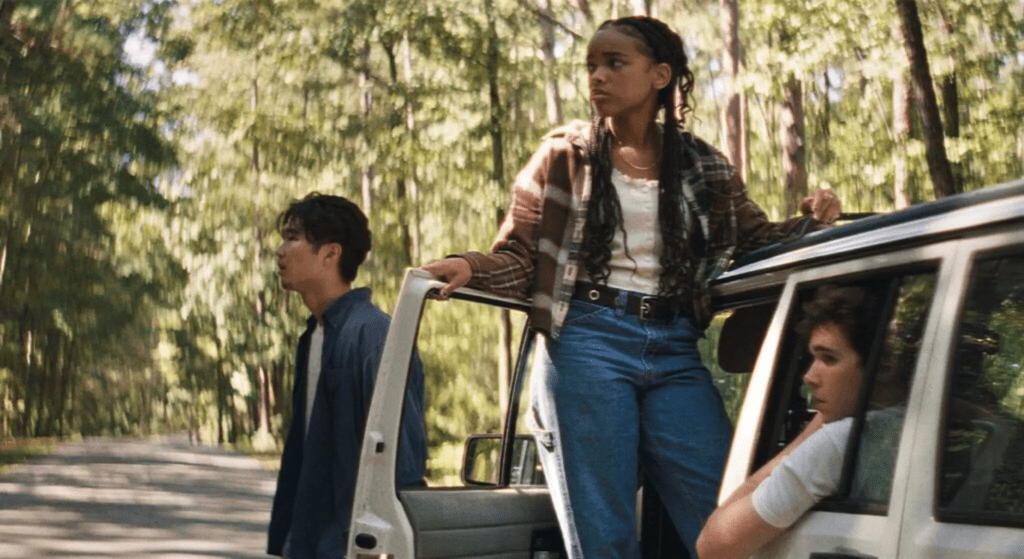
Come for the horror inflected logline about four friends trapped in a loop of Florida highway; stay for the gradual shift to existentialist drama. Spent a bit of the opening wondering if the dialogue was going to try to hard to be current, eventually relaxed into it as Ullom establishes a rhythm and a routine of driving, stopping, exploring, then getting back in. All four actors are uniformly excellent, establishing who they are and what they mean to each other within a few scenes and always coming across as realistic youths. Ullom also makes a smart choice to remove all of the survival barriers including the need to sleep, meaning that the conflict turns increasingly philosophical as the foursome debate whether they’re dead and if there’s any meaning in their situation. It’s not the most controlled script – though Ullom shows a deft hand at editing – but it’s never tedious. You could easily view it as a metaphor for life, bolstered by the hopeful ending. For all that it feels targeted to GenZ, it’s pretty cross-generational and maybe even eternal. At the very least it’s a trumph of low-budget filmmaking, reminding me the most of James Ward Bykirt’s Coherence without the sci-fi thrills.

Train Dreams (Clint Bentley): B

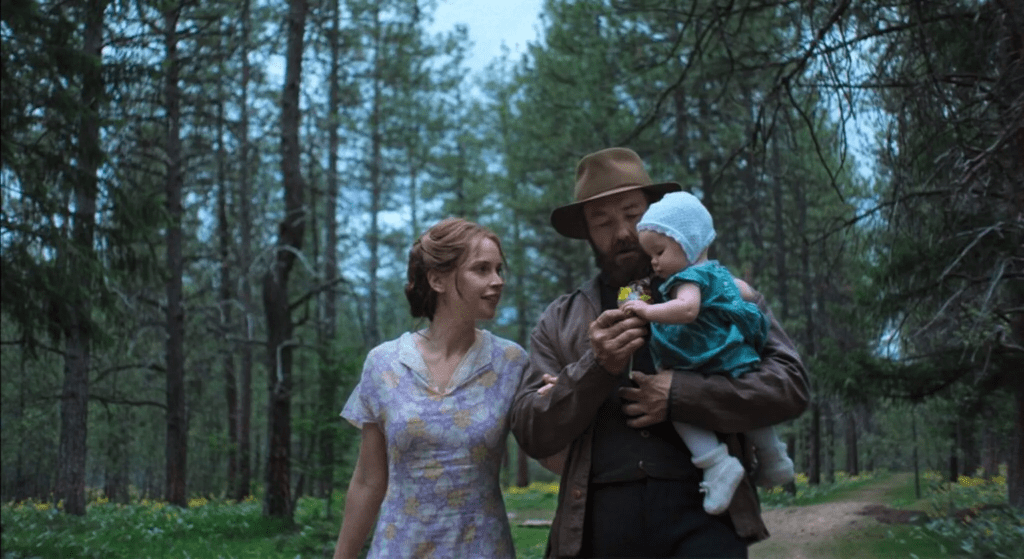
Perfectly fine, occasionally moving. Joel Edgerton’s reserved yet warm, nailing the emotional scenes as required and doing a pretty good job of it. I think part of the problem for me is the amount of voiceover narration; that probably would’ve told me it’s an adaptation even if I hadn’t gone in knowing and really it just made me want to read the book. At its best when it’s focusing on the relationship between Robert and Gladis (he has great chemistry with Felicity Jones), could’ve used at least a tad more focus on the experience of immigrants given how much it haunts the movie. Confirmed from a couple review scans that it does, indeed, feel Malickean what with all the nature shots and the sunsets and the love. Of course the camera is largely static and as much as I’ve felt bored by Malick, he does have the capacity to stun. Perhaps I’m being a little too hard on it. Not Oscar Bait by any means and all the parts are there, it just never quite gets to transcendence. I almost wish I’d gone to Reflections In A Dead Diamond.

Tomorrow: Attempting the first of a few full days, including Amanda Seyfried’s Christian Musical and a movie that might be about snuff.

PFF 34 Day 7: The Nature Of Truth

Except for one, I suppose

Not too bad of a day. Found yet another late-breaking surprise; I guess I haven’t been too stingy with the high grades.

Christy (Brendan Canty): B

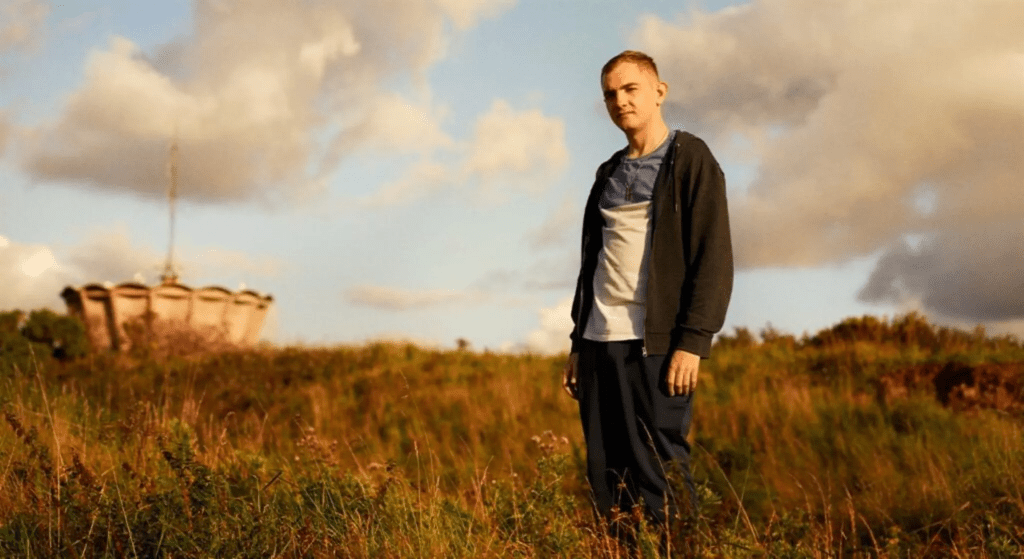
AKA: Christy (Ireland), as presented in the guide to distinguish it from the Sydney Sweeney Christy (US). Similar in some ways to Urchin in that they’re both slice-of-life portraits of a downtrodden man in the British Isles, though despite Canty’s direction not being quite as showy as Dickinson’s I think I kind of liked this a little more. Spent a good portion wondering if it was going to spring some sort of twist regarding either the title character, his half-brother Shane, or both; dunno if it’s better that it declines to do so and it might be that I misunderstood an earlier Instagram video not as a Pedo Hunter one but of a fight Christy was in. The best scenes come courtesy of Jamie Ford’s Robot, so named because he’s in a wheelchair. He’s just a ton of fun to listen to as he banters back and forth, I could’ve watched an entire movie centered around him. Really as a whole it shines when it’s just hanging with Christy and the people of the Council he finds himself with, not so much when it’s leaning into typical social issue patterns. Thoroughly pleasant watch with lots of beautiful boys.

Growing Down (Bálint Dániel Sós): B+
Bit shocked I hadn’t heard more about this before now, although a quick Wikipedia check shows me it was in the Perspectives section at Berlin (for feature debuts). Grabbed me practically from the beginning, with its overwhelming sound over the title card before a quick cut to a camera sailing into a car window. Sós demonstrates a pretty stellar grasp of technique, from the precise edits to the stark black-and-white cinematography, not to mention distance. He and screenwriter Gergő V. Nagy craft a rather knotty ethical dilemma: widower Sándor (Szabolcs Hajdu) – at a critical moment in his relationship with his girlfriend and fellow single parent Klára (Anna Háy) – witnesses a potentially life-threatening accident involving his son Dénes (Ágoston Sáfrány) and her daughter Sári (Zonga Jakab-Aponyi) and in a split second choice, decides to lie for his son. It’s austere and tense as several relationships, not to mention a human life, threaten to completely crumble under the weight of parental love and/or selfishness… and then Sós occaisionally throws a lifeline, like a scene – shot from afar – involving a birthday gift that in lesser hands could be derail the whole thing but instead comes off as a facet of life that keeps going on even in the face of complete tragedy. The kind of utterly singular and controlled vision you want from a debut, and simply beautiful to look at too.

Blue Film (Elliott Tuttle): A

Yet another singular debut, this one even more spectacular and quite possibly the best thing I’ve seen at the fest. All I knew going in was it involved a camboy, Aaron Eagle(Kieron Moore), hired for the night by a mysterious stranger Hank (Reed Birney); what I only got hints of from my friend – hi Zoe – was that sexual abuse was involved but still, I don’t think anything could’ve prepared me for how gripping and unsettling this would be. Tuttle has crafted a two-hander (always at risk of being too stagey) interrogating the nature of desire and the reasons why people turn out how they do. In a way, it’s a good pairing with Springfest entry Predators, another film asking why someone would do such a heinous thing. Moore and Birney are simply astonishing together, the former alternating between the highly guarded Straight Masc Dom persona and the latter layering on a regretful older mentor. Like a lot of my favorites, the two play around with the idea of performing and truer personality, captured especially in a deeply uncomfortable yet strangely erotic scene involving age-play, shot in the kind of consumer grade video that resembles a porno you’d find on some tube site (I wish I’d written down some of the comments from the livestream that opens the film, both it and Moore’s dialogue are perfect encapsulations). Both the producer at the Q&A and the introduction stressed that it will be controversial; it’s circling distribution but had trouble even finding a festival that would accept it. That’s entirely understandable given the way it extends Birney’s character understanding. But that’s not the same as excusing, and the constant back-and-forth is where the film derives the most power. It’s perhaps the most honest film I’ve seen about taboo, kink, and responsibility, one that might be a difficult sit but is the kind of thing queer filmmakers should be getting full support for.

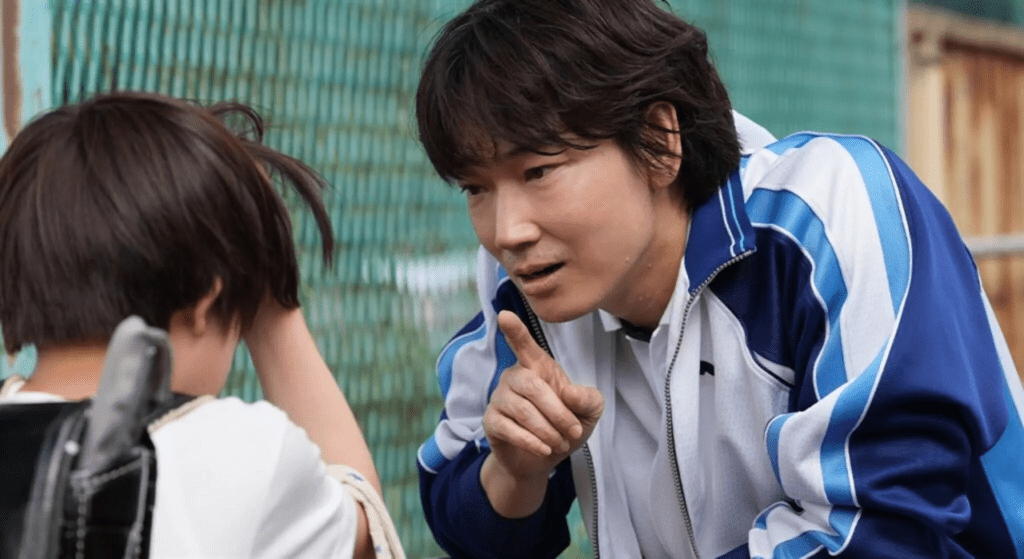
Sham (Takeshi Miike): B-/B

For all that Miike’s prolificacy is harped upon, rarely do we ever get to see that range beyond the outre and the most violent or wacky. After all, when you’ve directed over 100 films across genres and demographics you’re gonna have to be able to adjust to fit the material. Sham might be Miike’s most restrained film but for those who associate restraint with something like Audition are probably going to be disappointed. Not so much because of the lack of violence or whatnot, but more that this ripped-from-the-headlines story chooses the wrong track to focus on, at least at first. That opening features some of the Miike we know, as middle school teacher Yabushita (Go Ayano) goes off on a highly xenophobic rant about mixed-race Japanese to Ritsuko Himuro (Ko Shibasaki), then proceeds to subject her son Takuto (Kira Miura) to such an extreme regiment of bullying it’s almost impossible to believe. Which is kind of the rub, as from what I can tell; screenwriters Hayashi Mori and Masumi Fukuda (who wrote a book about the case) fashion something like a Rashomon story and in Miike’s hands, it’s suitably gripping and well acted, but the actual case seems to be far more definitive then you would think. Although its tempting to compare it to Hirokazu Kore-Eda’s Monster – what with the bullying and the split narratives that circle back – at its heart it’s much more similar to Thomas Vinterberg’s The Hunt. Had it just been a courtroom drama and a film about a wrongly accused teacher or even just about bullying, it could’ve been stellar. Unfortunately, despite the 2-hour runtime it never digs into the circumstances around the case, like the media frenzy (now there’s an interesting one, a film about an alleged bully being himself bullied by the media) or the histories of the parents, or even the Japanese school system. None of this might bother you in the moment while watching – except when questions arise that could be related to Japanese legal proceedings or the like. I wouldn’t go as far as to call it a Lifetime/TV Movie – it’s a little too well constructed for that. If anything it’s proof that we’ve been sorely deprived of Miike’s true skill and range but still we get some stuff like a great title drop.

Tomorrow: I look for things to fill in my schedule.

PFF34 Day 6: Investigations

More than halfway there.

With The Mastermind today, I’ve basically seen all of my most high profile choices (only Sentimental Value and The Secret Agent are left). So far haven’t really had much in the way of disappointment or misses barring Hamnet and Sirât so hopefully those come around sooner rather than later. Here on out it’s all new to me.

The Good Sister (Sarah Miro Fischer): C-

Inert MeToo drama that barely gets to what it even promises. I was intrigued by the idea of having to reckon with your own sibling committing an act of sexual violence, but there’s no indication that lead character Rose even understands why she’s being called to testify and barely seems to struggle with it at all. The movie itself struggles to provide any sort of drama or intrigue, merely gesturing to themes without really doing a whole lot beyond that. Couldn’t bring myself to work up all that much ire; more on the side of failure but not anything to really be bothered about.

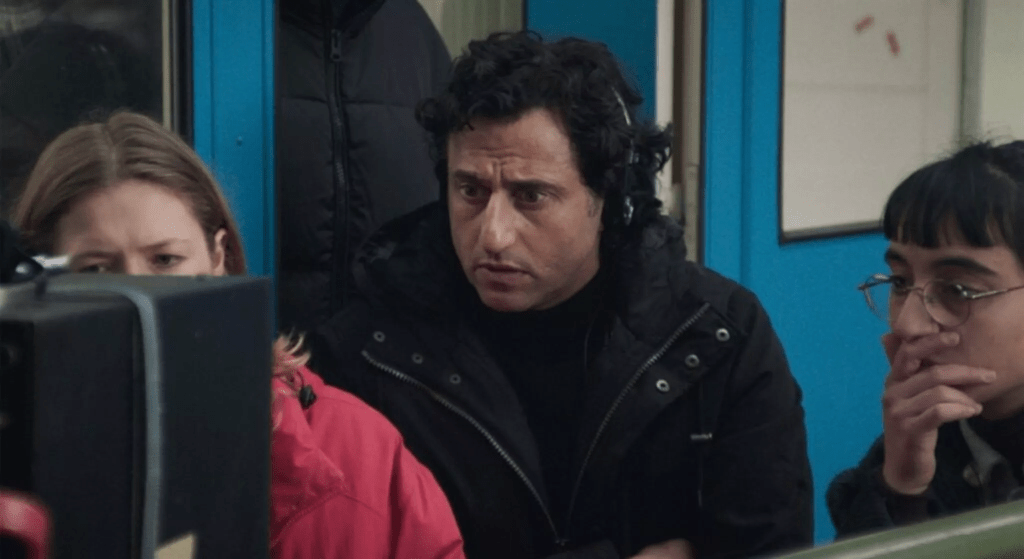
Hysteria (Mehmet Akif Büyükatalay): B

Now here’s something with a thorny dilemma. Grabbed me from the starting premise, in which assistant director Elif – amidst an incident involving a burned Qu’ran on the set of a historical film – loses the keys to a producer’s apartment she’s staying at, and subsequently the tapes she was responsible for. Büyükatalay uses the burning as a jumping off point to ask questions about artistic integrity and representation, early on featuring a character noting how Europeans tend to make films about racism in their countries to absolve themselves. It’s self-aware enough to see that Elif has a lot less to lose than the extras accused of theft and while the two threads don’t always feel cohesive, they come together in a confrontation scene that gives a great jolt. Not quite sold on the ending but I appreciate the swings it takes without fully biting the hand.

The Mastermind (Kelly Reichardt): A-

Talk about someone who knows how to end a film. I really have not kept up with Reichardt as I should, though given the rumblings about Showing Up I know she’s capable of being quite funny. Screen Unseen Attempt The Mastermind is indeed quite funny for much of its run time; the centerpiece art theft (calling it a “heist” feels like giving it too much credit) got a big laugh from me out of one line as did the prep and the aftermath. Reichardt’s editing is sublime, swift and lean, very pleasing on the jump cuts but lingering just as long as it should. Josh O’Connor remains magnetically watchable, enormously charismatic in the beginning but still with that deep well of sadness that only grows as his competence and arrogance dims. Like his performance in La Chimera (a movie I must revisit), he’s skilled at revealing the depths of a silence and simply staring. The political thread running throughout the background is part of what makes the ending so good, and I really dug the jazzy score from Rob Mazurek. I perhaps blanked out only a couple times (late in the day and all) and I do wish Alana Haim was afforded more to work with. As funny as it all is, it never loses sight of the depths of O’Connor’s failures as a father, a husband, and all around person.

Resurrection (Bi Gan): B+

Must a film be coherent, thematically or narratively? Is it not enough to watch 6 discrete, lusciously filmed mini-movies about the senses as well as Chinese cinema history? Yes, actually. It’s been almost a decade since I’ve seen Long Day’s Journey Into Night and this is definitely a film from the director behind that. The whole thread about “deliriants” and “other ones” and “dreaming” barely felt like a thread, to be honest, or even a frame story. Not that I particularly minded as somewhere within the second story I started treating it more like an anthology of metaphor and just kind of rocked with the mini stories happening. Occasionally dull and not all that emotionally involving, but every so often Gan provides the razzle and dazzle, and that can be enough for the vibes.

Tomorrow: Some under-the-radar picks, and I check in with what Takeshi Miike is doing.

PFF34 Day 5: Win Some Lose Some

A quieter day.

My Father’s Shadow. Credit: MUBI

Only got two today, as I didn’t want to see Jay Kelly and none of the ones at the top looked particularly interesting. Feel like I might be seeing less this year than last but I’m sure it’ll pick up over this next weekend, and is probably just as well. That being said, had at least one unexpected triumph.

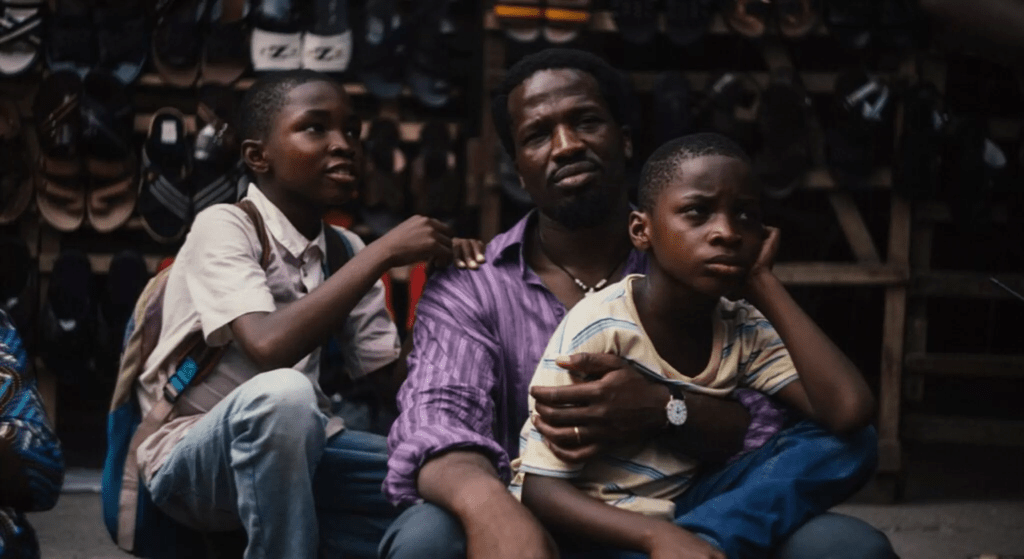
My Father’s Shadow (Akinola Davies Jr): A

Only knew it was Un Certain Regard and some passing Cannes reviews, was completely unprepared for the near experimental track it takes in the opening with its collage of film and thunderous soundtrack. Davies Jr’s debut (writing with his brother Wale) is less Bicycle Thieves (though one could easily draw that comparison what with the father searching for money) and more Aftersun, but with a stronger political bent. I was a little concerned it could be too ominous on the soundtrack; African history is not my strongest but given that it’s set on the eve of an election you can do the math. And when it does come it’s properly devastating, but more important is that you forget something bad is going to happen for a large period as you hang with this family through Lagos. Godwin Egbo and Chibuike Marvellous Egbo are truly marvelous finds even if they weren’t actual brothers, striking the perfect balance between inquisitive carefree kids and watchful youths sensing that something is troubling their father. As that father, Ṣọpẹ́ Dìrísù (unfamiliar to me, but it appears he’s big in the UK) projects warmth and good nature, immensely charismatic but – like Paul Mescal – able to thread a discomfort without it overwhelming. The 16mm haze is absolutely beautiful and the score from CJ Mirra and Tuval Anthony is simply wonderful. Hard to believe this is a debut, so assured and graceful. It’s one of those films that reminds me why I come to festivals.

Redux Redux. Credit: XYZ Films

Redux Redux (Andrew and Kevin McManus): C

Too many good films in a row, only inevitable I find something lackluster. I was already a little wary of it just from the concept of “woman travelling parallel universes to enact vengeance on the man who killed her daughter” because of the fash potential, and despite the guide noting Terminator I was unprepared for it to be mostly about her doing it with one of his victims she manages to rescue by accident. Bits of it could form a reasonably compelling movie – the one about multiversal smugglers is neat worldbuilding – but I got off on the wrong foot the minute Mia started talking; she’s written way too “clever”, sounding like some melange of old tough broads while also being quite blasé for someone who almost got serial murdered. There’s a similar lack of care throughout some of the other details, not enough to be bothersome so much as make you ask questions. Perhaps most symptomatic is a blaring score that’s almost constant throughout the movie. I won’t say the most interesting thing that happened was someone throwing up in the theater although if that didn’t happen, I can’t say I really would’ve remembered much about it in the end.

Tomorrow: Checking back in with Josh O’Connor and a long ass Chinese film.

PFF34 Day 4: There’s Some Holes In This House

A day of straight bangers

Sound of Falling. Credit: MK2

Today was pretty much the rest of my most anticipated. I’ll be seeing The Mastermind and Sentimental Value later in the festival, so after that it’s things I’m either taking a chance on or haven’t had much interest to begin with, which can sometimes feature surprises in itself. Of course, there’s always a chance that some of the other popular showings could have late screenings but given the way distributors have been acting this year, I’m not holding my breath. Pretty much all of the ones below I anticipated giving high scores, a couple can be more acquired tastes.

Sound Of Falling: A-

In which you simply must surrender yourself to some absolutely beautiful shots. I’ll be honest, a few of the timelines weren’t exactly clear to me and it’s perhaps a bit too elliptical; the unifying theme appears to be death and its seductive pull between 4 generations of women. Recurring bits like each of them remarking on something being “warm”, the buzzing of flies, and gazes into the camera provide some form of linkage but it really is one you just kind of vibe with or you don’t. Mascha Schilinski was the co-winner of the Jury Prize at Cannes this year (third place basically) for her second feature, the first German woman since Maren Ade to be in Competition. Very easy to see why, and it’s just as easy to imagine it taking a deeper hold in my mind or simply evaporating away like so many memories and traumas.

No Other Choice. Credit: NEON

No Other Choice: A-

I expected the score on that one to be higher and it very well could rise. That was almost certainly because as someone who’s been unemployed for almost a year now, I was expecting this to hit like a truck. While it didn’t quite do that, it is highly relatable and in some way reassuring to see that job hunting remains the same basically everywhere in the world (there’s no one to talk to, no way in). Park layers on the comedy much more than usual, almost teasing us with the prospect of our main character going on a killing spree in order to make himself the most viable candidate. And when it does come, it’s both satisfying and sad as you’d expect, sympathies going up and down. It’s less of a movie about class rage than inevitability, where everyone’s insistence that they have no control in the matter is really just a means of avoiding discomfort or humiliation. As bleak as it may seem, it’s still incredibly entertaining and stylish as the Park Chan-Wook we know and love (all the match cuts, dissolves, transitions etc), with a little less of the emotional gutpunching but more of the bloody laughter.

If I Had Legs I’d Kick You. Credit: A24

If I Had Legs I’d Kick You: A

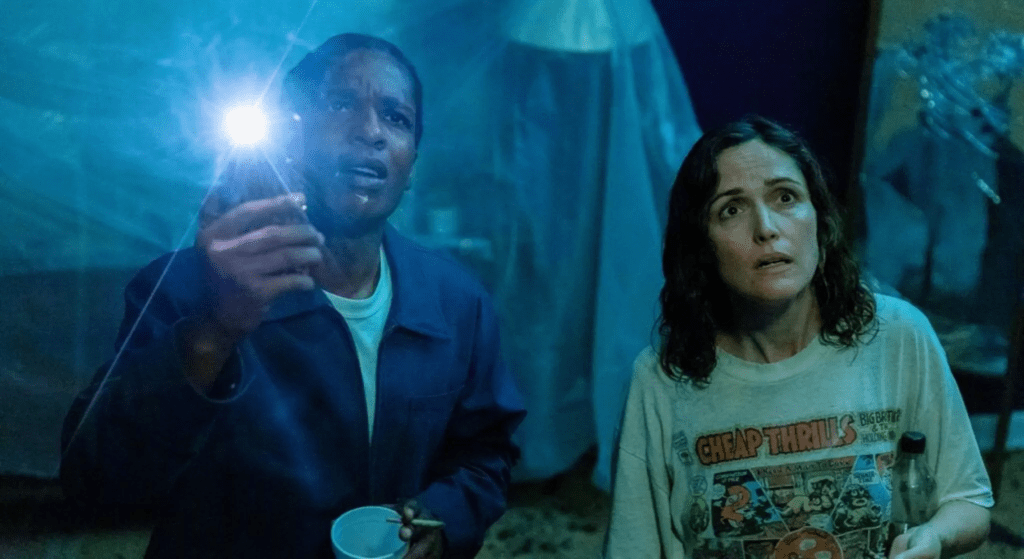
Easily the most stressful experience I’ve had at this festival and I mean it entirely positively. Mary Bronstein’s second film (hadn’t heard of her until this was announced at Berlin, because Yeast came out when I was a child) feels incredibly personal as so many portraits of motherhood do, but bracingly there’s seemingly zero upsides. Rose Byrne deservingly won the Silver Bear for Best Lead Performance, portraying a woman overwhelmed and under the influence, only just holding herself back from going completely apeshit. And she would be entirely justified: on top of her job as a therapist, she’s got a child with a feeding tube who isn’t hitting her weight goals to the constant judgement of her doctor (Bronstein), a husband overseas who could not be less helpful, her own therapist (a very welcome Conan O’Brien) who’s becoming more and more antagonistic, and a giant hole in the ceiling of her apartment. Bronstein’s husband Ronald is a frequent collaborator of the Safdies – with Josh on board as a producer – and that’s absolutely felt in the sound design and occasional mystical glimpses into jewel-like tunnels. Those parts don’t feel as connected thematically but if anything, they offer a small reprieve from the absolutely demonic screeching of the child, who’s unnamed and unseen except for the broadest of outlines. A$AP Rocky drops by as well for another excellent supporting turn after Highest 2 Lowest, as the manager of the hotel Linda’s forced to relocate to and proving to be something of her only actual friend, even if she can’t seem to recognize it. For me, If I Had Legs was first and foremost about the visceral experience, and it can absolutely be overwhelming. Byrne holds it all together magnificently – as she’s done in basically everything she’s ever been in. This is a frequently funny movie on top of being creepy, and her skill alone should be seen in the way she screams “giant FUCKING HOLE!!!” over the phone before calmly approaching a pharmacy counter. Lots of movies have shown “bad” women and mothers, there’s vanishingly few that have been willing to ask if someone should even be one in the first place.

Frankenstein. Credit: Netflix

Frankenstein: B+

Exactly what you’d expect from “Guillermo Del Toro’s Frankenstein” and luckily for me, that’s all positive. I couldn’t tell you if it’s a completely one-to-one from the book since – like everyone else – my knowledge comes from cultural osmosis and general summaries. What I can say is that it’s handsomely crafted, fully Crimson Peak mode with the graphic gore to match (though without being too excessive). Oscar Isaac is very sexy on top of delivering a good performance, and Jacob Elordi holds his own rather well, even when he’s just being tall as hell. All the usual themes of man playing God, nature vs. nurture, etc. are there and I don’t know that it really adds all that much to centuries of analysis. There is, however, a lot of queerness both in the bodies depicted and in the Monster Of It All, which may also be in the book. Del Toro’s big gooey heart comes in at the ending and it fits in perfectly. I had a pretty good time, and it’s solid craft all around. This being a Netflix joint I can’t tell if the cinematography is a little washed because of them or something else, but it doesn’t at least look especially flat to me. I’m kinda glad we got a guy making freaky goopy gothic flicks, you can tell he loves it all.

Tomorrow: Bit of a lighter day but we’ll see if we can’t squeeze a few more in.

PFF34 Day 3: Things Are Heating Up

Get this. Get this!!! Directors who are known for being good… make good films.

Arco. Credit: NEON

Haven’t yet had a 5 film day, which is probably for the best in terms of focus and energy. I had debated going to Sirât – of which I’ve heard many a good thing – but ultimately decided to wait until its official release. It’s one of the 6+ movies NEON acquired this year at Cannes in their quest to snag the Palme again (successfully, as you’ll see in a bit), a move I still consider rather gauche. They also released one of the ones below, which I totally forgot about until the bumper rolled. Not that it particularly means much of anything, but it is helpful in planning to know if something has any chance of actually coming out in the near future versus imminently, so I’ll probably know in a couple weeks whether I should’ve kicked myself for missing it an Hamnet. Anyways, a pretty good day yesterday!

Arco: A-

Clearly inspired by Ghibli – specifically, Miyazaki – in ways that got my hackles up within the opening minutes; not helpful was the dub NEON insisted on sending us, since this is a French production, and while it’s not bad it still has some of the stiffness I associate with Netflix dubs (this is also a Netflix France co-production). As you can guess by the score, it won me over gradually, first off by the quality of the animation itself – there’s some Hosada and Yuuasa in there, as well as a melange of numerous other works that still feels coherent as a whole – which captures the typical framerate anime tends to use, along with the propensity to have static backgrounds or shots with no motion. The plot’s a little extended by the end but its simplicity helps it enormously. I won’t lie and say I got a little teary eyed at the end; whether it earns it fairly or not is another question, especially with one late minute twist very similar to a movie from 10 years ago. Even if it doesn’t have much deep to say, I still appreciated it on a visual level; there’s some truly beautiful scenes, and it works to make you really care about the characters. Still feel a little robbed not getting Swann Arulaud but the cast does a good enough job, and I hope this sort of Franco-Japanese blending becomes more common.

Urchin. Credit: BBC Films

Urchin: B

I don’t want to start every review off making comparisons to other films or remarking on familiarity but sometimes that’s the only thing that’ll do. Which is to say, Harris Dickinson’s debut feels very similar to Mike Leigh (eg Naked) and the Safdies’ with its portrait of a fuckup out of prison trying to keep himself off the streets. Frank Dillane – most famous for being in Harry Potter after I stopped watching those – generates sympathy for his homeless addict character, coming off as somewhat pleasant and funny when he’s not trapped in a downward spiral. He doesn’t quite have the depth of character and neither does the film really; Dickinson (who also appears in a minor role as a fellow straggler) does show promise behind the camera, with a number of abstract and surreal sequences, and a pretty good visual eye. Promising, wouldn’t say he should quit his day job quite yet.

It Was Just An Accident. Credit: NEON

It Was Just An Accident: A

The film Panahi has been working towards for more than a decade, not that he really had much of a choice. I didn’t get a chance to catch the features he made on house arrest (saw part of This Is Not A Film, have a library copy of No Bears waiting for me) and my only other reference is Offside so I couldn’t say whether the mostly static camera is due to this one also being shot mostly in secret. What I can say is that it’s a deserving Palme winner, a knotty moral dilemma about the Regime as Iranian film tends towards without making any of its characters explicit mouthpieces for one side as they try to determine if they’ve found their prison torturer, who’s voice they’ve only heard. All of them have been through hell – some more traumatized than others – but none of them seem to know what kind of justice they want. Lest you think its a grim drudge, Panahi laces in frequent comedic moments revolving around how hard it is to enact revenge, as well as how transactional relationships have become; one of the funniest moments there involves a security guard pulling out a credit card terminal for a bribe. It leads to a stomach-churning climax, followed by what might be the best ending of the year. France has submitted it for Best International Feature, due to being a coproduction and because it’s most certainly banned in Iran. Even if he doesn’t win, it’s a triumph for a director who’s fought to make the films he wants under the most oppressing circumstances.

Bugonia. Credit: Focus Features

Bugonia: A-

Lanthimos continues to expand the possibilities of scaring the hoes, albeit in a way that still feels like it takes place in our world. Knew it was an adaptation of the Korean film Save The Green Planet! (original director Jang Joon-hwan was supposed to direct this one but had to drop out, staying on as exec producer) but hadn’t seen that, and judging from at least one of my friends as well as the introduction, it’s probably best that I went in knowing only it’s about a guy who kidnaps a CEO, believing her to be an alien destroying the world. I can imagine the 2003 version being much lighter even with the standard tonal shifts; as scripted by Will Tracy, it’s an angrier film than you might expect. Of course, being a Lanthimos joint it’s frequently hilarious in rather fucked up ways, particularly Emma Stone’s initially calm reactions to her predicaments. Jesse Plemmons continues to prove a perfect addition to the stable, deadpan and almost rational sounding before the cracks start appearing. Bugonia nods to the confused ideological soup a lot of Americans have fallen into both with Internet radicalization and the general feeling of a chaotic world; one could explain why Plemmons’ Teddy Gatz is Like This, but they inevitably feel like mere justifications or excuses. Newcomer Aidan Delbis plays off the two well as Teddy’s cousin, and as CEO Michelle Fuller, Stone gives one of her best performances. I don’t know if it was the sound mixing or just the Film Center theater but one of my biggest reservations is the score, too often blaring and bombastic, doing too much. The ending also gives me a bit of pause; while admirable in its audacity it sort of throws a wrench into ultimate thematic meaning. Despite that, it’s extremely gripping and entertaining, the kind of button-pushing that feels resonant while also pondering where exactly things failed.

Tomorrow: A straight block of heavy hitters featuring highlights from the Big Three Fests, and I see about getting into Frankenstein

Back at it again at the Philadelphia Film Festival (34th Edition)

An announcement of upcoming coverage

Credit: Philadelphia Film Society

It’s that time of the year again: Festival Season, where everyone starts putting out the “good movies” in the hopes of getting award attention and we all get to learn what’s going to get held back another year. I, for one, could not be more delighted to be back at the Philadelphia Film Festival especially considering the state of, well… everything nowadays. Thanks to both a surplus of free time because of the job market and a press badge (thank you PFS!), I will once again be shoving as many films in front of my eyeballs as humanly possible.

And check out the heavy hitters we got this year: Jafar Panahi! Yorgos Lianthimos! Park Chan-Wook! Mary Bronstein! Chloe Zhao! It gets to a point where I’m glad I managed to catch one of the titles (Lesbian Space Princess) on a screener if only to clear up my schedule for a bit. That schedule was formed a tiny bit last minute due to me waiting on the mail for my program, as well as trying to figure out which ones I need to prioritize and whether I’ll be able to jump on some RSVPs late. For this year, I’m going to do daily blog posts that I’ll try to put up by noon each subsequent day. My goal for this year is to try and make them short, in part for my own sanity since I have some other assignments brewing, but also on the off chance I get an official review commissioned later. So join me, won’t you? As we explore the 34th Annual Philadelphia Film Festival.

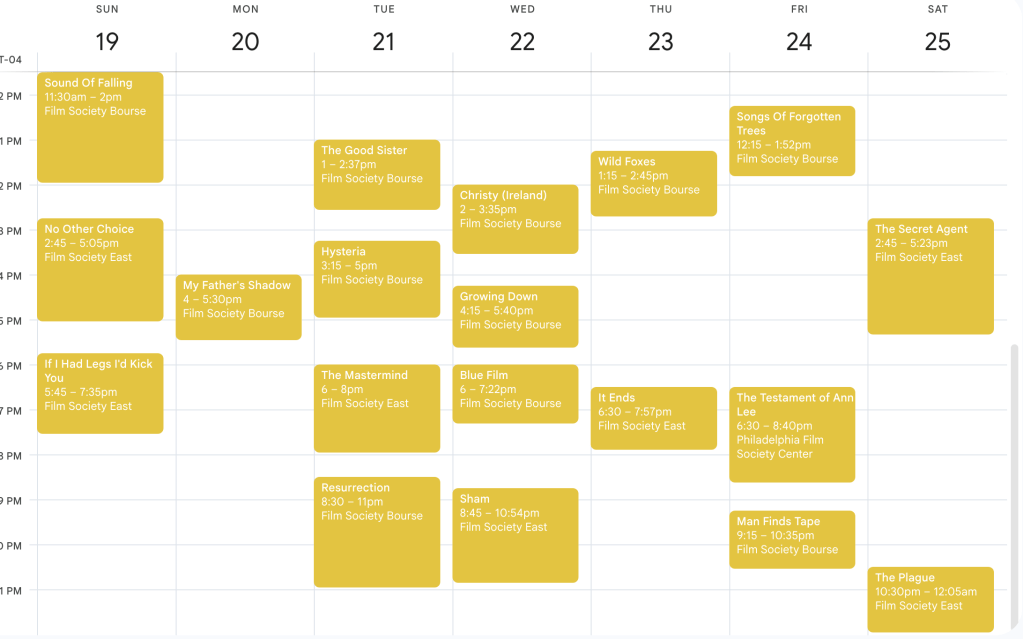
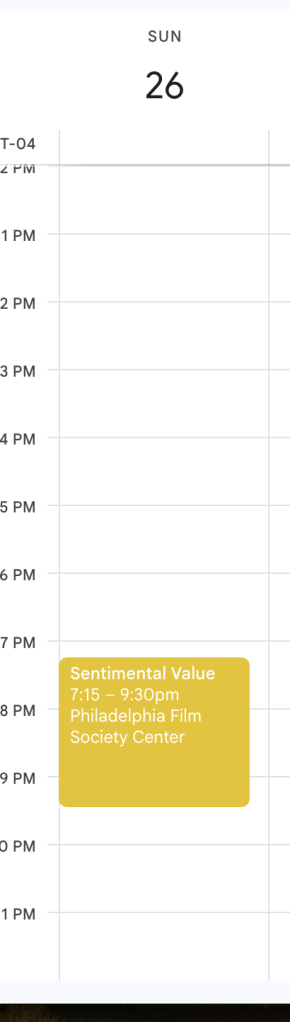
Schedule follows below. Some of the gaps will probably be filled in later in the week, while others may be forfeit for reasons of rest or overlap.

PFF33 Day Eleven: Baseball and Stolen Artifacts Close Out A Great Fest

Plus: the 10 Best Films seen.

My viewing habits finally caught up with me, as did the looming specter of joblessness. As I’ve mentioned before, in the past I’d usually become rundown by this point, powered as I was by caffeine and black-and-white cookies before the ownership changed. I think part of it was the nature of the scheduling as well: given how long a lot of the films were this year, there’s not a whole lot of time left, which in turn limits what’s programmed. Even if I hadn’t been able to do another 5-film-day, I still ended with a couple decent to pretty good films.

Eephus. Credit: Music Box Films

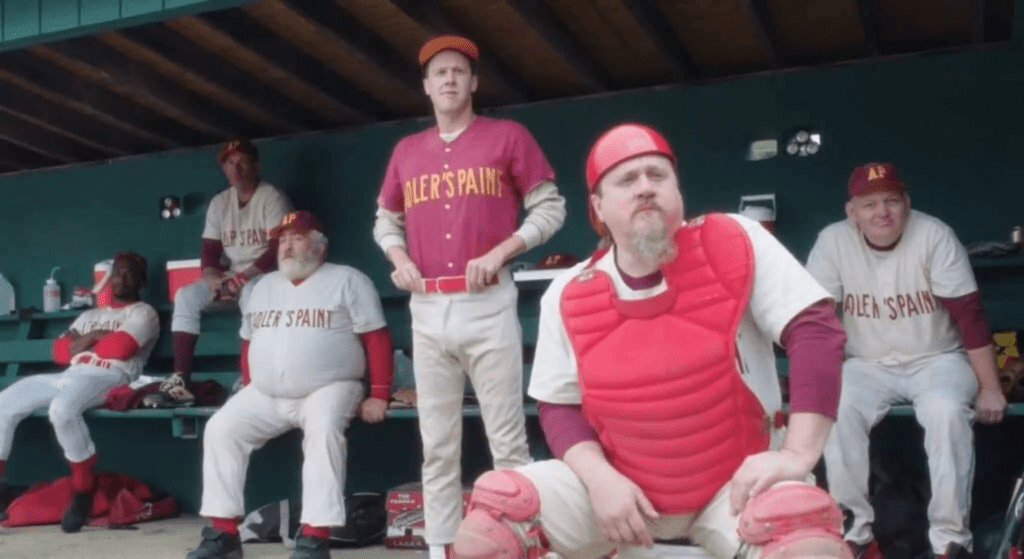
Starting off with the good was Carson Lund’s Eephus (Grade: A-). I probably wouldn’t have seen it if one-time editor Vikram Murthi hadn’t praised it on Twitter; sports are not really my thing, and I only really started watching them at all once I realized I could see them in the gay bar (because, you know… Men™). Turns out you don’t really need to know much of anything about baseball. The mechanics of the game aren’t as important as the fact that it gives the men an excuse to gather and memorialize their preferred field before a school is built on it. Lund is best known as a cinematographer, most notably with No-Budge stalwart Tyler Taormina. He caries the same sort of relaxed, slightly deadpan energy one associates with such films.

Which isn’t to say it isn’t screamingly funny, ie a man hitting a pitch and then immediately faceplanting on the ground. Much of that humor comes through in the banter and background dialogue as the men razz each other, complain about the drive to Duster’s Field, and overall mourn the passing of time. As the game stretches on, you get the sense that none of them really want to stop playing, if only because that means the friendship gets dissolved. Truth be told, you also start to feel the length of the game as it goes on. Lund keeps it easy-going, cutting between people around the ballpark and the players in free-flowing plot, so when actual tension starts to rise up it harshes the mellow a bit. What remains is the pleasure of seeing these men interact with each other, their good-nature camraderie, the sheer love of the game even if they aren’t very good at it. Like the pitch that gives the film its title, time seems to be suspended for a bit before it starts up again. And hey, like a wiseman once said: everything dies baby, that’s a fact. But maybe everything that dies, some day comes back.

Dahomey. Credit: MUBI

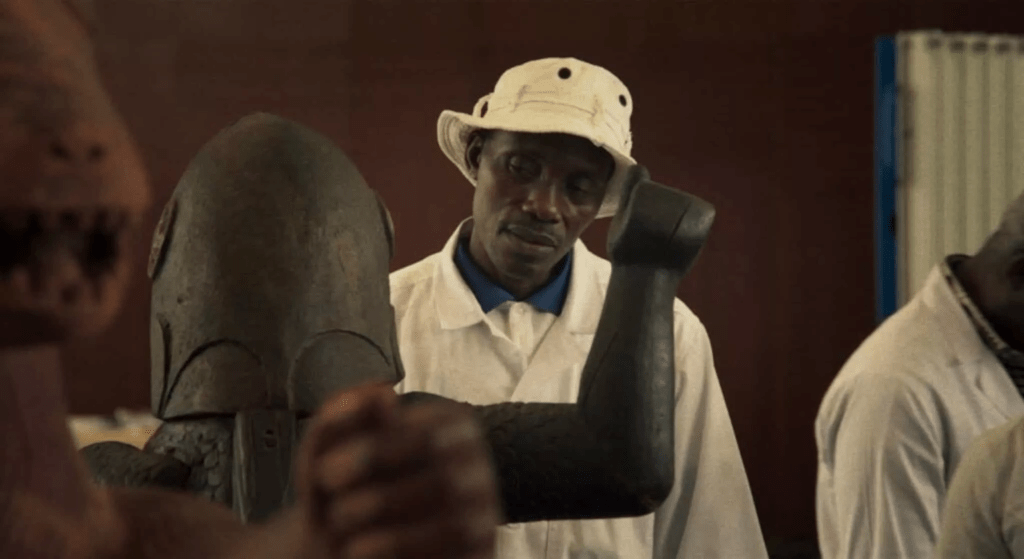
“Things coming back” is the ostensible subject of the last movie I saw at the Festival, Mati Diop’s Berlin-winning documentary Dahomey (Grade: B-). The name refers to the African kingdom – now the Republic of Benin – that has recently repatriated 26 artifacts taken during French colonial rule. Part of the documentary is a fictionalized narration of the objects themselves, telling the story of their theft and return. The other half revolves around a debate with university students, in which they discuss the fact that 7,000 objects reside in the Paris museum, and they’ve only gotten this many back through years of diplomacy.

I saw Diop’s first film – Atlantics – back at the 29th Fest when I was in college; I think it closed my festival experience then too. Maybe I need to stop doing that, because much like that one, this just kind of washed over me. It’s not without its pleasures (the music, from Wally Badarou and Dean Blunt, for instance), and Diop does have talent. But I would’ve preferred the narration for every object, or at least a greater focus on their travel from France to Benin. As enlightening and lively as the university discussion is, it takes up quite a bit of a 67-minute movie. I could feel myself getting on the wavelength for it before it dissipated. Perhaps more exposure to this type of thing is needed.

And with that, the 33rd Philadelphia Film Festival has come to a close. By my count, I saw the most I’ve ever seen at one of these, at 38. Having an entire week off will do that to you. I can’t forget my badge situation as well though; not having to pay for Centerpiece tickets meant that I took a lot more chances on entires I would have otherwise ignored. This year still felt strange to me, in that the schedule somehow felt lighter than it had in years past. Not sure if that’s because there were more films here, longer runtimes, less from the vaults, however you wanna play it. Hard to remember how you felt or what you were doing 2 years ago, after all.

What I can confirm is what many of the programming staff said about this being the best one yet. By quality alone, I saw some truly stellar productions, most of my most anticipated films living up to the lofty festival hype. The biggest regret is that I had to miss The Seed of The Sacred Fig, and am now at the mercy of NEON to play it in Philly; I also had to miss Sister Midnight, the last entry in the Focus On India section, so I hope that gets a release somewhere. As I tabulated the list, I found a lack of surprise. Most everything I loved was something I’d heard of before or had put on my watchlist ages ago. There was no Red Rooms, no Tremors, or Rose Plays Julie, ie something that came from out of nowhere to completely knock my socks off. I don’t know if that was just a testament to the year or my own evolving critical tastes (or at least an attempt to hold back on crowning something just as I come out of the theater). All that said, making a top 10 was somewhat difficult. Many of these will be strong Best of The Year contenders, if not this year than the next. There are still quite a few I saw at the full list, which you can check out at Letterboxd. With the caveat that these could shift on later viewings, here’s The 10 Best Films of the 33rd Philadelphia Film Festival:

  1. All We Imagine As Light
    Still currently my favorite thing I’ve seen all year. Payal Kapadia’s rapturous feature debut is the kind of movie you just want to sink into, absorb every sensual texture and image. She turns the landscapes of Mumbai into something like a dream and in the process enhances the loneliness present everywhere. At the risk of cliche, it’s pure poetic cinema.
    Opening 11/15 in NY and LA via Sideshow and Janus, expansion likely
  2. Nickel Boys
    Out of the story of two boys at a Florida Reform School, RaMell Ross crafts a stone cold stunner. More than anything, he crafts what it feels like to hold back memories, the associations one creates from disparate moments and references that bind themselves to your trauma. Evocative but not explicit, it’s a major accomplishment and a fine work of adaptation.
    Opening 12/13 in limited release via MGM and Amazon
  3. Flow
    Easily the best animated movie of the year on sheer visual spectacle. But it’s a triumph of visual storytelling, utilizing the full scope of body language and tone to give animals character without making them human. Makes you wish you could show it to every Hollywood studio and force them to be better.
    Opening 11/22 in limited release via Sideshow and Janus, 12/6 in wide release
  4. Anora
    The most borderline one, but the late act sells it for me. Whatever Sean Baker’s politics, there’s no denying he sees such a wide vein of empathy in his title character; all he’s ever wanted was for us to understand them, and he does through his typical mix of the profanely funny. Mikey Madison is going to change gay speech patterns for years to come. Just watch that trailer and try to say “a FRAUD marriage?!” any other way.
    Out now in limited release, expect an expansion
  5. No Other Land
    “Important” is the among the lowest forms of praise you can give a movie, but if anything deserves it, it’s this. Shamefully, there’s still no legal way to see it in the US, more than likely because it refuses to act as though people can’t come to conclusions for the things they see in front of their eyes. To quote the man outside my screening: “The people that need to see this won’t.” Upsetting, harrowing, yet undoubtedly the work of filmmakers wishing for the world to see the beauty of their humanity.
    No US distributor as of this writing.
  6. Dead Talent’s Society
    Sometimes, you just have a lot of fun with a movie. I’ll admit to being a little seal-like in my joy of seeing an extended Perfect Blue reference. It helps that the rest of the movie is committed to goofy, cartoony jokes and fairly clever in using scares as a metaphor for filmmaking. A little heart goes a long way.
    Current international plans unknown. Expect it to come over next year, if not on streaming
  7. The Brutalist
    Adrian Brody, Guy Pierce, and Felicity Jones turn in fantastic performances but the true star is Brady Corbet. He effortlessly corales power, the fantasy of America, Jewish alienation, the Holocaust, and so much more into a surprisingly brisk, There Will Be Blood style epic on one man’s quest to stake his name. The fact that a movie that looks as good as this – from the sets to the costumes, down to the camera movements and compositions – for $10 million is an indictment to every actor and producer working in Hollywood today. Utterly overwhelming, and yet intensely compelling.
    Opening 12/20 in limited release
  8. Birdeater
    Truth be told I’m a little nervous to revisit this, for fear the spell will be broken. I still don’t want to give too much away from this singularly demented creation, still the most insane thing I saw at this festival. Utilizing editing and framing almost as an attack, Jack Clark and Jim Weir plunge you deep into a singularly anxious mind and then constantly pull the rug out, veering from surreality to comedy back to relationship drama and horror. Maybe the substance isn’t quite there. I gotta hand it to them for making what feels like the most unstable movie I’ve ever seen (and I mean that entirely as a compliment).
    US release unknown. Out in Australia
  9. The Order
    It might boil down to standard “cops and robbers” but what well-wrought cops and robbers these are. For whatever lack of depth (and copaganda, if you feel it) may be present on the cop side, the robbers – in this case, white supremacist terrorists – get an utterly chilling treatment that their charisma can’t hide. As much as we tell ourselves it’s done, the words of Quiz Kid Donnie Smith ring-out over the climax of The Turner Diaries: “we may be through with the past, but the PAST ain’t through with us”.
    Opening 12/6 in limited release
  10. Night Call
    The more I’ve talked about it, the more I’ve come around to this taut thriller’s ending. Michiel Blanchart wrings every bit of tension he can from his setpieces, but notice the protagonist’s relationship with the BLM protestors. Uncommonly smart when it comes to its character’s actions, ultimately unsparing as the circle closes in around him. It might be the movie I’m most looking forward to revisiting, and I hope it captures more attention when it releases.
    No date set, acquired by Magnet Releasing, should be limited within the next year