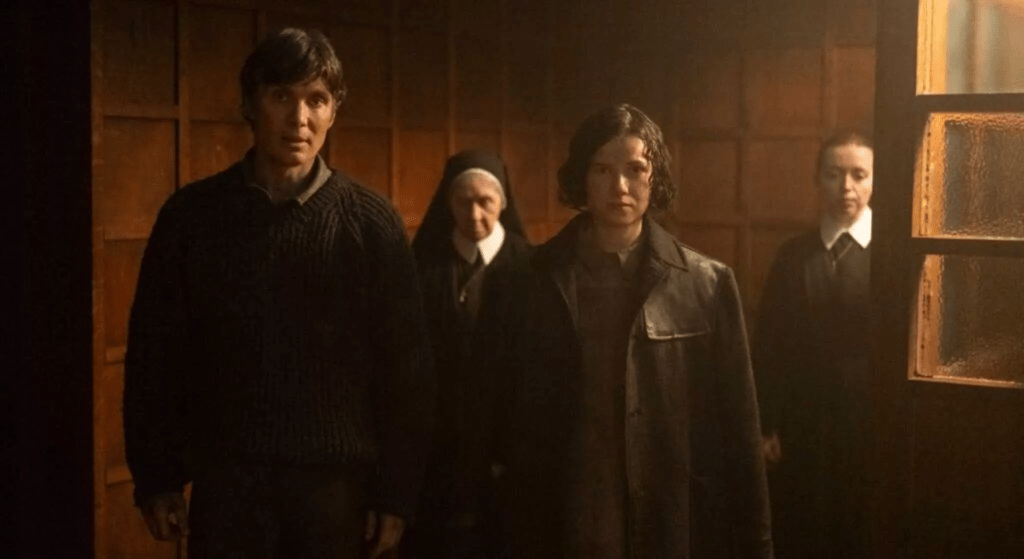
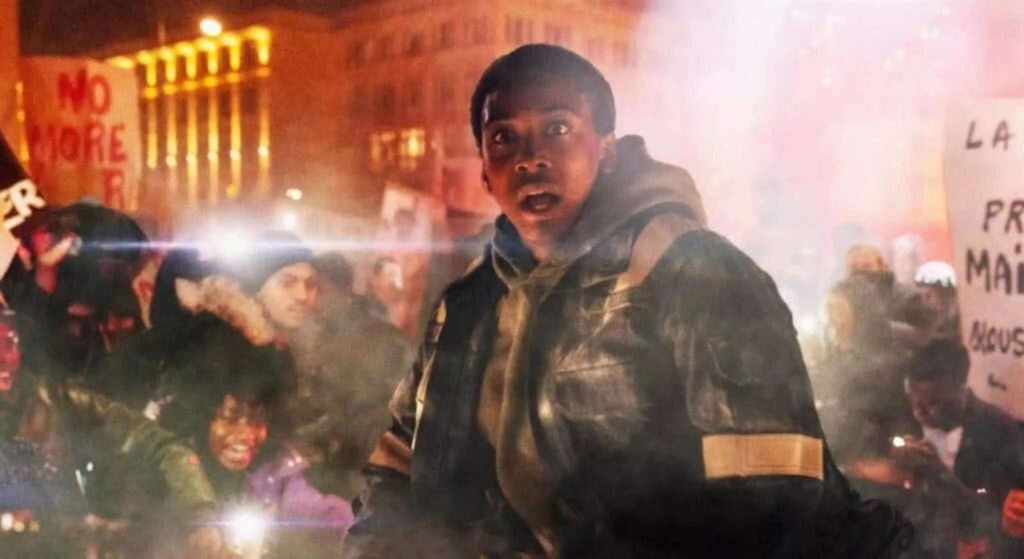
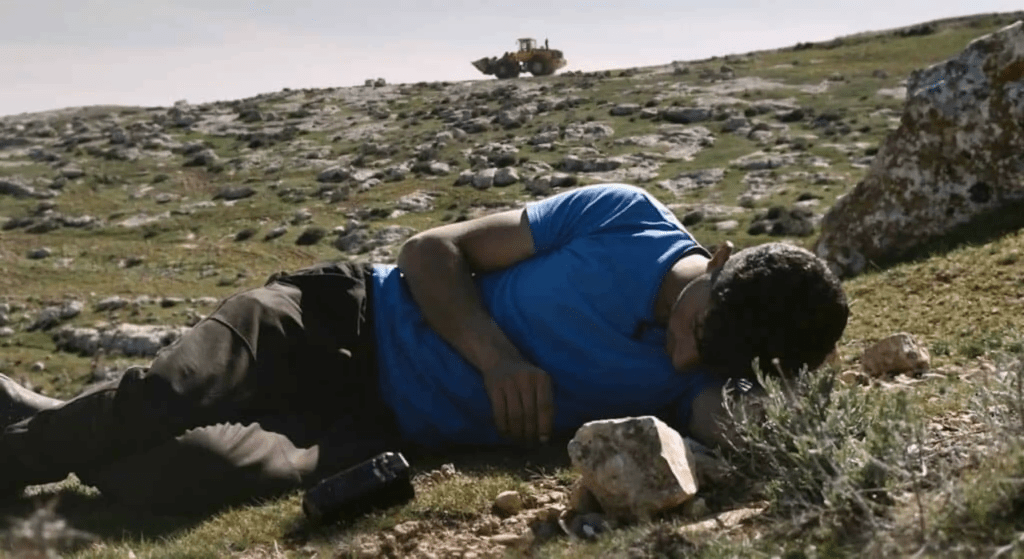
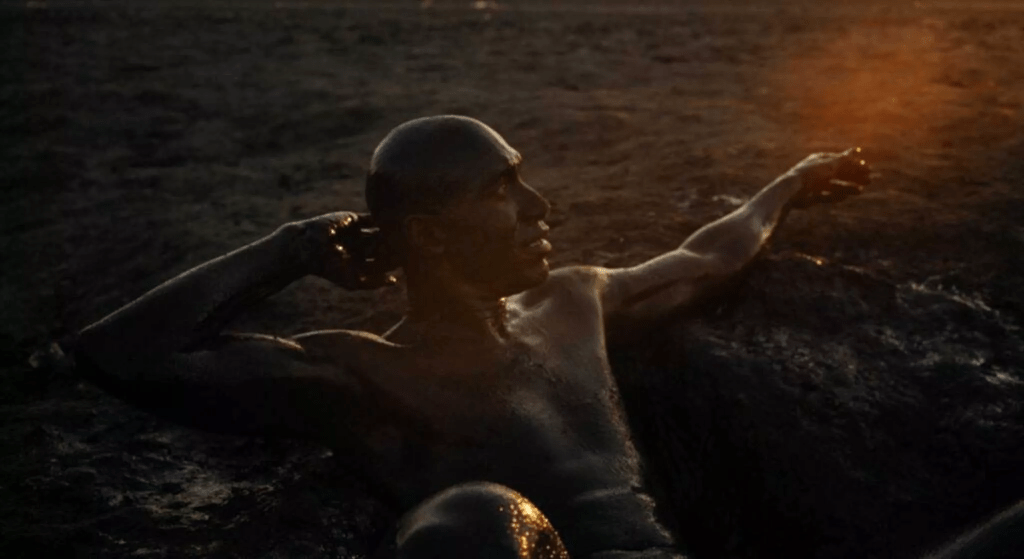
PFF33 Day Four: Mike Leigh Delivers Some “Hard Truths”

Elsewhere, Real Pain in multiple senses

A Real Pain. Credit: Fox Searchlight

My goal for attending PFF has usually come down to shoving as much cinema in front of my eyeballs as humanly possible. The majority of the time, it’s the most acclaimed films I’ve been following throughout the year, and as you can imagine, that’s not always conducive to brain power. Sometimes, you do need something a little light, a little more normal, if only to reset the paradigm. A pallette cleanser, if you will.

Said cleanser came in the form of A Real Pain (Grade: B), the most quintessential sort of crowd-pleasing comedies festivals love to program. It’s got Jesse Eisenberg and Kieran Culkin playing on their most associated character types – anxious nerd and More Psychologically Stable Roman Roy – as the two of them go on a Jewish history tour of Poland in honor of their recently deceased grandmother. This is ostensibly inline with the recurring theme this year of Jewish identity and responses to the Holocaust, which to be fair the movie (written and directed by Eisenberg), does dive into. Specifically, it’s most interested in memory and remembrance, how much trauma a person should have to hold on to and live out. On top of that is a comedy that often veers towards cringe; Culkin is doing his quippy asshole schtick and for the most part it is pretty funny. For me, it passed a time early on from “oh you” Comedy Type to “ohhhhh you” Deeply Damaged, far sooner than the movie wants us to get there. Thankfully, the requisite emotional scenes carry the necessary power to forgive the somewhat standard journey. It’s the nicest movie you’ll see about generational Jewish trauma, no more no less.

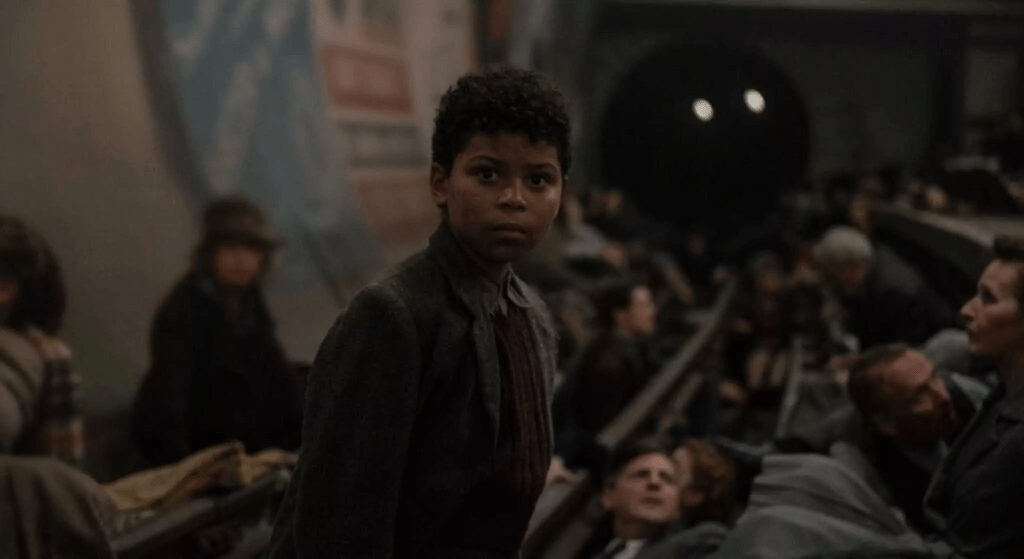
Today was an unexpectedly trauma-filled day, though filtered through distance and abstraction of sorts. Perhaps the most thrillingly unexpected of these was Nickel Boys (Grade: A), a movie I didn’t know much about except Colson Whitehead book, the director of Hale County This Morning, This Evening, and reformatory school. Cue trepidation when the opening POV style shots didn’t shift over to regular camera style, leading me to write down “Is it going to be like this the whole time?” Yes, and no. RaMell Ross’ main “gimmick” here is shooting everything from first-person, sort of like the sitcom Peep Show (or Hardcore Henry, for those less cultured), observed totally through the eyes of the main character. Once it introduces the other lead – Turner (Brandon Wilson) – the gimmick becomes less blatant and more like a normal movie, easing whatever dissonance or annoyance may be wrought.

Still, nothing can quite prepare you for the sheer overwhelming power Ross accumulates. The story was inspired by the Dozier School For Boys, a reform school in Florida (shout-out Tallahassee) home to unimaginable horror; unmarked graves were still being found as late as 2019 (the school closed in 2011). While the great temptation is to show us in unflinching detail what happened to these boys that made them want to flee, Ross withholds but in no manner does he shy away. Cutting freely between time, across memories, filled with detours to old films, MLK speeches, and impressionistic montages, Nickel Boys has the feeling of reliving memories, the random bits that get imprinted and conflated, how those times get chopped up and covered up to avoid looking at it directly. Here’s a movie that only needs to show us a fragmented scene of a whipping room and give us hints at boys being disappeared to know that when a boxer accidentally wins a match he’s supposed to throw, whatever becomes of him is going to be terrible (that part, with the camera held close and just off-centered on his face and outstretched arm, his pleas of “I didn’t know!” are stomach churning). By the time it hits a scene later in a bar of a reunion between students, before a montage of such powerful emotional clarity that shines through any abstraction, I knew I was seeing something major. The fact that a major Hollywood studio is willing to fund something so bold and downright experimental is heartening, as is such a beautiful expression of Black art. It will definitely not be for everybody – especially with the POV shots – but it deserves to be seen (and I will be cracking open my Criterion of The Underground Railroad as soon as humanly possible).

Hard Truths. Credit: Bleeker Street

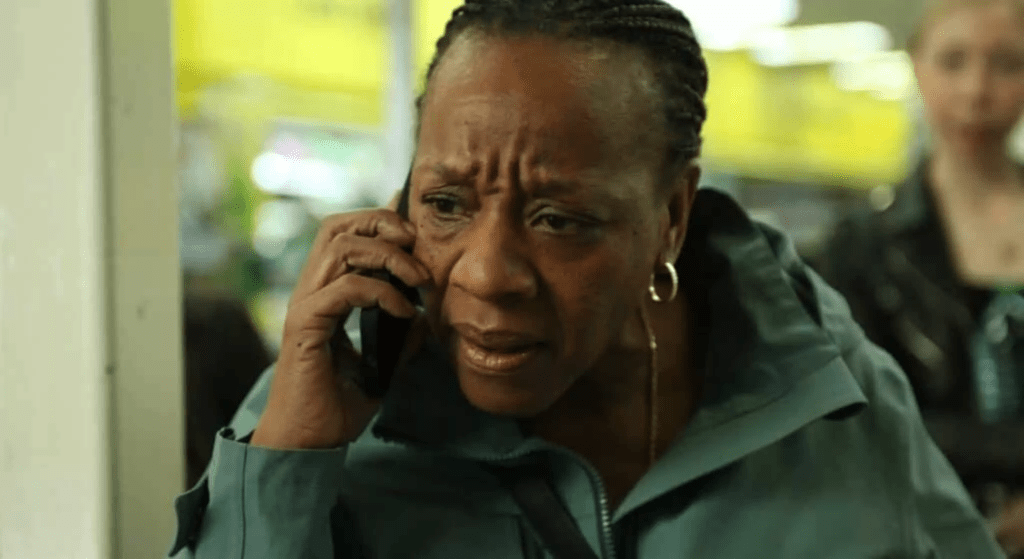
Finally, speaking of studio funding: Mike Leigh! The great filmmaker has always had trouble finding funding thanks in part to his famous method (in short: assemble a group of actors, have them create characters, improvise a series of scenarios and backstory, then write a screenplay) but the situation has been a lot more dire in recent years. His latest got rejected from several big festivals despite having won the main prize at two of them, something that usually guarantees you an out-of-competition slot. Given that Hard Truths (Grade: B+/A-) centers around a black cast – including a reunion with Secrets & Lies star Marianne Jean-Baptiste – it’s not hard to imagine majority white boards from passing on a character as venomous as Leigh’s most infamous creations (ie, Johnny).

Then again, Pansy is an extreme difference from even that Naked lead; at least Thewlis gave him a modicum of charm that suggested why people would put up with his shit. Jean-Baptiste does a near complete 180 from her previous character, draining any and all warmth and even joy to portray a woman so remarkably unpleasant she causes winces from everyone she comes into contact with. She lives in a sterile house, obsessively cleaning when she isn’t sleeping or berating her quiet son Moses (Tuwaine Barrett) and put-upon husband Curtley (David Webber). One of the often celebrated aspects of the Leigh Method is how the actors can really make you feel that hidden backstory the years of these relationships; Barrett and Webber’s faces during an early dinner scene show the strain of having dealt with her all these years.

By contrast, her sister Chantelle (Michelle Austin, aka Hortense’s friend in Secrets & Lies) is much better adjusted – single, but with two daughters each dealing with their own unique strife. It’s enough to make you wonder why Pansy turned out the way she did; in a pivotal scene, Chantelle even asks and the only response is “I don’t know”. Jean-Baptiste’s outbursts are often very funny (when asked if she’s ok, she snaps back “I’m at the doctor’s office!”) but she unveils an awareness that something is wrong within her. Whether it’s a lack of control, some type of childhood trauma, deeper mental illness… Leigh resists giving deeper answers. I think I would’ve appreciated if it had been longer; at 97 minutes its shorter than both Naked and Secrets & Lies and though the former is similarly plotless, there’s a sense of greater development of all the characters. Specifically, I would’ve loved to see more of Moses – a small moment when a girl shares candy with him could’ve powered its own movie, frankly. Lower key Leigh is still masterful, or close to it at least. It’s criminal that no one seems to want to give him money – the hardest truth of all may be the current state of the film industry.

Tomorrow: Palestinian documentary No Other Land, and a thriller about the Pope(s)[?]

PFF33 Day Three: A Slew of Centerpieces (Including One of the Best of the Year)

And also Maria is here

All We Imagine As Light. Credit: Janus/Sideshow

Payal Kapadia’s All We Imagine As Light (Grade: A) is a frontrunner for my favorite film I’ve seen all year. Don’t know how to start this off other than just to put it plainly. There may have been no other film I’ve been anticipating all year, at least since the reviews and the Grand Prix award started coming in and it’s clear we’ve got a major talent on our hands. At turns luscious, dreamy, and poetic, Kapadia’s crafted a thing of true beauty, a grand claim for the female voice in Indian cinema.

Her previous film – 2021’s controversial documentary A Night of Knowing Nothing – featured fictional love letters read in voice over between film students interspersed with footage of protests against the Modi government, something which I’m told has gotten the film banned in a few states (and probably had something to do with why the selection committee passed it over at the Oscars, all man board notwithstanding). Here the voiceover returns and paired with the evocative nighttime shots of Mumbai, it’s transcendent – beginning first with a survey of Mumbai’s many languages describing the city, and then featuring everything from poetic dialog to text conversations.

The former centers around nurse straight-laced Prabha (Kani Kusruti). Her husband is away in Germany for work, unseen, represented by a foreign rice cooker she receives one day in the mail. In the thorough of loneliness she starts to fall into some sort of connection with a doctor at the hospital (Azees Nedumangad), though it’s clear to both that as much as they may want it, this is an impossible thing.

She lives with Anu (Divya Prahba), the source of the aforementioned text conversations. Those are for Shiaz (Hridhu Haroon), a handsome man who – more crucially – is Muslim; the forbidden nature of their romance would seem to point more towards her parents but given Modi’s current Hindu nationalist leanings, it’s not hard to read that as a comment on the country at large.

Kapadia’s political leanings don’t stop there either. The scene most reminiscent of A Night of Knowing Nothing features Parvaty (Chhaya Kadam), an older woman being threatened with eviction from her home of 22 years to make way for luxury condos, as she gathers with a group of activists. Her trip back home to her seaside village provides the ostensible plot, and it’s where the film ends in a particularly stunning shot. It can’t be overstated how beautifully shot the film is, awash in the life of the city, capturing its essence. Kusruti’s radiant performance provides the biggest emotional hook, but it’s the interplay with the actresses that provides the film with its beating heart. Here’s one that knows better than to lean into trite female celebration, instead drawing out the much deeper connections between them all, and from us.

Maria. Credit: Netflix

The same can’t really be said about Maria (Grade: C), Pablo Larraín’s capper to an impromptu trilogy about the fraught lives of famous divas. In this case, the diva is Maria Callas, a woman I admittedly know next to nothing about besides the Opera and that one clip of that old queen saying he’s never heard a bad performance from her. Unfortunately you’re not going to learn much of anything about who she was or her life from this.

I rather enjoyed Jackie a lot, Spencer a little less but I still think fondly of it and Kristin Stewart’s performance. Despite also being scripted by Steven Knight, this one is rather inert, almost boring. As La Callas, Angelina Jolie captures what I assume the mannerisms of her are (and looks the part in footage shown in the credits). She never gets into a big screaming match or throws things across the room which I suppose is a small blessing for this kind of biopic. But something about the dialog just kept rubbing me the wrong way; extremely blunt and sounding performative, but with no real insight as to whether she really believes any of that or not. It’s straining to be clever in a way that the last two never reached, with so much emphasis on the distinction between Maria and La Callas but without anything in the sense of differentiation. Larraín introduces a newer stylistic track here from Jackie‘s TV special shooting and Spencer‘s haunted house perfume ad, in this case sequences of a drug-induced hallucination (?) of Kodi-Smit Mc-Phee interviewing Callas and getting precisely zero out of her. There’s lots of clips of Jolie singing and if that’s really her voice she must be commended. At worst, Maria resembles a more traditional biopic, something that could never be said about the others. It’s as if it relies too much on the audience knowing anything about Callas’ past and expecting that to carry through. A late scene featuring her sister shows the better movie hiding in there, but it’s just not enough.

The Brutalist. Credit: A24

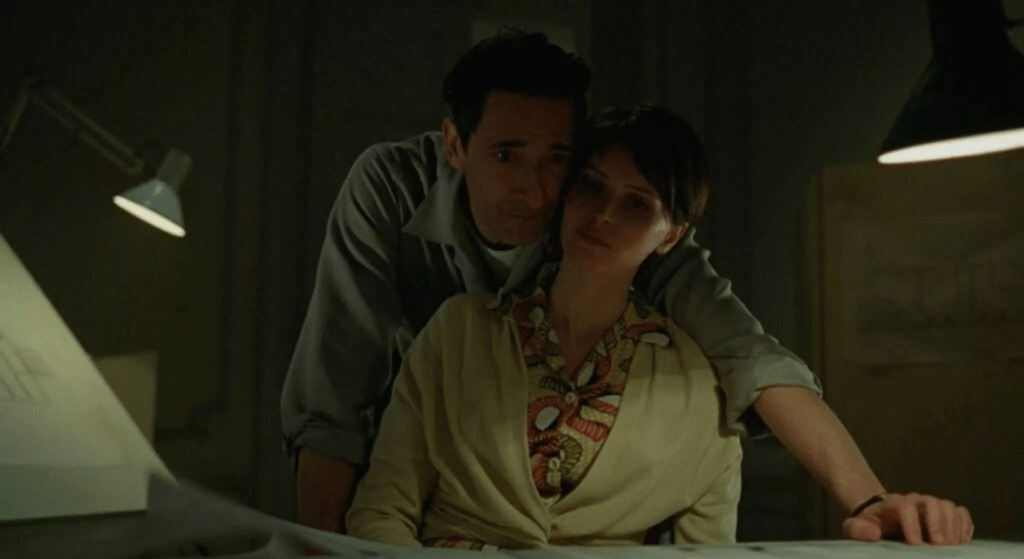
“Too little” is not a word anyone would use to describe The Brutalist (Grade: A-) – all 215 minutes + intermission of it. Brady Corbet’s – erstwhile European arthouse actor turned cold, provocative director of The Childhood of a Leader and Vox Lux – film has been described as an attempt at the Great American Novel and there’s really no other way to describe it in its epic sweep. The brutalist of the title is one László Tóth (Adrien Brody), a Hungarian architect fleeing the Holocaust to come to a little town called Doylestown in Pennsylvania (trust, that got a lot of reaction from the crowd).

Split into two acts covering roughly a couple decades, Corbet and co-writer Monica Fastvold have a lot on their mind: foreignness, Jewish people’s precarious place in society, the promise of America. Largely they mange to pull it off, and moving at quite a clip. By the time we hit the built in intermission I was certain we would be getting more chapters. Guy Pearce – as an industrialist who hires Tóth to construct a community center – injects a big dose of mid-century energy into the proceedings, pulling at threads of power and those who wield it over others. I’m not fully convinced the film has the necessary emotional power befitting of such an epic, and admittedly it does lag a bit in the interminable battle to get the center built. Still, the massive achievement of pacing itself cannot be denied, and I’m sure it will only rise in estimation once I get back around to it.

Finally, quick detour for some behind the scenes info: a big part of scheduling involves looking up US distributors, info that used to be on the program but for a few years now has not been there. If it’s from an A24, a Neon, a Mubi, etc. chances are that it will be coming to Philly, and so I feel much safer about skipping. This is part of how I found myself at the late night screening for Cloud (Grade: B+), a movie I likely would’ve seen eventually but frankly, did not want to take the chance that it would be coming a full year from now.

That aside: this is one of three or so Kiyoshi Kurosawa films in the pipeline this year (one of them, Chime, is on a Web3 platform or something) and Japan’s surprise choice for Best International. It follows Ryôsuke (Masaki Suda, the titular boy of The Boy and the Heron), a factory worker more concerned with his side hustle of reselling goods on the internet. What he’s not too concerned about is whether those goods are legitimate or whether the price he charges is fair. Naturally, this does not endear him to those he does business with, giving Kurosawa the chance to go back to the mode of Cure and Pulse that made him famous in the West. I don’t want to give away too much as to where it goes, other than to say it feels sort of like a Yakuza substory at times, perhaps one where Kiryu has to beat the shit out of someone scamming people. It may take a bit to get to the good parts, and the analysis of internet behavior may not be more than “anonymity (and money) breeds conflict”. But it’s a cracking thriller, uninterested in trying to garner sympathy for the lead but not too concerned with overly punishing him. If anything, it features a gunfight that suggests Kurosawa could make a pretty good action pivot.

Tomorrow: Mike Leigh reunites with Marianne Jean-Baptiste, Jesse and Kieran Go To Europe, and I try to make these things shorter for my own sake.

PFF33 Day Two: Sean Baker’s Grand Return

Plus the first of many Indian films, and the craziest of the festival so far

That one screenshot from Anora. Credit: NEON

There was probably no film more anticipated this year than Sean Baker’s Anora (Grade: A), at least judging from the packed house I barely made it into. That would still be the case even if it hadn’t won the Palme D’Or this year (incidentally: pretty sure this is the first time the Palme winner has been in a Centerpiece slot and not in a side section in a hot minute); since breaking through with 2015’s madcap iPhone-shot Tangerine, Baker has only gained in prominence and in filmmaking prowess. The Florida Project and Red Rocket were both previous PFF entries, as well as movies I like to love a whole lot for both their sunbleached visuals and the uproarious laughs.

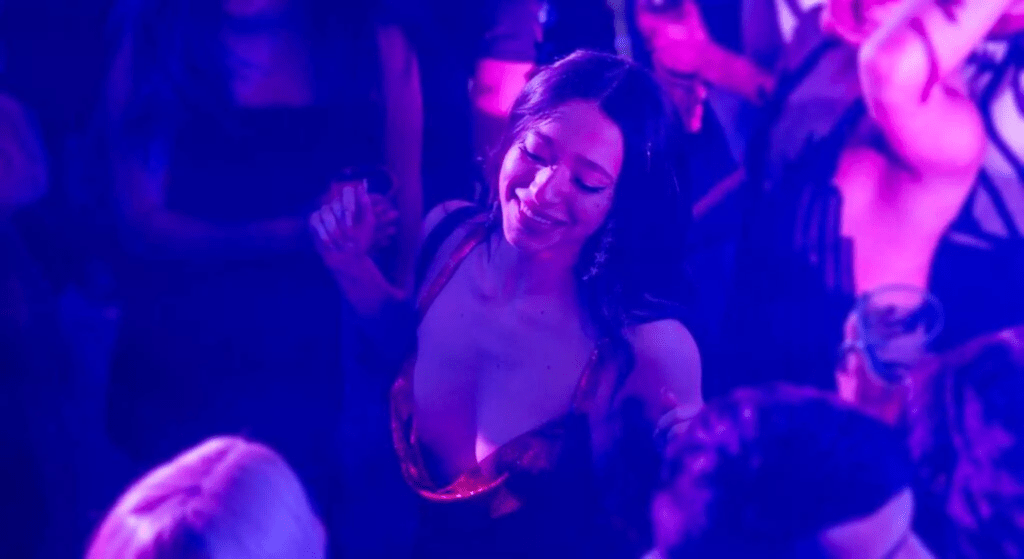
Anora is much of the same in some ways. For one, it’s the fourth in an unintentional series of films spotlighting sex workers, in this case the titular Ani (Mikey Madison), who works at a New York strip club. The shift to a relatively more dreary environment hasn’t stopped Baker from drenching the screen in color, awash in the neon lights as we follow Ani dance and hustle through a regular night of lapdances and parties. At first that seems like it’ll be the routine when Ivan (Mark Eydelshteyn) – or Vanya – walks in. Over a series of the quick-cut montages reminiscent of Red Rocket’s many sex scenes it moves into a private meet up, and then a girlfriend experience, until suddenly the two are married in a Vegas church (entirely sober, mind you). This is depicted less as a sort of romance than it is a bit that both decided to get into because why not? Ani scoffs at the initial proposal but we’ve seen her enchanted by Vanya’s luxurious lifestyle courtesy of his (potentially) oligarchical father and hey, they do seem to have fun together. That is not how Vanya’s family sees it and reality comes crashing in with the arrival of some Armenian associates (Karren Karagulian and Vache Tovmasyan, plus Yura Borisov), hellbent on annulling the marriage.

The film is by no means boring or lackluster in its first act. Eydelshteyn makes some particularly hilarious physical choices (ie, a backwards somersault on a bed) that – combined with his boyish charm – make you see what Ani might. But it’s once things all go to hell that Madison lights off the firecracker of her performance, turning into something of a hellcat. She’s effortlessly funny throughout, exasperated and confused, dropping off “fucks” like it’s her job. And yet there’s also some fear (of who these randos are and what she’s gotten herself into), and something like a desperation to hold onto the fairytale of a life with Vanya. Like all of Baker’s protagonists, she’s a real, flawed person, trying to make her way through this mess of a life, clawing her way out of desperation. I don’t know if I’d say it’s his best yet (I need to rewatch Tangerine and The Florida Project); what I can say is that Baker’s successfully controlled the chaos that’s often popped up into something more entertaining than stressful. He also lets the audience have a big cheer moment, before immediately undercutting it in truly devastating fashion. For whatever faults he may have – inside and outside filmmaking – here’s someone dedicated to showing the full spectrum of humanity, warts and all.

Armand. Credit: IFC Films

I didn’t plan it but today was a pretty women-centric day, at least onscreen. One of those women was Renate Reinsve, most famous for her Cannes winning role in The Worst Person In The World (a PFF30 entry!). She’s had something of a productive year in both Handling The Undead (Sundance, unseen by me) and A Different Man (one of the year’s best). Her third – that’s made it to the U.S. at least – is Armand (Grade: B/B+), Camera D’Or winner at Cannes (aka: best debut). In a shift from the younger focus of some of her characters, she plays Elisabeth, a single mother and actress called to a meeting at her son’s school where she learns he’s been accused of committing a heinous act against another child.

The details of said act are sketchy; only one child’s side is known, and no one else appears to have actually seen what took place. Further complicating things is her relationship to the parents of the other child (Ellen Dorrit Petersen and Endre Hellestveit), as well as her own struggles and issues, most clearly seen when she uncontrollably breaks into laughter for several minutes before segueing into sobbing.

If Elisabeth’s name and occupation didn’t raise any eyebrows, then knowing that director and writer Halfdan Ullmann Tøndel is the grandson of Ingmar Bergman and Liv Ullmann certainly raises the spector of Persona (not unfounded, thanks to the focus on two women and encroaching psychological breakdown). Tøndel possesses some definite technical brilliance at least, contributing to very recent subgenre of “movies shot like horror that are not horror”. He wrings tension out of a malfunctioning fire alarm (ignored warning signs?) and deeply unnerving sound design that seems to emphasize every step that echoes in the empty school. Unfortunately, he decides to take it into a more surreal direction, not quite verging into explicit horror but diverging enough from the drama template to break the spell a little. At almost 2 hours, it’s maybe a bit too long, but Reinsve is an absorbing screen prescence, and there’s at least some meat on the bones for a good while.

This year, PFF is spotlighting Indian film through a whole section, and my goal is to try to catch all of them at the fest. The first of these is Girls Will Be Girls (Grade: B-/B), a coming-of-age story directed by Shuchi Talati. It follows Mira (Preeti Panigrahi), a girl who’s just been made head prefect at her boarding school in the Himalayan Hills, as she begins a tentative romance with Sri (Kesav Binoy Kiron), a new boy from overseas. The main conflict comes in the form of her more traditional mother Anila (Kani Kusruti, also from this year’s All We Imagine As Light) forbids the relationship but has no issue becoming close to Sri herself.

Talati’s camera makes good use of the landscapes, but I found the film itself rather slight. There’s the seedings of themes of womanhood, of the patriarchy in India, of the changing times (it appears to be set in the 90s) and a later scene makes a slight tonal twist that emphasizes what being a girl means for Mira, for the most part it’s rather understated. The plot as a whole is sort of meandering, unified mainly by the romance which is rather cute. It’s pleasant – which, there are worse things to be – but missing some kind of spark perhaps. Maybe I’m just being too harsh on it.

“Harsh” may as well be one of the words to describe Birdeater (Grade: B+/A-), so far the most “girl what the FUCK is happening????” film I’ve seen at the fest so far. “Unclassifiable” is another one. Jack Clark and Jim Weir’s debut has a simple enough premise – a man invites his fiancee to his bachelor party in the Australian wilderness – that gives one a certain impression of how things might go; Clark and Weir certainly do, judging from the prominence of a poster for Wake In Fright, perhaps the most famous “bad things happen in Australia” film next to Wolf Creek.

It’s not so much what happens, though a dinner scene features a revelation so out-there it sends the entire party into a tailspin. No, Birdeater is a truly demented construction of almost jazz-like editing – with score to match! – and a tone that occasionally feels like an Aunty Donna sketch. There’s some truly dread-inducing shots, like a truck driving off into the vast darkness, but it’s never quite “scary”. “Dread-inducing” feels proper, as it reveals itself to not so much be about toxic masculinity (though of course, that features in) so much as it appears to pull at the fragile stability of straight relationships. It’s telling that the one person who seems completely normal is the lone bisexual out of the cast. I may just be easily wowed by technical prowess and pretty images, of which there are plenty. Birdeater deserves marks for sheer audacity if anything else. You kind of have to respect something this destabilizing on a such a formal level, as fractured as the psychologies of the characters.

Tomorrow: One of my most anticipated movies of the year, Payal Kapadia’s All We Imagine As Light, plus Brady Corbet’s Great American Epic The Brutalist, Pablo Larraín’s Maria, and the latest from Kiyoshi Kurosawa

PFF33 Day One: SNAFUs and a Very Good Dog

Opening up the festival with the Munich Hostage Crisis and feral Chinese dogs

September 5. Credit: Paramount Pictures

I love Festival Season. As a longtime Oscar watcher and film obsessive I’d scour every trade I could to see what the hottest incoming releases were. Once I got to college and realized that the Philadelphia Film Festival was not just a local fest but, in fact, had heavy hitters, I did my damndest to attend nearly every year I was in the city. So far, it’s been the only festival I’ve had the pleasure to go to – mainly out of location and timing concerns, and thanks to being in college for all that time. PFF is as associated with fall as my own birthday, and coming back feels like home in a way.

The point of this long-winded intro is that I consider myself a pretty plugged in person, one who’s just started going to the Opening Night showings because I both have a job and have passes that make it easy to decide whether I want to or not (also helped that the last two have been American Fiction and The Banshees of Inisherin, even if I only got to see the latter). Which is to say I was a bit surprised and confused when September 5 (Grade: C+) was announced as this year’s opener because I was pretty sure I had never heard of it until then. Turns out, I had; it was at Venice and a couple other festivals. It’s not difficult to understand why it might’ve been chosen either. Set during the 1972 Munich Olympics, it follows an ABC TV crew as they stumble upon and begin reporting on the Israeli team being taken hostage by Palestinian terrorists, most famously dramatized in Steven Spielberg’s Munich.

It’s undeniably tense and often gripping, with the added pleasures of the many analog processes needed to bring live news coverage in front of television viewers (I didn’t realize that captions had to be physically made like that), and for the most part it avoids slipping into Newsroom-style “how it should’ve gone”. But at the same time, I can’t help but focus on the fact that it reduces the Palestinians to faceless terrorists, including a very creepy black and white image catching them one on a balcony. To be fair, the film is not unaware of the biases and subjectivity around such an unprecedented event. Multiple arguments occur over whether they can show someone getting shot on live television, and there’s a recurring theme of how bad it would be for Jewish people to once again die horribly on German soil. It never quite reaches the level of soul searching needed to fully fend off whatever the bad vibes, and mostly just settles for recreations. The fact that it doesn’t ever leave the control room hampers things quite a bit too, as does the relative anonymity of most of the workers save Leonie Benesch’s Marianne. Director Tim Fehlbaum was unknown before this. He’d probably be a journyman in a functioning studio system.

Xin and Eddie Peng in Black Dog. Credit: The Seventh Art Pictures

This was actually the second film I saw this day, a process that took much longer thanks to some technical problems related to the print that saw us waiting for an hour before it started. Much smoother was Black Dog (Grade: B+), this year’s Un Certain Regard winner at Cannes and boy, does it ever live up to that title. In fact it opens with a whole pack of dogs running across the Gobi Desert, in the process causing a bus to crash. That bus holds our protagonist Lang (Eddie Peng), prone to near total silence like so many Western heroes of yore. He’s been paroled and is on his way back to his decaying industrial town, set to be demolished as part of a revitalization project. Director and co-writer Hu Guan makes wonderful use of the desolate and bare landscapes; even the abandoned buildings look kind of pretty under his eye. It’s at one of these abandoned buildings that he has his first encounter with the titular creature, a vicious greyhound that’s among the many dogs left behind as their owners have picked up or faded away.

In need of money to keep a vengeful gangster off his back, Lang joins up with a dog capturing team (lead by Jia Zhangke, prominent chronicler of modern China. His Caught By The Tides is winding its way through the festival circuit to great reviews) and becomes set on capturing it. Somewhere along the way, a bond forms. The two seem to sense that they’re both trapped in cages not all of their own making, creatures that aren’t bad but just need someone to care for them. It does help that it’s a very good dog and if you’re wondering, yes, the actor – Xin – won the Palm Dog. Guan’s film may not quite cohere together on a full thematic level, at least on first brush, somehow both blunt and elusive. He’s an expert at staging set pieces, and a late one featuring a zoo jailbreak set to Pink Floyd is kind of awe-inspiring. Like its protagonist, you grow to love the thing anyways, warts and all. And if nothing else it’s an absolutely beautiful looking film.

Tomorrow: Sean Baker’s much hyped Palme winner Anora, Renate Reinsve as a single mother, and the first of many Indian films, as well as After Hours.

33rd Philadelphia Film Festival Coverage Starts Tomorrow

A slightly different tack for reporting on Da Movies™

Credit: Philadelphia Film Society

A lot can change in the course of a year. For instance: last year at this time I was still employed, my uncle had just died, and my plans for that year’s Film Fest were scuttled both due to a small concert planning mishap and said death. Not to mention feeling a bit disappointed at the lineup that year – most of the high profile ones had either already released (Anatomy of a Fall, Killers of the Flower Moon) or were being held back for some unknown reason (The Zone of Interest, May/December).

Cut to this year: my job dissolves in November but wow, are the movies great. Which is all to say that today marks the official start of the 33rd Philadelphia Film Festival, aka the moment when my best of list gets filled out. This year is already an embarrassment of riches with the Philadelphia premieres of Anora and The Brutalist but factor in the new Mike Leigh, Payal Kapadia, Steve McQueen, Andrea Arnold, etc etc? Well… scheduling was a bit of a nightmare to say the least. I actually had to buy a badge for the first time this year thanks to demand which means I can now attempt to try every centerpiece plus opening and closing (a small blessing in disguise) and barring a few social events or exhaustion, my plan is once again to squeeze as many movies as I can in front of my eyeballs.

To that end, the purpose of this post. I’m gonna try something I wanted to do last year but couldn’t thanks to aforementioned personal issues, wherein I’ll do a daily recap/rundown of everything I saw in the style of The Dissolve and The AV Club‘s dispatches. The plan is to put up a post the next day with small(ish) reviews, ending with the usual top 10 or so when the festival ends. I will do my absolute best to put it up in a timely fashion – say, the morning of or afternoon – but I’m only human and, because I’m doing this on my vacation time, delays may occur.

All said, I’m pretty excited for this year. Some hard cuts may have had to happen but I’m confident those will come around sooner or later. If everything is as good as the hype has been, the year end list is going to be an absolute ordeal. I can’t wait. Hope you’ll follow along!

The Best Films of 2023

A (belated) roundup of a pretty great year

For a while, it was looking a bit touch and go there. I’ve been trying to do one of these since I first started this site back in 2021, but always held off thanks to something either not coming near me or still feeling like something was just missing. Hollywood seemed to be going downhill and anything not bought up by the majors was getting shunted right to streaming. Sometimes even the big ones from the majors ended up being forgotten on some platform somewhere, lost in a nebulous space. Was this it? A future where big screens surrendered to the Big Movies while everything else withered on the vine?

If the past 2 years felt like post-COVID blues, 2023 was the year when it seemed like things started getting back to normal. The MCU began to flop. A 3-hour epic about the creator of the atomic bomb made Titanic money and a Titanic reputation. Festivals were overflowing with choices and gems. Somewhere along the way, Hayao Miyazaki even managed to best Disney.

Making a list this year turned out to be murder, even with a spot reserved for my eventual #1. It felt like the first time since possibly 2019 when I didn’t have to scrape to find something to fill out the bottom ends, where cutting something was painful. Even the ones I didn’t love as much as expected still held a wealth; it’s very possible some of them could creep up on a rewatch. At the moment, these are what I’ve committed to, and it reflects how I felt at the time. First a couple rules: I go by Academy rules, which in this case means “it received a theatrical release in New York or LA long enough to qualify for awards”. That means I get to push some contenders to next year, but it does mean some unreleased or late breaking ones might get left off. In any case, if it’s been making enough lists and it’s on Mike D’Angelo’s Commerical Release Master, it counts. There will also be some honorable mentions and superlatives after. In any case, it’s been wonderful to remember the wealth last year gave, and only raises anticipation for the coming year.

15. Priscilla – dir. Sofia Coppola

A counterpiece of sorts to the big self-titled one released last year, though by no means dependent. Through Cailley Spaney’s carefully observed performance, Coppola captures how it feels to have Elvis Fucking Presley courting you and the boredom that sets in once you realize what that entails. Jacob Elordi – having something of a breakthrough year – may not look like The King, but he embodies him to get to the feeling of him. It’s a gauzy, hazy memory, both the good and the bad.

14. Bottoms – dir. Emma Seligman

Bottoms': Horny, Queer 'Fight Club' Is the Comedy Movie of the Summer

It’s tempting to focus on the Ayo Edibiri post-Emmy win and People’s Princess crowning. But I would regret not mentioning her insane roller coaster of an opening monologue that spins out a wild, anxious fantasy about your life going to shit and is truly unpredictable. That quality describes a lot of the humor of Bottoms – Rachel Sennott and Seligman’s script indulges in the teen movie cliches you expect but takes them to out-of-pocket, delirious places in its story of two gay losers who form a fight club to get chicks. More than most ironic Millenial/GenZ comedies, you either get it, or you don’t, and if you can’t laugh at the way Sennott asks “Has anyone here been raped before???”(a reading that almost made me spit out of my drink) then God help you.

13. Godzilla Minus One – dir. Takashi Yamazaki

Much has been said about the human focus: a kind of wholesome found family story, a bit of romance, the question of “How much PTSD can we shove into one guy?” And that’s still all very true. But don’t forget it’s also a pretty great Godzilla movie; when he gets to stompin’, those debris fields seem more dangerous than the Heat Breath. Sakura Ando will appear later in this list. She’s had a good year!

12. The Boy and The Heron (aka How Do You Live?) – dir. Hayao Miyazaki

The Boy and the Heron: Hayao Miyazaki and Studio Ghibli at their best - Vox

Not at all what you’d expect, maybe exactly what we deserve. Possibly Miyazaki’s most complex on a pure narrative and symbolic level (don’t quote me on that) yet still managing to carry forth a wave of emotion. Just watch someone run, or a bird fly, and you’ll remember you’re in the hands of a master. He may not really be retired but if he is, what a way to go.

11. Falcon Lake – dir. Charlotte Le Bon

Falcon Lake' Review: Pack Water, Sunscreen and Palo Santo - The New York  Times

Sometimes, a movie just comes out of nowhere and burrows into your head. Like Scott Tobias, I also probably wouldn’t have seen this had Mike D’Angelo not spoken so highly of it, and it becomes clear within the first mysteriously beautiful minutes. What could easily have been the banal coming-of-age somewhat romance between a teen boy and an older girl he meets on vacation instead becomes haunting and ominous, building up to an ending that feels inevitable yet crushing. It should be so simple, yet the results are nearly indescribable.

10. Passage – dir. Ira Sachs

Passages' Review: Ira Sachs' Brutally Self-Destructive Love Triangle –  IndieWire

The year’s sexiest movie by far should frankly put an end to the exhausting sex scene discourse. As the World’s First Bisexual Demon Twink, Franz Rogowski crashes through multiple lives, pulling people in, throwing them out, absorbing all of their attention until you can visibly feel them getting sick of his shit in real time. Sachs captures all of this in a very European sense: both in setting, and from the blocking. Never before has a back been so erotic on screen.

9. All of Us Strangers – dir. Andrew Haigh

Andrew Scott and Paul Mescal on diving into the great gay sadness of All of Us  Strangers | CBC Arts

Gay sex scenes are having their moment in all their explicit glory, and Haigh makes a pretty cute one. He also turns in a devastating rumination on grief, of things unsaid and things you wished you’d done. Andrew Scott and Paul Mescal have beautiful chemistry together, enough that it makes an ending that shouldn’t quite work land full force. More than anything, here’s a film that taps deeply into a generational gay experience and suggests those lines aren’t as full as you’d think.

8. Oppenheimer – dir. Christopher Nolan

In Review: 'Oppenheimer,' 'Barbie'

This should probably be higher. I don’t know what much else there is to say about it. Propulsive, entertaining, walloping. It’s a director working close to the heights of his very considerable powers, effortlessly merging past and present, history and reality, guilt and loathing, all into a complete package. Who else would make us excited for getting the band together only to then sit with the weight of our actions for an hour?

7. Asteroid City – dir. Wes Anderson

Wes Anderson's 'Asteroid City' is one of his most philosophical films, and  one of his very best | WBUR News

The longer Wes Anderson goes on, the freer he gets. The freer he gets, the more he devastates. In Asteroid City, he brings his signature artifice full circle into a movie about the making of a play, wrapped around the making of said play. It’s frequently very funny, maybe even a little chaotic. And in that chaos, we get glimpses of clarity like Maya Hawke and Rupert Friend giving heed to the wind and dancing to “Dear Alien (Who Art In Heaven)” (song of the year). No one’s better at hitting you when you least expect it; there’s lots of those moments here, but none I can explain more than having “Freight Train” recontextualized as an existential sigh of acceptance. “I don’t know which train he’s on / Won’t you tell me where he’s gone?”

6. May December – dir. Todd Haynes

May December trailer: Natalie Portman, Julianne Moore uncover truths. Watch  | Hollywood - Hindustan Times

The conversation surrounding Haynes’ latest has perhaps exposed just how much there is to explore. Brilliantly thorny, uncomfortably off-kilter, this story of an actress coming to shadow a woman who 30 years ago married the teenager she statutorily raped unfolds new layers with every second glance at its carefully composed images. Natalie Portman and Julianne Moore may have been the stars on the poster, but it’s Charles Melton who proves to be the soul and heart. He practically steals the picture from them and in a way, Samy Burch and Alex Mechanik’s screenplay suggests that’s the only moral way to tell this sordid tale.

5. Monster – dir. Hirokazu Kore-Eda

Monster” Contains a Mini-Masterwork About the Lives of Children | The New  Yorker

Maybe this is just projecting, but it feels like in some corners this has been received as somewhat of a disappointment, especially compared to Kore-Eda’s other (belated) release from this year. Personally, I think it’s as good as Shoplifters and perhaps in line with his other work. The unfolding perspectives read a bit like Farhadi but more localized; it starts as an engrossing mystery, transitions into rage at institutions, before settling in at how little adults know and how much children observe. Sakura Ando – in her second big role from this year – is wonderful, Kore-Eda wrings devastating performances out of Sōya Kurokawa and Hinata Hiiragi. It’s one of the finest depictions of the contradictions and anxiety caused by the closet, and the push-pull between doing the right thing and fitting in.

4. Killers of the Flower Moon – dir. Martin Scorsese

Movie Review: 'Killers of the Flower Moon'

An American Tragedy, immense in its scope and rooted in a toxic love story. The machinations and skullduggery being so out in the open only enhances the rage and despair at this horrible moment of history, punctuated by Lily Gladstone’s screams of anguish and pain that will never leave my head. For a brief moment, Scorsese even makes you believe that justice might be done for once, before the ending reminds you that no, this is still America, and this is still a story we will never understand. Gladstone radiates starpower, commanding the screen with simply a look, a tone of voice. It’s an unshakeable piece that reckons with its very making.

3. Blue Jean – dir. Georgia Oakley

Blue Jean (2022) - IMDb

We may be through with the past, but (unfortunately) the past isn’t through with us. Oakley’s sadly relevant debut may be following a PE teacher in Thatcherite England, but Don’t Say Gay bills are little more than Section 28 rehashes. Rosy McEwan deftly portrays the moral dilemma being closeted puts people in: when a student seems to get clocked and bullied for being a lesbian too, how can she help without putting her career and herself on blast in the process? Oakley maintains something of a suspense tone throughout, effortlessly depicting the cruelty of the situation, yet never quite letting her protagonist off the hook. As bad as things may be, the joy Jean experiences in the gay bar shows why it’s worth fighting.

2. How To Blow Up A Pipeline – dir. Daniel Goldhaber

How to Blow Up a Pipeline (2022) - IMDb

If anything deserves to get slapped with the meaningless descriptor of “urgent”, it’s this call to action. Goldhaber – along with star Ariela Barer and Jordan Sjol – turn Andreas Malm’s nonfiction book of the same name into a tense heist-like movie about a group of climate activists committing the titular act. Whatever didacticism or preaching it may offer is offset by how purely entertaining and tightly edited it is (the money shot: a cut to a flashback right as a strap breaks and everything seems to go to hell). Each member gets enough back story to understand them, and no one is shortchanged in the ensemble whether it be their jobs or their prescences. Fitting that it’s credited as “A film by Daniel Goldhaber, Ariela Barer, Jordan Sjol, and Daniel Garber”: here’s a movie the power of the collective with complete and utter faith in their beliefs and the actions needed to accomplish them.

1. The Zone of Interest – dir. Jonathan Glazer

The Zone of Interest' review: Jonathan Glazer's new masterpiece - Los  Angeles Times

I’ll admit, I had been anticipating this since the reviews at Cannes dropped. I had a spot reserved for it and everything. It got to the point where I wondered if I’d end up disappoiting myself through hype. Well, it’s one thing to read about the form; it’s another to actually experience it. Glazer throws out most of Martin Amis’ book and turns it into 105 minutes of a panic attack through sheer wrongness. Less the banality of evil and more how comfortable one can be in it. You can never stop thinking about the bodies over the fence; every word said carries menacing notes. Despite never setting foot in Auschwitz, it’s all you can think about. Perhaps the most chilling parts are how we see this evil seeping into the children, the soil, the entire environment of the place. These things happen because they become banal; they become banal because it contributes to someone’s idea of a “perfect” world. Make no mistake: everyone’s aware of it. Their inhumanity comes from believing it’s right. I can’t remember the last time I’ve been so shaken leaving the theater. Here’s a film that sits in your brain, turning over with every realized implication.

(And now, based in part off old AV Club formatting, some superlatives and extras!)

Honorable mentions: The Royal Hotel (Kitty Green), Tótem (Lila Aviles), The Taste of Things (Trần Anh Hùng), Anatomy of a Fall (Justine Triet), The Iron Claw (Sean Durkin)

Performance Charles Melton, May December: Not so much a “revelation” as a “break-out”, as I’d seen him before on Poker Face. The former Riverdale star emerges as a force with his hunched over body language, his nervous yet sweet demeanor. Melton makes him feel like he’s just play acting at being a dad, while at the same time not fitting in with the younger kids. The tension between not wanting to be a victim and being victimized for so long emerges in bursts, as in the much talked about scene on the roof, and it brings us back to the real person behind the stories.

Underrated – Rye Lane (Raine Allen-Miller): Many have decried the death of the studio rom-com, fated to be stuck with streaming fare like Red White and Royal Blue or The Kissing Booth. Here comes this charmer, a riff on Before Sunset with a wealth of style and energy to shock complacency. David Jonsson and Vivian Oparah exude wonderful chemistry together, with Miller providing a tour of South London fit to rival any classic Brit-com. It’s enough to make you believe love is real again.

Overrated – Barbie (Greta Gerwig): The big movie of the year has gotten more than it’s share of praise, criticism, rebuttals, and whatever else you want to call it. Gerwig’s movie has many charms for sure but despite that, it still ends up something of a mishmash, unable to fully shake off its corporate mandate or become a true “feminst” statement. But mostly: I just wish it was funnier.

Biggest Disappointment – Skinamarink (Kyle Edward Ball): When I first saw the poster online, I was all in. The trailer looked like the perfect mix of surreality and analog horror, and who could shake “In This House?” I don’t know whether watching a screener in my house deflated some of it when I went to the theater but alas: despite loving the look and the concept, I just found my mind wandering too much. I so desperately wanted to lock-in, and I can feel a successful version for me somewhere if it were just a little more active. Here’s hoping Ball’s next one fulfills his potential.

Most Pleasant SurpriseNight of the Hunted (Franck Khalfoun): All relative, since I don’t really tend to watch widely hated movies or things I think I’ll dislike because I’m currently doing this all for free. Which is to say: a thriller directed by the guy who did the Maniac remake may not seem all the fruitful. I found a rather tense single-location thriller, gory and brutal, and fairly plausible in keeping its heroine isolated. It may not be much more than that – and your mileage may vary as to the sniper’s ultimate political ranting. But it’s executed with a sure enough hand to stand out above a lot of Shudder exclusives.

Review: Eileen’s Psychosexual Drama Never Comes Together

The Anne Hathaway/Thomasin McKenzie two-hander doesn’t know who its’ title character is

Note: Expanded from Philadelphia Film Festival thoughts

Eileen is the sort of movie that promises a lot from the get-go. In its very first scene, we see the title character (Thomasin McKenzie) observing a couple getting frisky in the car next to her, appearing to get turned on herself before she shoves snow down her pants. The 60s setting and icy New England landscapes would point to some sort of repression on her end; at the very least, with an alcoholic father and dead-end job at a juvenile corrections facility in a remote town, her life doesn’t seem to going great.

All this is before Rebecca Saint John cruises into the parking lot in a Mustang and captures her attention. As embodied by Anne Hathaway (doing an accent, and doing it pretty good), Rebecca is the New Woman: unmarried, unwilling to take men’s shit, handling a cigarette in the way mysterious yet alluring women tend to do in movies like this. She’s arriving to take over for the prison psychologist and begins to take something of an interest in Eileen. Is it a crush? Simple mentorship? Something more sinister? The scene seems set for a dark sort of seduction.

Unfortunately, Eileen herself never seems to snap into focus. McKenzie also does an accent and it’s rather passible, but her character is too passive and internalized. The script is an adaptation of Otessa Mosfegh’s book – written by the author and her husband – and it feels as though large portions of an internal monologue were lopped out rather than integrated. Periodically, there are supremely jarring moments of fantasy where Eileen imagines herself having rough sex with a prison guard or shooting herself in the head, and they always come out of nowhere. It’s hard to even figure out if Eileen has some sort of repressed sexuality or obsessive desire since it’s not always clear what exactly she wants. Which means that Rebecca’s background story involving a prisoner who killed his father starts to become a lot more interesting, despite it being an ostensible side show.

The film takes a sudden swerve in the third act heightened by an impassioned monologue from Marin Ireland that also raises a boatload of interesting things to explore. For a moment, it seems to get into some thorny territory that itself could make a great story, but the movie ends before it has a chance to fully examine that. It’s not an issue of direction – William Oldroyd keeps a tidy pace and a clean visual style that makes great use of dark – but that aforementioned missing bits. It might’ve needed to be longer to fully unpack the impact of the massive twist. As it is, Eileen presents a titilating scenario but can’t make its protagonist shine through it. (C+)

May December and What We Mean by “Camp”

Thoughts on hot dogs, Twitter fingers, and taking abuse seriously.

Image

If you’ve been online the past week or so, you’ve probably seen the arguments about Todd Haynes’ May December. The film is – at its face – a story about an actress, Elizabeth (Natalie Portman) travelling to Savanah to interview and observe a woman, Gracie (Julianne Moore) who was involved in a tabloid scandal almost two decades ago. Said scandal is that she had an “affair” with a 13-year-old boy named Joe (Charles Melton, we’ll get to it), got pregnant, went to jail, and then subsequently married and had more children with him. All this is very clearly based on the Mary Kay Letourneau scandal from the 90s; lots of Cannes coverage mentioned this, as well as talking up how funny the movie was in addition to things like its psychological complexity. From the trailers and that coverage I had been eagerly awaiting it, especially curious to see multiple people I know and trust say it was one of the funniest movies of the year.

And make no mistake, Samy Burch’s screen play does make several jokes throughout. But I didn’t find it as funny as it was hyped. As I’ve said on Letterboxd and a few other places: while I laughed at things like Julianne Moore opening a fridge to a dramatic sting of music (aka, “I don’t think we have enough hot dogs”), it was frequently much more of an uncomfortable sort of laughter. Things like Elizabeth (the actress) remarking how none of the kids auditioning to play Joe in her movie are “sexy” enough, as you’ve just witnessed some VERY young boys. Or Gracie (the woman) telling her daughter how brave she was to show her arms in a dress in what must be the least subtle backhanded compliment anyone’s ever given. I found the movie to be a showcase of extreme repression and denial, where just hinting at the truth would be too much to bear psychologically.

The word that keeps popping up in all the discussion around the movie is “camp”. Now, I frankly do not have time to really get into what camp is – there’s been enough of that – but the way I see it: Katy Perry wearing a burger outfit to the Met Gala is not Camp. Katy Perry hurriedly attempting to get back into the burger outfit so that she can catch someone passing by is Camp. The word at its base implies some sort of artifice, a blowing up of things to heightened reality; the “tragically ludicrous” and “ludicrously tragic”, as it were. All this has lead to things like Netflix posting a screenshot of the two women with the opening to the Zola tweet thread, as well as numerous Letterboxd reviews about “mothering” and “slaying”. May December in that sense has become a sort of queer movie to some, something I can only describe as a “yass queen” type thing.

Buried under all of this is a central conflict: the implication of “badness” within the work. To me at least, “campy” means that you know something is bad or unintentional, and you celebrate that by pushing it up. “Camp” is not really made, it’s sort of the process that happens within some sort of failure or a general queer sensibility. Notably, Todd Haynes himself has disagreed with the label, and honestly if anyone would know it’s him. I don’t think it’s camp either. In fact, I think calling the movie “camp” or reducing it down to just a display of actresses actressing is sort of turning it into a metacommentary of sorts on the very scandal its adapting.

Charles Melton is the heart and soul of the movie as Joe. He practically steals the movie away from the two women and in a way, it’s really more about him and the ways he’s manipulated by the two of them. At the center of May December is the simple fact that a 36-year-old woman had sex with a 13-year-old boy and had his child. She did this multiple times; she convinced him they were in love, she maybe even convinced herself of it. The whole thing feels tawdry because it’s a sex and cheating scandal; it feels ridiculous because they were pet shop employees. That doesn’t mean it’s not deeply serious though. It’s more accurate to call May December a melodrama: these aspects are heightened to draw out the emotions of the situation, and draw your attention to the dark reality that everyone seems to be exploiting one way or another.

In a strange way, the reception to the movie is mirroring the tabloid scandal of years past. It’s easy to focus on the weird elements, the odd details, the way Julianne Moore says “I’m secure”. These are all great parts of the movie and it would do as big a disservice to dismiss them as insignificant. But it’s important not to lose sight of the man who never seems to fit in with the kids nor the adults. Someone was harmed both in real life and the context of the film; we should be able to look it straight on and call it for what it is. Men are often glossed over when it comes to abuse by women. Joe deserves to have the depth of his pain heard.

Review: The Past Looks A Whole Lot Like The Present in Blue Jean

A stunner of a debut following a lesbian teacher in Thatcherite England

We like to think that we’re better than the past. It’s just the way of the world: as time goes on, we make progress. Things improve and we learn to be more tolerant. Films about minorities tend to fall under this a lot, and it’s understandable to want to show someone fighting for their rights, or there being one person who was on the right side of history, so that the viewers can walk out of the theater shaking their heads and chattering about how awful it was back then and isn’t it nice we’re not like that anymore?

What I’d like to suggest is… maybe we’re not?

Blue Jean, the debut film from Georgia Oakley, is set during the late 80’s in the midst of Thatcher’s England. Section 28 – which banned the promotion of homosexuality within schools – has just become law. Characters will talk about this but otherwise it hangs over the movie like a cloud, a warning. The titular character of Jean Newman (Rosy McEwan) is a high school PE teacher who also coaches a girls netball team. She is also a lesbian, and at nights she transforms into the proper attire and hangs out at a gay bar with her friends and especially lover/girlfriend Viv (Kerrie Hayes), a leather butch in contrast to Jean’s more androgynous appearance (it’s a wonder she doesn’t get more rumors behind her back).

There’s some suggestion that Jean’s sexuality is a somewhat new development for her; while she doesn’t have that self-loathing that so many queer films gravitate to whenever they take place pre-1995 or so, Jean is rather happy and seemingly carefree in her carefully regimented life. Despite this, there’s a sense she’s still a little bit afraid to embrace herself, hiding Viv from her sister when she makes an impromptu visit in an early scene, and shying away from bonding with co-workers (who chitter about the law during lunch).

All of it threatens to come crashing down when she gets outcast and loner Lois (Lucy Halliday) to join the team, then subsequently sees her in the same bar where she finds such freedom. It’s here that Oakley shifts the tone to something akin to a horror film, though it never fully tips over. A terrible dilemma begins to present itself: both student and teacher know about the other. One desperately wishes that Jean could be something of a mentor to Lois, perhaps even shield her more from the bullies. But as an earlier scene makes clear – in which Jean tells Viv how she pretended to be her boss when calling a parent about one of the girls – she can never show anything that could be construed as favoritism. Not only that, but anything that could even remotely suggest she might be forming a relationship with a student beyond what’s appropriate. What the film lays bare is that laws like Section 28 create a cycle of oppression and more fear in both the adults and the youth. These moral panics about groomers discourage teens from seeking help, and adults from standing up for them and themselves. Because it’s not just her job that’s at stake for Jean, it’s everything. But what tilts it into greatness is the ease at which Oakley also expresses Lois’ point of view, depicting an understandably angry youth caught in the worst sort of rock and hard place.

Blue Jean‘s final moments bring a note of grace and understanding for both characters, while doing its best not to put too neat a bow on things. There are perhaps moments when it feels a little too blunt, too tuned into what feels like contemporary moments. At its very best, Oakley reminds us that the struggle is forever ongoing and what seems like a new low has really always been here. Those in power do their best to stamp out queer history, to make mentorship a liability and keep us at each others throats. In balancing this joy with dread, it reminds us why the fight is worth it, and who it’s all for.

The Best Films of the 31st Philadelphia Film Festival

"31st Philadelphia Film Festival" text imposed over red theater seats, with "SEE SOMETHING YOU'LL NEVER FORGET, OCTOBER 19-30" in the bottom right corner.

Back at it again.

It feels so good to be back at a festival. For about 5 years or so – pretty much since I started college – I’ve been attending the Philadelphia Film Festival in some form or another; a small blip occurred in 2017 for the 26th edition because of my co-op schedule. And of course, the 29th edition was remote thanks to COVID, while I missed the 30th because I had moved back home temporarily.

But finally, things have come back to some semblance of normality and looking back, it was a pretty great festival. I didn’t really find any new or off-the-radar picks, and there wasn’t a Tremors or a Thoroughbreds – aka, something that really knocked my socks off – but the established greats were still pretty great. Like every year previously, I’ve probably seen enough to formulate my end of year list but that of course will be held off until the other heavy hitters see fit to come to this city. At least one – Nanny – I missed due to technical issues on my first screening, and then the second and third overlapping with ones I’d bought tickets to (Women Talking) or decided to prioritize due to unsure distribution (Huesera).

For now, here’s a rough ranking of the best films I saw at the fest. Some of these are coming out imminently, other the next year. All of them are my definite recommendations.

1. How To Blow Up A Pipeline – dir. Daniel Goldhaber

The second film from Goldhaber (technically a film by Goldhaber, Ariel Barrer, Jordan Sjol, and Daniel Garber) makes good on his promise from Cam to marvelously entertaining effect. Their adaptation of Andreas Malm’s 2021 nonfiction expands it into a heist movie while still retaining the core message of direct action. Like all good heist movies, the cast is distinct and filled out. And Garber’s editing keeps things moving at a steady clip while deftly inserting flashbacks in often thrilling ways. But most importantly, it’s just a damn good film, adaptation or no.

2. Aftersun – dir. Charlotte Wells

One of those films that’s so deceptively simple yet powerful that trying to capture what makes it special in words feels futile. In short: it follows a father and daughter (Paul Mescal and Frankie Corio) on a vacation to Turkey, as filtered through the eyes of the daughter looking back on old camcorder footage. Wells mixes those camcorder segments along with slow-motion footage of the father at an otherworldly rave to capture the feeling of peering through memories trying desperately to understand one’s parents. Mescal is simply stunning, while Corio makes a promising debut, nailing that edge between adolescent and teen. This is a film of deep, emotional power, and when it connects, it hits like a hurricane.

3. Glass Onion – dir. Rian Johnson

While the novelty may have worn off a little bit compared to the first (and – admittedly – some of the satire can be a little cringe), Johnson’s much-anticipated sequel proves to be every bit as good. Riffing off the locked-room mystery, it’s suspenseful but much more of a comedy, and thankfully the hits are high. Most importantly, I’m thankful Janelle Monae finally has a role worthy of the talent she showed off in Moonlight, while Daniel Craig confirms he’s having an absolute blast as Benoit Blanc.

4. All The Beauty And The Bloodshed – dir. Laura Poitras

What could’ve been a standard (yet righteously angry) advocacy doc about the Sackler family’s art world reputation laundering becomes a devastating memoir when combined with Nan Goldin’s own photoslides and voice over. Goldin’s activisim itself is wonderful to see, but it’s this added context – this merging of past and present, of the things she’s lived through and fought against – that give her crusade its overwhelming power. It’s also a marvelous work of queer history, giving a personal look at one person while remembering everyone lost along the way.

5. The Banshees of Inesherin – dir. Martin McDonough

As if McDonough saw the doubts scattered in the wake of Three Billboards Outside Ebbing, Missouri and decided to remind everyone that, no: he is, in fact, the real deal. Returning to his playwright roots and to his home country of Ireland proves a much needed reset, as does the reunion of Colin Farrell and Brenden Gleeson (the former giving what might be a career best). This deeply allegorical tale of a disintegrated friendship is emotional, yes; but it’s also by far one of the funniest films of the year, padded out by wonderful supporting performances from Kerry Condon and Barry Keoghan.

6. Return To Seoul – dir. Davy Chou

Kim Jee-Min is an absolute force as a Korean-born Frenchwoman reconnecting with her biological family in Davy Chou’s second film (inspired by a real life anecdote). She communicates so much with her face alone and flips on a dime while remaining intensely charismatic and watchable throughout the various timejumps of the film. Wanna know what’s crazy? This is her debut performance. Chou’s script – with it’s mix of awkward comedy, luscious nightlife, and split cultures – ain’t too bad either.

7. All That Breaths – dir. Shaunak Sen

Sen’s documentary follows a group of brothers in India who run a makeshift hospital for New Delhi’s black kite population. Frequently lyrical and poetic, with lots of shots of birds flying, garbage strewn around the streets, mosquitos floating above water, it’s as much a sensory experience as it is a portrait of dedication. More that that, it connects India’s political struggles to environmental damage to give a grander picture of a nation itself at odds. Worth it alone for that magnificent bird footage.

8. Burning Days – dir. Emin Alper

Slow burn Turkish political thriller following a prosecutor assigned to a remote village in the midst of a trial over a water crisis. It takes its time setting up the dominoes but once in motion it’s gripping and morally complex, diving into aspects of corruption and toxic masculinity as scandals emerge and the pressure on him increases. A complicated film for sure, with an enticing thread of ambiguity running throughout.

9. Holy Spider – dir. Ali Abbas

I seem to be a bit of an outlier in liking this serial killer/jounrnalism movie so much; which is just as good, considering that I was a bit of an outlier in disliking Abbas’ last movie, the troll fable Border. This one is based off a real life Iranian serial killer and follows a journalist (Zar Amir Ebrahami) as she investigates along with the killer himself, proclaiming he is on a holy mission. It’s blunt about the misogyny at play, but perhaps even more potent is the idea that for the journalist, every man could be just as dangerous as the killer, especially in a society that largely believes he’s done nothing wrong since he’s killing prostitutes. It’s damning, but in more places than some would like to believe.

10. Next Exit – dir. Mali Elfman

My favorite part of film festivals is getting to discover those hidden gems, especially in the genre space. So in lieu of Decision To Leave (Park doesn’t need any help from me), I wanted to spotlight Mali Elfman’s debut feature. Opening a few months after the ghosts are proven – in a similar logline to Charlie McDowell’s The Discovery – the film follows a mismatched pair (Katie Parker and Rahul Kholi) traveling from New York to San Diego to take part in an experiment that will allow them to peacefully commit suicide. There’s a small bit of indie quirk to the proceedings, and it’s a little predictable at times. I was caught off guard by how deeply I’d become invested into the characters by the end, and before you know it, it’s become a slow burn romance that earns it. Can’t say I wouldn’t have liked a more philosophical film, or scenes like one reminiscent of The Leftovers, but it’s a rather promising debut. If anything, see it for Kholi to prove his range.