Spooktober #3: Noroi: the Curse

A movie I haven’t quite been able to get out of my mind.
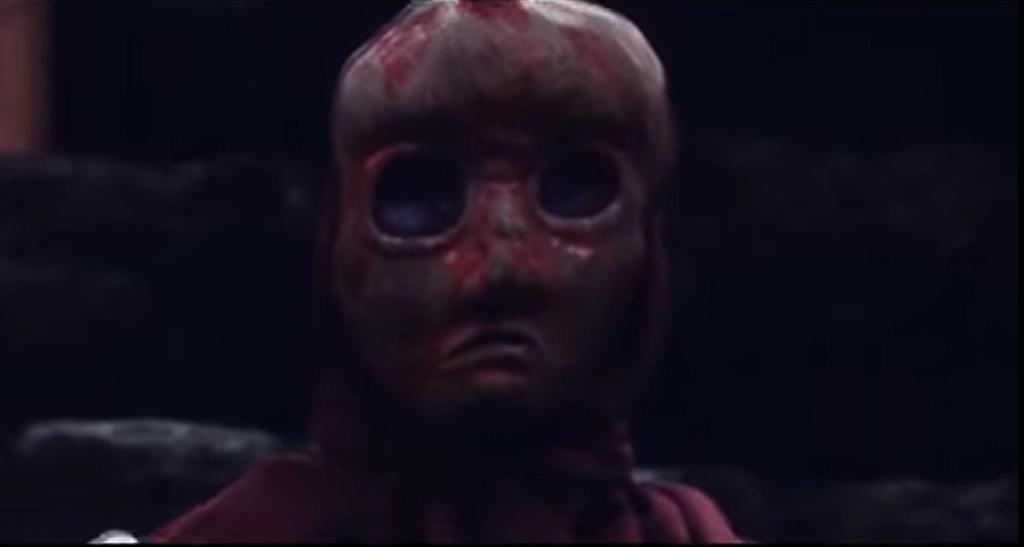
Ritual

The mockumentary – and, to a lesser extent, found footage – is a surprisingly underrated format when it comes to horror. Perhaps it’s due to the genre’s main association with comedies. Or perhaps the cheapness and extensibility of found footage created a default state for filmmakers. After all, why go to the trouble of drafting a world when you can just pretend someone stumbled upon this horrifying video footage (never mind the question of “who assembled this footage just so”). A true fake documentary holds greater potential, because of the nature of having to assemble something. Think Ghostwatch, where a British television special on hauntings accidentally becomes something realer. Or Lake Mungo – beloved by many, more appreciated by me – which uses a talking head format as a starting point for a ghost story.

Noroi: The Curse commits fully to its premise, presenting itself as an unreleased documentary by paranormal researcher Masafumi Kobayashi. It blends typical documentary footage and in person interviews along with archival footage of variety shows and news reports, all shot on 2005 era video cameras with the according VHS tracking from old tapes. Perhaps it’s just my love of analog horror in general, but I do think found footage and mockumentaries of this nature lose a little something when the quality is too good. Recent found footage films like Gonjiam: Haunted Asylum enhance themselves with corruption or streaming drops where the audio continues while video freezes. The goal in my mind is to look like something conceivably made outside of a studio, save for the clips used from live television. Seen today, the quality of the footage makes things look even eerier, in part because it feels “realer” in a way.

Of course, aesthetics aren’t everything. You can only do so much with low quality cameras and shaky audio before you actually need to provide a story. And this is where Koji Shirashi’s film shines. Initially, we appear to be following three different unrelated tracks: there’s a woman named Junko Ishii who’s neighbors are unnerved by her and her son. There’s Kana Yano, a girl with seemingly legitimate psychic abilities demonstrated on variety shows. Finally, there’s the actress Marika Matsumoto (the voice of Rikku in Final Fantasy X!) – playing herself – who has a terrifying encounter at a shrine.

It Slowly, Shirashi and co-writer Naoyuki Yokata begin connecting the strands. There’s a man named Matsuo Hori, a psychic also suffering from some form of mental illness, who had dealings with both Kana and Marika. Strange loops make begin to appear, as do a creepy looking mask. Kobayashi begins to research a demon named Kagutaba, and the trail of death following Junko Ishii, all leading back to a village and a ritual that has gone wrong. While a little long and perhaps prone to highlighting the creepy things in the background (something that could be explained as just Kobayashi’s style), the film casts an unnerving feeling throughout. Once the stories begin intersecting, a sense of dread starts to enter, and it builds it up slowly but steadily. It’s riveting as you put the pieces together, and Shirashi’s style cultivates a genuine feeling of authenticity. There are no winks to the camera, no cheats in the concept. It builds to a finale hinted at in the beginning that explodes in horrifying power, leaving you completely unsettled. If nothing else, you’ll never see masks – or hear a baby’s cry – the same way again.

Spooktober #2: Audition

A movie about lies that is itself a big lie.

One of the most iconic images in horror cinema

Spoilers for Audition, but if you’re reading this you probably already know what’s up. Additionally: Spooktober will take the form of 4 posts about horror films I really love (because a post a day was far too ambitious). Look forward to them!

Audition is a film about deception. There’s, of course, the thrust of the inciting incident of the narrative itself: a producer holding a fake audition to find the perfect wife. More infamously, there’s the structure of the film itself: at this point it’s probably more known for starting out as a serene Japanese drama before suddenly shifting into gory horror. Takashi Miike’s breakthrough film doesn’t exactly lie to the audience, and neither does the marketing. But through near total restraint and careful pacing, Miike and screenwriter Daisuke Tengan take protagonist Aoyama’s ignorance of red flags and implant it into the audience themselves. There are signs sprinkled all throughout that things are not what they appear to be. The fatal flaw is that the characters would rather live in the lie than get off the path to ruin.

Talking about Audition is naturally a little bit hard, but at this point the ending is as infamous as Psycho‘s first grand kill. It’s essentially impossible to view it in it’s pure, first time format unless – as Mike D’Angelo suggested – you hand someone an unmarked DVD containing the film and nothing else and have them watch it right there. In broad strokes, the film is about a widowed producer, Shigeharu Aoyama (Ryo Ishibashi), who – with prodding from his friend – holds a fake casting audition to find himself the perfect wife. He finds this in Asami (Eihi Shiina), who at first appears to be everything he could ask for. There’s just something “off” about her…

Having advanced knowledge actually presents quite an interesting shift in viewing – one that probably occured for all who were familiar with Miike before this film: surprise at how un-Miike like it is. Miike has of course directed over 100 films at this point, ranging from bizarre and violent to family-friendly; in the West – perhaps due to the inherent publicity from controversy over the most extreme of them – he’s famous for violence and a slightly hyper-active style. Audition, by contrast, stays almost completely rooted in a rather naturalistic and quiet mood for the first half or so. This is the key to the whole thing working, and the key to the film itself. Just after the titular audition scene, Aoyama is contacted by another worker, who reveals some mildly troubling news: he can’t seem to find any of the references Asami has left on her application. This is a rather mild slip, but Miike consciously shoots it as an omen of things to come. Time and time again, Aoyama is given an out: his friend even explicitly tells him that something about Asami unnerves him and that it would be a bad idea to continue things further.

Both Aoyama and Asami are, in some ways, lying to themselves as much as they lie to each other. Aoyama would rather believe in the non-existent perfect wife, despite the many deeply troubling signs. Asami – to a lesser extent – is willing to believe him when he says that he will love only her (it’s unclear whether she knows at this point of both his son and his dog). Seen from this angle, Aoyama’s punishment in the finale almost comes across as justified for his hubris: he’s unwilling to believe Asami is anything other than perfectly compliant and submissive, that she could ever be capable of violence until she finally turns it back on him.

Perhaps the greatest deception of all is that Audition is “torture porn”. On the one hand, it’s easy to believe given how infamous (and graphic) the finale is. Strangely enough, that finale is actually kind of bloodless if you compare it to something like Hostel, with all its guts and gore spilling across the place. It helps that Shiina underplays Asami’s psychopathy: she calmly straps herself into an apron, preparing her surgical field with deadpan efficiency. Her manner of speech is as if she’s just administering punishment, not revenge (a point for the “it’s all in his head” team). This isn’t to say there’s no blood, but rather compared to Miike’s reputation, it actually feels somewhat realistic for the actions taken. He even cuts away from the needles entering Aoyama’s eyeballs, letting us see Asami and imagine for ourselves what’s happening.

Miike has never made another film like this, though he surely has it in him from a formal perspective. What makes it so effective after all these years is the sheer nature of it as a deceptive film, tying us back to the characters themselves. We can wish all we want that it’ll end at him waking up, that someone will make different decisions, that it was all just in his head. Reality won’t let that happen, and as Aoyama does, we accept the punishment for thinking things could end any other way.