PFS SpringFest 2026 Round-Up

A few notes and some warm recs.

I more or less stuck to the schedule of my previous post, save moving a couple entries around, adding some, while skipping others by the end. Some of that was due to previous engagements, others I was just feeling a tad worn by the end and not entirely sold. Apologies to The Napa Boys and Maddie’s Secret in that case; the former should be on VOD now, the latter is opening this summer. For the most part I liked a lot of what I saw. I’m still not fully sold on the expanded lineup, since a couple entries amount to sneak previews, and there’s something kind of nice about being able to watch everything essentially. I do hope it remains on the smaller side, since that lends a feeling of uniqueness. My only other complaint is some of the screenings being limited but chalk that up to distributors. Rather than make a list of the best, I’ve decided to do some quick drive-bys. Hopefully I remember my thoughts since I only logged a few. Presented in watch order.

Mile End Kicks (Chandler Levack): I’m not immune to a needledrop. The instance I heard the guitar strings of Deerhunter’s “Revival” I was ready to lock in. As a glimpse of a bygone era (Montreal’s indie scene circa 2011, complete with Grimes), Levack’s film is warm and lived in. I really appreciated Juliette GariĆ©py getting to flaunt her range, and between this and Faces of Death I’ll follow Barbie Ferriera anywhere. Unfortunately I could not buy her crush on the most annoying man alive. On a conceptual level I understand the dynamic but he’s just so flighty that I was screaming at her to work on her Alanis book. Much less of that than you’d expect as well. B-

Hokum (Damian McCarthy): A damn good horror movie, not so much a step up from Oddity as an expansion of that movie’s strengths. Similarly, McCarthy also knows exactly why the audience is coming: here it’s a creepy-ass hotel room and he wrings it for all its worth. That’s not to say he doesn’t dive into the “elevated” bag from time to time (though it gets that out of the way earlier than you’d expect), with Adam Scott’s deadpan tortured writer and mixture of folklore and storytelling. It’s the best Silent Hill (or even Resident Evil) movie one could hope for, down to a devious scare when you least expect it. A-

Over Your Dead Body (Jorma Taccone): What can I say, I had a pretty good time with this remake of a Norwegian black comedy. Taccone demonstrates a nice handle on the tone, highlighting absurdity more generally while also making the gore have real impact. I’m not fully sold on the shift it makes in the second half, especially with one scene that almost goes too far – and in fact put off one of my friends. The fact that it plays as horrifying can be given to Jason Segal, who’s got great chemistry with Samara Weaving (more on her later). Not the deepest or probably even best version of toxic disintegrating relationship but it’ll get the job done. Great needledrop at the end too. B

Carolina Caroline (Adam Carter Rehmeier): Checked this one out on rec from Mike D’Angelo, having not seen Dinner In America or Snack Shack. Combining con artists with romance is almost always a safe bet and that works out fairly well here as Samara Weaving – with a great southern accent – meets Kyle Gallner as he pulls off a scam at her filling station, and the two fall instantly in love. You could probably guess where it’s headed even if it hadn’t opened at the end but it possesses its own sturdy charms, and an unexpectedly bracing scene towards the end with Kyra Sedgwick. Rehmeier and writer Tom Dean play at some tension between being a bad person and being good at doing bad things that mostly works. It’s the pleasures that sing here first and foremost, along with the views of the Southeast. B+

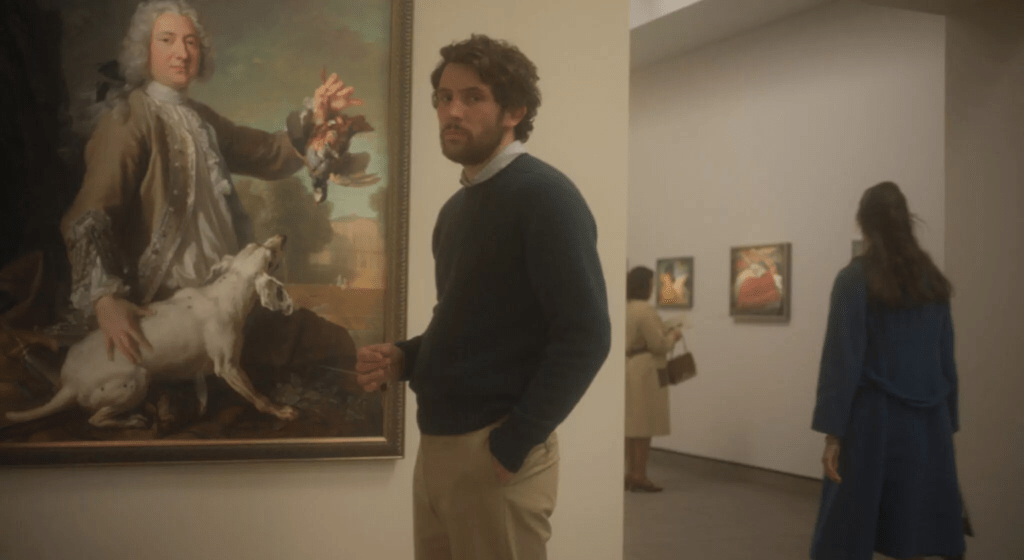
I Want Your Sex (Gregg Araki): I meant to watch some Araki before this so it’s quite possible this comes across as lower tier later on. To these untrained eyes it’s very entertaining romp through questionable power dynamics, awakening kinks, and contemporary art; it’s the first two that feel the most potent. It obviously wants to say something about GenZ’s relationship to sex but I don’t know that it ever manages to find a coherent point there, nor does its shots at the art world feel as fresh. Olivia Wilde and Cooper Hoffman make a fantastic pair and Araki’s visual style becomes pop art of its own. Perhaps the best you could say is that it trafficks in clear Sunset Blvd. comparisons but manages to differentiate itself enough that you don’t feel like you could be watching that instead. B+/A-

Obsession (Curry Barker): More to come on this later, so let me just say that I literally screamed “oh my god” multiple times during one scene that I dare not spoil, except to say that according to the producer Q+A it was the reason the film originally got an NC-17 before being cut. The kind of film I could imagine finding richer on a second viewing, I’ve already seen some great analyses, featuring what might be the best performance of the year. B+/A-

These Are My Friends! (Aaron Bartuska): Local movies are always a bit of a tossup – as I imagine they are everywhere – but the decision to try it out was mainly because the director hit a Benny Safdie and stood outside the Film Center in a sandwich board advertising it. And whaddya know, it’s charming! Set over the course of a house party somewhere in South Philly, Bartuska’s film meanders about from person to person, sketching some low-key plotlines (burgeoning romance, someone who doesn’t wanna be there, a guy who’s gotten extremely drunk) but managed to win me over in the end thanks to its better-than-expected acting and a decent enough script. Nothing original at all and were it set anywhere else with characters just a little more obnoxious it’d probably be excruciating. Two biggest trips: realizing I went to college with one of the cast and seeing some characters enter the exact theater we were watching the movie in (the old Ritz East signage revealing this movie was shot a few years ago). B+

Tuner (Daniel Roher): Stylish enough with some jazzy editing as well as a pretty cute relationship between Leo Woodall and Havana Rose Liu but it can’t save it from piling coincidence on top of coincidence by the end. There’s not nearly enough process either, in the titular piano tuning or the eventual shift to thievery, and more focus on either end probably would’ve saved one specific reveal from annoying me to no end. Mostly well-designed, but there’s been much better versions of this type of thing; less stupid ones too. C

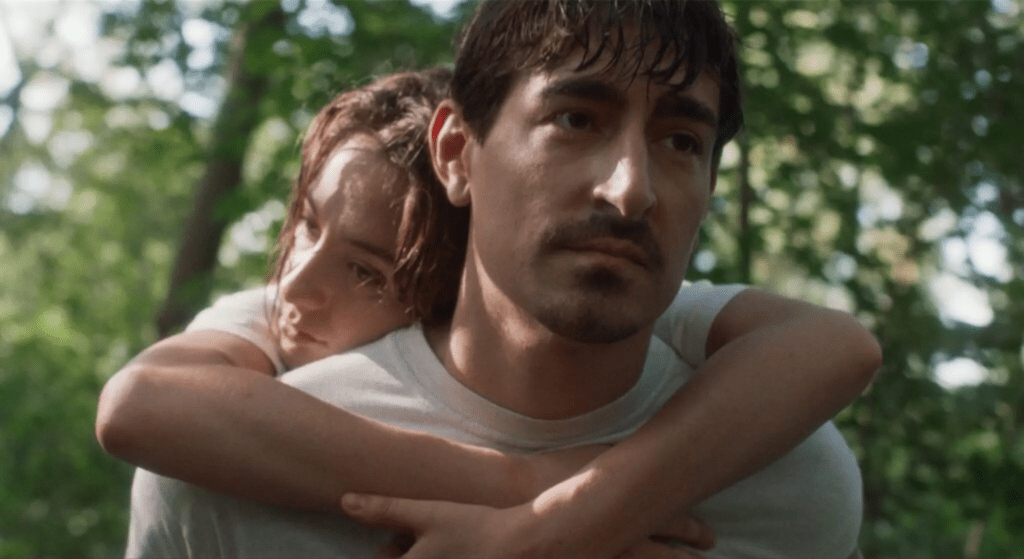
Leviticus (Adrian Chiarella): More to come on this in a month or so. I seemed to be the outlier of my friend group in being positive on this one. At a certain point I wondered if I was watching the best film of the year. While you can consider this hedging a bit – it does indeed have some resemblance to It Follows – I found it thematically potent, not just with the conversion therapy of it all (leading to the fear, the separation, etc) but with the ways that damage gets inflicted on other people, intentionally or otherwise. The romance between Joe Bird and Stacy Clausen is the biggest strength and it offers a veneer of hope that’s probably going to be needed more than ever. All that, AND a genuinely scary threat. A-/A

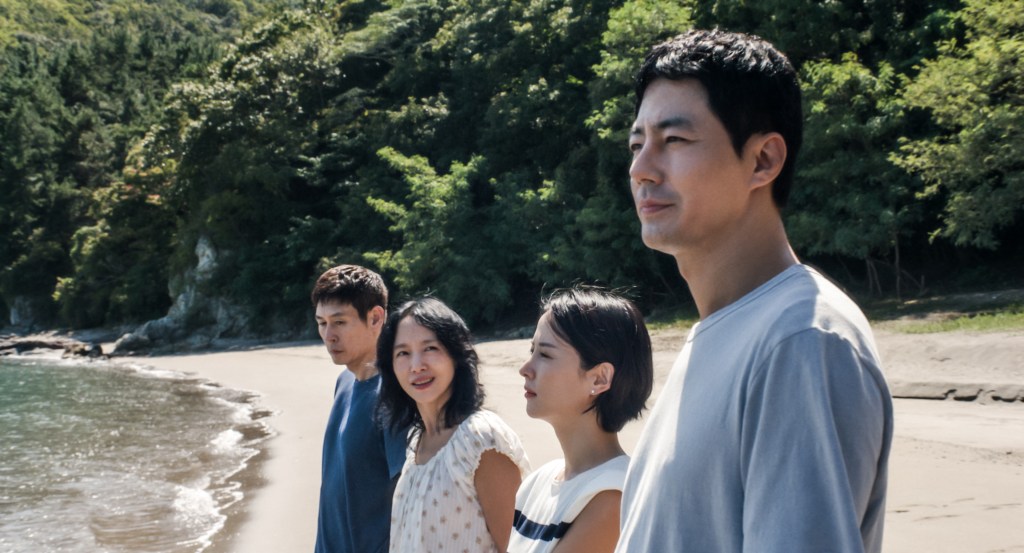
Agon (Giulio Bertelli): Tempting to call it “like nothing you’ve ever seen before” because in a lot of ways, it is. Bertelli’s style fits in with the Sensory Ethnography Lab aesthetic (Leviathan, etc) despite it being pointedly fictional. Despite that, it’s very easy to fall into thinking of it as a documentary; he sticks to a purely observational style with occasional wild detours I won’t spoil (except to say there’s a lot more video games than you’d expect) and slowly, themes of sports violence and competition begin to emerge. As a conventional narrative, it’s lacking in things like “character”. As an examination into the toll the Olympics take on an athlete, well… it’s in a class of its own. A-

Marriage Cops (Shashwati Talukdar, Cheryl Hess): Last minute sub since I couldn’t make it to Napa Boys. I expected something more from this. Talukdar and Hess stick to a stringently veritĆ© observation mode that doesn’t quite manage to generate enough interest on its own. Wished it would examine the divorce rates in India, why the government was sponsoring marriage counselling, etc. There’s a shocking amount of open admittance to domestic violence to the point it starts to form something of a thesis about the patriarchy, but it doesn’t go far enough. It feels caught between a unique “crowdpleasing” portrait and something more serious. C+

The Furious (Kenji Tanigaki): You’re not likely to see any better fight scenes this year and to some degree, that’s really all you need for a movie like this. Comparison’s to The Raid are accurate; much like A Better Tomorrow, these are stunts where you really feel like it hurts, even if everyone can withstand a mallet to the stomach and keep going. Easy to suspend disbelief and ride with it until people open their mouths and you get acting that ranges from “serviceable” to “godawful”. Dialogue isn’t much better than functional, the story is just as deep as it needs to be without completely bumming you out about human trafficking, and it drops an honest-to-God live action anime villain into the proceedings. So like a lot of Hong Kong action classics, except the extraneous bullshit doesn’t manage to kill the energy too badly. B

PFF34 Day 6: Investigations

More than halfway there.

With The Mastermind today, I’ve basically seen all of my most high profile choices (only Sentimental Value and The Secret Agent are left). So far haven’t really had much in the way of disappointment or misses barring Hamnet and SirĆ¢t so hopefully those come around sooner rather than later. Here on out it’s all new to me.

The Good Sister (Sarah Miro Fischer): C-

Inert MeToo drama that barely gets to what it even promises. I was intrigued by the idea of having to reckon with your own sibling committing an act of sexual violence, but there’s no indication that lead character Rose even understands why she’s being called to testify and barely seems to struggle with it at all. The movie itself struggles to provide any sort of drama or intrigue, merely gesturing to themes without really doing a whole lot beyond that. Couldn’t bring myself to work up all that much ire; more on the side of failure but not anything to really be bothered about.

Hysteria (Mehmet Akif Büyükatalay): B

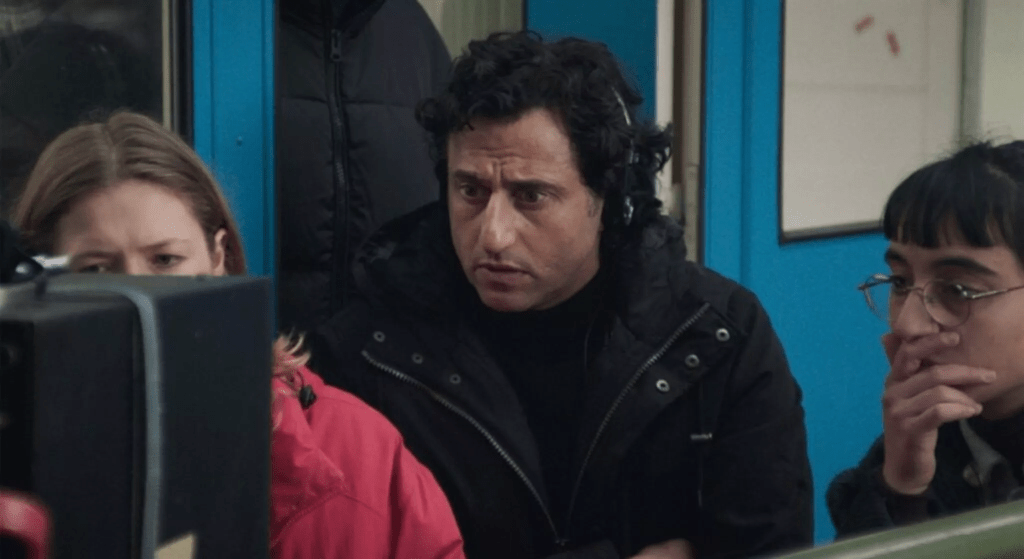
Now here’s something with a thorny dilemma. Grabbed me from the starting premise, in which assistant director Elif – amidst an incident involving a burned Qu’ran on the set of a historical film – loses the keys to a producer’s apartment she’s staying at, and subsequently the tapes she was responsible for. Büyükatalay uses the burning as a jumping off point to ask questions about artistic integrity and representation, early on featuring a character noting how Europeans tend to make films about racism in their countries to absolve themselves. It’s self-aware enough to see that Elif has a lot less to lose than the extras accused of theft and while the two threads don’t always feel cohesive, they come together in a confrontation scene that gives a great jolt. Not quite sold on the ending but I appreciate the swings it takes without fully biting the hand.

The Mastermind (Kelly Reichardt): A-

Talk about someone who knows how to end a film. I really have not kept up with Reichardt as I should, though given the rumblings about Showing Up I know she’s capable of being quite funny. Screen Unseen Attempt The Mastermind is indeed quite funny for much of its run time; the centerpiece art theft (calling it a “heist” feels like giving it too much credit) got a big laugh from me out of one line as did the prep and the aftermath. Reichardt’s editing is sublime, swift and lean, very pleasing on the jump cuts but lingering just as long as it should. Josh O’Connor remains magnetically watchable, enormously charismatic in the beginning but still with that deep well of sadness that only grows as his competence and arrogance dims. Like his performance in La Chimera (a movie I must revisit), he’s skilled at revealing the depths of a silence and simply staring.Ā The political thread running throughout the background is part of what makes the ending so good, and I really dug the jazzy score from Rob Mazurek. I perhaps blanked out only a couple times (late in the day and all) and I do wish Alana Haim was afforded more to work with. As funny as it all is, it never loses sight of the depths of O’Connor’s failures as a father, a husband, and all around person.

Resurrection (Bi Gan): B+

Must a film be coherent, thematically or narratively? Is it not enough to watch 6 discrete, lusciously filmed mini-movies about the senses as well as Chinese cinema history? Yes, actually. It’s been almost a decade since I’ve seen Long Day’s Journey Into Night and this is definitely a film from the director behind that. The whole thread about “deliriants” and “other ones” and “dreaming” barely felt like a thread, to be honest, or even a frame story. Not that I particularly minded as somewhere within the second story I started treating it more like an anthology of metaphor and just kind of rocked with the mini stories happening. Occasionally dull and not all that emotionally involving, but every so often Gan provides the razzle and dazzle, and that can be enough for the vibes.

Tomorrow: Some under-the-radar picks, and I check in with what Takeshi Miike is doing.

33rd Philadelphia Film Festival Coverage Starts Tomorrow

A slightly different tack for reporting on Da Moviesā„¢

Credit: Philadelphia Film Society

A lot can change in the course of a year. For instance: last year at this time I was still employed, my uncle had just died, and my plans for that year’s Film Fest were scuttled both due to a small concert planning mishap and said death. Not to mention feeling a bit disappointed at the lineup that year – most of the high profile ones had either already released (Anatomy of a Fall, Killers of the Flower Moon) or were being held back for some unknown reason (The Zone of Interest, May/December).

Cut to this year: my job dissolves in November but wow, are the movies great. Which is all to say that today marks the official start of the 33rd Philadelphia Film Festival, aka the moment when my best of list gets filled out. This year is already an embarrassment of riches with the Philadelphia premieres of Anora and The Brutalist but factor in the new Mike Leigh, Payal Kapadia, Steve McQueen, Andrea Arnold, etc etc? Well… scheduling was a bit of a nightmare to say the least. I actually had to buy a badge for the first time this year thanks to demand which means I can now attempt to try every centerpiece plus opening and closing (a small blessing in disguise) and barring a few social events or exhaustion, my plan is once again to squeeze as many movies as I can in front of my eyeballs.

To that end, the purpose of this post. I’m gonna try something I wanted to do last year but couldn’t thanks to aforementioned personal issues, wherein I’ll do a daily recap/rundown of everything I saw in the style of The Dissolve and The AV Club‘s dispatches. The plan is to put up a post the next day with small(ish) reviews, ending with the usual top 10 or so when the festival ends. I will do my absolute best to put it up in a timely fashion – say, the morning of or afternoon – but I’m only human and, because I’m doing this on my vacation time, delays may occur.

All said, I’m pretty excited for this year. Some hard cuts may have had to happen but I’m confident those will come around sooner or later. If everything is as good as the hype has been, the year end list is going to be an absolute ordeal. I can’t wait. Hope you’ll follow along!

May December and What We Mean by “Camp”

Thoughts on hot dogs, Twitter fingers, and taking abuse seriously.

Image

If you’ve been online the past week or so, you’ve probably seen the arguments about Todd Haynes’ May December. The film is – at its face – a story about an actress, Elizabeth (Natalie Portman) travelling to Savanah to interview and observe a woman, Gracie (Julianne Moore) who was involved in a tabloid scandal almost two decades ago. Said scandal is that she had an “affair” with a 13-year-old boy named Joe (Charles Melton, we’ll get to it), got pregnant, went to jail, and then subsequently married and had more children with him. All this is very clearly based on the Mary Kay Letourneau scandal from the 90s; lots of Cannes coverage mentioned this, as well as talking up how funny the movie was in addition to things like its psychological complexity. From the trailers and that coverage I had been eagerly awaiting it, especially curious to see multiple people I know and trust say it was one of the funniest movies of the year.

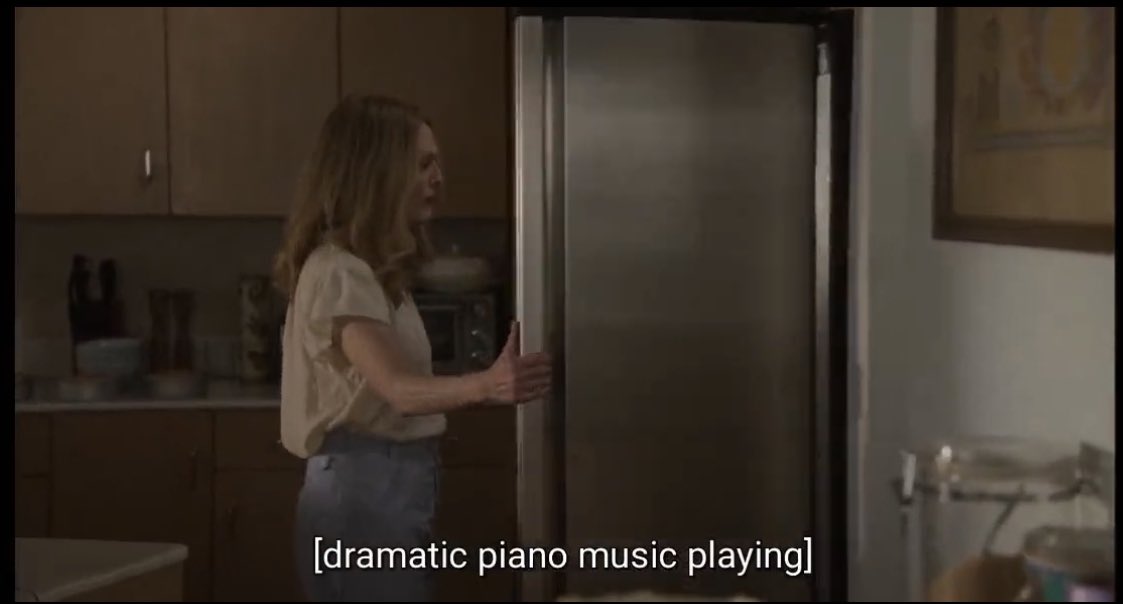
And make no mistake, Samy Burch’s screen play does make several jokes throughout. But I didn’t find it as funny as it was hyped. As I’ve said on Letterboxd and a few other places: while I laughed at things like Julianne Moore opening a fridge to a dramatic sting of music (aka, “I don’t think we have enough hot dogs”), it was frequently much more of an uncomfortable sort of laughter. Things like Elizabeth (the actress) remarking how none of the kids auditioning to play Joe in her movie are “sexy” enough, as you’ve just witnessed some VERY young boys. Or Gracie (the woman) telling her daughter how brave she was to show her arms in a dress in what must be the least subtle backhanded compliment anyone’s ever given. I found the movie to be a showcase of extreme repression and denial, where just hinting at the truth would be too much to bear psychologically.

The word that keeps popping up in all the discussion around the movie is “camp”. Now, I frankly do not have time to really get into what camp is – there’s been enough of that – but the way I see it: Katy Perry wearing a burger outfit to the Met Gala is not Camp. Katy Perry hurriedly attempting to get back into the burger outfit so that she can catch someone passing by is Camp. The word at its base implies some sort of artifice, a blowing up of things to heightened reality; the “tragically ludicrous” and “ludicrously tragic”, as it were. All this has lead to things like Netflix posting a screenshot of the two women with the opening to the Zola tweet thread, as well as numerous Letterboxd reviews about “mothering” and “slaying”. May December in that sense has become a sort of queer movie to some, something I can only describe as a “yass queen” type thing.

Buried under all of this is a central conflict: the implication of “badness” within the work. To me at least, “campy” means that you know something is bad or unintentional, and you celebrate that by pushing it up. “Camp” is not really made, it’s sort of the process that happens within some sort of failure or a general queer sensibility. Notably, Todd Haynes himself has disagreed with the label, and honestly if anyone would know it’s him. I don’t think it’s camp either. In fact, I think calling the movie “camp” or reducing it down to just a display of actresses actressing is sort of turning it into a metacommentary of sorts on the very scandal its adapting.

Charles Melton is the heart and soul of the movie as Joe. He practically steals the movie away from the two women and in a way, it’s really more about him and the ways he’s manipulated by the two of them. At the center of May December is the simple fact that a 36-year-old woman had sex with a 13-year-old boy and had his child. She did this multiple times; she convinced him they were in love, she maybe even convinced herself of it. The whole thing feels tawdry because it’s a sex and cheating scandal; it feels ridiculous because they were pet shop employees. That doesn’t mean it’s not deeply serious though. It’s more accurate to call May December a melodrama: these aspects are heightened to draw out the emotions of the situation, and draw your attention to the dark reality that everyone seems to be exploiting one way or another.

In a strange way, the reception to the movie is mirroring the tabloid scandal of years past. It’s easy to focus on the weird elements, the odd details, the way Julianne Moore says “I’m secure”. These are all great parts of the movie and it would do as big a disservice to dismiss them as insignificant. But it’s important not to lose sight of the man who never seems to fit in with the kids nor the adults. Someone was harmed both in real life and the context of the film; we should be able to look it straight on and call it for what it is. Men are often glossed over when it comes to abuse by women. Joe deserves to have the depth of his pain heard.