It’s that time of the year again: Festival Season, where everyone starts putting out the “good movies” in the hopes of getting award attention and we all get to learn what’s going to get held back another year. I, for one, could not be more delighted to be back at the Philadelphia Film Festival especially considering the state of, well… everything nowadays. Thanks to both a surplus of free time because of the job market and a press badge (thank you PFS!), I will once again be shoving as many films in front of my eyeballs as humanly possible.
And check out the heavy hitters we got this year: Jafar Panahi! Yorgos Lianthimos! Park Chan-Wook! Mary Bronstein! Chloe Zhao! It gets to a point where I’m glad I managed to catch one of the titles (Lesbian Space Princess) on a screener if only to clear up my schedule for a bit. That schedule was formed a tiny bit last minute due to me waiting on the mail for my program, as well as trying to figure out which ones I need to prioritize and whether I’ll be able to jump on some RSVPs late. For this year, I’m going to do daily blog posts that I’ll try to put up by noon each subsequent day. My goal for this year is to try and make them short, in part for my own sanity since I have some other assignments brewing, but also on the off chance I get an official review commissioned later. So join me, won’t you? As we explore the 34th Annual Philadelphia Film Festival.
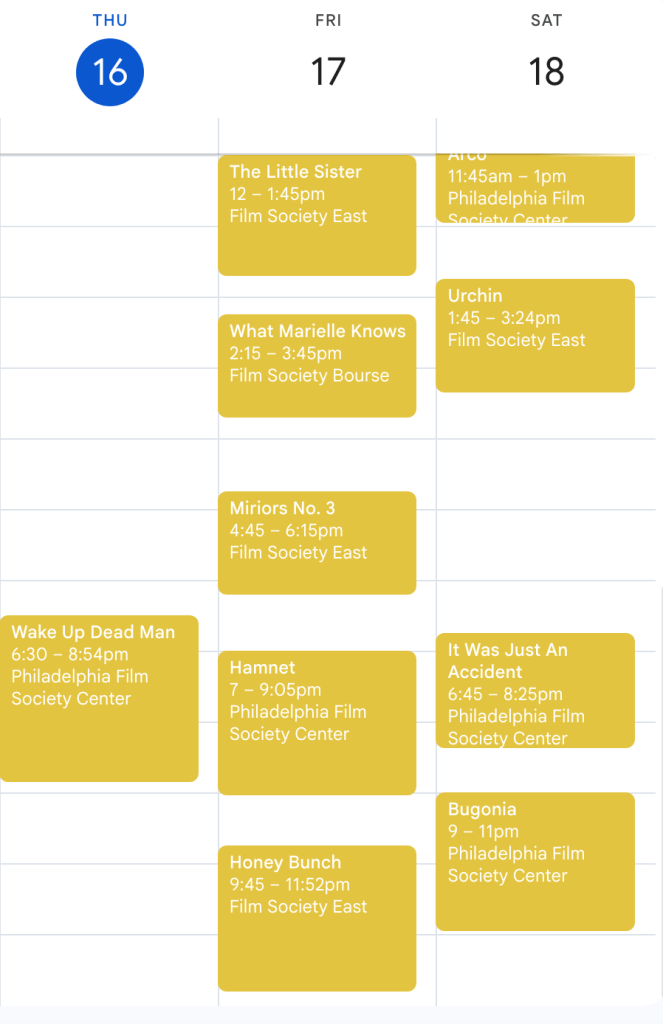
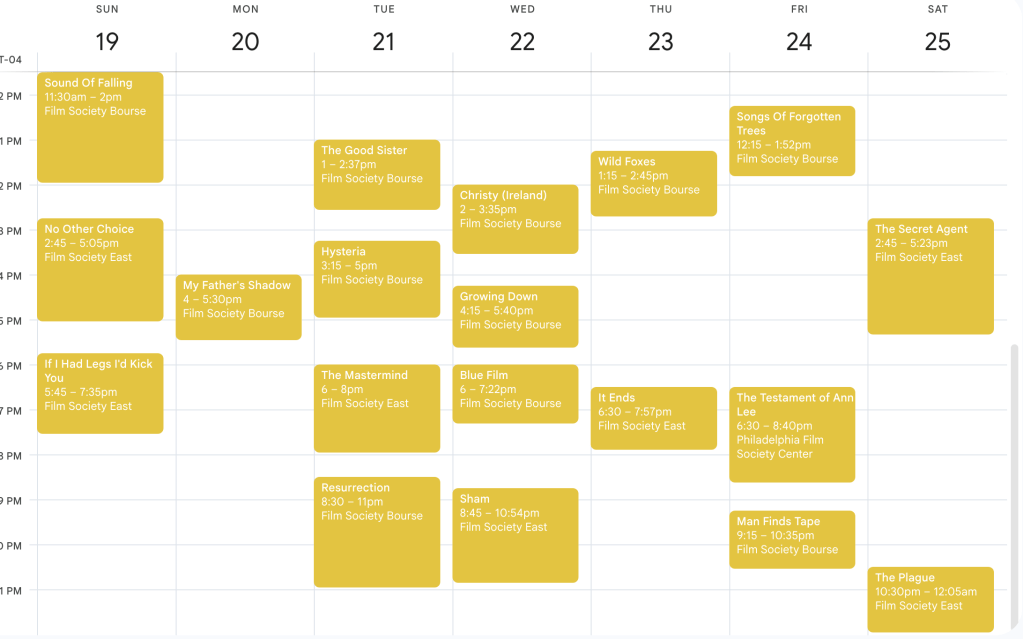
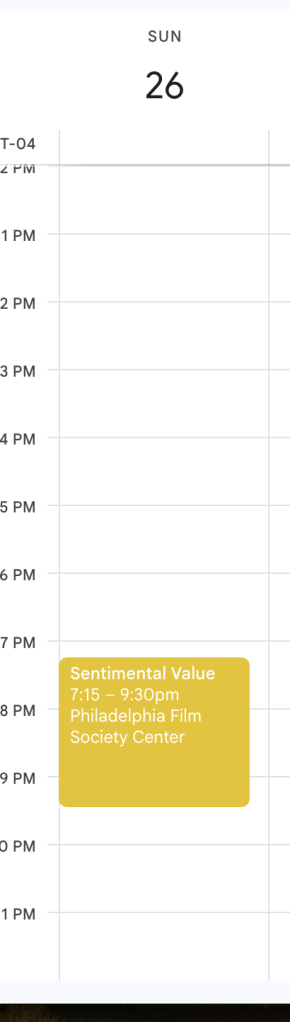
Schedule follows below. Some of the gaps will probably be filled in later in the week, while others may be forfeit for reasons of rest or overlap.
My viewing habits finally caught up with me, as did the looming specter of joblessness. As I’ve mentioned before, in the past I’d usually become rundown by this point, powered as I was by caffeine and black-and-white cookies before the ownership changed. I think part of it was the nature of the scheduling as well: given how long a lot of the films were this year, there’s not a whole lot of time left, which in turn limits what’s programmed. Even if I hadn’t been able to do another 5-film-day, I still ended with a couple decent to pretty good films.
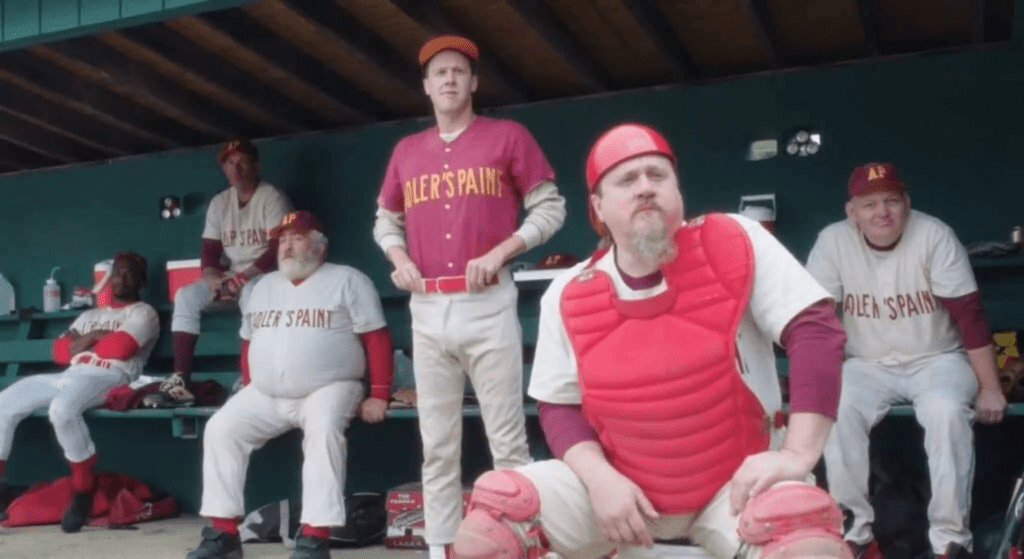
Eephus. Credit: Music Box Films
Starting off with the good was Carson Lund’s Eephus (Grade: A-). I probably wouldn’t have seen it if one-time editor Vikram Murthi hadn’t praised it on Twitter; sports are not really my thing, and I only really started watching them at all once I realized I could see them in the gay bar (because, you know… Men™). Turns out you don’t really need to know much of anything about baseball. The mechanics of the game aren’t as important as the fact that it gives the men an excuse to gather and memorialize their preferred field before a school is built on it. Lund is best known as a cinematographer, most notably with No-Budge stalwart Tyler Taormina. He caries the same sort of relaxed, slightly deadpan energy one associates with such films.
Which isn’t to say it isn’t screamingly funny, ie a man hitting a pitch and then immediately faceplanting on the ground. Much of that humor comes through in the banter and background dialogue as the men razz each other, complain about the drive to Duster’s Field, and overall mourn the passing of time. As the game stretches on, you get the sense that none of them really want to stop playing, if only because that means the friendship gets dissolved. Truth be told, you also start to feel the length of the game as it goes on. Lund keeps it easy-going, cutting between people around the ballpark and the players in free-flowing plot, so when actual tension starts to rise up it harshes the mellow a bit. What remains is the pleasure of seeing these men interact with each other, their good-nature camraderie, the sheer love of the game even if they aren’t very good at it. Like the pitch that gives the film its title, time seems to be suspended for a bit before it starts up again. And hey, like a wiseman once said: everything dies baby, that’s a fact. But maybe everything that dies, some day comes back.
Dahomey. Credit: MUBI
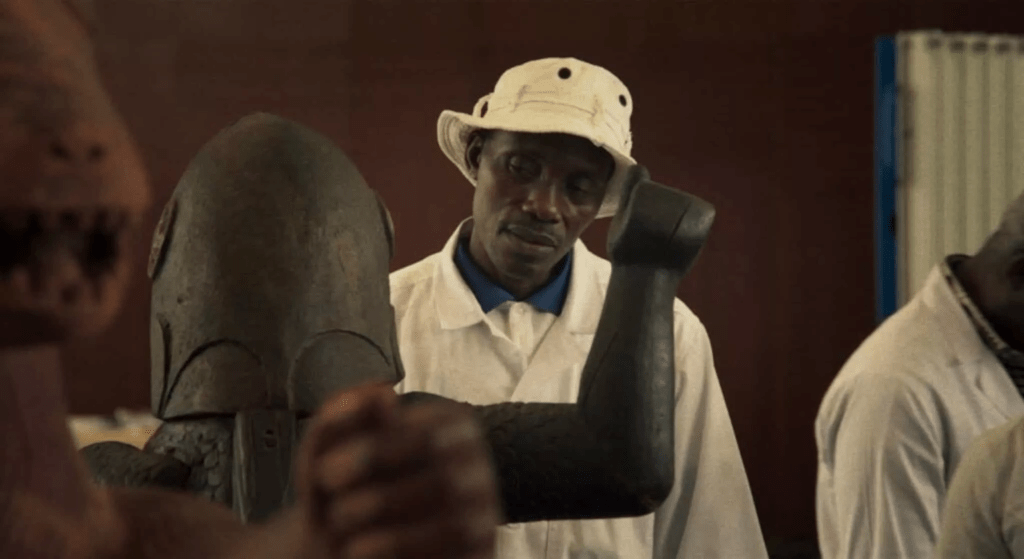
“Things coming back” is the ostensible subject of the last movie I saw at the Festival, Mati Diop’s Berlin-winning documentary Dahomey (Grade: B-). The name refers to the African kingdom – now the Republic of Benin – that has recently repatriated 26 artifacts taken during French colonial rule. Part of the documentary is a fictionalized narration of the objects themselves, telling the story of their theft and return. The other half revolves around a debate with university students, in which they discuss the fact that 7,000 objects reside in the Paris museum, and they’ve only gotten this many back through years of diplomacy.
I saw Diop’s first film – Atlantics – back at the 29th Fest when I was in college; I think it closed my festival experience then too. Maybe I need to stop doing that, because much like that one, this just kind of washed over me. It’s not without its pleasures (the music, from Wally Badarou and Dean Blunt, for instance), and Diop does have talent. But I would’ve preferred the narration for every object, or at least a greater focus on their travel from France to Benin. As enlightening and lively as the university discussion is, it takes up quite a bit of a 67-minute movie. I could feel myself getting on the wavelength for it before it dissipated. Perhaps more exposure to this type of thing is needed.
And with that, the 33rd Philadelphia Film Festival has come to a close. By my count, I saw the most I’ve ever seen at one of these, at 38. Having an entire week off will do that to you. I can’t forget my badge situation as well though; not having to pay for Centerpiece tickets meant that I took a lot more chances on entires I would have otherwise ignored. This year still felt strange to me, in that the schedule somehow felt lighter than it had in years past. Not sure if that’s because there were more films here, longer runtimes, less from the vaults, however you wanna play it. Hard to remember how you felt or what you were doing 2 years ago, after all.
What I can confirm is what many of the programming staff said about this being the best one yet. By quality alone, I saw some truly stellar productions, most of my most anticipated films living up to the lofty festival hype. The biggest regret is that I had to miss The Seed of The Sacred Fig, and am now at the mercy of NEON to play it in Philly; I also had to miss Sister Midnight, the last entry in the Focus On India section, so I hope that gets a release somewhere. As I tabulated the list, I found a lack of surprise. Most everything I loved was something I’d heard of before or had put on my watchlist ages ago. There was no Red Rooms, no Tremors, or Rose Plays Julie, ie something that came from out of nowhere to completely knock my socks off. I don’t know if that was just a testament to the year or my own evolving critical tastes (or at least an attempt to hold back on crowning something just as I come out of the theater). All that said, making a top 10 was somewhat difficult. Many of these will be strong Best of The Year contenders, if not this year than the next. There are still quite a few I saw at the full list, which you can check out at Letterboxd. With the caveat that these could shift on later viewings, here’s The 10 Best Films of the 33rd Philadelphia Film Festival:
All We Imagine As Light Still currently my favorite thing I’ve seen all year. Payal Kapadia’s rapturous feature debut is the kind of movie you just want to sink into, absorb every sensual texture and image. She turns the landscapes of Mumbai into something like a dream and in the process enhances the loneliness present everywhere. At the risk of cliche, it’s pure poetic cinema. Opening 11/15 in NY and LA via Sideshow and Janus, expansion likely
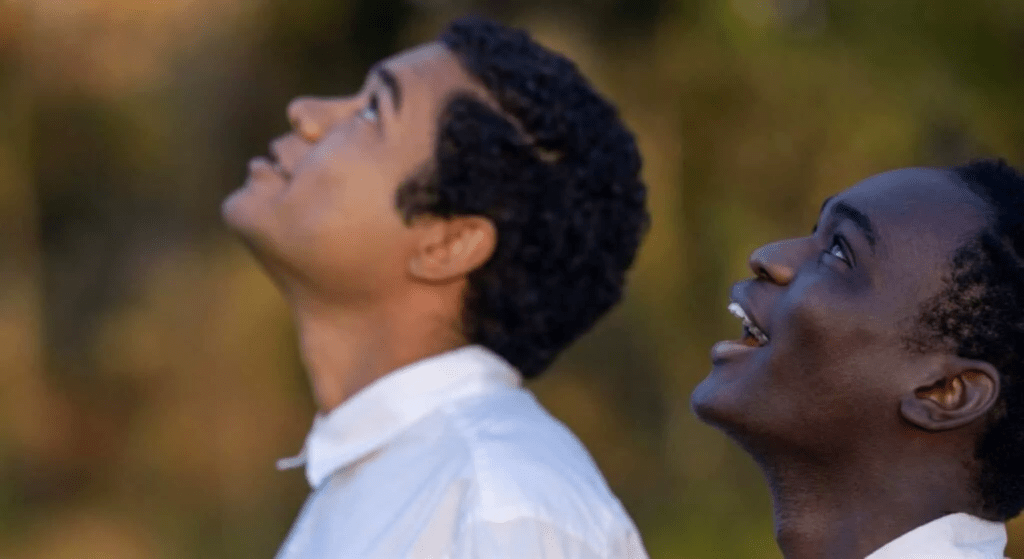
Nickel Boys Out of the story of two boys at a Florida Reform School, RaMell Ross crafts a stone cold stunner. More than anything, he crafts what it feels like to hold back memories, the associations one creates from disparate moments and references that bind themselves to your trauma. Evocative but not explicit, it’s a major accomplishment and a fine work of adaptation. Opening 12/13in limited release via MGM and Amazon
Flow Easily the best animated movie of the year on sheer visual spectacle. But it’s a triumph of visual storytelling, utilizing the full scope of body language and tone to give animals character without making them human. Makes you wish you could show it to every Hollywood studio and force them to be better. Opening 11/22 in limited release via Sideshow and Janus, 12/6 in wide release
Anora The most borderline one, but the late act sells it for me. Whatever Sean Baker’s politics, there’s no denying he sees such a wide vein of empathy in his title character; all he’s ever wanted was for us to understand them, and he does through his typical mix of the profanely funny. Mikey Madison is going to change gay speech patterns for years to come. Just watch that trailer and try to say “a FRAUD marriage?!” any other way. Out now in limited release, expect an expansion
No Other Land “Important” is the among the lowest forms of praise you can give a movie, but if anything deserves it, it’s this. Shamefully, there’s still no legal way to see it in the US, more than likely because it refuses to act as though people can’t come to conclusions for the things they see in front of their eyes. To quote the man outside my screening: “The people that need to see this won’t.” Upsetting, harrowing, yet undoubtedly the work of filmmakers wishing for the world to see the beauty of their humanity. No US distributor as of this writing.
Dead Talent’s Society Sometimes, you just have a lot of fun with a movie. I’ll admit to being a little seal-like in my joy of seeing an extended Perfect Blue reference. It helps that the rest of the movie is committed to goofy, cartoony jokes and fairly clever in using scares as a metaphor for filmmaking. A little heart goes a long way. Current international plans unknown. Expect it to come over next year, if not on streaming
The Brutalist Adrian Brody, Guy Pierce, and Felicity Jones turn in fantastic performances but the true star is Brady Corbet. He effortlessly corales power, the fantasy of America, Jewish alienation, the Holocaust, and so much more into a surprisingly brisk, There Will Be Blood style epic on one man’s quest to stake his name. The fact that a movie that looks as good as this – from the sets to the costumes, down to the camera movements and compositions – for $10 million is an indictment to every actor and producer working in Hollywood today. Utterly overwhelming, and yet intensely compelling. Opening 12/20 in limited release
Birdeater Truth be told I’m a little nervous to revisit this, for fear the spell will be broken. I still don’t want to give too much away from this singularly demented creation, still the most insane thing I saw at this festival. Utilizing editing and framing almost as an attack, Jack Clark and Jim Weir plunge you deep into a singularly anxious mind and then constantly pull the rug out, veering from surreality to comedy back to relationship drama and horror. Maybe the substance isn’t quite there. I gotta hand it to them for making what feels like the most unstable movie I’ve ever seen (and I mean that entirely as a compliment). US release unknown. Out in Australia
The Order It might boil down to standard “cops and robbers” but what well-wrought cops and robbers these are. For whatever lack of depth (and copaganda, if you feel it) may be present on the cop side, the robbers – in this case, white supremacist terrorists – get an utterly chilling treatment that their charisma can’t hide. As much as we tell ourselves it’s done, the words of Quiz Kid Donnie Smith ring-out over the climax of The Turner Diaries: “we may be through with the past, but the PAST ain’t through with us”. Opening 12/6 in limited release
Night Call The more I’ve talked about it, the more I’ve come around to this taut thriller’s ending. Michiel Blanchart wrings every bit of tension he can from his setpieces, but notice the protagonist’s relationship with the BLM protestors. Uncommonly smart when it comes to its character’s actions, ultimately unsparing as the circle closes in around him. It might be the movie I’m most looking forward to revisiting, and I hope it captures more attention when it releases. No date set, acquired by Magnet Releasing, should be limited within the next year
A couple highlights, one dud, a disapointment, and a throwback.
The End. Credit: Neon
Years ago – when I was clocking time at UPS before college – I was listening to an episode of Filmspotting, where they talked about director’s they’d give blank checks too. One of them was Joshua Oppenheimer, director of Indonesia genocide documentaries The Act of Killing and The Look of Silence (movies I both need to see and revisit, my younger self be cursed). They mentioned that one of the things the MacArthur Grant recipient was shopping around was a post-apocalyptic musical, a very leftfield choice and understandably one that was having difficulty getting funding. I subsequently forgot about it over the years as his documentaries placed on numerous decade lists, right up until it was announced to be showing at both Telluride and TIFF.
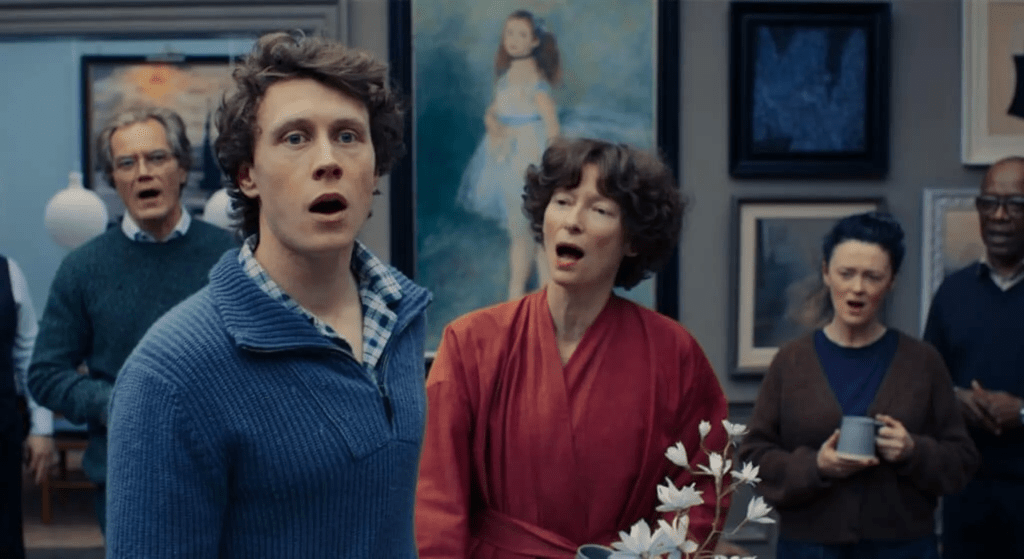
That musical is The End (Grade: A-), starring Tilda Swinton, Michael Shannon, and George McKay as characters known only as The Mother, The Father, and The Son. They live in an giant underground bunker nestled among salt flats with their few staff and friends; it resembles more of an art museum than it does an actual home. From the start it’s clear that in some ways, everyone is telling themselves stories to live, whether they’re aware of it or not. Father worked in the oil industry yet denies that his actions had anything to do with the disaster. The Son – only knowing the bunker – is prepped for the future but how long that future is going to last is never clear. Their routines are jarred with the arrival of Moses Ingram’s Girl, conflicting with their general pronouncements in song that the outside world is full of danger.
What happens is perhaps less important than how everyone feels about it. Oppenheimer’s script with Rasmus Heisterbeg tends towards the anticlimactic but it never feels overly concerned with plot. The Son becomes much more concerned with the “why” of things, why his parents are alone in the bunker, why they decided on their only friends, why they’re writing a history book this particular way. In the grand nature of Hollywood musicals it so often resembles, the characters break into song when their emotions become too complex for any other method. Their movements are less dancing and more the need to express, to shake out the nervous energy. Performance wise, they mostly do good; MacKay and Ingram are the two best singers, while Swinton and Shannon sound unprofessional but not unlistenable. It could’ve used some more musical numbers just to break up the pacing, despite the dialog scenes being arresting. This is the definition of a big swing, admirable in its audacity, made by someone with a deep appreciation for what movie musicals can do and fully embracing all the odd emotional rhythms that come. Of all the films here, you owe it to yourself to at least check this one out; we may never get another one.
The Room Next Door. Credit: Sony Pictures Classics
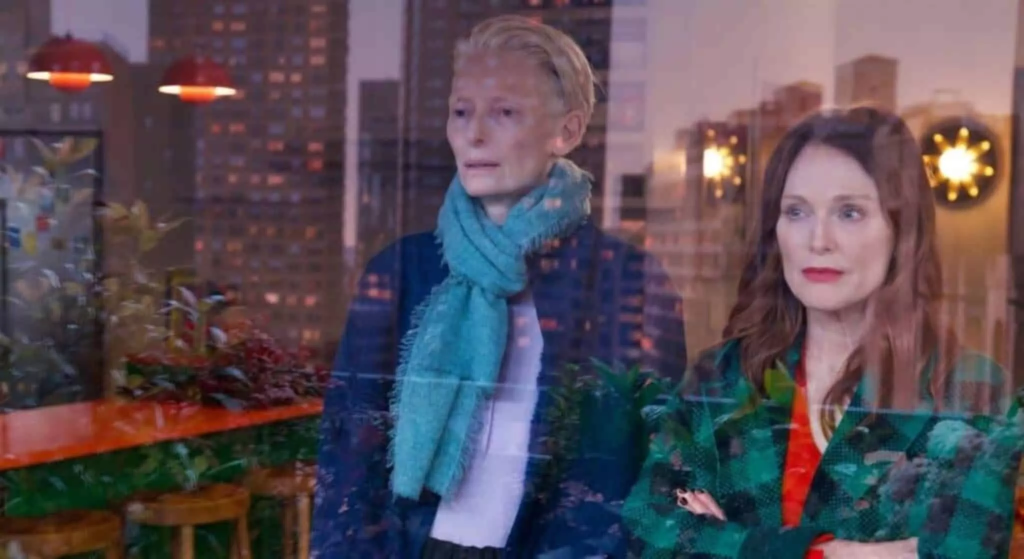
In a plesant coincidence (thanks to moving schedules around), Swinton featured prominently in the other big get of the festival, Pedro Almodóvar’s Golden Lion winner The Room Next Door (Grade: B), also starring Julianne Moore. I’ve been trying to catch up on his work, having rewatched and loved All About My Mother and Talk To Her earlier this year; Pain and Glory and Parallel Mothers were two of my favorite films from the past 5 or so years, the latter possibly one of his best works (certainly one of Penelope Cruz’ finest performances).
Unfortunately, as you can tell by the rating, I have to concur with most critics in finding this to be a relative disappointment. All the ingredients for a classic Pedro are here: the enigmatic performances from two fine actresses, the beautifully colored decor, the melodramatic flourishes. But his English language debut is somehow more sedate and subdued than his past work. Swinton and Moore do fine work, as a woman dying of cancer asking her friend to accompany her on a trip so she can end her life, though strangely reserved much of the time. My audience seemed to be laughing at things that didn’t seem like they were supposed to be funny at all, even if some of that excess presents itself (like a scene with a personal trainer). Maybe it’s also that there seems to be little debate over the topic of euthanasia itself, a lack of struggle or buried emotion to burst out. His eye remains as strong as ever, as does Alberto Iglesias’ score. And yes, the rhythms of the dialog do feel slightly awkward and even repetitive at times but honestly I don’t know if it usually sounds this way to a native Spanish speaker. That Golden Lion win was the first time the major festivals have ever given him the big prize; he’s made several much better than this. Still, it’s not without its many pleasures. Maybe he can get Swinton back in Memoria mode and film her in Spanish.
Flow. Credit: Janus/Sideshow
Dialog is not a problem in Flow (Grade: A), because there is none. Latvia’s pick for International Feature is an animated tale of animals traveling on a sailboat in the midst of a massive flood, communicating only via their normal sounds and body language. “Communicating” is putting it a bit strongly, because they all act like normal animals, those innate traits giving them bursts of character in response to each other’s actions, though with some leeway to – say – steer the boat. Our primacy focus is a black cat, acting as cats do as it gets knocked about by all series of torrents and creatures. Joining it are a capybara (very chill), a lemur (obsessed with a basket of shinies), an unidentified bird (injured, acting high and mighty), and a dog (pure of heart, dumb of ass). If this were made by a major animation studio, it’d be a candidate for the most annoying movie alive. Instead, it’s awash in painterly textures, content to sit in silence and calm as it observes the boat move through water. The world feels heavily inspired by games, everything from Ico to Breath of the Wild to Myst and Stray, yet it’s distinctly cinematic, the camera roving through the world and at times adopting a handheld style. What’s more impressive is that a clear narrative emerges, as do conflicts and traits, and by the end you’re rooting for them all to be friends. Can’t say I know for certain what some of the more surreal imagery might be representing, if it does at all. All I know is that I’ll be shocked if I see a better animated feature this year.
A Traveller’s Needs. Credit: Cinema Guild
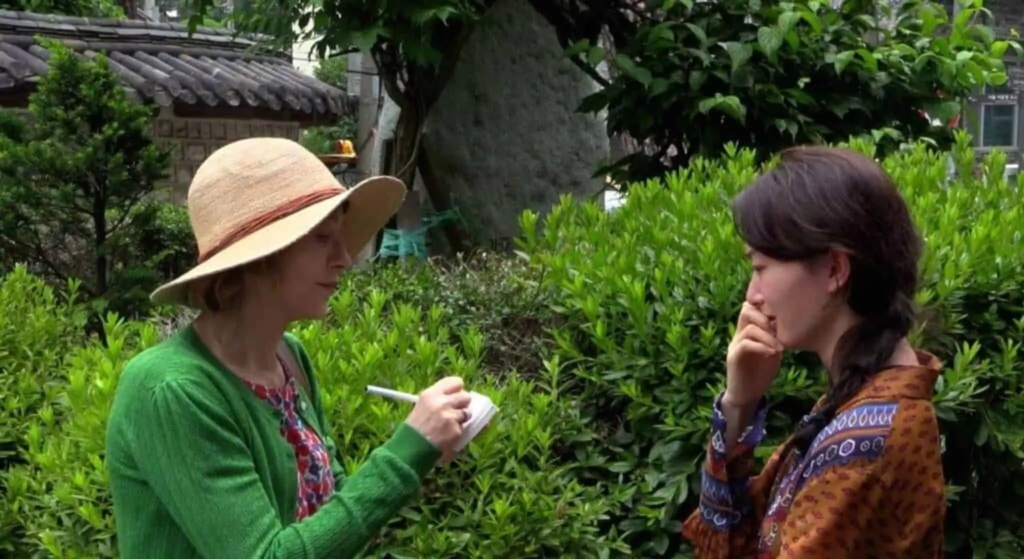
I had been planning on seeing Bound In Heaven but due to overrun from both the bumpers and introduction to The End, it started as I was getting out. My backup choice with friends was Hong Sang-Soo’sA Traveller’s Needs (Grade: C), which I probably wouldn’t have seen otherwise. I like Right Now, Wrong Then, so far the only Hong I’ve seen; it’s felt like he’s become a bit of a meme in online circles after that, with his increase in productivity and seeming decrease in actually making a regular movie. If you follow Mike D’Angelo (as I do, check out his website and Patreon), you will be familiar with a lot of his complaints about a lot of Hong’s work lately. Gotta say I agree with him.
Isabelle Huppert’s second team-up has her as a French teacher in Korea with a unique method: having people write down sentences in French that speak to their feelings and practicing those to learn the language. I doubt that’s very effective. The movie itself is mostly in English and it feels like they’re flailing to improvise or the script is so banal it hardly matters otherwise. There doesn’t seem to be much of a plot or really any character build up, just conversations about language and how playing instruments make people feel that go on too long without saying much of anything interesting. Occaisionally he does have some funny moments, like when Huppert leaves one client and they look back to see she’s already gone, commenting on how fast she walks. A later scene involving her boyfriend/roommate and his mom lends itself to some actual conflict and some interest into who she is and why she’s in Korea. It all just comes across as so arbitrary to me, down to the framing and the length of shots. I’ve known that he’s largely doing everything himself now but the image quality itself frequently looks like a home movie. I don’t want to rag on it too much because he has made at least one movie I do like and frankly, he’s made so many others in that time that I’m sure I’ll find another. As it is, it’s just kind of boring, and I’d prefer at least a little more structure and baring that, something interesting or amusing. You can make it look however you want in that case but you can’t have it both ways.
Streets of Fire. Credit: Universal
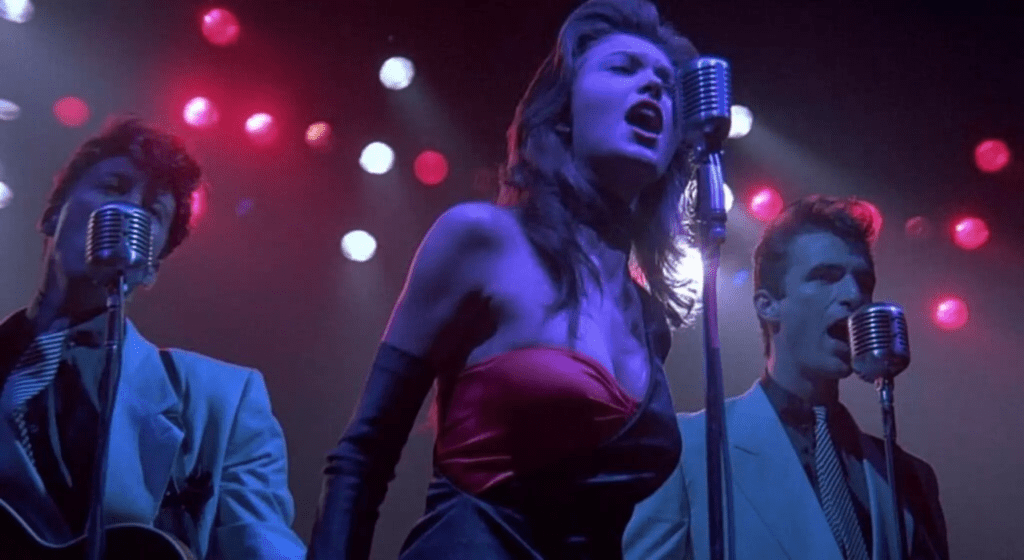
Like most other film festivals, PFF also does retrospective screenings. Usually I don’t go to them, in the past because I could find them elsewhere (and my time was limited), nowadays because chances are they’ve played it before or will play it again. I did, however, decide to go to Streets of Fire (Grade: A-) because I’d already missed it once, and my friend Evan had said I should watch it. I’m so glad I did. Walter Hill’s musical fantasia is pure cinema, exactly as the opening describes: “Another Time, Another Place”. I’ve heard the opening section of first number “Nowhere Fast” a bunch because PFS used it as the bumper for August last year, and I went a ton. The full thing still hits, and kicks off a fantastic sequence in which rock goddess Ellen Aim (Diane Lane) is kidnapped from her band The Attackers by Raven Shaddock (Willem Dafoe, extremely young & incredibly hot), leader of the biker gang The Bombers. It falls to her old flame Tom Cody (Michael Paré), lesbian-coded mechanic and ex-solider McCoy (Amy Madigan), and dweeby manager Billy Fish (Rick Moranis, very surprising) to go and rescue her.
During the beginning and the end, I thought I was watching my new favorite film. Hill fuses the culture and look of the 50s with the hard edge style and talk of the 80s, creating something fully unique in the process. No other film will give you a stripper doing a vigorous Charleston to a bar full of leather-clad bikers giving straightened up Tom Of Finland while a rockabilly saxophonist wails, and frankly the fact that America let it flop is the reason we got Regan a second time. The music – from the operatic pop stylist Jim Steinmann of Bonnie Tyler, Celine Dion, and Meat Loaf – hits hard and hits quick. Once again, I could use so many more numbers. I must admit that my friend was right about the middle. By no means is it bad but it stalls a bit, and Paré isn’t as up to the task of talking, no matter how cool his lines are. But when he’s blowing up bikes with a shotgun… Goddamn is he the coolest motherfucker alive.
Tomorrow: PFF33 comes to an end, with a couple last entries and my favorite 10.
As you can gather from the title, “closing night” is a bit of a misnomer in that there’s still two days of programming left afterwards. I’ve got a top 10 decently solidified by now but of course, there’s always room for some latebreaking entries. Last year it was The Settlers; this year the weekend mostly brings repeats and a couple retrospectives so we’ll have to see what happens.
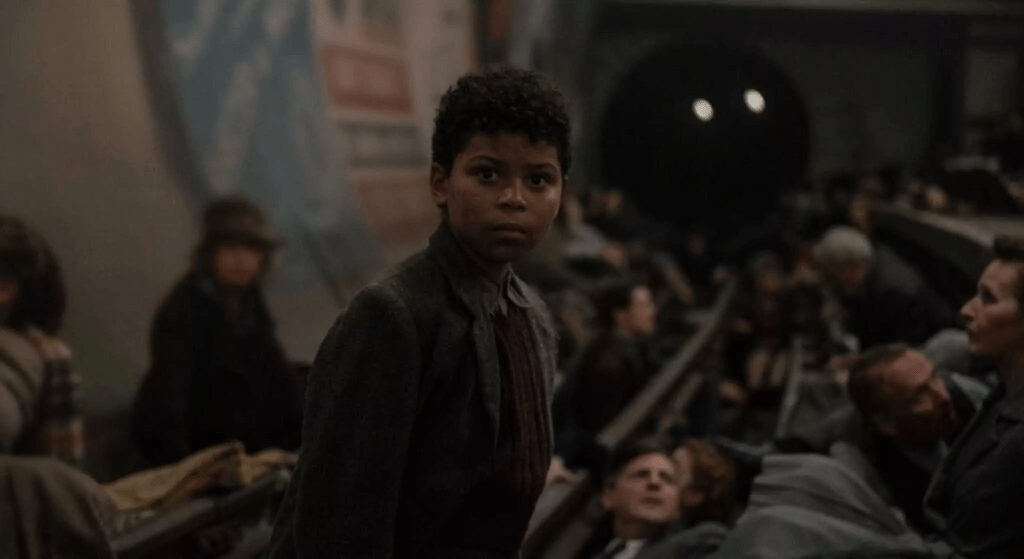
In the past I’ve had to either stand in rush line or get tickets ahead of time for movies like Knives Out or All The Beauty And the Bloodshed (both great). Last year was the first time my badge let me into one, and it happened to be Saltburn (I don’t want to talk about it). A WWII drama about an evacuated mixed-race boy traveling back to London in search of his mother is usually not my thing, even helmed by the great Steve McQueen. Widows, Small Axe, 12 Years A Slave… Need I go on?
That said, I don’t know what all the reviews calling Blitz (Grade: A-) lesser or even anonymous are on about. Admittedly it does take a bit for the tone to even itself out; this is probably the lightest film McQueen has ever done, which is saying a lot for a movie that features a terrifying sequence of waterlines bursting in the London Underground. Some of the early child actors are too precocious, it’s at times didactic about everyone coming together, the score gets overbearing. And yet I cannot deny that it absolutely works for me. It’s as if someone took a Call The Midwife or similarly rah-rah British period piece and shot it through with the actual, terrible reality of the time. McQueen keeps pulling at the tension between the supposed solidarity of the war effort and the refusal of White Brits to stop being racist for 5 goddamn minutes, tempering the good time nostalgia with brutal reminders of the damage a bomb can do. Saoirse Ronan gets all glammed up and she works it, maybe not on the level of her best work, but absolutely a testament to her strengths as an actress. Perhaps it would’ve been served a little better if it was less sanitized for a PG-13. All I know is that McQueen should try doing a musical again, and I really need to watch the rest of Small Axe.
Santosh. Credit: BBC Films
Blitz was the last centerpiece to play but it’s far from the last high profile film to play. One of those – for me at least – was Santosh (Grade: B+/A-), an Un Certain Regard competitor and the UK’s pick for Best International. Sandhya Suri’s feature debut follows the woman of the title, who takes her late husband’s job as a constable and ends up investigating the rape and murder of a young girl. I must admit there’s a few things going against me here: for one, I’m not at all familiar with India’s policing or justice system, so the concept of “women police” who either appear to handle things for other women or women related crimes went over my head. Additionally I did have to dip out to use the restroom, something I typically avoid doing even if I don’t miss much.
Maybe I also want to talk myself into liking it a bit more than I ended up. Suri zeroes in an the twin difficulties of the caste system (of which I’m familiar, but not completely) and being a woman in India. Santosh’s team up with an older woman investigator who’s more than a little dodgy also speaks to well-known corruption throughout Indian society, frequently centered around the police. As a procedural, it’s a tad lacking, though it does get tense. What sells it for me is the way sexism and misogyny lead compound on already present problems, exacerbated by a heavily stratified society getting more and more on edge. Overall, it’s an engrossing drama, and I can’t deny I enjoyed the look at the country from an actual Indian woman.
The Knife. Credit: Iam21 Entertainment
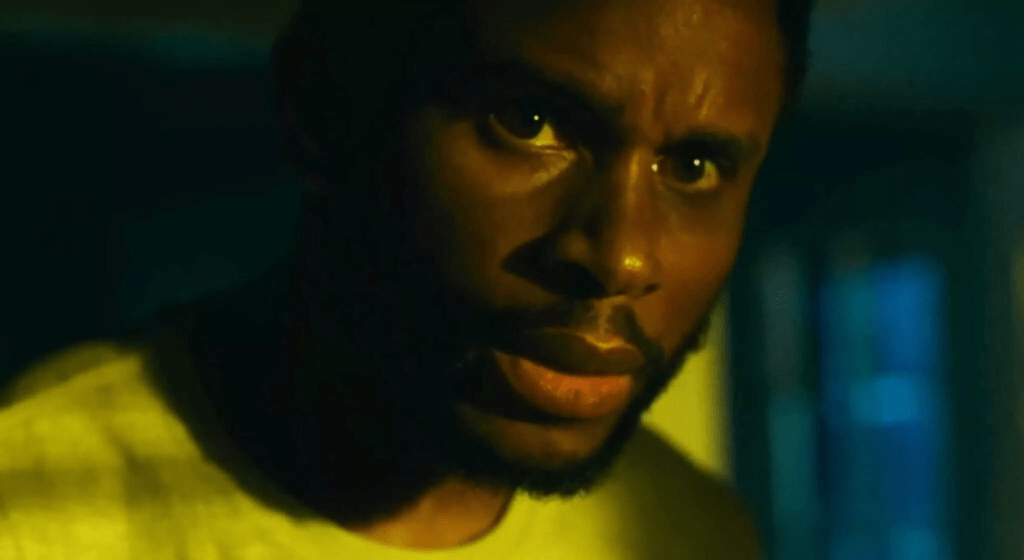
Part of the many reasons I love coming to Film Fest (and why I’m aching to travel to one of the bigger ones one day [please commission me]) is the discovery of a major new talent, someone I can obsess over that no one else may care about. This year has been a little lacking on that front; pretty much all the ones I’ve loved are movies I’d either heard about or from directors who are known quantities. Of the two other indies I saw today, The Knife(Grade: B/B+) lands somewhere along the lines of “wanted to love”. Conceptually it’s rather though-provoking: a Black man discovers a white woman has broken into his house, leading to an altercation that looks rather dire. Director Nnamdi Asomugha puts together a nice exercise in style and tension, despite leaning a bit on flashbacks in editing. His script with Mumblecore stalwart Mark Duplass is by no means egregious in twists or dialog, and Asomugha puts in a pretty credible performance along side Aja Noemi King, Melissa Leo, and Manny Jacinto. It’s ultimately less than the sum of its parts, perhaps better as a short or proof of concept but at least a decent calling card for a burgeoning filmmaker and actor.
Sew Torn. Credit: Orinoso
Speaking of proof of concept, the director of the next film said in a Q&A after that it actually started as a short which made its way to Joel Coen, who encouraged its production. Call that serendipity or whatever since Sew Torn (Grade: B+/A-) on paper sounds like such a riff on No Country For Old Men as to bring disaster. You never want someone to be thinking of the much better thing they could be watching instead. Turns out a drug deal gone bad and stolen money is practically the only thing similar to the Coen’s masterpiece. Freddy MacDonald – co-writing with his dad Fred – has actually crafted something on the level of Greener Grass or Survival Skills, aka a series of sketches that don’t seem to take place anywhere near reality.
I was in love with it from the moment I saw the painfully European car with a giant needle-and-thread on the back of it. That car belongs to Barbara (Eve Connolly), a seamstress in a storybook-like Swiss town. She’s mourning her mother, in the process of losing her shop – home to fanciful Talking Portraits made of thread – when a dash to service a client finds her smack in the middle of the aforementioned drug deal. From here, MacDonald crafts a Run Lola Run style choice-narrative: Take Money, Call Police, Drive Away. Each chapter features inventive MacGuyvering of string and thread, some funny bits surrounding townspeople and side-characters, and the Coens’ pet theme of “crime is really, really, hard you guys”. The toyetic feel and quirky town would suggest Wes Anderson, but MacDonald lacks his precision of tone and voice. It doesn’t feel as populated as other low budget stunners like Riddle of Fire, though Connolly has a presence that reminded me of a less crazed Vic Michaelis.
All of which is to say I wanted more of what MacDonald was selling. He strikes such a unique tone with such inspired thread-based setpieces. I laughed quite a bit and had a pretty good time, and if it doesn’t reach the heights of my other beloved discoveries, he should at least take solace in scraping such rarified company. I’m so glad I managed to make time for it, and that’s enough.
Tomorrow: The director of The Act of Killing and The Look Of Silence unleashes his long gestating musical, and I get a double dose of Tilda when I finally get to the latest Almodóvar.
My goal for attending PFF has usually come down to shoving as much cinema in front of my eyeballs as humanly possible. The majority of the time, it’s the most acclaimed films I’ve been following throughout the year, and as you can imagine, that’s not always conducive to brain power. Sometimes, you do need something a little light, a little more normal, if only to reset the paradigm. A pallette cleanser, if you will.
Said cleanser came in the form of A Real Pain (Grade: B), the most quintessential sort of crowd-pleasing comedies festivals love to program. It’s got Jesse Eisenberg and Kieran Culkin playing on their most associated character types – anxious nerd and More Psychologically Stable Roman Roy – as the two of them go on a Jewish history tour of Poland in honor of their recently deceased grandmother. This is ostensibly inline with the recurring theme this year of Jewish identity and responses to the Holocaust, which to be fair the movie (written and directed by Eisenberg), does dive into. Specifically, it’s most interested in memory and remembrance, how much trauma a person should have to hold on to and live out. On top of that is a comedy that often veers towards cringe; Culkin is doing his quippy asshole schtick and for the most part it is pretty funny. For me, it passed a time early on from “oh you” Comedy Type to “ohhhhh you” Deeply Damaged, far sooner than the movie wants us to get there. Thankfully, the requisite emotional scenes carry the necessary power to forgive the somewhat standard journey. It’s the nicest movie you’ll see about generational Jewish trauma, no more no less.
Today was an unexpectedly trauma-filled day, though filtered through distance and abstraction of sorts. Perhaps the most thrillingly unexpected of these was Nickel Boys(Grade: A), a movie I didn’t know much about except Colson Whitehead book, the director of Hale County This Morning, This Evening, and reformatory school. Cue trepidation when the opening POV style shots didn’t shift over to regular camera style, leading me to write down “Is it going to be like this the whole time?” Yes, and no. RaMell Ross’ main “gimmick” here is shooting everything from first-person, sort of like the sitcom Peep Show (or Hardcore Henry, for those less cultured), observed totally through the eyes of the main character. Once it introduces the other lead – Turner (Brandon Wilson) – the gimmick becomes less blatant and more like a normal movie, easing whatever dissonance or annoyance may be wrought.
Still, nothing can quite prepare you for the sheer overwhelming power Ross accumulates. The story was inspired by the Dozier School For Boys, a reform school in Florida (shout-out Tallahassee) home to unimaginable horror; unmarked graves were still being found as late as 2019 (the school closed in 2011). While the great temptation is to show us in unflinching detail what happened to these boys that made them want to flee, Ross withholds but in no manner does he shy away. Cutting freely between time, across memories, filled with detours to old films, MLK speeches, and impressionistic montages, Nickel Boys has the feeling of reliving memories, the random bits that get imprinted and conflated, how those times get chopped up and covered up to avoid looking at it directly. Here’s a movie that only needs to show us a fragmented scene of a whipping room and give us hints at boys being disappeared to know that when a boxer accidentally wins a match he’s supposed to throw, whatever becomes of him is going to be terrible (that part, with the camera held close and just off-centered on his face and outstretched arm, his pleas of “I didn’t know!” are stomach churning). By the time it hits a scene later in a bar of a reunion between students, before a montage of such powerful emotional clarity that shines through any abstraction, I knew I was seeing something major. The fact that a major Hollywood studio is willing to fund something so bold and downright experimental is heartening, as is such a beautiful expression of Black art. It will definitely not be for everybody – especially with the POV shots – but it deserves to be seen (and I will be cracking open my Criterion of The Underground Railroad as soon as humanly possible).
Hard Truths. Credit: Bleeker Street
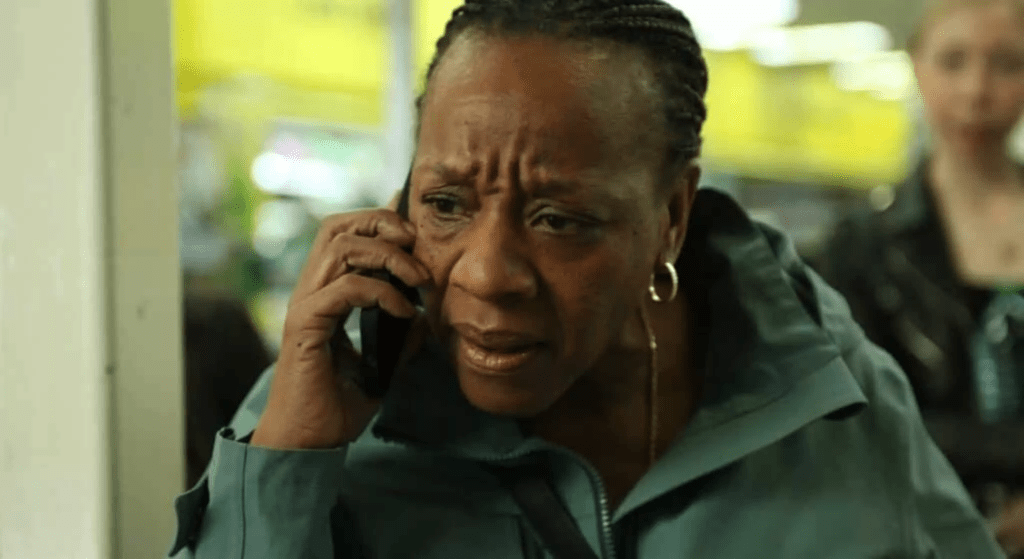
Finally, speaking of studio funding: Mike Leigh! The great filmmaker has always had trouble finding funding thanks in part to his famous method (in short: assemble a group of actors, have them create characters, improvise a series of scenarios and backstory, then write a screenplay) but the situation has been a lot more dire in recent years. His latest got rejected from several big festivals despite having won the main prize at two of them, something that usually guarantees you an out-of-competition slot. Given that Hard Truths(Grade: B+/A-) centers around a black cast – including a reunion with Secrets & Lies star Marianne Jean-Baptiste – it’s not hard to imagine majority white boards from passing on a character as venomous as Leigh’s most infamous creations (ie, Johnny).
Then again, Pansy is an extreme difference from even that Naked lead; at least Thewlis gave him a modicum of charm that suggested why people would put up with his shit. Jean-Baptiste does a near complete 180 from her previous character, draining any and all warmth and even joy to portray a woman so remarkably unpleasant she causes winces from everyone she comes into contact with. She lives in a sterile house, obsessively cleaning when she isn’t sleeping or berating her quiet son Moses (Tuwaine Barrett) and put-upon husband Curtley (David Webber). One of the often celebrated aspects of the Leigh Method is how the actors can really make you feel that hidden backstory the years of these relationships; Barrett and Webber’s faces during an early dinner scene show the strain of having dealt with her all these years.
By contrast, her sister Chantelle (Michelle Austin, aka Hortense’s friend in Secrets & Lies) is much better adjusted – single, but with two daughters each dealing with their own unique strife. It’s enough to make you wonder why Pansy turned out the way she did; in a pivotal scene, Chantelle even asks and the only response is “I don’t know”. Jean-Baptiste’s outbursts are often very funny (when asked if she’s ok, she snaps back “I’m at the doctor’s office!”) but she unveils an awareness that something is wrong within her. Whether it’s a lack of control, some type of childhood trauma, deeper mental illness… Leigh resists giving deeper answers. I think I would’ve appreciated if it had been longer; at 97 minutes its shorter than both Naked and Secrets & Lies and though the former is similarly plotless, there’s a sense of greater development of all the characters. Specifically, I would’ve loved to see more of Moses – a small moment when a girl shares candy with him could’ve powered its own movie, frankly. Lower key Leigh is still masterful, or close to it at least. It’s criminal that no one seems to want to give him money – the hardest truth of all may be the current state of the film industry.
Tomorrow: Palestinian documentary No Other Land, and a thriller about the Pope(s)[?]
Opening up the festival with the Munich Hostage Crisis and feral Chinese dogs
September 5. Credit: Paramount Pictures
I love Festival Season. As a longtime Oscar watcher and film obsessive I’d scour every trade I could to see what the hottest incoming releases were. Once I got to college and realized that the Philadelphia Film Festival was not just a local fest but, in fact, had heavy hitters, I did my damndest to attend nearly every year I was in the city. So far, it’s been the only festival I’ve had the pleasure to go to – mainly out of location and timing concerns, and thanks to being in college for all that time. PFF is as associated with fall as my own birthday, and coming back feels like home in a way.
The point of this long-winded intro is that I consider myself a pretty plugged in person, one who’s just started going to the Opening Night showings because I both have a job and have passes that make it easy to decide whether I want to or not (also helped that the last two have been American Fiction and The Banshees of Inisherin, even if I only got to see the latter). Which is to say I was a bit surprised and confused when September 5(Grade: C+) was announced as this year’s opener because I was pretty sure I had never heard of it until then. Turns out, I had; it was at Venice and a couple other festivals. It’s not difficult to understand why it might’ve been chosen either. Set during the 1972 Munich Olympics, it follows an ABC TV crew as they stumble upon and begin reporting on the Israeli team being taken hostage by Palestinian terrorists, most famously dramatized in Steven Spielberg’s Munich.
It’s undeniably tense and often gripping, with the added pleasures of the many analog processes needed to bring live news coverage in front of television viewers (I didn’t realize that captions had to be physically made like that), and for the most part it avoids slipping into Newsroom-style “how it should’ve gone”. But at the same time, I can’t help but focus on the fact that it reduces the Palestinians to faceless terrorists, including a very creepy black and white image catching them one on a balcony. To be fair, the film is not unaware of the biases and subjectivity around such an unprecedented event. Multiple arguments occur over whether they can show someone getting shot on live television, and there’s a recurring theme of how bad it would be for Jewish people to once again die horribly on German soil. It never quite reaches the level of soul searching needed to fully fend off whatever the bad vibes, and mostly just settles for recreations. The fact that it doesn’t ever leave the control room hampers things quite a bit too, as does the relative anonymity of most of the workers save Leonie Benesch’s Marianne. Director Tim Fehlbaum was unknown before this. He’d probably be a journyman in a functioning studio system.
Xin and Eddie Peng in Black Dog. Credit: The Seventh Art Pictures
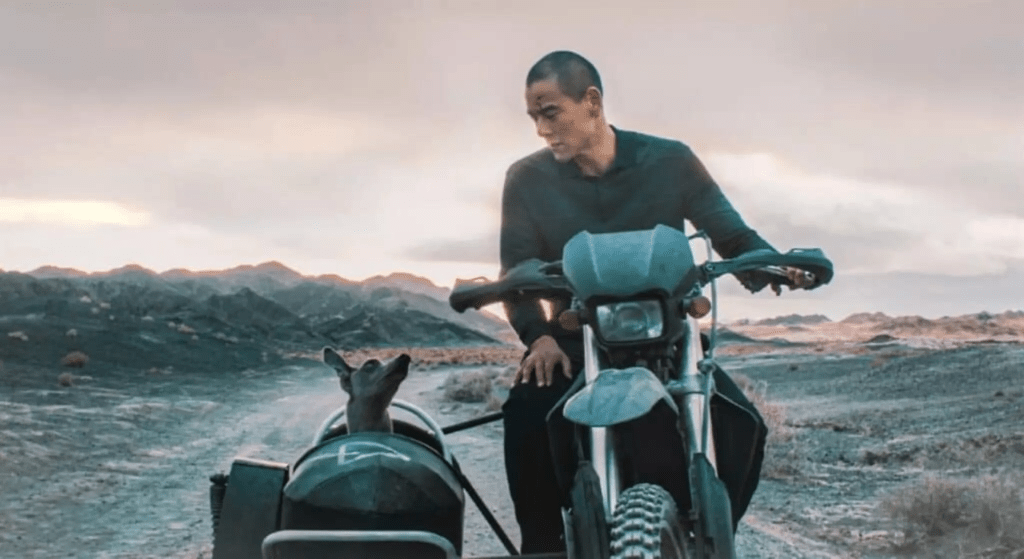
This was actually the second film I saw this day, a process that took much longer thanks to some technical problems related to the print that saw us waiting for an hour before it started. Much smoother was Black Dog(Grade: B+), this year’s Un Certain Regard winner at Cannes and boy, does it ever live up to that title. In fact it opens with a whole pack of dogs running across the Gobi Desert, in the process causing a bus to crash. That bus holds our protagonist Lang (Eddie Peng), prone to near total silence like so many Western heroes of yore. He’s been paroled and is on his way back to his decaying industrial town, set to be demolished as part of a revitalization project. Director and co-writer Hu Guan makes wonderful use of the desolate and bare landscapes; even the abandoned buildings look kind of pretty under his eye. It’s at one of these abandoned buildings that he has his first encounter with the titular creature, a vicious greyhound that’s among the many dogs left behind as their owners have picked up or faded away.
In need of money to keep a vengeful gangster off his back, Lang joins up with a dog capturing team (lead by Jia Zhangke, prominent chronicler of modern China. His Caught By The Tides is winding its way through the festival circuit to great reviews) and becomes set on capturing it. Somewhere along the way, a bond forms. The two seem to sense that they’re both trapped in cages not all of their own making, creatures that aren’t bad but just need someone to care for them. It does help that it’s a very good dog and if you’re wondering, yes, the actor – Xin – won the Palm Dog. Guan’s film may not quite cohere together on a full thematic level, at least on first brush, somehow both blunt and elusive. He’s an expert at staging set pieces, and a late one featuring a zoo jailbreak set to Pink Floyd is kind of awe-inspiring. Like its protagonist, you grow to love the thing anyways, warts and all. And if nothing else it’s an absolutely beautiful looking film.
Tomorrow: Sean Baker’s much hyped Palme winner Anora, Renate Reinsve as a single mother, and the first of many Indian films, as well as After Hours.
A slightly different tack for reporting on Da Movies™
Credit: Philadelphia Film Society
A lot can change in the course of a year. For instance: last year at this time I was still employed, my uncle had just died, and my plans for that year’s Film Fest were scuttled both due to a small concert planning mishap and said death. Not to mention feeling a bit disappointed at the lineup that year – most of the high profile ones had either already released (Anatomy of a Fall, Killers of the Flower Moon) or were being held back for some unknown reason (The Zone of Interest, May/December).
Cut to this year: my job dissolves in November but wow, are the movies great. Which is all to say that today marks the official start of the 33rd Philadelphia Film Festival, aka the moment when my best of list gets filled out. This year is already an embarrassment of riches with the Philadelphia premieres of Anora and The Brutalist but factor in the new Mike Leigh, Payal Kapadia, Steve McQueen, Andrea Arnold, etc etc? Well… scheduling was a bit of a nightmare to say the least. I actually had to buy a badge for the first time this year thanks to demand which means I can now attempt to try every centerpiece plus opening and closing (a small blessing in disguise) and barring a few social events or exhaustion, my plan is once again to squeeze as many movies as I can in front of my eyeballs.
To that end, the purpose of this post. I’m gonna try something I wanted to do last year but couldn’t thanks to aforementioned personal issues, wherein I’ll do a daily recap/rundown of everything I saw in the style of The Dissolve and The AV Club‘s dispatches. The plan is to put up a post the next day with small(ish) reviews, ending with the usual top 10 or so when the festival ends. I will do my absolute best to put it up in a timely fashion – say, the morning of or afternoon – but I’m only human and, because I’m doing this on my vacation time, delays may occur.
All said, I’m pretty excited for this year. Some hard cuts may have had to happen but I’m confident those will come around sooner or later. If everything is as good as the hype has been, the year end list is going to be an absolute ordeal. I can’t wait. Hope you’ll follow along!
For a while, it was looking a bit touch and go there. I’ve been trying to do one of these since I first started this site back in 2021, but always held off thanks to something either not coming near me or still feeling like something was just missing. Hollywood seemed to be going downhill and anything not bought up by the majors was getting shunted right to streaming. Sometimes even the big ones from the majors ended up being forgotten on some platform somewhere, lost in a nebulous space. Was this it? A future where big screens surrendered to the Big Movies while everything else withered on the vine?
If the past 2 years felt like post-COVID blues, 2023 was the year when it seemed like things started getting back to normal. The MCU began to flop. A 3-hour epic about the creator of the atomic bomb made Titanic money and a Titanic reputation. Festivals were overflowing with choices and gems. Somewhere along the way, Hayao Miyazaki even managed to best Disney.
Making a list this year turned out to be murder, even with a spot reserved for my eventual #1. It felt like the first time since possibly 2019 when I didn’t have to scrape to find something to fill out the bottom ends, where cutting something was painful. Even the ones I didn’t love as much as expected still held a wealth; it’s very possible some of them could creep up on a rewatch. At the moment, these are what I’ve committed to, and it reflects how I felt at the time. First a couple rules: I go by Academy rules, which in this case means “it received a theatrical release in New York or LA long enough to qualify for awards”. That means I get to push some contenders to next year, but it does mean some unreleased or late breaking ones might get left off. In any case, if it’s been making enough lists and it’s on Mike D’Angelo’s Commerical Release Master, it counts. There will also be some honorable mentions and superlatives after. In any case, it’s been wonderful to remember the wealth last year gave, and only raises anticipation for the coming year.
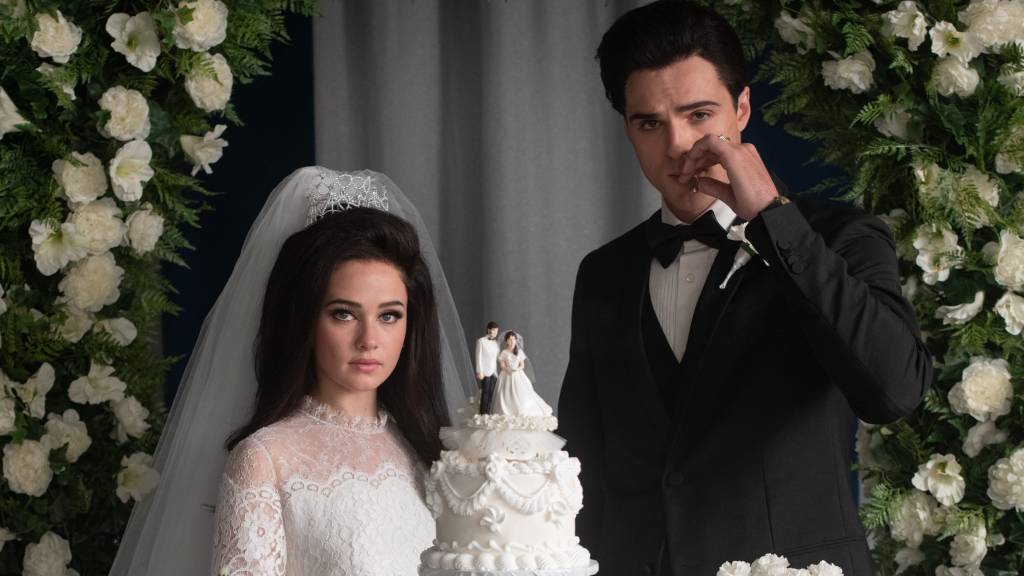
15. Priscilla – dir. Sofia Coppola
A counterpiece of sorts to the big self-titled one released last year, though by no means dependent. Through Cailley Spaney’s carefully observed performance, Coppola captures how it feels to have Elvis Fucking Presley courting you and the boredom that sets in once you realize what that entails. Jacob Elordi – having something of a breakthrough year – may not look like The King, but he embodies him to get to the feeling of him. It’s a gauzy, hazy memory, both the good and the bad.
14. Bottoms – dir. Emma Seligman
It’s tempting to focus on the Ayo Edibiri post-Emmy win and People’s Princess crowning. But I would regret not mentioning her insane roller coaster of an opening monologue that spins out a wild, anxious fantasy about your life going to shit and is truly unpredictable. That quality describes a lot of the humor of Bottoms – Rachel Sennott and Seligman’s script indulges in the teen movie cliches you expect but takes them to out-of-pocket, delirious places in its story of two gay losers who form a fight club to get chicks. More than most ironic Millenial/GenZ comedies, you either get it, or you don’t, and if you can’t laugh at the way Sennott asks “Has anyone here been raped before???”(a reading that almost made me spit out of my drink) then God help you.
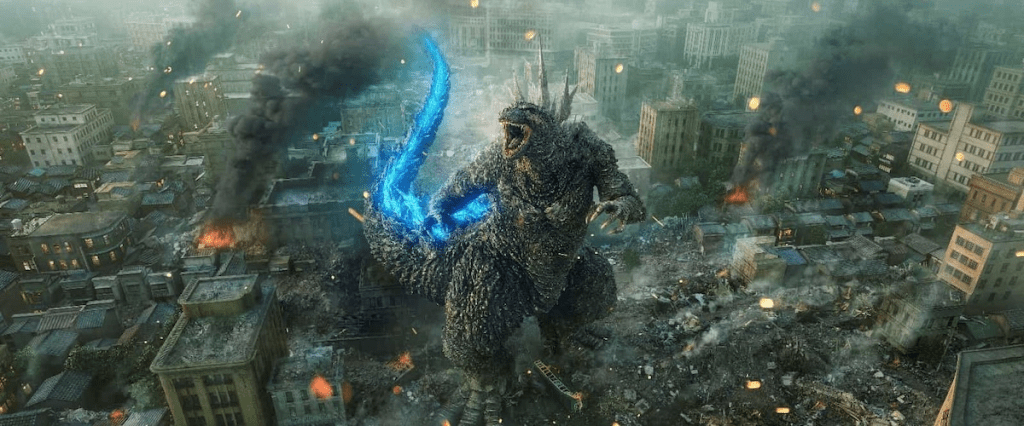
13. Godzilla Minus One – dir. Takashi Yamazaki
Much has been said about the human focus: a kind of wholesome found family story, a bit of romance, the question of “How much PTSD can we shove into one guy?” And that’s still all very true. But don’t forget it’s also a pretty great Godzilla movie; when he gets to stompin’, those debris fields seem more dangerous than the Heat Breath. Sakura Ando will appear later in this list. She’s had a good year!
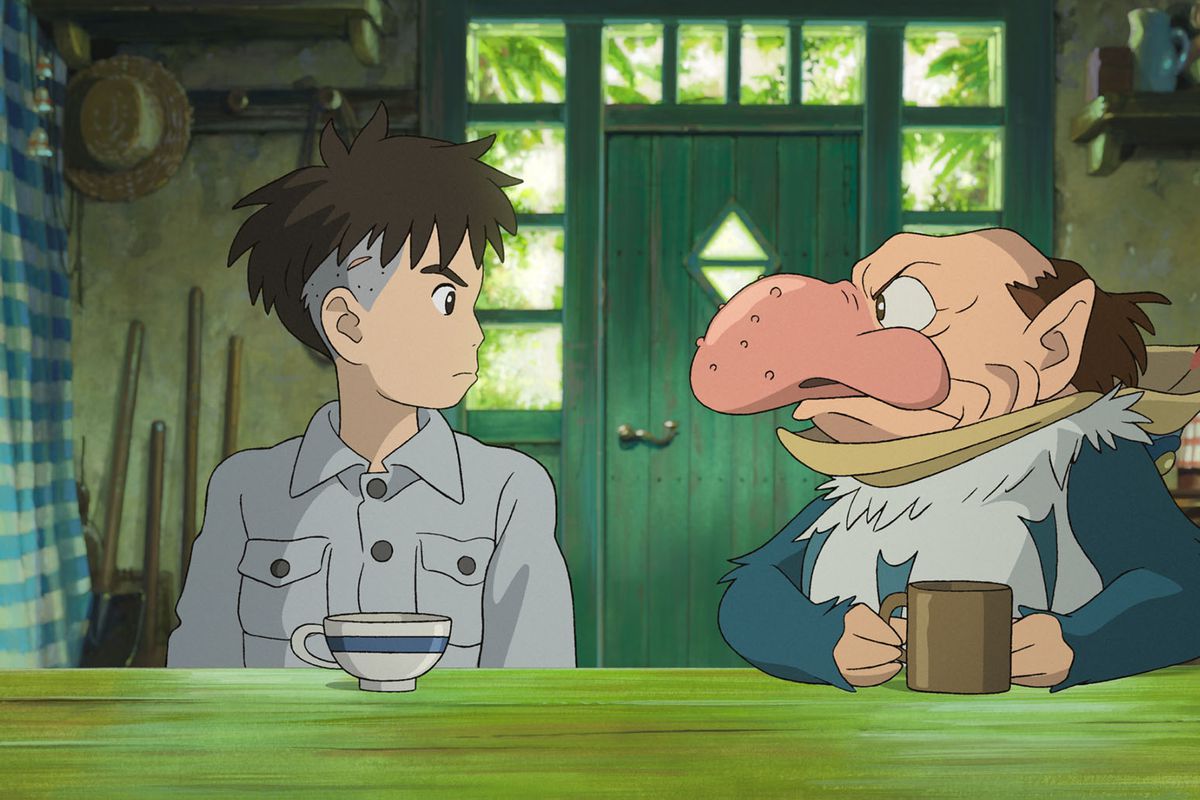
12. The Boy and The Heron (aka How Do You Live?) – dir. Hayao Miyazaki
Not at all what you’d expect, maybe exactly what we deserve. Possibly Miyazaki’s most complex on a pure narrative and symbolic level (don’t quote me on that) yet still managing to carry forth a wave of emotion. Just watch someone run, or a bird fly, and you’ll remember you’re in the hands of a master. He may not really be retired but if he is, what a way to go.
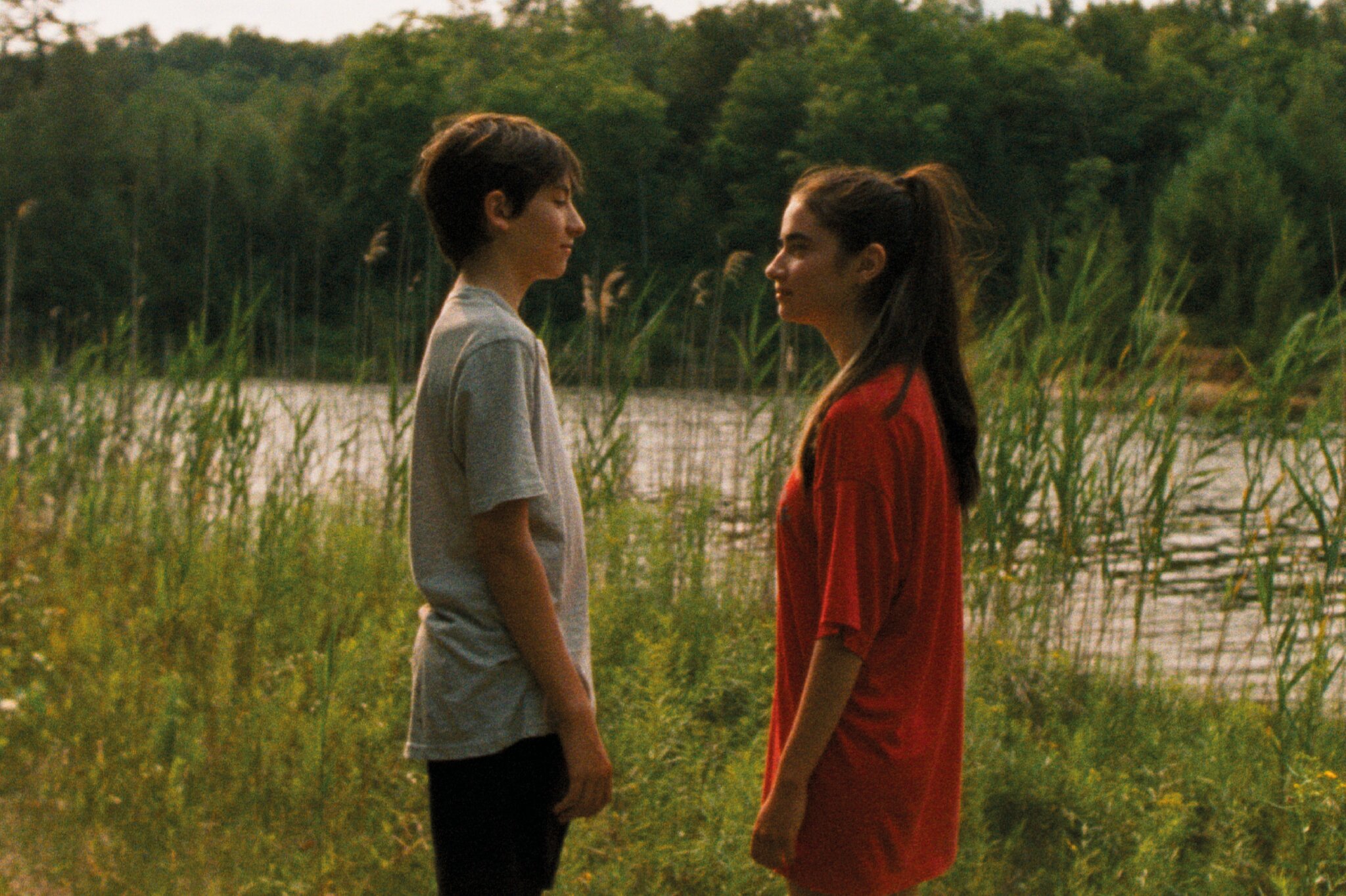
11. Falcon Lake – dir. Charlotte Le Bon
Sometimes, a movie just comes out of nowhere and burrows into your head. Like Scott Tobias, I also probably wouldn’t have seen this had Mike D’Angelo not spoken so highly of it, and it becomes clear within the first mysteriously beautiful minutes. What could easily have been the banal coming-of-age somewhat romance between a teen boy and an older girl he meets on vacation instead becomes haunting and ominous, building up to an ending that feels inevitable yet crushing. It should be so simple, yet the results are nearly indescribable.
10. Passage – dir. Ira Sachs
The year’s sexiest movie by far should frankly put an end to the exhausting sex scene discourse. As the World’s First Bisexual Demon Twink, Franz Rogowski crashes through multiple lives, pulling people in, throwing them out, absorbing all of their attention until you can visibly feel them getting sick of his shit in real time. Sachs captures all of this in a very European sense: both in setting, and from the blocking. Never before has a back been so erotic on screen.
9. All of Us Strangers – dir. Andrew Haigh
Gay sex scenes are having their moment in all their explicit glory, and Haigh makes a pretty cute one. He also turns in a devastating rumination on grief, of things unsaid and things you wished you’d done. Andrew Scott and Paul Mescal have beautiful chemistry together, enough that it makes an ending that shouldn’t quite work land full force. More than anything, here’s a film that taps deeply into a generational gay experience and suggests those lines aren’t as full as you’d think.
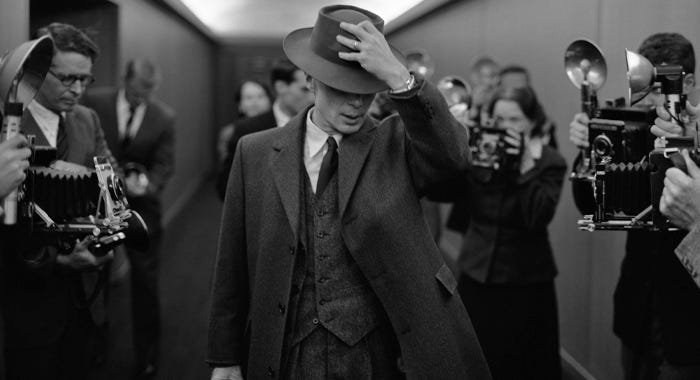
8. Oppenheimer – dir. Christopher Nolan
This should probably be higher. I don’t know what much else there is to say about it. Propulsive, entertaining, walloping. It’s a director working close to the heights of his very considerable powers, effortlessly merging past and present, history and reality, guilt and loathing, all into a complete package. Who else would make us excited for getting the band together only to then sit with the weight of our actions for an hour?
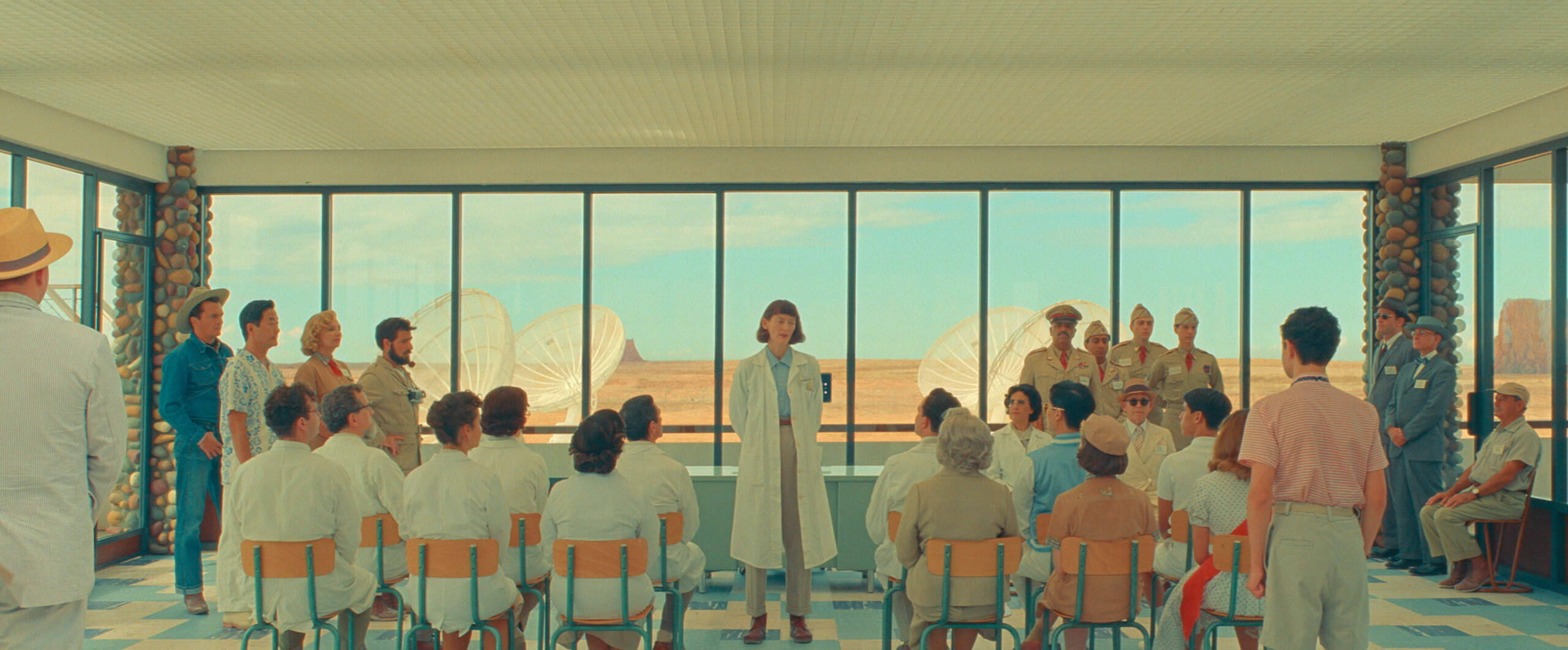
7. Asteroid City – dir. Wes Anderson
The longer Wes Anderson goes on, the freer he gets. The freer he gets, the more he devastates. In Asteroid City, he brings his signature artifice full circle into a movie about the making of a play, wrapped around the making of said play. It’s frequently very funny, maybe even a little chaotic. And in that chaos, we get glimpses of clarity like Maya Hawke and Rupert Friend giving heed to the wind and dancing to “Dear Alien (Who Art In Heaven)” (song of the year). No one’s better at hitting you when you least expect it; there’s lots of those moments here, but none I can explain more than having “Freight Train” recontextualized as an existential sigh of acceptance. “I don’t know which train he’s on / Won’t you tell me where he’s gone?”
6. May December – dir. Todd Haynes
The conversation surrounding Haynes’ latest has perhaps exposed just how much there is to explore. Brilliantly thorny, uncomfortably off-kilter, this story of an actress coming to shadow a woman who 30 years ago married the teenager she statutorily raped unfolds new layers with every second glance at its carefully composed images. Natalie Portman and Julianne Moore may have been the stars on the poster, but it’s Charles Melton who proves to be the soul and heart. He practically steals the picture from them and in a way, Samy Burch and Alex Mechanik’s screenplay suggests that’s the only moral way to tell this sordid tale.
5. Monster – dir. Hirokazu Kore-Eda
Maybe this is just projecting, but it feels like in some corners this has been received as somewhat of a disappointment, especially compared to Kore-Eda’s other (belated) release from this year. Personally, I think it’s as good as Shoplifters and perhaps in line with his other work. The unfolding perspectives read a bit like Farhadi but more localized; it starts as an engrossing mystery, transitions into rage at institutions, before settling in at how little adults know and how much children observe. Sakura Ando – in her second big role from this year – is wonderful, Kore-Eda wrings devastating performances out of Sōya Kurokawa and Hinata Hiiragi. It’s one of the finest depictions of the contradictions and anxiety caused by the closet, and the push-pull between doing the right thing and fitting in.
4. Killers of the Flower Moon – dir. Martin Scorsese
An American Tragedy, immense in its scope and rooted in a toxic love story. The machinations and skullduggery being so out in the open only enhances the rage and despair at this horrible moment of history, punctuated by Lily Gladstone’s screams of anguish and pain that will never leave my head. For a brief moment, Scorsese even makes you believe that justice might be done for once, before the ending reminds you that no, this is still America, and this is still a story we will never understand. Gladstone radiates starpower, commanding the screen with simply a look, a tone of voice. It’s an unshakeable piece that reckons with its very making.
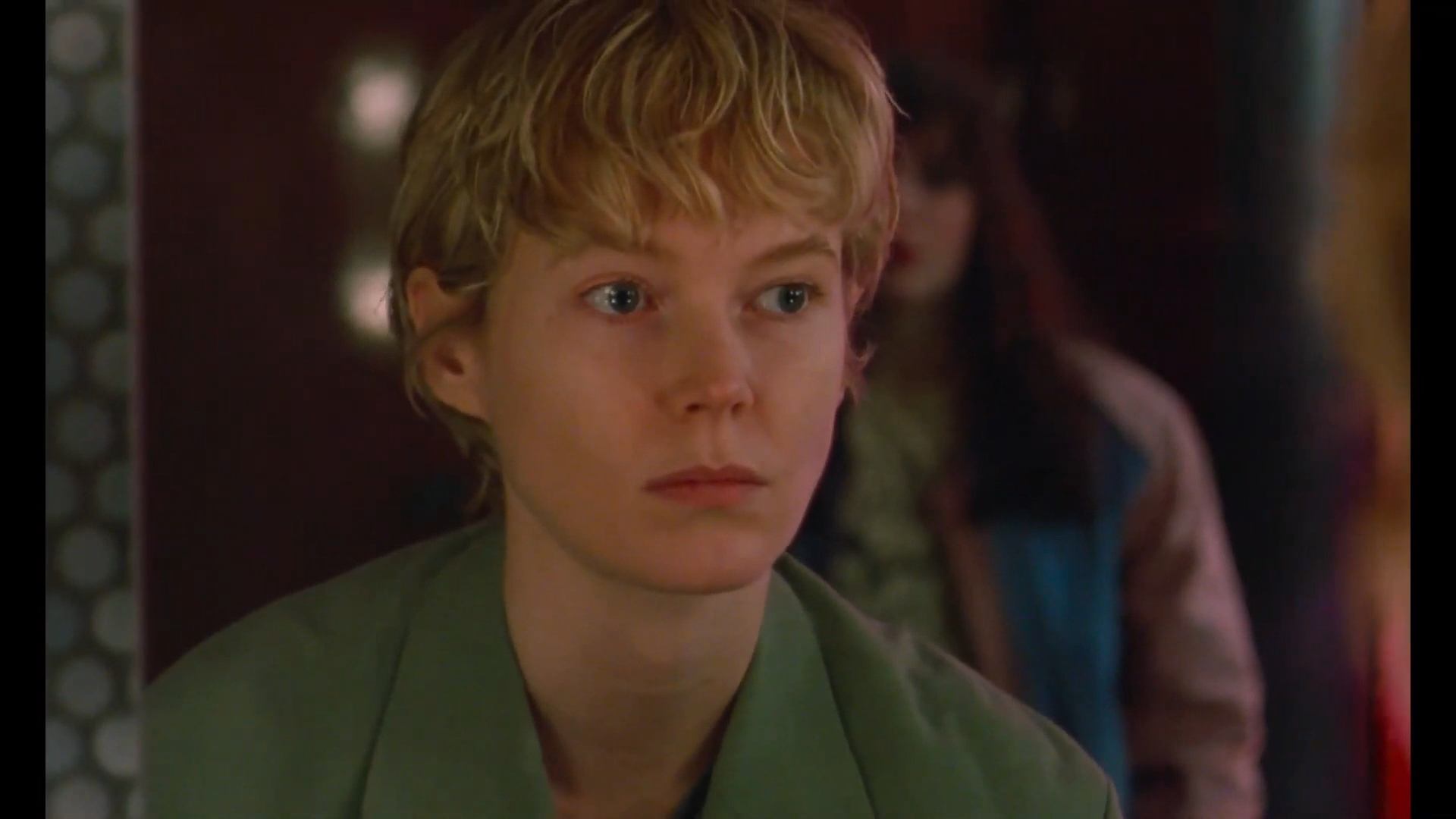
3. Blue Jean – dir. Georgia Oakley
We may be through with the past, but (unfortunately) the past isn’t through with us. Oakley’s sadly relevant debut may be following a PE teacher in Thatcherite England, but Don’t Say Gay bills are little more than Section 28 rehashes. Rosy McEwan deftly portrays the moral dilemma being closeted puts people in: when a student seems to get clocked and bullied for being a lesbian too, how can she help without putting her career and herself on blast in the process? Oakley maintains something of a suspense tone throughout, effortlessly depicting the cruelty of the situation, yet never quite letting her protagonist off the hook. As bad as things may be, the joy Jean experiences in the gay bar shows why it’s worth fighting.
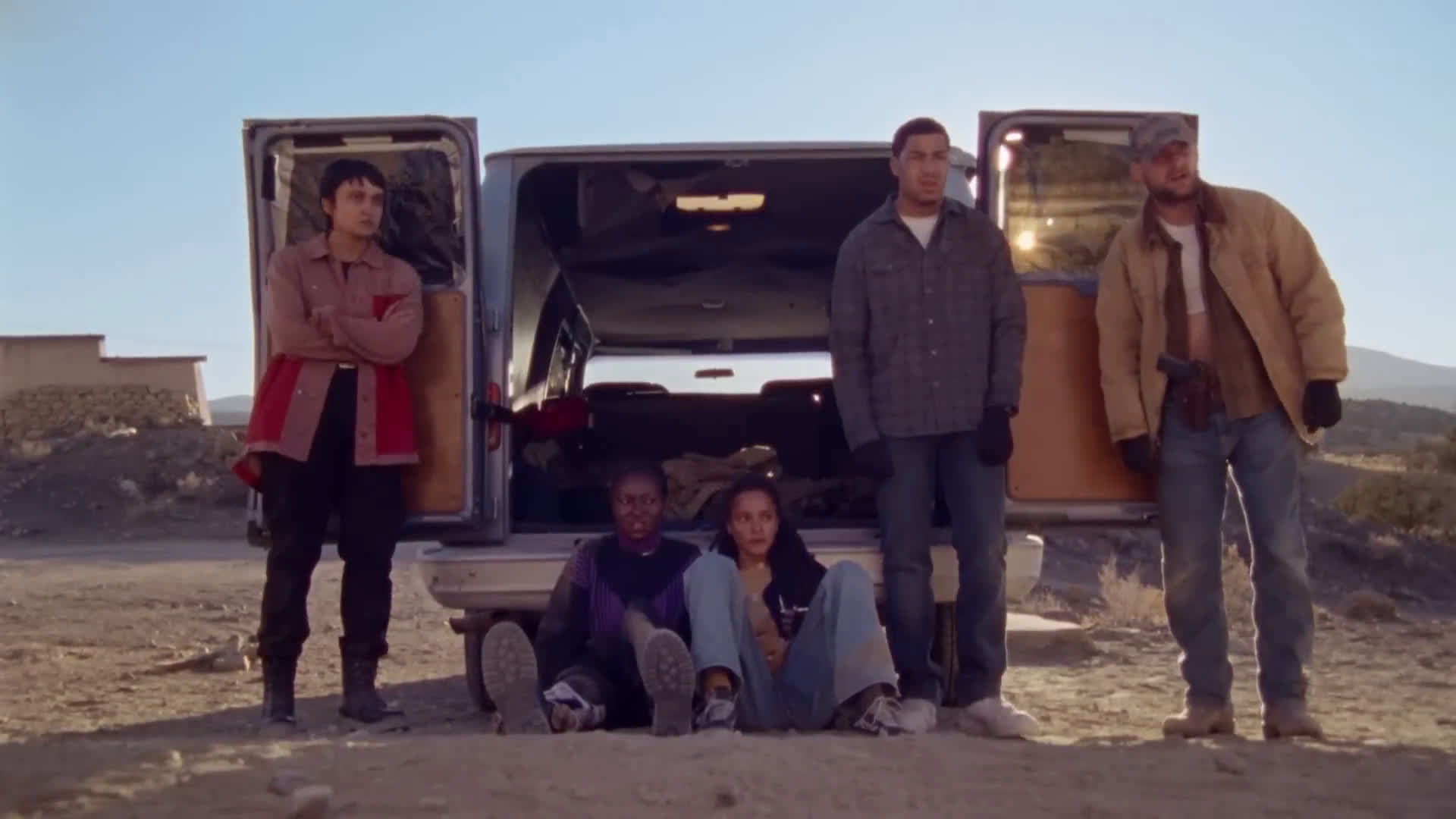
2. How To Blow Up A Pipeline – dir. Daniel Goldhaber
If anything deserves to get slapped with the meaningless descriptor of “urgent”, it’s this call to action. Goldhaber – along with star Ariela Barer and Jordan Sjol – turn Andreas Malm’s nonfiction book of the same name into a tense heist-like movie about a group of climate activists committing the titular act. Whatever didacticism or preaching it may offer is offset by how purely entertaining and tightly edited it is (the money shot: a cut to a flashback right as a strap breaks and everything seems to go to hell). Each member gets enough back story to understand them, and no one is shortchanged in the ensemble whether it be their jobs or their prescences. Fitting that it’s credited as “A film by Daniel Goldhaber, Ariela Barer, Jordan Sjol, and Daniel Garber”: here’s a movie the power of the collective with complete and utter faith in their beliefs and the actions needed to accomplish them.
1. The Zone of Interest – dir. Jonathan Glazer
I’ll admit, I had been anticipating this since the reviews at Cannes dropped. I had a spot reserved for it and everything. It got to the point where I wondered if I’d end up disappoiting myself through hype. Well, it’s one thing to read about the form; it’s another to actually experience it. Glazer throws out most of Martin Amis’ book and turns it into 105 minutes of a panic attack through sheer wrongness. Less the banality of evil and more how comfortable one can be in it. You can never stop thinking about the bodies over the fence; every word said carries menacing notes. Despite never setting foot in Auschwitz, it’s all you can think about. Perhaps the most chilling parts are how we see this evil seeping into the children, the soil, the entire environment of the place. These things happen because they become banal; they become banal because it contributes to someone’s idea of a “perfect” world. Make no mistake: everyone’s aware of it. Their inhumanity comes from believing it’s right. I can’t remember the last time I’ve been so shaken leaving the theater. Here’s a film that sits in your brain, turning over with every realized implication.
(And now, based in part off old AV Club formatting, some superlatives and extras!)
Honorable mentions: The Royal Hotel (Kitty Green), Tótem (Lila Aviles), The Taste of Things (Trần Anh Hùng), Anatomy of a Fall (Justine Triet), The Iron Claw (Sean Durkin)
Performance – Charles Melton, May December: Not so much a “revelation” as a “break-out”, as I’d seen him before on Poker Face. The former Riverdale star emerges as a force with his hunched over body language, his nervous yet sweet demeanor. Melton makes him feel like he’s just play acting at being a dad, while at the same time not fitting in with the younger kids. The tension between not wanting to be a victim and being victimized for so long emerges in bursts, as in the much talked about scene on the roof, and it brings us back to the real person behind the stories.
Underrated – Rye Lane (Raine Allen-Miller): Many have decried the death of the studio rom-com, fated to be stuck with streaming fare like Red White and Royal Blue or The Kissing Booth. Here comes this charmer, a riff on Before Sunset with a wealth of style and energy to shock complacency. David Jonsson and Vivian Oparah exude wonderful chemistry together, with Miller providing a tour of South London fit to rival any classic Brit-com. It’s enough to make you believe love is real again.
Overrated – Barbie (Greta Gerwig): The big movie of the year has gotten more than it’s share of praise, criticism, rebuttals, and whatever else you want to call it. Gerwig’s movie has many charms for sure but despite that, it still ends up something of a mishmash, unable to fully shake off its corporate mandate or become a true “feminst” statement. But mostly: I just wish it was funnier.
Biggest Disappointment – Skinamarink (Kyle Edward Ball): When I first saw the poster online, I was all in. The trailer looked like the perfect mix of surreality and analog horror, and who could shake “In This House?” I don’t know whether watching a screener in my house deflated some of it when I went to the theater but alas: despite loving the look and the concept, I just found my mind wandering too much. I so desperately wanted to lock-in, and I can feel a successful version for me somewhere if it were just a little more active. Here’s hoping Ball’s next one fulfills his potential.
Most Pleasant Surprise – Night of the Hunted (Franck Khalfoun): All relative, since I don’t really tend to watch widely hated movies or things I think I’ll dislike because I’m currently doing this all for free. Which is to say: a thriller directed by the guy who did the Maniac remake may not seem all the fruitful. I found a rather tense single-location thriller, gory and brutal, and fairly plausible in keeping its heroine isolated. It may not be much more than that – and your mileage may vary as to the sniper’s ultimate political ranting. But it’s executed with a sure enough hand to stand out above a lot of Shudder exclusives.
Thoughts on hot dogs, Twitter fingers, and taking abuse seriously.
If you’ve been online the past week or so, you’ve probably seen the arguments about Todd Haynes’ May December. The film is – at its face – a story about an actress, Elizabeth (Natalie Portman) travelling to Savanah to interview and observe a woman, Gracie (Julianne Moore) who was involved in a tabloid scandal almost two decades ago. Said scandal is that she had an “affair” with a 13-year-old boy named Joe (Charles Melton, we’ll get to it), got pregnant, went to jail, and then subsequently married and had more children with him. All this is very clearly based on the Mary Kay Letourneau scandal from the 90s; lots of Cannes coverage mentioned this, as well as talking up how funny the movie was in addition to things like its psychological complexity. From the trailers and that coverage I had been eagerly awaiting it, especially curious to see multiple people I know and trust say it was one of the funniest movies of the year.
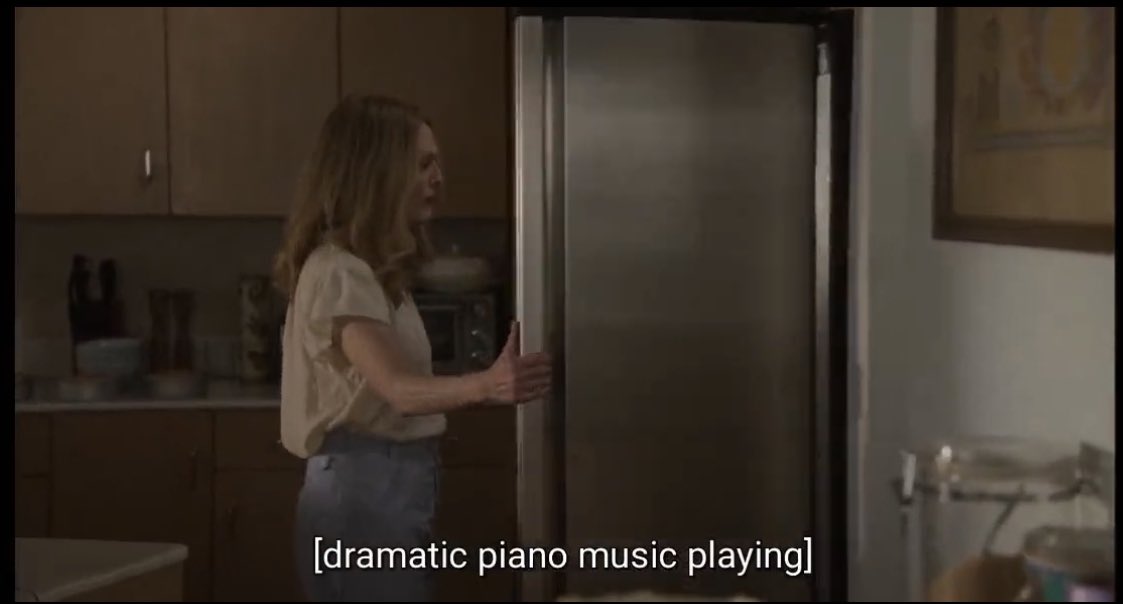
And make no mistake, Samy Burch’s screen play does make several jokes throughout. But I didn’t find it as funny as it was hyped. As I’ve said on Letterboxd and a few other places: while I laughed at things like Julianne Moore opening a fridge to a dramatic sting of music (aka, “I don’t think we have enough hot dogs”), it was frequently much more of an uncomfortable sort of laughter. Things like Elizabeth (the actress) remarking how none of the kids auditioning to play Joe in her movie are “sexy” enough, as you’ve just witnessed some VERY young boys. Or Gracie (the woman) telling her daughter how brave she was to show her arms in a dress in what must be the least subtle backhanded compliment anyone’s ever given. I found the movie to be a showcase of extreme repression and denial, where just hinting at the truth would be too much to bear psychologically.
The word that keeps popping up in all the discussion around the movie is “camp”. Now, I frankly do not have time to really get into what camp is – there’s been enough of that – but the way I see it: Katy Perry wearing a burger outfit to the Met Gala is not Camp. Katy Perry hurriedly attempting to get back into the burger outfit so that she can catch someone passing by is Camp. The word at its base implies some sort of artifice, a blowing up of things to heightened reality; the “tragically ludicrous” and “ludicrously tragic”, as it were. All this has lead to things like Netflix posting a screenshot of the two women with the opening to the Zola tweet thread, as well as numerous Letterboxd reviews about “mothering” and “slaying”. May December in that sense has become a sort of queer movie to some, something I can only describe as a “yass queen” type thing.
Buried under all of this is a central conflict: the implication of “badness” within the work. To me at least, “campy” means that you know something is bad or unintentional, and you celebrate that by pushing it up. “Camp” is not really made, it’s sort of the process that happens within some sort of failure or a general queer sensibility. Notably, Todd Haynes himself has disagreed with the label, and honestly if anyone would know it’s him. I don’t think it’s camp either. In fact, I think calling the movie “camp” or reducing it down to just a display of actresses actressing is sort of turning it into a metacommentary of sorts on the very scandal its adapting.
Charles Melton is the heart and soul of the movie as Joe. He practically steals the movie away from the two women and in a way, it’s really more about him and the ways he’s manipulated by the two of them. At the center of May December is the simple fact that a 36-year-old woman had sex with a 13-year-old boy and had his child. She did this multiple times; she convinced him they were in love, she maybe even convinced herself of it. The whole thing feels tawdry because it’s a sex and cheating scandal; it feels ridiculous because they were pet shop employees. That doesn’t mean it’s not deeply serious though. It’s more accurate to call May December a melodrama: these aspects are heightened to draw out the emotions of the situation, and draw your attention to the dark reality that everyone seems to be exploiting one way or another.
In a strange way, the reception to the movie is mirroring the tabloid scandal of years past. It’s easy to focus on the weird elements, the odd details, the way Julianne Moore says “I’m secure”. These are all great parts of the movie and it would do as big a disservice to dismiss them as insignificant. But it’s important not to lose sight of the man who never seems to fit in with the kids nor the adults. Someone was harmed both in real life and the context of the film; we should be able to look it straight on and call it for what it is. Men are often glossed over when it comes to abuse by women. Joe deserves to have the depth of his pain heard.















 Life of the Mind