A stunner of a debut following a lesbian teacher in Thatcherite England
We like to think that we’re better than the past. It’s just the way of the world: as time goes on, we make progress. Things improve and we learn to be more tolerant. Films about minorities tend to fall under this a lot, and it’s understandable to want to show someone fighting for their rights, or there being one person who was on the right side of history, so that the viewers can walk out of the theater shaking their heads and chattering about how awful it was back then and isn’t it nice we’re not like that anymore?
What I’d like to suggest is… maybe we’re not?
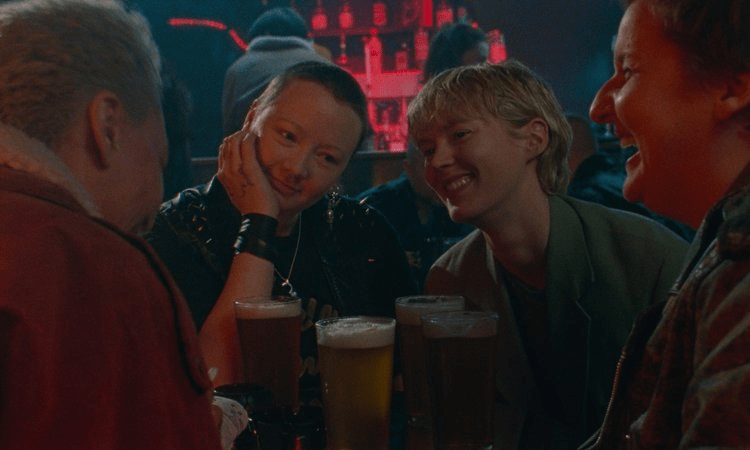
Blue Jean, the debut film from Georgia Oakley, is set during the late 80’s in the midst of Thatcher’s England. Section 28 – which banned the promotion of homosexuality within schools – has just become law. Characters will talk about this but otherwise it hangs over the movie like a cloud, a warning. The titular character of Jean Newman (Rosy McEwan) is a high school PE teacher who also coaches a girls netball team. She is also a lesbian, and at nights she transforms into the proper attire and hangs out at a gay bar with her friends and especially lover/girlfriend Viv (Kerrie Hayes), a leather butch in contrast to Jean’s more androgynous appearance (it’s a wonder she doesn’t get more rumors behind her back).
There’s some suggestion that Jean’s sexuality is a somewhat new development for her; while she doesn’t have that self-loathing that so many queer films gravitate to whenever they take place pre-1995 or so, Jean is rather happy and seemingly carefree in her carefully regimented life. Despite this, there’s a sense she’s still a little bit afraid to embrace herself, hiding Viv from her sister when she makes an impromptu visit in an early scene, and shying away from bonding with co-workers (who chitter about the law during lunch).
All of it threatens to come crashing down when she gets outcast and loner Lois (Lucy Halliday) to join the team, then subsequently sees her in the same bar where she finds such freedom. It’s here that Oakley shifts the tone to something akin to a horror film, though it never fully tips over. A terrible dilemma begins to present itself: both student and teacher know about the other. One desperately wishes that Jean could be something of a mentor to Lois, perhaps even shield her more from the bullies. But as an earlier scene makes clear – in which Jean tells Viv how she pretended to be her boss when calling a parent about one of the girls – she can never show anything that could be construed as favoritism. Not only that, but anything that could even remotely suggest she might be forming a relationship with a student beyond what’s appropriate. What the film lays bare is that laws like Section 28 create a cycle of oppression and more fear in both the adults and the youth. These moral panics about groomers discourage teens from seeking help, and adults from standing up for them and themselves. Because it’s not just her job that’s at stake for Jean, it’s everything. But what tilts it into greatness is the ease at which Oakley also expresses Lois’ point of view, depicting an understandably angry youth caught in the worst sort of rock and hard place.
Blue Jean‘s final moments bring a note of grace and understanding for both characters, while doing its best not to put too neat a bow on things. There are perhaps moments when it feels a little too blunt, too tuned into what feels like contemporary moments. At its very best, Oakley reminds us that the struggle is forever ongoing and what seems like a new low has really always been here. Those in power do their best to stamp out queer history, to make mentorship a liability and keep us at each others throats. In balancing this joy with dread, it reminds us why the fight is worth it, and who it’s all for.
 Life of the Mind