PFF 34 Day 7: The Nature Of Truth

Except for one, I suppose
Not too bad of a day. Found yet another late-breaking surprise; I guess I haven’t been too stingy with the high grades.

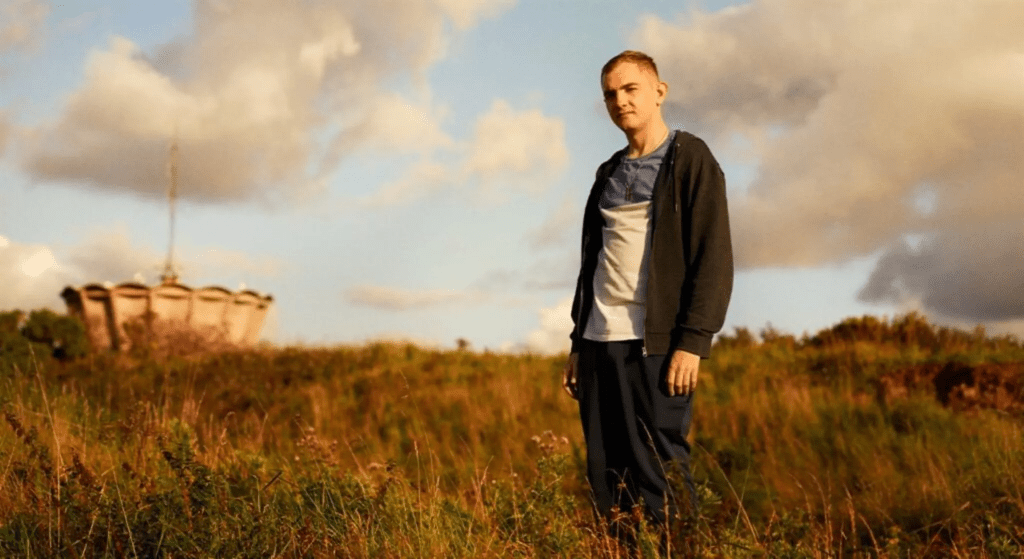
Christy (Brendan Canty): B

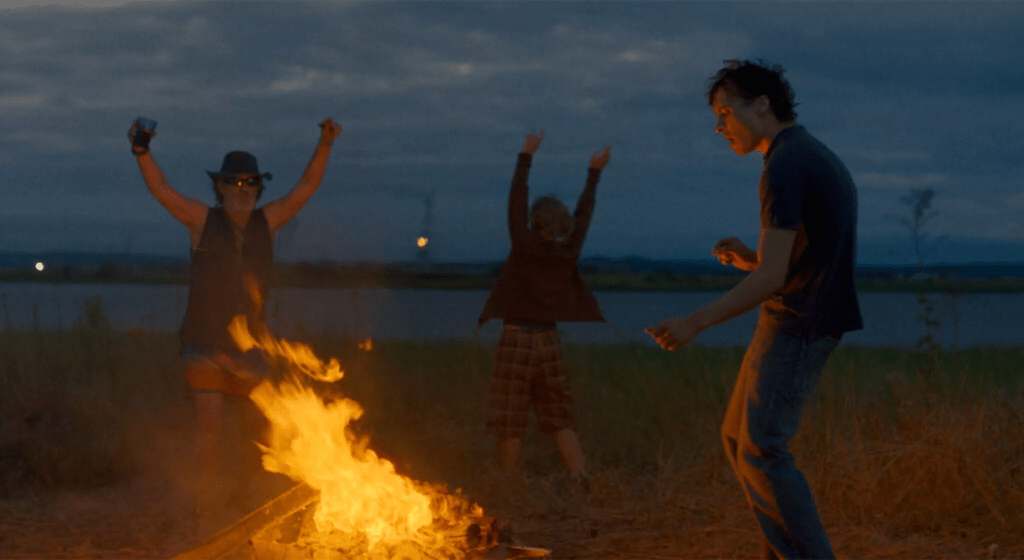
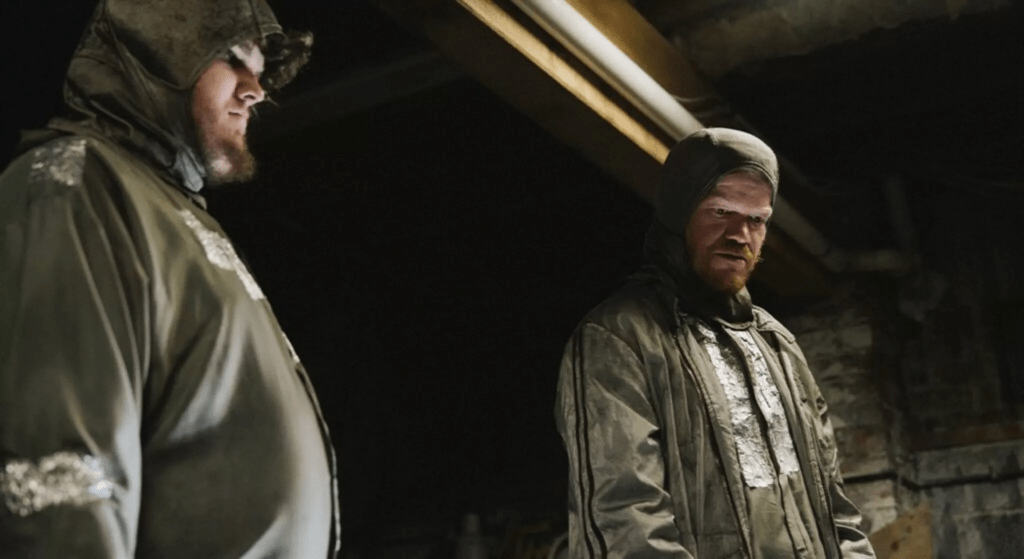
AKA: Christy (Ireland), as presented in the guide to distinguish it from the Sydney Sweeney Christy (US). Similar in some ways to Urchin in that they’re both slice-of-life portraits of a downtrodden man in the British Isles, though despite Canty’s direction not being quite as showy as Dickinson’s I think I kind of liked this a little more. Spent a good portion wondering if it was going to spring some sort of twist regarding either the title character, his half-brother Shane, or both; dunno if it’s better that it declines to do so and it might be that I misunderstood an earlier Instagram video not as a Pedo Hunter one but of a fight Christy was in. The best scenes come courtesy of Jamie Ford’s Robot, so named because he’s in a wheelchair. He’s just a ton of fun to listen to as he banters back and forth, I could’ve watched an entire movie centered around him. Really as a whole it shines when it’s just hanging with Christy and the people of the Council he finds himself with, not so much when it’s leaning into typical social issue patterns. Thoroughly pleasant watch with lots of beautiful boys.
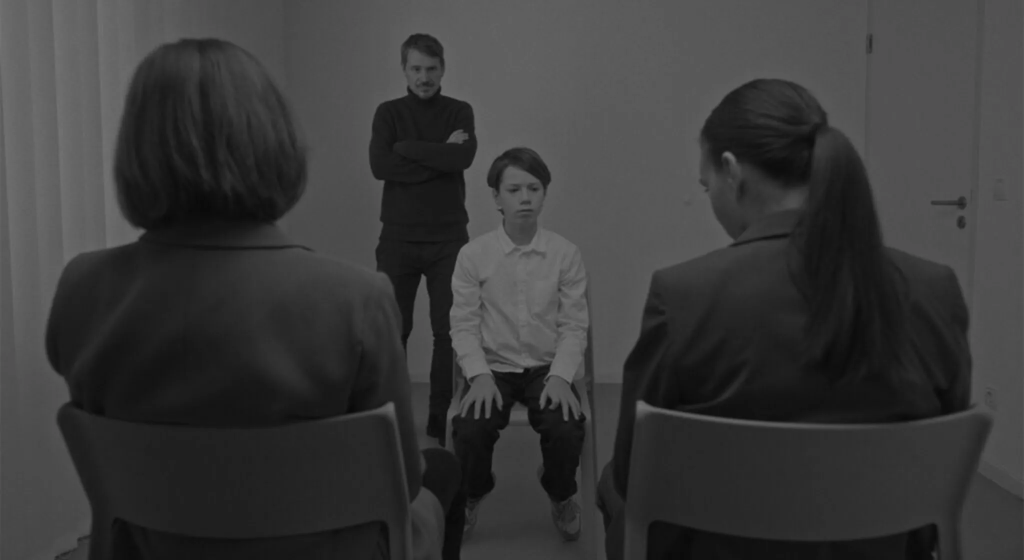
Growing Down (Bálint Dániel Sós): B+
Bit shocked I hadn’t heard more about this before now, although a quick Wikipedia check shows me it was in the Perspectives section at Berlin (for feature debuts). Grabbed me practically from the beginning, with its overwhelming sound over the title card before a quick cut to a camera sailing into a car window. Sós demonstrates a pretty stellar grasp of technique, from the precise edits to the stark black-and-white cinematography, not to mention distance. He and screenwriter Gergő V. Nagy craft a rather knotty ethical dilemma: widower Sándor (Szabolcs Hajdu) – at a critical moment in his relationship with his girlfriend and fellow single parent Klára (Anna Háy) – witnesses a potentially life-threatening accident involving his son Dénes (Ágoston Sáfrány) and her daughter Sári (Zonga Jakab-Aponyi) and in a split second choice, decides to lie for his son. It’s austere and tense as several relationships, not to mention a human life, threaten to completely crumble under the weight of parental love and/or selfishness… and then Sós occaisionally throws a lifeline, like a scene – shot from afar – involving a birthday gift that in lesser hands could be derail the whole thing but instead comes off as a facet of life that keeps going on even in the face of complete tragedy. The kind of utterly singular and controlled vision you want from a debut, and simply beautiful to look at too.

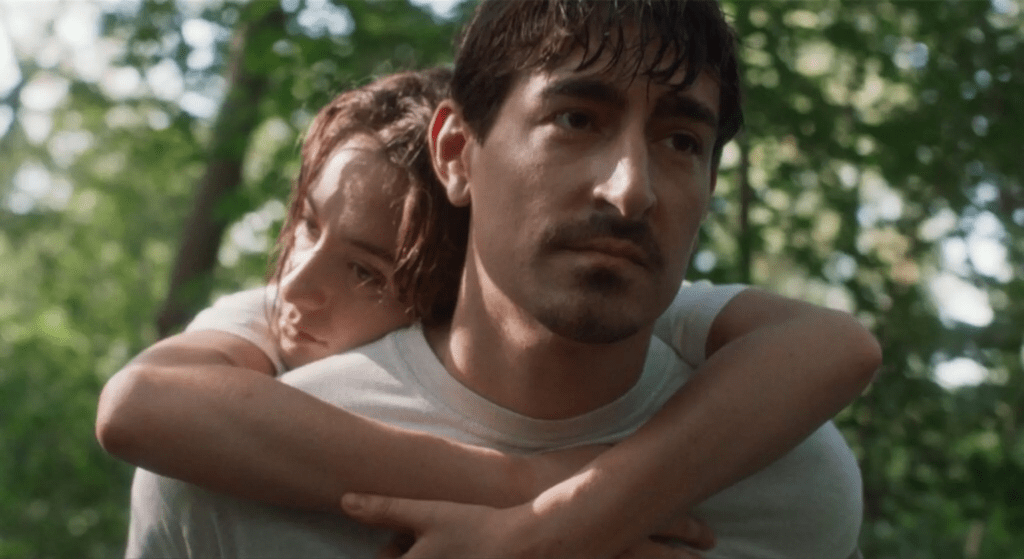
Blue Film (Elliott Tuttle): A

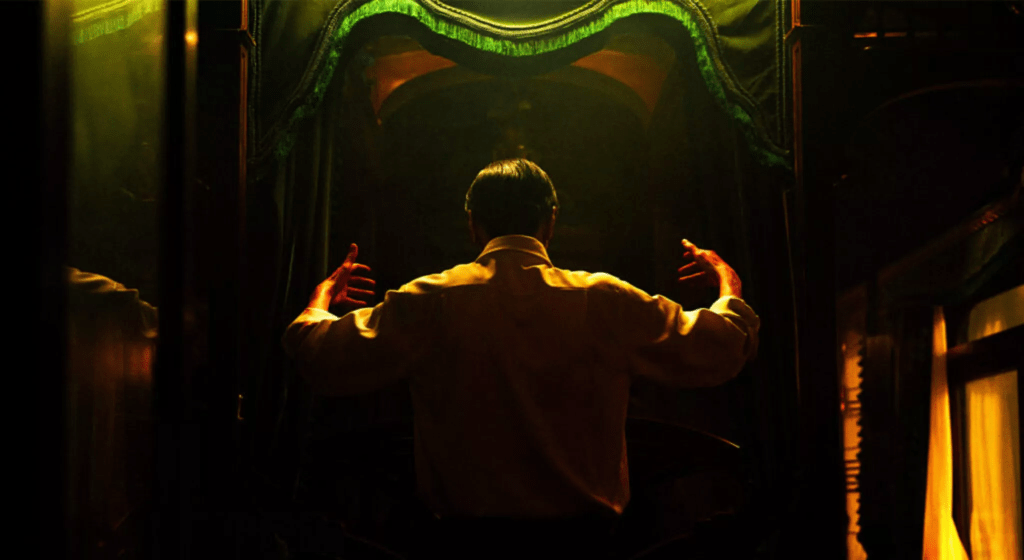
Yet another singular debut, this one even more spectacular and quite possibly the best thing I’ve seen at the fest. All I knew going in was it involved a camboy, Aaron Eagle(Kieron Moore), hired for the night by a mysterious stranger Hank (Reed Birney); what I only got hints of from my friend – hi Zoe – was that sexual abuse was involved but still, I don’t think anything could’ve prepared me for how gripping and unsettling this would be. Tuttle has crafted a two-hander (always at risk of being too stagey) interrogating the nature of desire and the reasons why people turn out how they do. In a way, it’s a good pairing with Springfest entry Predators, another film asking why someone would do such a heinous thing. Moore and Birney are simply astonishing together, the former alternating between the highly guarded Straight Masc Dom persona and the latter layering on a regretful older mentor. Like a lot of my favorites, the two play around with the idea of performing and truer personality, captured especially in a deeply uncomfortable yet strangely erotic scene involving age-play, shot in the kind of consumer grade video that resembles a porno you’d find on some tube site (I wish I’d written down some of the comments from the livestream that opens the film, both it and Moore’s dialogue are perfect encapsulations). Both the producer at the Q&A and the introduction stressed that it will be controversial; it’s circling distribution but had trouble even finding a festival that would accept it. That’s entirely understandable given the way it extends Birney’s character understanding. But that’s not the same as excusing, and the constant back-and-forth is where the film derives the most power. It’s perhaps the most honest film I’ve seen about taboo, kink, and responsibility, one that might be a difficult sit but is the kind of thing queer filmmakers should be getting full support for.
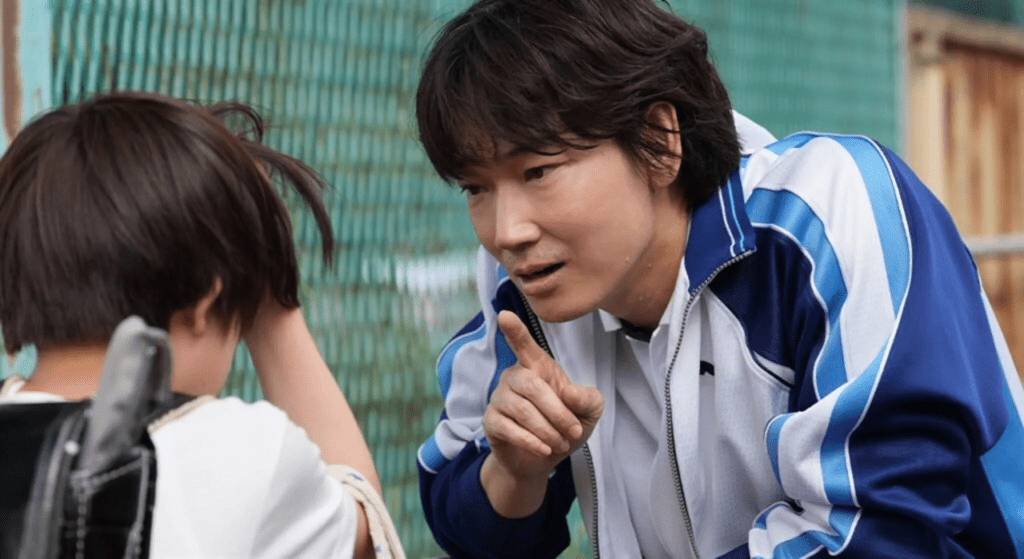
Sham (Takeshi Miike): B-/B

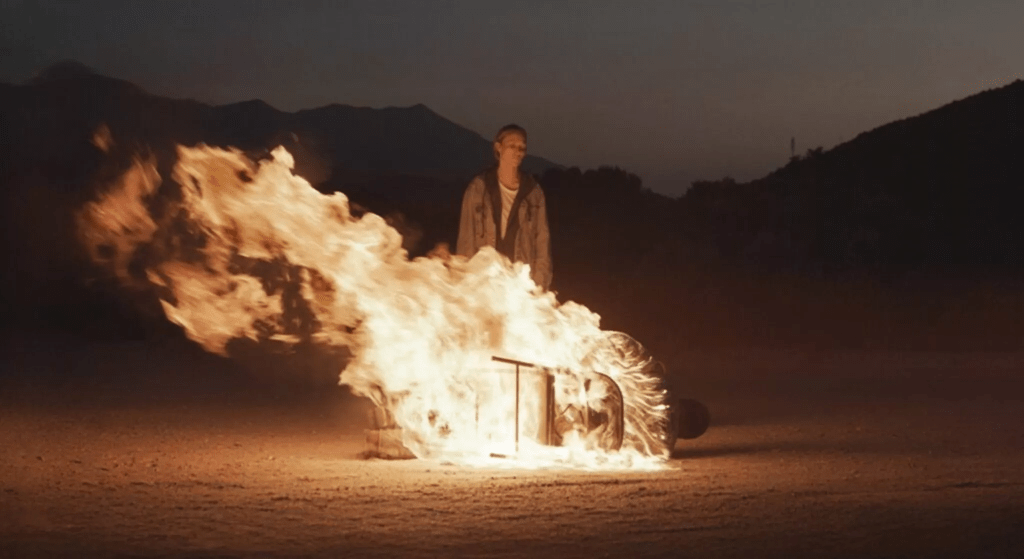
For all that Miike’s prolificacy is harped upon, rarely do we ever get to see that range beyond the outre and the most violent or wacky. After all, when you’ve directed over 100 films across genres and demographics you’re gonna have to be able to adjust to fit the material. Sham might be Miike’s most restrained film but for those who associate restraint with something like Audition are probably going to be disappointed. Not so much because of the lack of violence or whatnot, but more that this ripped-from-the-headlines story chooses the wrong track to focus on, at least at first. That opening features some of the Miike we know, as middle school teacher Yabushita (Go Ayano) goes off on a highly xenophobic rant about mixed-race Japanese to Ritsuko Himuro (Ko Shibasaki), then proceeds to subject her son Takuto (Kira Miura) to such an extreme regiment of bullying it’s almost impossible to believe. Which is kind of the rub, as from what I can tell; screenwriters Hayashi Mori and Masumi Fukuda (who wrote a book about the case) fashion something like a Rashomon story and in Miike’s hands, it’s suitably gripping and well acted, but the actual case seems to be far more definitive then you would think. Although its tempting to compare it to Hirokazu Kore-Eda’s Monster – what with the bullying and the split narratives that circle back – at its heart it’s much more similar to Thomas Vinterberg’s The Hunt. Had it just been a courtroom drama and a film about a wrongly accused teacher or even just about bullying, it could’ve been stellar. Unfortunately, despite the 2-hour runtime it never digs into the circumstances around the case, like the media frenzy (now there’s an interesting one, a film about an alleged bully being himself bullied by the media) or the histories of the parents, or even the Japanese school system. None of this might bother you in the moment while watching – except when questions arise that could be related to Japanese legal proceedings or the like. I wouldn’t go as far as to call it a Lifetime/TV Movie – it’s a little too well constructed for that. If anything it’s proof that we’ve been sorely deprived of Miike’s true skill and range but still we get some stuff like a great title drop.

Tomorrow: I look for things to fill in my schedule.
PFF34 Day 6: Investigations

More than halfway there.

With The Mastermind today, I’ve basically seen all of my most high profile choices (only Sentimental Value and The Secret Agent are left). So far haven’t really had much in the way of disappointment or misses barring Hamnet and Sirât so hopefully those come around sooner rather than later. Here on out it’s all new to me.

The Good Sister (Sarah Miro Fischer): C-

Inert MeToo drama that barely gets to what it even promises. I was intrigued by the idea of having to reckon with your own sibling committing an act of sexual violence, but there’s no indication that lead character Rose even understands why she’s being called to testify and barely seems to struggle with it at all. The movie itself struggles to provide any sort of drama or intrigue, merely gesturing to themes without really doing a whole lot beyond that. Couldn’t bring myself to work up all that much ire; more on the side of failure but not anything to really be bothered about.

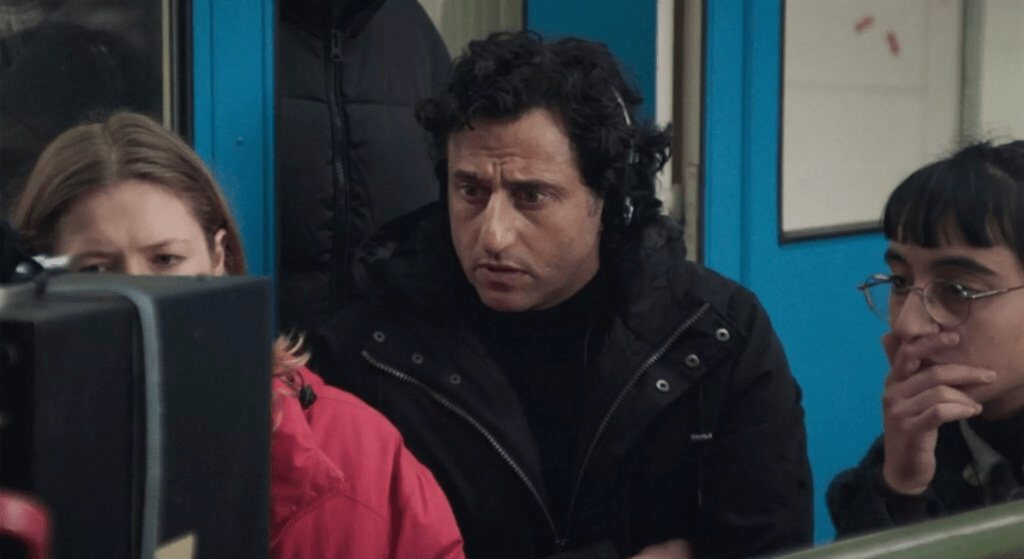
Hysteria (Mehmet Akif Büyükatalay): B

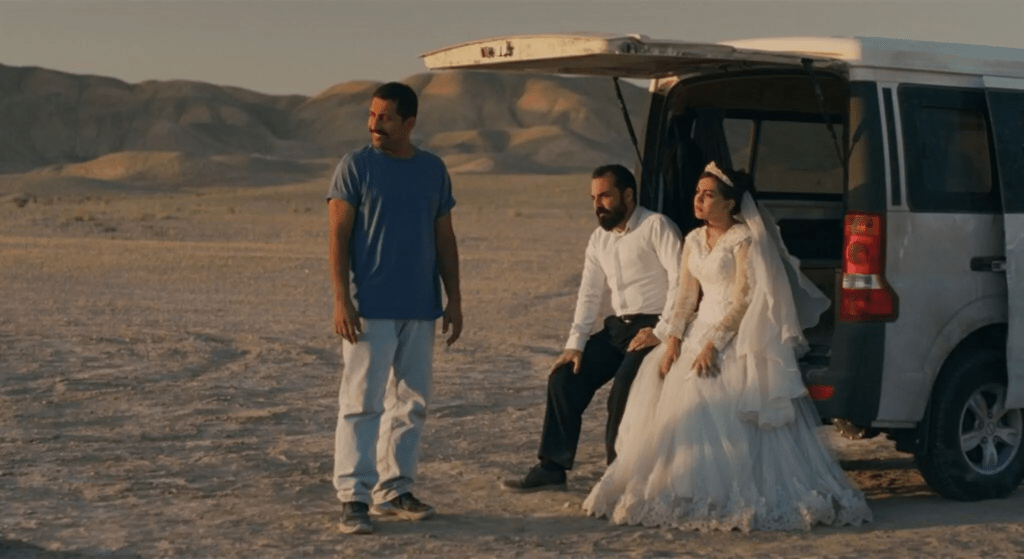
Now here’s something with a thorny dilemma. Grabbed me from the starting premise, in which assistant director Elif – amidst an incident involving a burned Qu’ran on the set of a historical film – loses the keys to a producer’s apartment she’s staying at, and subsequently the tapes she was responsible for. Büyükatalay uses the burning as a jumping off point to ask questions about artistic integrity and representation, early on featuring a character noting how Europeans tend to make films about racism in their countries to absolve themselves. It’s self-aware enough to see that Elif has a lot less to lose than the extras accused of theft and while the two threads don’t always feel cohesive, they come together in a confrontation scene that gives a great jolt. Not quite sold on the ending but I appreciate the swings it takes without fully biting the hand.

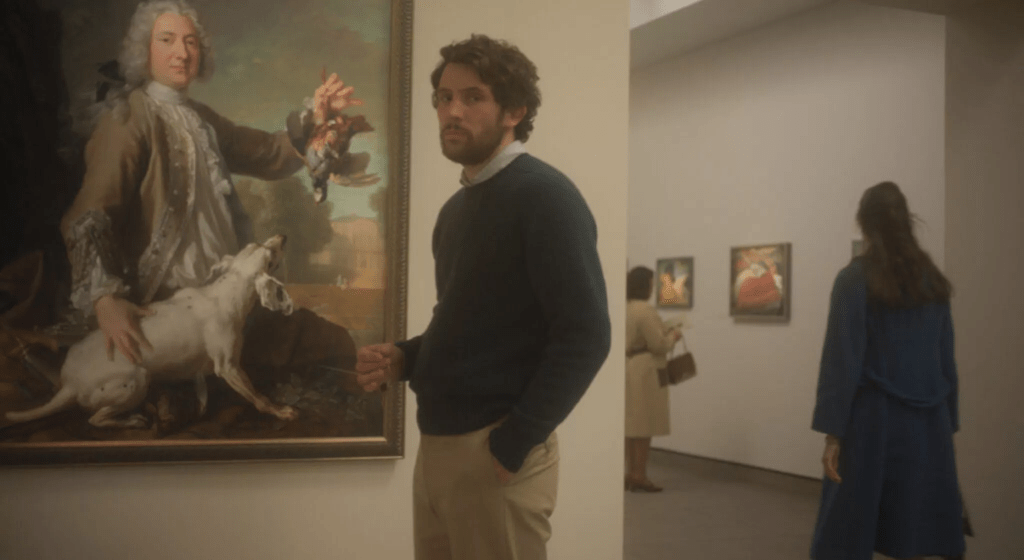
The Mastermind (Kelly Reichardt): A-

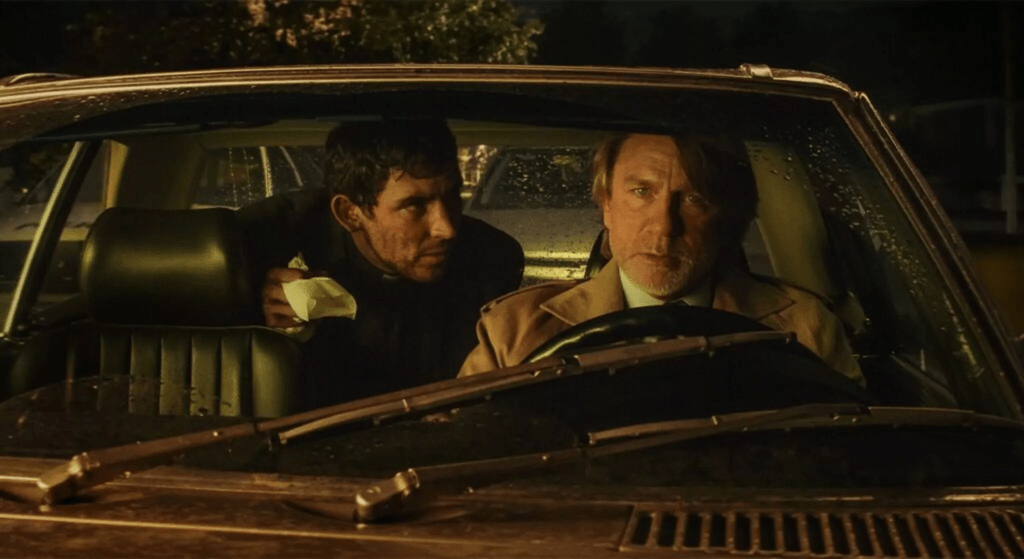
Talk about someone who knows how to end a film. I really have not kept up with Reichardt as I should, though given the rumblings about Showing Up I know she’s capable of being quite funny. Screen Unseen Attempt The Mastermind is indeed quite funny for much of its run time; the centerpiece art theft (calling it a “heist” feels like giving it too much credit) got a big laugh from me out of one line as did the prep and the aftermath. Reichardt’s editing is sublime, swift and lean, very pleasing on the jump cuts but lingering just as long as it should. Josh O’Connor remains magnetically watchable, enormously charismatic in the beginning but still with that deep well of sadness that only grows as his competence and arrogance dims. Like his performance in La Chimera (a movie I must revisit), he’s skilled at revealing the depths of a silence and simply staring. The political thread running throughout the background is part of what makes the ending so good, and I really dug the jazzy score from Rob Mazurek. I perhaps blanked out only a couple times (late in the day and all) and I do wish Alana Haim was afforded more to work with. As funny as it all is, it never loses sight of the depths of O’Connor’s failures as a father, a husband, and all around person.

Resurrection (Bi Gan): B+

Must a film be coherent, thematically or narratively? Is it not enough to watch 6 discrete, lusciously filmed mini-movies about the senses as well as Chinese cinema history? Yes, actually. It’s been almost a decade since I’ve seen Long Day’s Journey Into Night and this is definitely a film from the director behind that. The whole thread about “deliriants” and “other ones” and “dreaming” barely felt like a thread, to be honest, or even a frame story. Not that I particularly minded as somewhere within the second story I started treating it more like an anthology of metaphor and just kind of rocked with the mini stories happening. Occasionally dull and not all that emotionally involving, but every so often Gan provides the razzle and dazzle, and that can be enough for the vibes.

Tomorrow: Some under-the-radar picks, and I check in with what Takeshi Miike is doing.

PFF34 Day 5: Win Some Lose Some

A quieter day.

My Father’s Shadow. Credit: MUBI

Only got two today, as I didn’t want to see Jay Kelly and none of the ones at the top looked particularly interesting. Feel like I might be seeing less this year than last but I’m sure it’ll pick up over this next weekend, and is probably just as well. That being said, had at least one unexpected triumph.

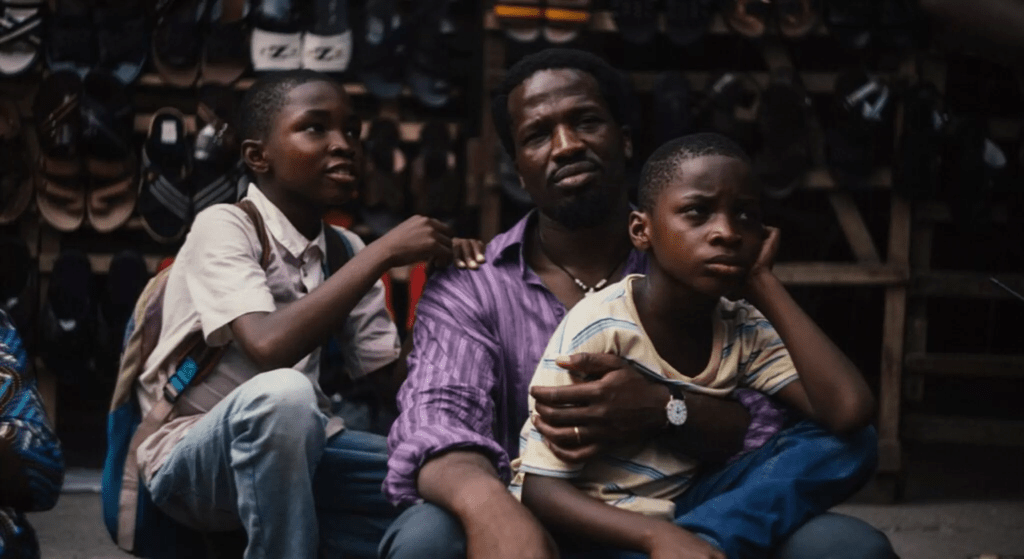
My Father’s Shadow (Akinola Davies Jr): A

Only knew it was Un Certain Regard and some passing Cannes reviews, was completely unprepared for the near experimental track it takes in the opening with its collage of film and thunderous soundtrack. Davies Jr’s debut (writing with his brother Wale) is less Bicycle Thieves (though one could easily draw that comparison what with the father searching for money) and more Aftersun, but with a stronger political bent. I was a little concerned it could be too ominous on the soundtrack; African history is not my strongest but given that it’s set on the eve of an election you can do the math. And when it does come it’s properly devastating, but more important is that you forget something bad is going to happen for a large period as you hang with this family through Lagos. Godwin Egbo and Chibuike Marvellous Egbo are truly marvelous finds even if they weren’t actual brothers, striking the perfect balance between inquisitive carefree kids and watchful youths sensing that something is troubling their father. As that father, Ṣọpẹ́ Dìrísù (unfamiliar to me, but it appears he’s big in the UK) projects warmth and good nature, immensely charismatic but – like Paul Mescal – able to thread a discomfort without it overwhelming. The 16mm haze is absolutely beautiful and the score from CJ Mirra and Tuval Anthony is simply wonderful. Hard to believe this is a debut, so assured and graceful. It’s one of those films that reminds me why I come to festivals.

Redux Redux. Credit: XYZ Films

Redux Redux (Andrew and Kevin McManus): C

Too many good films in a row, only inevitable I find something lackluster. I was already a little wary of it just from the concept of “woman travelling parallel universes to enact vengeance on the man who killed her daughter” because of the fash potential, and despite the guide noting Terminator I was unprepared for it to be mostly about her doing it with one of his victims she manages to rescue by accident. Bits of it could form a reasonably compelling movie – the one about multiversal smugglers is neat worldbuilding – but I got off on the wrong foot the minute Mia started talking; she’s written way too “clever”, sounding like some melange of old tough broads while also being quite blasé for someone who almost got serial murdered. There’s a similar lack of care throughout some of the other details, not enough to be bothersome so much as make you ask questions. Perhaps most symptomatic is a blaring score that’s almost constant throughout the movie. I won’t say the most interesting thing that happened was someone throwing up in the theater although if that didn’t happen, I can’t say I really would’ve remembered much about it in the end.

Tomorrow: Checking back in with Josh O’Connor and a long ass Chinese film.

PFF34 Day 3: Things Are Heating Up

Get this. Get this!!! Directors who are known for being good… make good films.

Arco. Credit: NEON

Haven’t yet had a 5 film day, which is probably for the best in terms of focus and energy. I had debated going to Sirât – of which I’ve heard many a good thing – but ultimately decided to wait until its official release. It’s one of the 6+ movies NEON acquired this year at Cannes in their quest to snag the Palme again (successfully, as you’ll see in a bit), a move I still consider rather gauche. They also released one of the ones below, which I totally forgot about until the bumper rolled. Not that it particularly means much of anything, but it is helpful in planning to know if something has any chance of actually coming out in the near future versus imminently, so I’ll probably know in a couple weeks whether I should’ve kicked myself for missing it an Hamnet. Anyways, a pretty good day yesterday!

Arco: A-

Clearly inspired by Ghibli – specifically, Miyazaki – in ways that got my hackles up within the opening minutes; not helpful was the dub NEON insisted on sending us, since this is a French production, and while it’s not bad it still has some of the stiffness I associate with Netflix dubs (this is also a Netflix France co-production). As you can guess by the score, it won me over gradually, first off by the quality of the animation itself – there’s some Hosada and Yuuasa in there, as well as a melange of numerous other works that still feels coherent as a whole – which captures the typical framerate anime tends to use, along with the propensity to have static backgrounds or shots with no motion. The plot’s a little extended by the end but its simplicity helps it enormously. I won’t lie and say I got a little teary eyed at the end; whether it earns it fairly or not is another question, especially with one late minute twist very similar to a movie from 10 years ago. Even if it doesn’t have much deep to say, I still appreciated it on a visual level; there’s some truly beautiful scenes, and it works to make you really care about the characters. Still feel a little robbed not getting Swann Arulaud but the cast does a good enough job, and I hope this sort of Franco-Japanese blending becomes more common.

Urchin. Credit: BBC Films

Urchin: B

I don’t want to start every review off making comparisons to other films or remarking on familiarity but sometimes that’s the only thing that’ll do. Which is to say, Harris Dickinson’s debut feels very similar to Mike Leigh (eg Naked) and the Safdies’ with its portrait of a fuckup out of prison trying to keep himself off the streets. Frank Dillane – most famous for being in Harry Potter after I stopped watching those – generates sympathy for his homeless addict character, coming off as somewhat pleasant and funny when he’s not trapped in a downward spiral. He doesn’t quite have the depth of character and neither does the film really; Dickinson (who also appears in a minor role as a fellow straggler) does show promise behind the camera, with a number of abstract and surreal sequences, and a pretty good visual eye. Promising, wouldn’t say he should quit his day job quite yet.

It Was Just An Accident. Credit: NEON

It Was Just An Accident: A

The film Panahi has been working towards for more than a decade, not that he really had much of a choice. I didn’t get a chance to catch the features he made on house arrest (saw part of This Is Not A Film, have a library copy of No Bears waiting for me) and my only other reference is Offside so I couldn’t say whether the mostly static camera is due to this one also being shot mostly in secret. What I can say is that it’s a deserving Palme winner, a knotty moral dilemma about the Regime as Iranian film tends towards without making any of its characters explicit mouthpieces for one side as they try to determine if they’ve found their prison torturer, who’s voice they’ve only heard. All of them have been through hell – some more traumatized than others – but none of them seem to know what kind of justice they want. Lest you think its a grim drudge, Panahi laces in frequent comedic moments revolving around how hard it is to enact revenge, as well as how transactional relationships have become; one of the funniest moments there involves a security guard pulling out a credit card terminal for a bribe. It leads to a stomach-churning climax, followed by what might be the best ending of the year. France has submitted it for Best International Feature, due to being a coproduction and because it’s most certainly banned in Iran. Even if he doesn’t win, it’s a triumph for a director who’s fought to make the films he wants under the most oppressing circumstances.

Bugonia. Credit: Focus Features

Bugonia: A-

Lanthimos continues to expand the possibilities of scaring the hoes, albeit in a way that still feels like it takes place in our world. Knew it was an adaptation of the Korean film Save The Green Planet! (original director Jang Joon-hwan was supposed to direct this one but had to drop out, staying on as exec producer) but hadn’t seen that, and judging from at least one of my friends as well as the introduction, it’s probably best that I went in knowing only it’s about a guy who kidnaps a CEO, believing her to be an alien destroying the world. I can imagine the 2003 version being much lighter even with the standard tonal shifts; as scripted by Will Tracy, it’s an angrier film than you might expect. Of course, being a Lanthimos joint it’s frequently hilarious in rather fucked up ways, particularly Emma Stone’s initially calm reactions to her predicaments. Jesse Plemmons continues to prove a perfect addition to the stable, deadpan and almost rational sounding before the cracks start appearing. Bugonia nods to the confused ideological soup a lot of Americans have fallen into both with Internet radicalization and the general feeling of a chaotic world; one could explain why Plemmons’ Teddy Gatz is Like This, but they inevitably feel like mere justifications or excuses. Newcomer Aidan Delbis plays off the two well as Teddy’s cousin, and as CEO Michelle Fuller, Stone gives one of her best performances. I don’t know if it was the sound mixing or just the Film Center theater but one of my biggest reservations is the score, too often blaring and bombastic, doing too much. The ending also gives me a bit of pause; while admirable in its audacity it sort of throws a wrench into ultimate thematic meaning. Despite that, it’s extremely gripping and entertaining, the kind of button-pushing that feels resonant while also pondering where exactly things failed.

Tomorrow: A straight block of heavy hitters featuring highlights from the Big Three Fests, and I see about getting into Frankenstein

PFF 34 Day 1: An Opening/Closing Tradition Continues

Rian Johnson drops by for the traditional premiere, and a bonus film you should check out if you can.

Stealing once again from Mike D’Angelo (and some others), I’m going to try to be doing relatively short capsules here, which means trying in part not to go over a lot of context. Realtively light day since it was opening.

Wake Up Dead Man: A Knives Out Mystery: B+/A-

I realized as I was making my schedule that I’ve seen every single one of the Benoit Blanc flicks for the first time at PFF; Knives Out was the closing back in 2019, Glass Onion was a Centerpiece a couple years ago (Johnson has always shown up as well for a Q&A, and he’s a delight). These always work best with a crowd – the first one especially was amongst my most memorable theatrical experiences – and the latest is no different. Johnson still knows his way around a mystery, though this one isn’t as structurally playful as the last ones are, and probably for the best. I haven’t seen Knives Out since release and I feel I may have overrated Glass Onion a tad in retrospect. Dead Man for sure has a much stronger emotional core than the last two – funny enough but not a straight comedy (not unwelcome). Josh O’Connor makes quite the good protagonist, as an earnest priest in a parish in the thralls of a personality cult, and the rest of the cast acquits itself quite well even if their characters aren’t always the strongest (Glenn Close ends up on the better side compared to the past years). If I seem a little more reserved, it’s only because it’s so hard to match up to the novelty of the first, especially that ending. A scene with Bridgett Everrett reveals itself to be the heart of the movie, and I appreciate the genuine reckoning with religion even if Benoit doesn’t really wrestle much himself. No creative exhaustion yet as I can tell.

Lesbian Space Princess: B

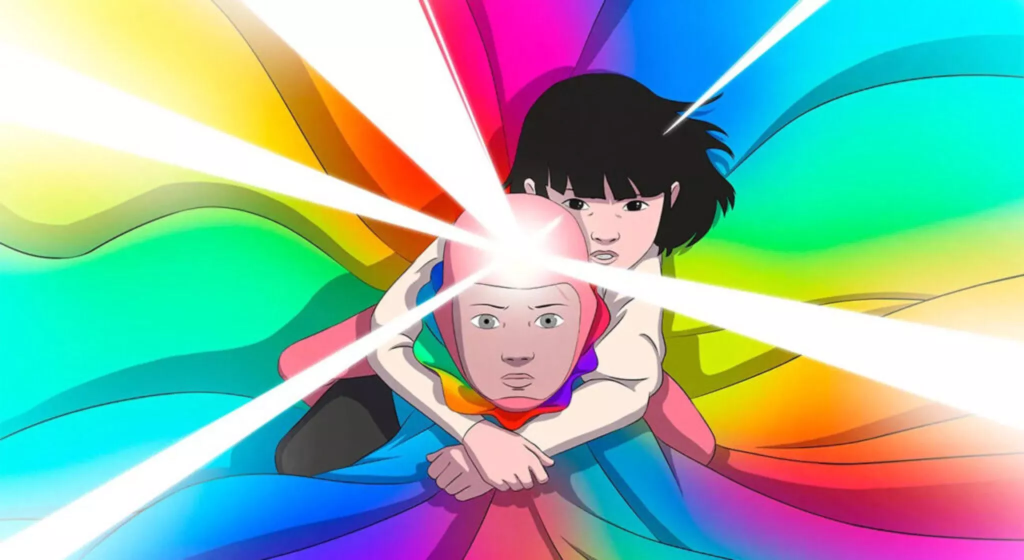
This one isn’t showing until Sunday and then next Friday, but since I saw a screener of it early in advance of a filmmaker interview with Emma Hough Hobbs and Leela Varghese I thought I’d just jot some quick thoughts down. In short: it’s cute! I had a nice enough time with it – Shabana Azeez proves an adept voice actress, and the Aunty Donna guys are always fun to be around. It’s the kind of adult animation that throws a lot of jokes at you, enough that at least one of them will probably hit (there’s at least a couple that made me laugh a lot). All in all, a good debut and I’m curious to see what they’ll do next.

Tomorrow: Checking in with some German movies, and the newest Chloe Zhao.

PFF33 Day One: SNAFUs and a Very Good Dog

Opening up the festival with the Munich Hostage Crisis and feral Chinese dogs

September 5. Credit: Paramount Pictures

I love Festival Season. As a longtime Oscar watcher and film obsessive I’d scour every trade I could to see what the hottest incoming releases were. Once I got to college and realized that the Philadelphia Film Festival was not just a local fest but, in fact, had heavy hitters, I did my damndest to attend nearly every year I was in the city. So far, it’s been the only festival I’ve had the pleasure to go to – mainly out of location and timing concerns, and thanks to being in college for all that time. PFF is as associated with fall as my own birthday, and coming back feels like home in a way.

The point of this long-winded intro is that I consider myself a pretty plugged in person, one who’s just started going to the Opening Night showings because I both have a job and have passes that make it easy to decide whether I want to or not (also helped that the last two have been American Fiction and The Banshees of Inisherin, even if I only got to see the latter). Which is to say I was a bit surprised and confused when September 5 (Grade: C+) was announced as this year’s opener because I was pretty sure I had never heard of it until then. Turns out, I had; it was at Venice and a couple other festivals. It’s not difficult to understand why it might’ve been chosen either. Set during the 1972 Munich Olympics, it follows an ABC TV crew as they stumble upon and begin reporting on the Israeli team being taken hostage by Palestinian terrorists, most famously dramatized in Steven Spielberg’s Munich.

It’s undeniably tense and often gripping, with the added pleasures of the many analog processes needed to bring live news coverage in front of television viewers (I didn’t realize that captions had to be physically made like that), and for the most part it avoids slipping into Newsroom-style “how it should’ve gone”. But at the same time, I can’t help but focus on the fact that it reduces the Palestinians to faceless terrorists, including a very creepy black and white image catching them one on a balcony. To be fair, the film is not unaware of the biases and subjectivity around such an unprecedented event. Multiple arguments occur over whether they can show someone getting shot on live television, and there’s a recurring theme of how bad it would be for Jewish people to once again die horribly on German soil. It never quite reaches the level of soul searching needed to fully fend off whatever the bad vibes, and mostly just settles for recreations. The fact that it doesn’t ever leave the control room hampers things quite a bit too, as does the relative anonymity of most of the workers save Leonie Benesch’s Marianne. Director Tim Fehlbaum was unknown before this. He’d probably be a journyman in a functioning studio system.

Xin and Eddie Peng in Black Dog. Credit: The Seventh Art Pictures

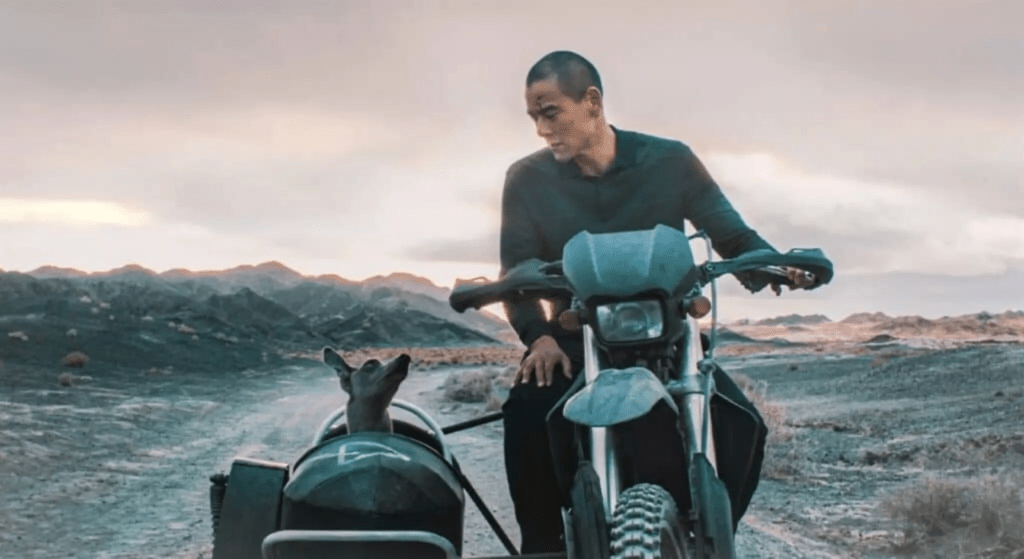
This was actually the second film I saw this day, a process that took much longer thanks to some technical problems related to the print that saw us waiting for an hour before it started. Much smoother was Black Dog (Grade: B+), this year’s Un Certain Regard winner at Cannes and boy, does it ever live up to that title. In fact it opens with a whole pack of dogs running across the Gobi Desert, in the process causing a bus to crash. That bus holds our protagonist Lang (Eddie Peng), prone to near total silence like so many Western heroes of yore. He’s been paroled and is on his way back to his decaying industrial town, set to be demolished as part of a revitalization project. Director and co-writer Hu Guan makes wonderful use of the desolate and bare landscapes; even the abandoned buildings look kind of pretty under his eye. It’s at one of these abandoned buildings that he has his first encounter with the titular creature, a vicious greyhound that’s among the many dogs left behind as their owners have picked up or faded away.

In need of money to keep a vengeful gangster off his back, Lang joins up with a dog capturing team (lead by Jia Zhangke, prominent chronicler of modern China. His Caught By The Tides is winding its way through the festival circuit to great reviews) and becomes set on capturing it. Somewhere along the way, a bond forms. The two seem to sense that they’re both trapped in cages not all of their own making, creatures that aren’t bad but just need someone to care for them. It does help that it’s a very good dog and if you’re wondering, yes, the actor – Xin – won the Palm Dog. Guan’s film may not quite cohere together on a full thematic level, at least on first brush, somehow both blunt and elusive. He’s an expert at staging set pieces, and a late one featuring a zoo jailbreak set to Pink Floyd is kind of awe-inspiring. Like its protagonist, you grow to love the thing anyways, warts and all. And if nothing else it’s an absolutely beautiful looking film.

Tomorrow: Sean Baker’s much hyped Palme winner Anora, Renate Reinsve as a single mother, and the first of many Indian films, as well as After Hours.

Review: Eileen’s Psychosexual Drama Never Comes Together

The Anne Hathaway/Thomasin McKenzie two-hander doesn’t know who its’ title character is

Note: Expanded from Philadelphia Film Festival thoughts

Eileen is the sort of movie that promises a lot from the get-go. In its very first scene, we see the title character (Thomasin McKenzie) observing a couple getting frisky in the car next to her, appearing to get turned on herself before she shoves snow down her pants. The 60s setting and icy New England landscapes would point to some sort of repression on her end; at the very least, with an alcoholic father and dead-end job at a juvenile corrections facility in a remote town, her life doesn’t seem to going great.

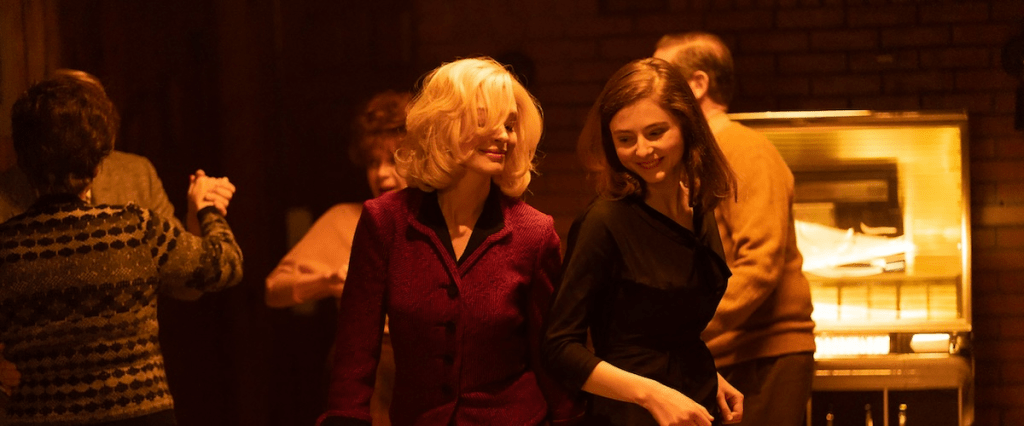
All this is before Rebecca Saint John cruises into the parking lot in a Mustang and captures her attention. As embodied by Anne Hathaway (doing an accent, and doing it pretty good), Rebecca is the New Woman: unmarried, unwilling to take men’s shit, handling a cigarette in the way mysterious yet alluring women tend to do in movies like this. She’s arriving to take over for the prison psychologist and begins to take something of an interest in Eileen. Is it a crush? Simple mentorship? Something more sinister? The scene seems set for a dark sort of seduction.

Unfortunately, Eileen herself never seems to snap into focus. McKenzie also does an accent and it’s rather passible, but her character is too passive and internalized. The script is an adaptation of Otessa Mosfegh’s book – written by the author and her husband – and it feels as though large portions of an internal monologue were lopped out rather than integrated. Periodically, there are supremely jarring moments of fantasy where Eileen imagines herself having rough sex with a prison guard or shooting herself in the head, and they always come out of nowhere. It’s hard to even figure out if Eileen has some sort of repressed sexuality or obsessive desire since it’s not always clear what exactly she wants. Which means that Rebecca’s background story involving a prisoner who killed his father starts to become a lot more interesting, despite it being an ostensible side show.

The film takes a sudden swerve in the third act heightened by an impassioned monologue from Marin Ireland that also raises a boatload of interesting things to explore. For a moment, it seems to get into some thorny territory that itself could make a great story, but the movie ends before it has a chance to fully examine that. It’s not an issue of direction – William Oldroyd keeps a tidy pace and a clean visual style that makes great use of dark – but that aforementioned missing bits. It might’ve needed to be longer to fully unpack the impact of the massive twist. As it is, Eileen presents a titilating scenario but can’t make its protagonist shine through it. (C+)