
An existentialist horror classic
Thoughts on a horror film every week for the month of October, both new and old.
No one will ever be able to replicate The Blair Witch Project. This is true in the broadest sense, in that audiences will no longer believe a movie is truly “found footage”, especially after the myriad rip-offs and knock-offs in the early 10s. But in the most literal sense, the very methods and form used to create the movie have been supplanted both by higher quality video and audio, as well as the fact that, well: the cast was essentially psychologically terrorized over the course of weeks in a sort of “Method filmmaking”, as directors Daniel Myrick and Eduardo Sanchez described. Watching The Blair Witch Project almost 25 years out – long past the hype cycle and a few attempts at turning into a proper franchise – have only strengthened the core of why it still resonates so strongly. Marketing gimmicks are temporary. Bone deep mental disintegration worms its way deep inside your mind and festers.
Of course, not everyone sees it that way. While praised by critics, it’s proven much more divisive amongst audiences in part because of how barebones it is. There aren’t really any overt scares, at least nothing that we can see. We sure hear a lot: snapping twigs, a baby crying, maybe someone being horribly killed. Among the genius of the movie (something that’s been cited time and time again) is how much is really left to your imagination. Even the thing that could be chasing college kids Heather, Josh, and Mike isn’t set in stone. Myrick and Sanchez offer everything from the Blair Witch herself to a child serial killer and even float the possibility of the locals fucking with the kids. One thing’s for certain: there’s something out there, and it means harm.
As we get further and further away from 1999, the idea of reality has only evaporated further and further. So much of the discourse surrounding The Blair Witch Project was the idea that these events actually happened; it was heightened by the actors each using their own names for characters and by staying out of the spotlight once the film debut. There were documentaries, websites devoted to shaping the central myth that what you saw was real, even though it still carries normal credits and disclaimers (not to mention that were it actually true, it would have amounted to a snuff film, and while Hollywood is amoral, it’s not that amoral). Found footage itself has basically lost the veneer of reality through establishing tropes and casting familiar faces. But in a paradoxical way, this makes it easier to slip into the world of the film. The footage is all handheld consumer grade film, the kind college students would be able to get. It looks rawer because it is, all the imperfections and “amateurness” kept in. Cameras have only gotten better and in some sense, we’ve lost this sort of scuzzy feel. The footage just looks too good. But then again… how many times have you scrolled by a video reuploaded through 3 different social media platforms, degraded by compression, showcasing a purportedly real-life event? More things are staged than ever before, so what does it even matter if it’s not real to begin with? Josh calls it a “filtered reality” and later, suggests that Heather keeps filming because it makes it easier to pretend it’s not happening. Judging by the way she screams back “It’s all I have left!”, he may have a point.
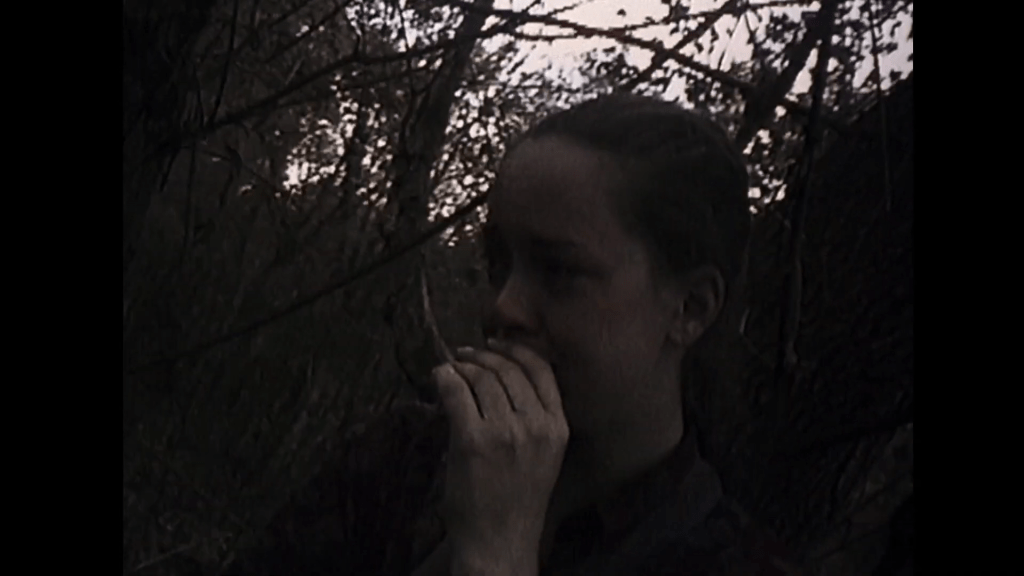
What matters is that it’s convincing, and the movie does not work at all if you don’t believe the actors. A recurring criticism (especially of Heather) is that they’re all annoying college kids goofing off but look at the opening scenes. Here, they’re casual, laidback, playful even. There’s an unforced chemistry and charisma to all of them, little touches like zooming into some marshmallows or Heather declaring she hates scotch. These establishing scenes give the later ones when they turn on each other a great impact, because we know that’s not what they’re normally like. Josh’s especially is upsetting, because we see his friendship with Heather earlier on, and his repeated shouts of “There’s no one coming to save you” pour more and more salt into the wounds of her mistakes. Heather herself – it should be said – has proved a competent director, despite what the public opinion says. After all, she got them the interviews, filmed openings, lead them to Coffin Rock. Perhaps she got them lost but if she did, well… there’s also a demonic presence insistent on torturing them, so you can’t blame it all on her. Heather Donohue is willing to make her abrasive as things get worse, but there’s a deep sense that she knows she fucked up and she’s being constantly reminded of it, but she can’t change it as they spiral closer and closer to her doom. Her final confession is iconic in part because of her despair and terror, of seeing how frayed she is and how she wishes she could’ve made a better decision. It’s possible that wouldn’t have helped anyways. Maybe you can’t hate her if you don’t believe that she could exist.
The Blair Witch Project is a psychological drama masquerading as a horror film. It’s not necessarily “scary” so much as it is deeply upsetting and uncomfortable to witness. Part of that is knowing that – yes – the cast really were operating on little sleep and food, being tormented by the directors (one line late in the film could be aimed at either the spiritual presence or the directors themselves). But that weariness translates into a sort of existential dread that comes with knowing you’re deeply lost in the woods and that every day will bring more of the same. It’s in seeing people turn on each other in some of the most vicious ways, clawing at each other while gripping tightly for support. The lines between reality and fiction dissolve as much as their own sanities until by the end we’re seeing pure, animalistic terror. You can’t recapture that. Maybe you shouldn’t try to.
Available on HBO Max, Hulu, and digital rental platforms.


 Life of the Mind