Thoughts on hot dogs, Twitter fingers, and taking abuse seriously.
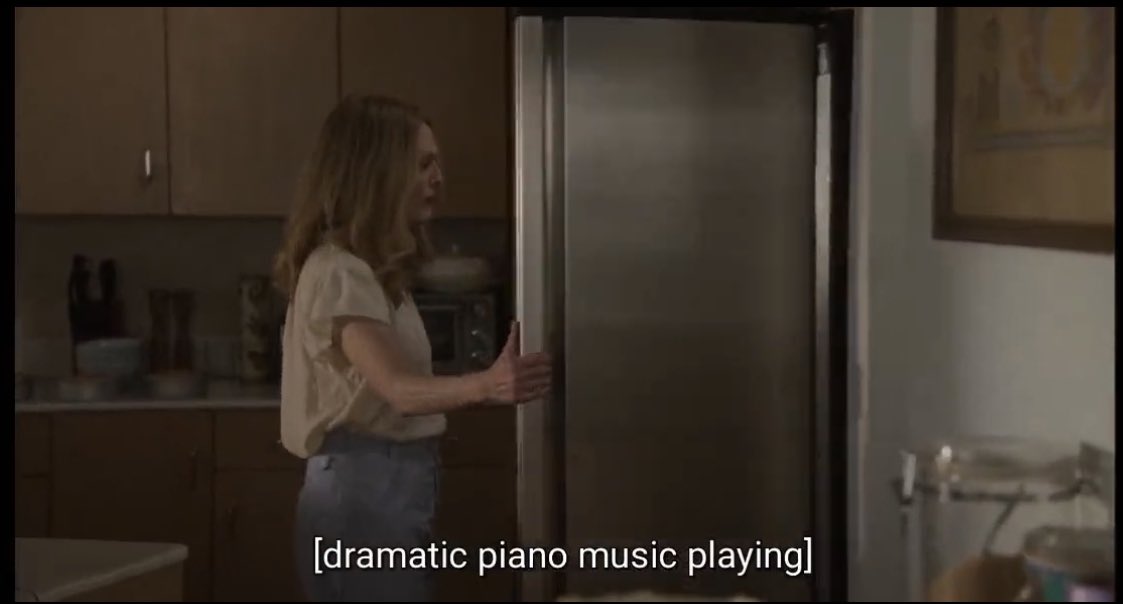
If you’ve been online the past week or so, you’ve probably seen the arguments about Todd Haynes’ May December. The film is – at its face – a story about an actress, Elizabeth (Natalie Portman) travelling to Savanah to interview and observe a woman, Gracie (Julianne Moore) who was involved in a tabloid scandal almost two decades ago. Said scandal is that she had an “affair” with a 13-year-old boy named Joe (Charles Melton, we’ll get to it), got pregnant, went to jail, and then subsequently married and had more children with him. All this is very clearly based on the Mary Kay Letourneau scandal from the 90s; lots of Cannes coverage mentioned this, as well as talking up how funny the movie was in addition to things like its psychological complexity. From the trailers and that coverage I had been eagerly awaiting it, especially curious to see multiple people I know and trust say it was one of the funniest movies of the year.
And make no mistake, Samy Burch’s screen play does make several jokes throughout. But I didn’t find it as funny as it was hyped. As I’ve said on Letterboxd and a few other places: while I laughed at things like Julianne Moore opening a fridge to a dramatic sting of music (aka, “I don’t think we have enough hot dogs”), it was frequently much more of an uncomfortable sort of laughter. Things like Elizabeth (the actress) remarking how none of the kids auditioning to play Joe in her movie are “sexy” enough, as you’ve just witnessed some VERY young boys. Or Gracie (the woman) telling her daughter how brave she was to show her arms in a dress in what must be the least subtle backhanded compliment anyone’s ever given. I found the movie to be a showcase of extreme repression and denial, where just hinting at the truth would be too much to bear psychologically.
The word that keeps popping up in all the discussion around the movie is “camp”. Now, I frankly do not have time to really get into what camp is – there’s been enough of that – but the way I see it: Katy Perry wearing a burger outfit to the Met Gala is not Camp. Katy Perry hurriedly attempting to get back into the burger outfit so that she can catch someone passing by is Camp. The word at its base implies some sort of artifice, a blowing up of things to heightened reality; the “tragically ludicrous” and “ludicrously tragic”, as it were. All this has lead to things like Netflix posting a screenshot of the two women with the opening to the Zola tweet thread, as well as numerous Letterboxd reviews about “mothering” and “slaying”. May December in that sense has become a sort of queer movie to some, something I can only describe as a “yass queen” type thing.
Buried under all of this is a central conflict: the implication of “badness” within the work. To me at least, “campy” means that you know something is bad or unintentional, and you celebrate that by pushing it up. “Camp” is not really made, it’s sort of the process that happens within some sort of failure or a general queer sensibility. Notably, Todd Haynes himself has disagreed with the label, and honestly if anyone would know it’s him. I don’t think it’s camp either. In fact, I think calling the movie “camp” or reducing it down to just a display of actresses actressing is sort of turning it into a metacommentary of sorts on the very scandal its adapting.
Charles Melton is the heart and soul of the movie as Joe. He practically steals the movie away from the two women and in a way, it’s really more about him and the ways he’s manipulated by the two of them. At the center of May December is the simple fact that a 36-year-old woman had sex with a 13-year-old boy and had his child. She did this multiple times; she convinced him they were in love, she maybe even convinced herself of it. The whole thing feels tawdry because it’s a sex and cheating scandal; it feels ridiculous because they were pet shop employees. That doesn’t mean it’s not deeply serious though. It’s more accurate to call May December a melodrama: these aspects are heightened to draw out the emotions of the situation, and draw your attention to the dark reality that everyone seems to be exploiting one way or another.
In a strange way, the reception to the movie is mirroring the tabloid scandal of years past. It’s easy to focus on the weird elements, the odd details, the way Julianne Moore says “I’m secure”. These are all great parts of the movie and it would do as big a disservice to dismiss them as insignificant. But it’s important not to lose sight of the man who never seems to fit in with the kids nor the adults. Someone was harmed both in real life and the context of the film; we should be able to look it straight on and call it for what it is. Men are often glossed over when it comes to abuse by women. Joe deserves to have the depth of his pain heard.

 Life of the Mind