It’s that time of the year again: Festival Season, where everyone starts putting out the “good movies” in the hopes of getting award attention and we all get to learn what’s going to get held back another year. I, for one, could not be more delighted to be back at the Philadelphia Film Festival especially considering the state of, well… everything nowadays. Thanks to both a surplus of free time because of the job market and a press badge (thank you PFS!), I will once again be shoving as many films in front of my eyeballs as humanly possible.
And check out the heavy hitters we got this year: Jafar Panahi! Yorgos Lianthimos! Park Chan-Wook! Mary Bronstein! Chloe Zhao! It gets to a point where I’m glad I managed to catch one of the titles (Lesbian Space Princess) on a screener if only to clear up my schedule for a bit. That schedule was formed a tiny bit last minute due to me waiting on the mail for my program, as well as trying to figure out which ones I need to prioritize and whether I’ll be able to jump on some RSVPs late. For this year, I’m going to do daily blog posts that I’ll try to put up by noon each subsequent day. My goal for this year is to try and make them short, in part for my own sanity since I have some other assignments brewing, but also on the off chance I get an official review commissioned later. So join me, won’t you? As we explore the 34th Annual Philadelphia Film Festival.
Schedule follows below. Some of the gaps will probably be filled in later in the week, while others may be forfeit for reasons of rest or overlap.
My viewing habits finally caught up with me, as did the looming specter of joblessness. As I’ve mentioned before, in the past I’d usually become rundown by this point, powered as I was by caffeine and black-and-white cookies before the ownership changed. I think part of it was the nature of the scheduling as well: given how long a lot of the films were this year, there’s not a whole lot of time left, which in turn limits what’s programmed. Even if I hadn’t been able to do another 5-film-day, I still ended with a couple decent to pretty good films.
Eephus. Credit: Music Box Films
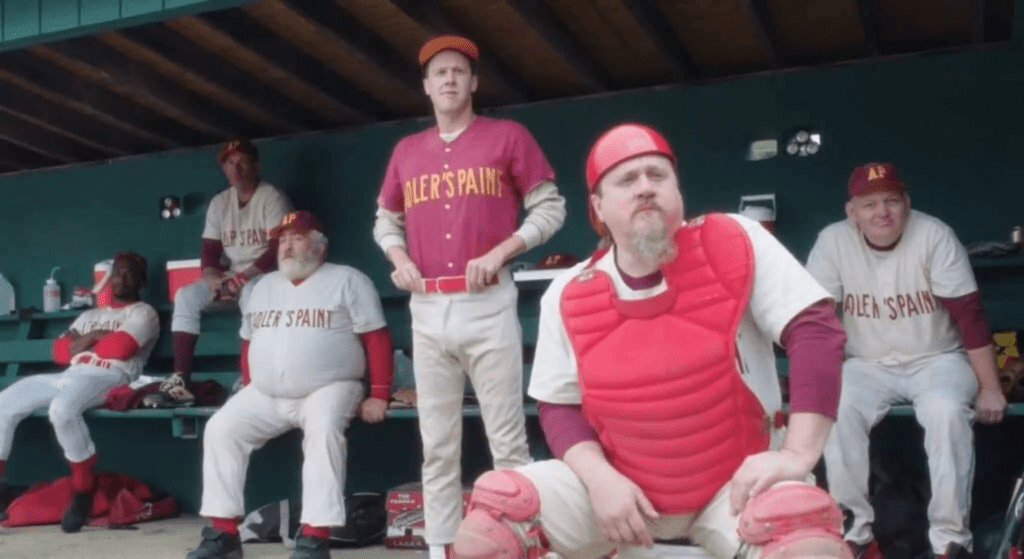
Starting off with the good was Carson Lund’s Eephus (Grade: A-). I probably wouldn’t have seen it if one-time editor Vikram Murthi hadn’t praised it on Twitter; sports are not really my thing, and I only really started watching them at all once I realized I could see them in the gay bar (because, you know… Men™). Turns out you don’t really need to know much of anything about baseball. The mechanics of the game aren’t as important as the fact that it gives the men an excuse to gather and memorialize their preferred field before a school is built on it. Lund is best known as a cinematographer, most notably with No-Budge stalwart Tyler Taormina. He caries the same sort of relaxed, slightly deadpan energy one associates with such films.
Which isn’t to say it isn’t screamingly funny, ie a man hitting a pitch and then immediately faceplanting on the ground. Much of that humor comes through in the banter and background dialogue as the men razz each other, complain about the drive to Duster’s Field, and overall mourn the passing of time. As the game stretches on, you get the sense that none of them really want to stop playing, if only because that means the friendship gets dissolved. Truth be told, you also start to feel the length of the game as it goes on. Lund keeps it easy-going, cutting between people around the ballpark and the players in free-flowing plot, so when actual tension starts to rise up it harshes the mellow a bit. What remains is the pleasure of seeing these men interact with each other, their good-nature camraderie, the sheer love of the game even if they aren’t very good at it. Like the pitch that gives the film its title, time seems to be suspended for a bit before it starts up again. And hey, like a wiseman once said: everything dies baby, that’s a fact. But maybe everything that dies, some day comes back.
Dahomey. Credit: MUBI
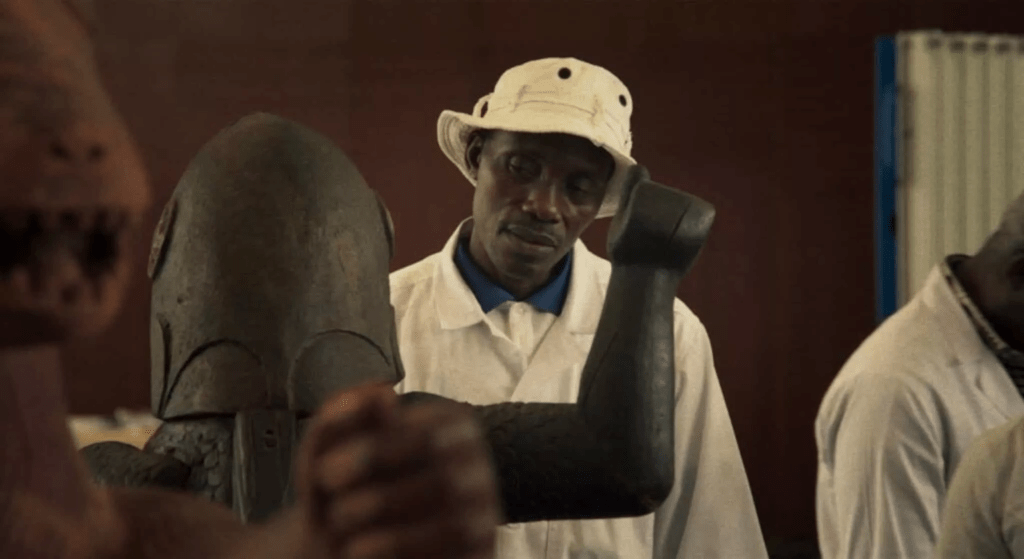
“Things coming back” is the ostensible subject of the last movie I saw at the Festival, Mati Diop’s Berlin-winning documentary Dahomey (Grade: B-). The name refers to the African kingdom – now the Republic of Benin – that has recently repatriated 26 artifacts taken during French colonial rule. Part of the documentary is a fictionalized narration of the objects themselves, telling the story of their theft and return. The other half revolves around a debate with university students, in which they discuss the fact that 7,000 objects reside in the Paris museum, and they’ve only gotten this many back through years of diplomacy.
I saw Diop’s first film – Atlantics – back at the 29th Fest when I was in college; I think it closed my festival experience then too. Maybe I need to stop doing that, because much like that one, this just kind of washed over me. It’s not without its pleasures (the music, from Wally Badarou and Dean Blunt, for instance), and Diop does have talent. But I would’ve preferred the narration for every object, or at least a greater focus on their travel from France to Benin. As enlightening and lively as the university discussion is, it takes up quite a bit of a 67-minute movie. I could feel myself getting on the wavelength for it before it dissipated. Perhaps more exposure to this type of thing is needed.
And with that, the 33rd Philadelphia Film Festival has come to a close. By my count, I saw the most I’ve ever seen at one of these, at 38. Having an entire week off will do that to you. I can’t forget my badge situation as well though; not having to pay for Centerpiece tickets meant that I took a lot more chances on entires I would have otherwise ignored. This year still felt strange to me, in that the schedule somehow felt lighter than it had in years past. Not sure if that’s because there were more films here, longer runtimes, less from the vaults, however you wanna play it. Hard to remember how you felt or what you were doing 2 years ago, after all.
What I can confirm is what many of the programming staff said about this being the best one yet. By quality alone, I saw some truly stellar productions, most of my most anticipated films living up to the lofty festival hype. The biggest regret is that I had to miss The Seed of The Sacred Fig, and am now at the mercy of NEON to play it in Philly; I also had to miss Sister Midnight, the last entry in the Focus On India section, so I hope that gets a release somewhere. As I tabulated the list, I found a lack of surprise. Most everything I loved was something I’d heard of before or had put on my watchlist ages ago. There was no Red Rooms, no Tremors, or Rose Plays Julie, ie something that came from out of nowhere to completely knock my socks off. I don’t know if that was just a testament to the year or my own evolving critical tastes (or at least an attempt to hold back on crowning something just as I come out of the theater). All that said, making a top 10 was somewhat difficult. Many of these will be strong Best of The Year contenders, if not this year than the next. There are still quite a few I saw at the full list, which you can check out at Letterboxd. With the caveat that these could shift on later viewings, here’s The 10 Best Films of the 33rd Philadelphia Film Festival:
All We Imagine As Light Still currently my favorite thing I’ve seen all year. Payal Kapadia’s rapturous feature debut is the kind of movie you just want to sink into, absorb every sensual texture and image. She turns the landscapes of Mumbai into something like a dream and in the process enhances the loneliness present everywhere. At the risk of cliche, it’s pure poetic cinema. Opening 11/15 in NY and LA via Sideshow and Janus, expansion likely
Nickel Boys Out of the story of two boys at a Florida Reform School, RaMell Ross crafts a stone cold stunner. More than anything, he crafts what it feels like to hold back memories, the associations one creates from disparate moments and references that bind themselves to your trauma. Evocative but not explicit, it’s a major accomplishment and a fine work of adaptation. Opening 12/13in limited release via MGM and Amazon
Flow Easily the best animated movie of the year on sheer visual spectacle. But it’s a triumph of visual storytelling, utilizing the full scope of body language and tone to give animals character without making them human. Makes you wish you could show it to every Hollywood studio and force them to be better. Opening 11/22 in limited release via Sideshow and Janus, 12/6 in wide release
Anora The most borderline one, but the late act sells it for me. Whatever Sean Baker’s politics, there’s no denying he sees such a wide vein of empathy in his title character; all he’s ever wanted was for us to understand them, and he does through his typical mix of the profanely funny. Mikey Madison is going to change gay speech patterns for years to come. Just watch that trailer and try to say “a FRAUD marriage?!” any other way. Out now in limited release, expect an expansion
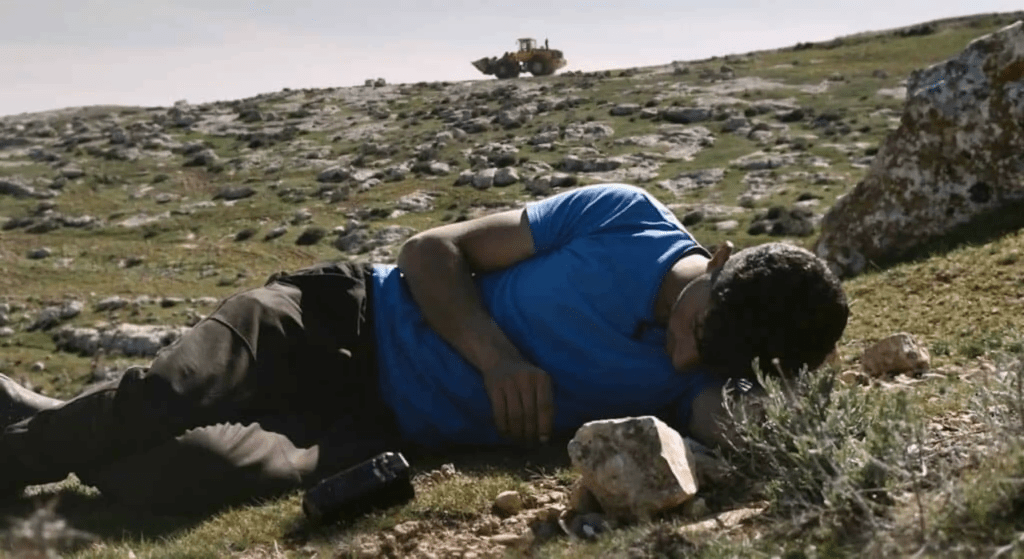
No Other Land “Important” is the among the lowest forms of praise you can give a movie, but if anything deserves it, it’s this. Shamefully, there’s still no legal way to see it in the US, more than likely because it refuses to act as though people can’t come to conclusions for the things they see in front of their eyes. To quote the man outside my screening: “The people that need to see this won’t.” Upsetting, harrowing, yet undoubtedly the work of filmmakers wishing for the world to see the beauty of their humanity. No US distributor as of this writing.
Dead Talent’s Society Sometimes, you just have a lot of fun with a movie. I’ll admit to being a little seal-like in my joy of seeing an extended Perfect Blue reference. It helps that the rest of the movie is committed to goofy, cartoony jokes and fairly clever in using scares as a metaphor for filmmaking. A little heart goes a long way. Current international plans unknown. Expect it to come over next year, if not on streaming
The Brutalist Adrian Brody, Guy Pierce, and Felicity Jones turn in fantastic performances but the true star is Brady Corbet. He effortlessly corales power, the fantasy of America, Jewish alienation, the Holocaust, and so much more into a surprisingly brisk, There Will Be Blood style epic on one man’s quest to stake his name. The fact that a movie that looks as good as this – from the sets to the costumes, down to the camera movements and compositions – for $10 million is an indictment to every actor and producer working in Hollywood today. Utterly overwhelming, and yet intensely compelling. Opening 12/20 in limited release
Birdeater Truth be told I’m a little nervous to revisit this, for fear the spell will be broken. I still don’t want to give too much away from this singularly demented creation, still the most insane thing I saw at this festival. Utilizing editing and framing almost as an attack, Jack Clark and Jim Weir plunge you deep into a singularly anxious mind and then constantly pull the rug out, veering from surreality to comedy back to relationship drama and horror. Maybe the substance isn’t quite there. I gotta hand it to them for making what feels like the most unstable movie I’ve ever seen (and I mean that entirely as a compliment). US release unknown. Out in Australia
The Order It might boil down to standard “cops and robbers” but what well-wrought cops and robbers these are. For whatever lack of depth (and copaganda, if you feel it) may be present on the cop side, the robbers – in this case, white supremacist terrorists – get an utterly chilling treatment that their charisma can’t hide. As much as we tell ourselves it’s done, the words of Quiz Kid Donnie Smith ring-out over the climax of The Turner Diaries: “we may be through with the past, but the PAST ain’t through with us”. Opening 12/6 in limited release
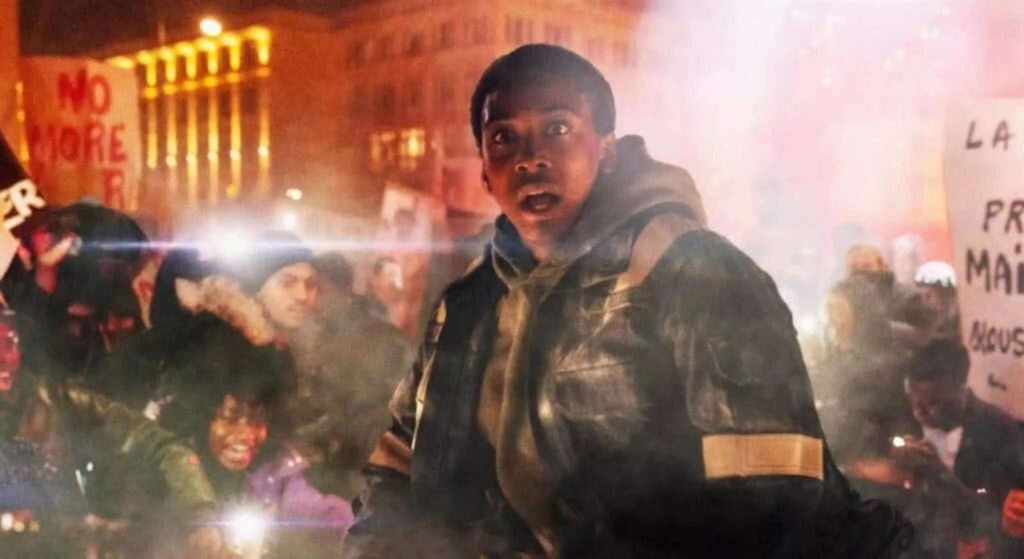
Night Call The more I’ve talked about it, the more I’ve come around to this taut thriller’s ending. Michiel Blanchart wrings every bit of tension he can from his setpieces, but notice the protagonist’s relationship with the BLM protestors. Uncommonly smart when it comes to its character’s actions, ultimately unsparing as the circle closes in around him. It might be the movie I’m most looking forward to revisiting, and I hope it captures more attention when it releases. No date set, acquired by Magnet Releasing, should be limited within the next year
A couple highlights, one dud, a disapointment, and a throwback.
The End. Credit: Neon
Years ago – when I was clocking time at UPS before college – I was listening to an episode of Filmspotting, where they talked about director’s they’d give blank checks too. One of them was Joshua Oppenheimer, director of Indonesia genocide documentaries The Act of Killing and The Look of Silence (movies I both need to see and revisit, my younger self be cursed). They mentioned that one of the things the MacArthur Grant recipient was shopping around was a post-apocalyptic musical, a very leftfield choice and understandably one that was having difficulty getting funding. I subsequently forgot about it over the years as his documentaries placed on numerous decade lists, right up until it was announced to be showing at both Telluride and TIFF.
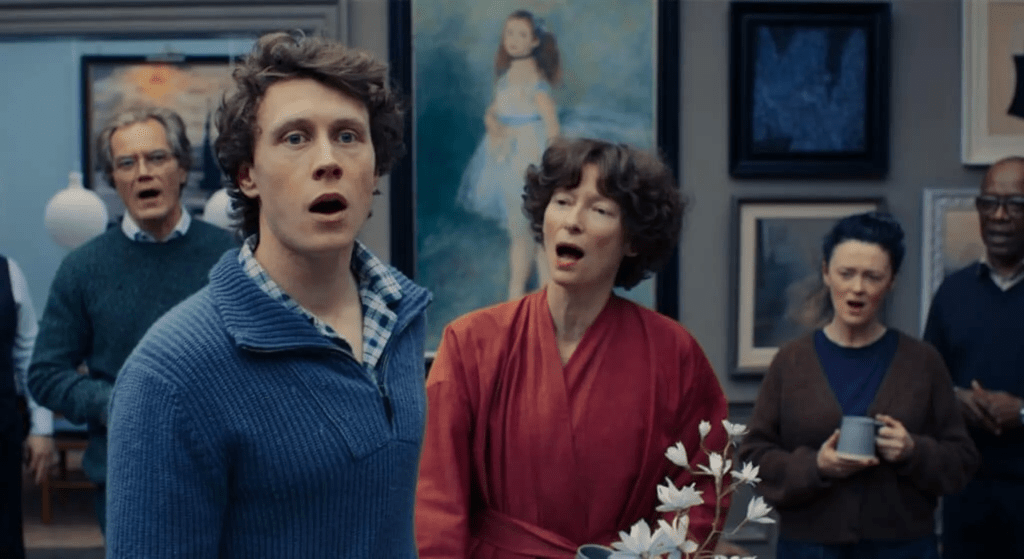
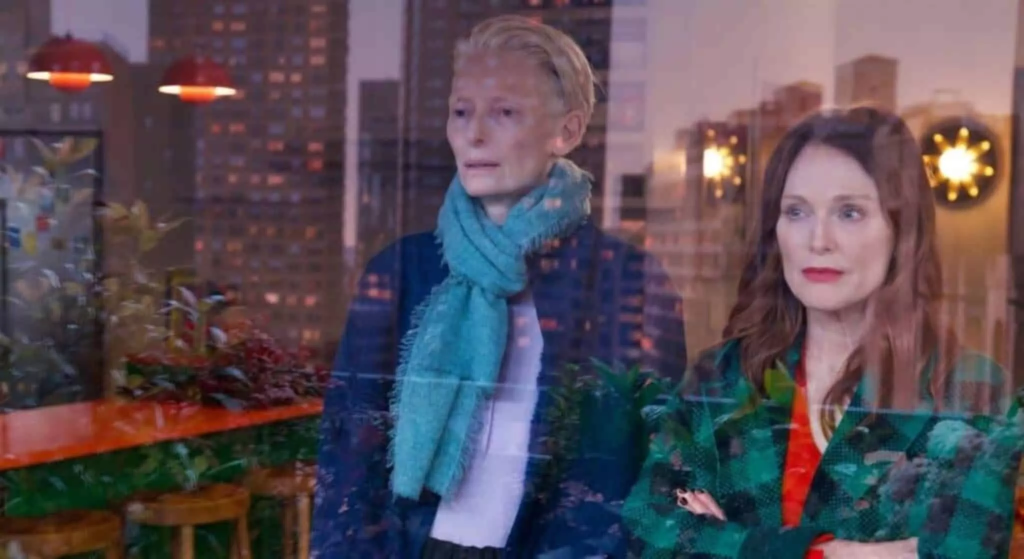
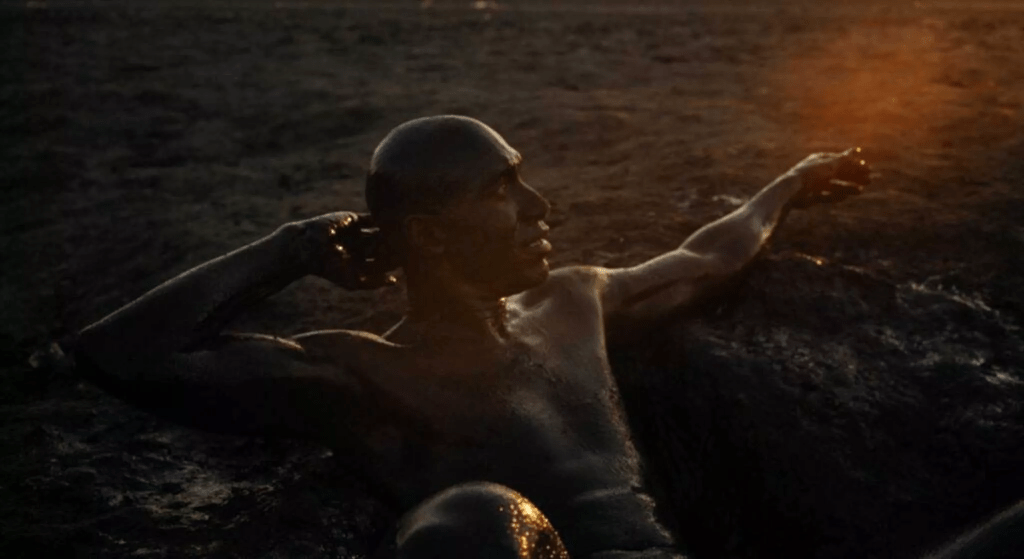
That musical is The End (Grade: A-), starring Tilda Swinton, Michael Shannon, and George McKay as characters known only as The Mother, The Father, and The Son. They live in an giant underground bunker nestled among salt flats with their few staff and friends; it resembles more of an art museum than it does an actual home. From the start it’s clear that in some ways, everyone is telling themselves stories to live, whether they’re aware of it or not. Father worked in the oil industry yet denies that his actions had anything to do with the disaster. The Son – only knowing the bunker – is prepped for the future but how long that future is going to last is never clear. Their routines are jarred with the arrival of Moses Ingram’s Girl, conflicting with their general pronouncements in song that the outside world is full of danger.
What happens is perhaps less important than how everyone feels about it. Oppenheimer’s script with Rasmus Heisterbeg tends towards the anticlimactic but it never feels overly concerned with plot. The Son becomes much more concerned with the “why” of things, why his parents are alone in the bunker, why they decided on their only friends, why they’re writing a history book this particular way. In the grand nature of Hollywood musicals it so often resembles, the characters break into song when their emotions become too complex for any other method. Their movements are less dancing and more the need to express, to shake out the nervous energy. Performance wise, they mostly do good; MacKay and Ingram are the two best singers, while Swinton and Shannon sound unprofessional but not unlistenable. It could’ve used some more musical numbers just to break up the pacing, despite the dialog scenes being arresting. This is the definition of a big swing, admirable in its audacity, made by someone with a deep appreciation for what movie musicals can do and fully embracing all the odd emotional rhythms that come. Of all the films here, you owe it to yourself to at least check this one out; we may never get another one.
The Room Next Door. Credit: Sony Pictures Classics
In a plesant coincidence (thanks to moving schedules around), Swinton featured prominently in the other big get of the festival, Pedro Almodóvar’s Golden Lion winner The Room Next Door (Grade: B), also starring Julianne Moore. I’ve been trying to catch up on his work, having rewatched and loved All About My Mother and Talk To Her earlier this year; Pain and Glory and Parallel Mothers were two of my favorite films from the past 5 or so years, the latter possibly one of his best works (certainly one of Penelope Cruz’ finest performances).
Unfortunately, as you can tell by the rating, I have to concur with most critics in finding this to be a relative disappointment. All the ingredients for a classic Pedro are here: the enigmatic performances from two fine actresses, the beautifully colored decor, the melodramatic flourishes. But his English language debut is somehow more sedate and subdued than his past work. Swinton and Moore do fine work, as a woman dying of cancer asking her friend to accompany her on a trip so she can end her life, though strangely reserved much of the time. My audience seemed to be laughing at things that didn’t seem like they were supposed to be funny at all, even if some of that excess presents itself (like a scene with a personal trainer). Maybe it’s also that there seems to be little debate over the topic of euthanasia itself, a lack of struggle or buried emotion to burst out. His eye remains as strong as ever, as does Alberto Iglesias’ score. And yes, the rhythms of the dialog do feel slightly awkward and even repetitive at times but honestly I don’t know if it usually sounds this way to a native Spanish speaker. That Golden Lion win was the first time the major festivals have ever given him the big prize; he’s made several much better than this. Still, it’s not without its many pleasures. Maybe he can get Swinton back in Memoria mode and film her in Spanish.
Flow. Credit: Janus/Sideshow
Dialog is not a problem in Flow (Grade: A), because there is none. Latvia’s pick for International Feature is an animated tale of animals traveling on a sailboat in the midst of a massive flood, communicating only via their normal sounds and body language. “Communicating” is putting it a bit strongly, because they all act like normal animals, those innate traits giving them bursts of character in response to each other’s actions, though with some leeway to – say – steer the boat. Our primacy focus is a black cat, acting as cats do as it gets knocked about by all series of torrents and creatures. Joining it are a capybara (very chill), a lemur (obsessed with a basket of shinies), an unidentified bird (injured, acting high and mighty), and a dog (pure of heart, dumb of ass). If this were made by a major animation studio, it’d be a candidate for the most annoying movie alive. Instead, it’s awash in painterly textures, content to sit in silence and calm as it observes the boat move through water. The world feels heavily inspired by games, everything from Ico to Breath of the Wild to Myst and Stray, yet it’s distinctly cinematic, the camera roving through the world and at times adopting a handheld style. What’s more impressive is that a clear narrative emerges, as do conflicts and traits, and by the end you’re rooting for them all to be friends. Can’t say I know for certain what some of the more surreal imagery might be representing, if it does at all. All I know is that I’ll be shocked if I see a better animated feature this year.
A Traveller’s Needs. Credit: Cinema Guild
I had been planning on seeing Bound In Heaven but due to overrun from both the bumpers and introduction to The End, it started as I was getting out. My backup choice with friends was Hong Sang-Soo’sA Traveller’s Needs (Grade: C), which I probably wouldn’t have seen otherwise. I like Right Now, Wrong Then, so far the only Hong I’ve seen; it’s felt like he’s become a bit of a meme in online circles after that, with his increase in productivity and seeming decrease in actually making a regular movie. If you follow Mike D’Angelo (as I do, check out his website and Patreon), you will be familiar with a lot of his complaints about a lot of Hong’s work lately. Gotta say I agree with him.
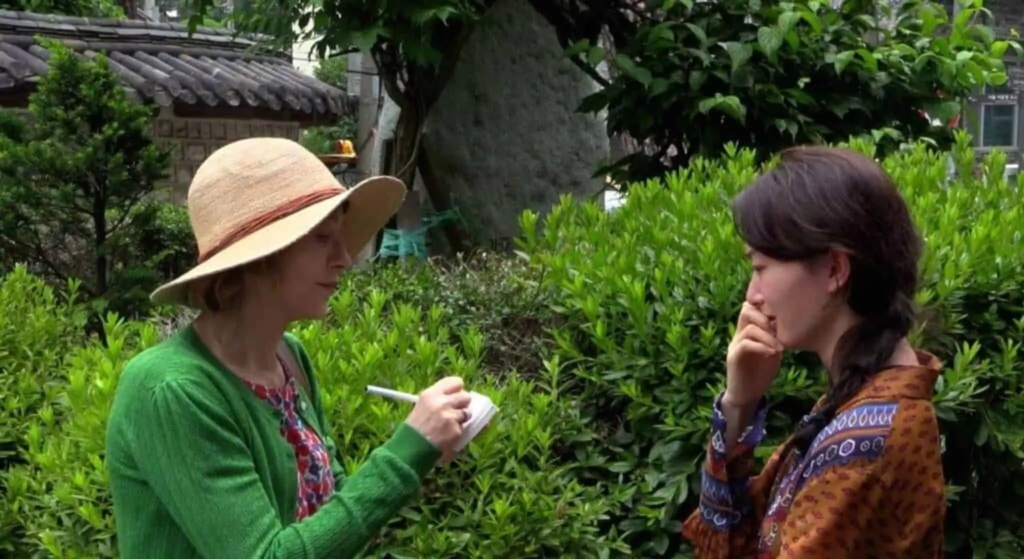
Isabelle Huppert’s second team-up has her as a French teacher in Korea with a unique method: having people write down sentences in French that speak to their feelings and practicing those to learn the language. I doubt that’s very effective. The movie itself is mostly in English and it feels like they’re flailing to improvise or the script is so banal it hardly matters otherwise. There doesn’t seem to be much of a plot or really any character build up, just conversations about language and how playing instruments make people feel that go on too long without saying much of anything interesting. Occaisionally he does have some funny moments, like when Huppert leaves one client and they look back to see she’s already gone, commenting on how fast she walks. A later scene involving her boyfriend/roommate and his mom lends itself to some actual conflict and some interest into who she is and why she’s in Korea. It all just comes across as so arbitrary to me, down to the framing and the length of shots. I’ve known that he’s largely doing everything himself now but the image quality itself frequently looks like a home movie. I don’t want to rag on it too much because he has made at least one movie I do like and frankly, he’s made so many others in that time that I’m sure I’ll find another. As it is, it’s just kind of boring, and I’d prefer at least a little more structure and baring that, something interesting or amusing. You can make it look however you want in that case but you can’t have it both ways.
Streets of Fire. Credit: Universal
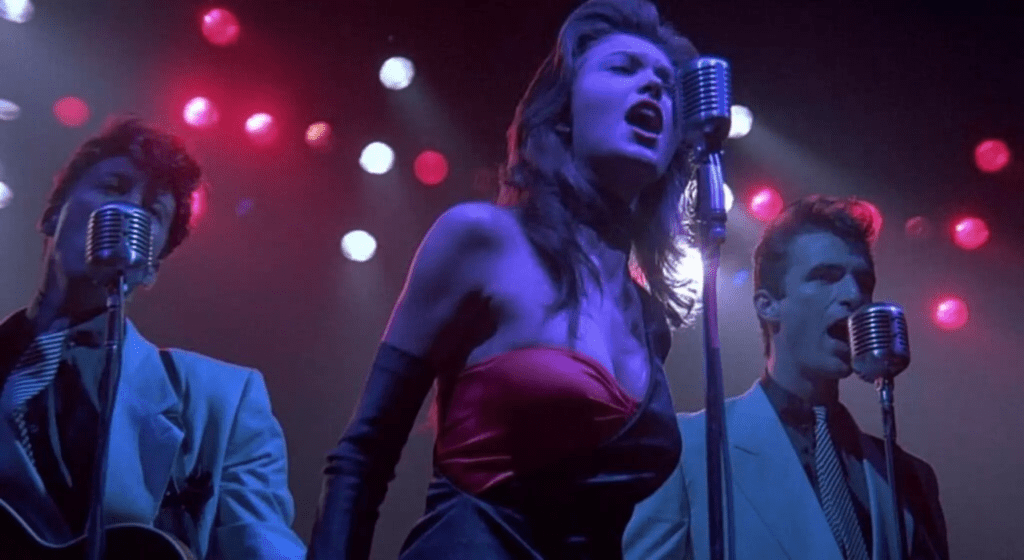
Like most other film festivals, PFF also does retrospective screenings. Usually I don’t go to them, in the past because I could find them elsewhere (and my time was limited), nowadays because chances are they’ve played it before or will play it again. I did, however, decide to go to Streets of Fire (Grade: A-) because I’d already missed it once, and my friend Evan had said I should watch it. I’m so glad I did. Walter Hill’s musical fantasia is pure cinema, exactly as the opening describes: “Another Time, Another Place”. I’ve heard the opening section of first number “Nowhere Fast” a bunch because PFS used it as the bumper for August last year, and I went a ton. The full thing still hits, and kicks off a fantastic sequence in which rock goddess Ellen Aim (Diane Lane) is kidnapped from her band The Attackers by Raven Shaddock (Willem Dafoe, extremely young & incredibly hot), leader of the biker gang The Bombers. It falls to her old flame Tom Cody (Michael Paré), lesbian-coded mechanic and ex-solider McCoy (Amy Madigan), and dweeby manager Billy Fish (Rick Moranis, very surprising) to go and rescue her.
During the beginning and the end, I thought I was watching my new favorite film. Hill fuses the culture and look of the 50s with the hard edge style and talk of the 80s, creating something fully unique in the process. No other film will give you a stripper doing a vigorous Charleston to a bar full of leather-clad bikers giving straightened up Tom Of Finland while a rockabilly saxophonist wails, and frankly the fact that America let it flop is the reason we got Regan a second time. The music – from the operatic pop stylist Jim Steinmann of Bonnie Tyler, Celine Dion, and Meat Loaf – hits hard and hits quick. Once again, I could use so many more numbers. I must admit that my friend was right about the middle. By no means is it bad but it stalls a bit, and Paré isn’t as up to the task of talking, no matter how cool his lines are. But when he’s blowing up bikes with a shotgun… Goddamn is he the coolest motherfucker alive.
Tomorrow: PFF33 comes to an end, with a couple last entries and my favorite 10.
As you can gather from the title, “closing night” is a bit of a misnomer in that there’s still two days of programming left afterwards. I’ve got a top 10 decently solidified by now but of course, there’s always room for some latebreaking entries. Last year it was The Settlers; this year the weekend mostly brings repeats and a couple retrospectives so we’ll have to see what happens.
In the past I’ve had to either stand in rush line or get tickets ahead of time for movies like Knives Out or All The Beauty And the Bloodshed (both great). Last year was the first time my badge let me into one, and it happened to be Saltburn (I don’t want to talk about it). A WWII drama about an evacuated mixed-race boy traveling back to London in search of his mother is usually not my thing, even helmed by the great Steve McQueen. Widows, Small Axe, 12 Years A Slave… Need I go on?
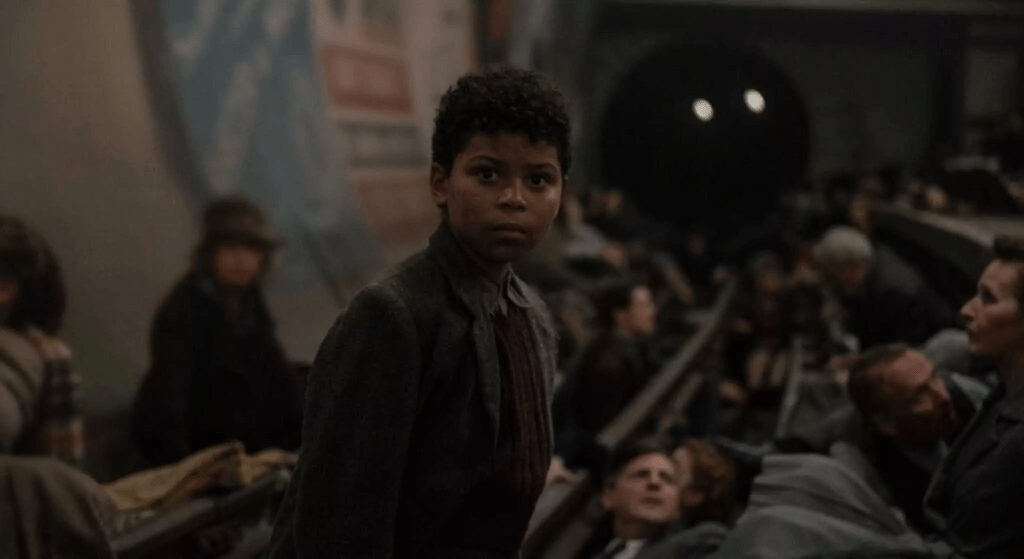
That said, I don’t know what all the reviews calling Blitz (Grade: A-) lesser or even anonymous are on about. Admittedly it does take a bit for the tone to even itself out; this is probably the lightest film McQueen has ever done, which is saying a lot for a movie that features a terrifying sequence of waterlines bursting in the London Underground. Some of the early child actors are too precocious, it’s at times didactic about everyone coming together, the score gets overbearing. And yet I cannot deny that it absolutely works for me. It’s as if someone took a Call The Midwife or similarly rah-rah British period piece and shot it through with the actual, terrible reality of the time. McQueen keeps pulling at the tension between the supposed solidarity of the war effort and the refusal of White Brits to stop being racist for 5 goddamn minutes, tempering the good time nostalgia with brutal reminders of the damage a bomb can do. Saoirse Ronan gets all glammed up and she works it, maybe not on the level of her best work, but absolutely a testament to her strengths as an actress. Perhaps it would’ve been served a little better if it was less sanitized for a PG-13. All I know is that McQueen should try doing a musical again, and I really need to watch the rest of Small Axe.
Santosh. Credit: BBC Films
Blitz was the last centerpiece to play but it’s far from the last high profile film to play. One of those – for me at least – was Santosh (Grade: B+/A-), an Un Certain Regard competitor and the UK’s pick for Best International. Sandhya Suri’s feature debut follows the woman of the title, who takes her late husband’s job as a constable and ends up investigating the rape and murder of a young girl. I must admit there’s a few things going against me here: for one, I’m not at all familiar with India’s policing or justice system, so the concept of “women police” who either appear to handle things for other women or women related crimes went over my head. Additionally I did have to dip out to use the restroom, something I typically avoid doing even if I don’t miss much.
Maybe I also want to talk myself into liking it a bit more than I ended up. Suri zeroes in an the twin difficulties of the caste system (of which I’m familiar, but not completely) and being a woman in India. Santosh’s team up with an older woman investigator who’s more than a little dodgy also speaks to well-known corruption throughout Indian society, frequently centered around the police. As a procedural, it’s a tad lacking, though it does get tense. What sells it for me is the way sexism and misogyny lead compound on already present problems, exacerbated by a heavily stratified society getting more and more on edge. Overall, it’s an engrossing drama, and I can’t deny I enjoyed the look at the country from an actual Indian woman.
The Knife. Credit: Iam21 Entertainment
Part of the many reasons I love coming to Film Fest (and why I’m aching to travel to one of the bigger ones one day [please commission me]) is the discovery of a major new talent, someone I can obsess over that no one else may care about. This year has been a little lacking on that front; pretty much all the ones I’ve loved are movies I’d either heard about or from directors who are known quantities. Of the two other indies I saw today, The Knife(Grade: B/B+) lands somewhere along the lines of “wanted to love”. Conceptually it’s rather though-provoking: a Black man discovers a white woman has broken into his house, leading to an altercation that looks rather dire. Director Nnamdi Asomugha puts together a nice exercise in style and tension, despite leaning a bit on flashbacks in editing. His script with Mumblecore stalwart Mark Duplass is by no means egregious in twists or dialog, and Asomugha puts in a pretty credible performance along side Aja Noemi King, Melissa Leo, and Manny Jacinto. It’s ultimately less than the sum of its parts, perhaps better as a short or proof of concept but at least a decent calling card for a burgeoning filmmaker and actor.
Sew Torn. Credit: Orinoso
Speaking of proof of concept, the director of the next film said in a Q&A after that it actually started as a short which made its way to Joel Coen, who encouraged its production. Call that serendipity or whatever since Sew Torn (Grade: B+/A-) on paper sounds like such a riff on No Country For Old Men as to bring disaster. You never want someone to be thinking of the much better thing they could be watching instead. Turns out a drug deal gone bad and stolen money is practically the only thing similar to the Coen’s masterpiece. Freddy MacDonald – co-writing with his dad Fred – has actually crafted something on the level of Greener Grass or Survival Skills, aka a series of sketches that don’t seem to take place anywhere near reality.
I was in love with it from the moment I saw the painfully European car with a giant needle-and-thread on the back of it. That car belongs to Barbara (Eve Connolly), a seamstress in a storybook-like Swiss town. She’s mourning her mother, in the process of losing her shop – home to fanciful Talking Portraits made of thread – when a dash to service a client finds her smack in the middle of the aforementioned drug deal. From here, MacDonald crafts a Run Lola Run style choice-narrative: Take Money, Call Police, Drive Away. Each chapter features inventive MacGuyvering of string and thread, some funny bits surrounding townspeople and side-characters, and the Coens’ pet theme of “crime is really, really, hard you guys”. The toyetic feel and quirky town would suggest Wes Anderson, but MacDonald lacks his precision of tone and voice. It doesn’t feel as populated as other low budget stunners like Riddle of Fire, though Connolly has a presence that reminded me of a less crazed Vic Michaelis.
All of which is to say I wanted more of what MacDonald was selling. He strikes such a unique tone with such inspired thread-based setpieces. I laughed quite a bit and had a pretty good time, and if it doesn’t reach the heights of my other beloved discoveries, he should at least take solace in scraping such rarified company. I’m so glad I managed to make time for it, and that’s enough.
Tomorrow: The director of The Act of Killing and The Look Of Silence unleashes his long gestating musical, and I get a double dose of Tilda when I finally get to the latest Almodóvar.
Recently, I’ve been listening to a podcast called Weird Little Guys, a sister show of sorts to Behind The Bastards. Host Molly Conger follows a more scripted structure to the latter’s focus on “the worst people in history”, in the case focused on White Supremacists’ crimes and trials as well as their ideological background. As you can imagine it has been home to some extremely disturbing listening (particularly an episode focused on Terrorgram). What’s been most enlightening for me, however, has been how interconnected all of these people are, if not interpersonally than in the various elements that pop up. Things like William Luther Pierce’s racist novel/action plan The Turner Diaries, or Unite The Right.
All of this means I was probably primed more than most for The Order (Grade: A-), named after the Aryan Nation splinter group of the same name (as well as the organization featured in The Turner Diaries). The film mostly traces their series of bank robberies and bombings throughout the early 80s, culminating in the assassination of Jewish liberal radio host Alan Berg (Marc Maron). They’re lead by Bob Matthews, played by Nicholas Hoult with strong charisma, less a cult leader than a really effective one. He believes that the Aryan Nation – with its plan to get people in government and slowly enact their will – is too slow and all talk. He favors a more direct approach, one that catches the attention of Jude Law’s Terry Husk. What starts as a peculiar pattern of bombings at synagogues and porn stores reveals itself to be the first in what will eventually become an armed revolution if they let it get that far.
Justin Kurzel’s direction is assured without being too over-the-top, orchestrating a number of tense action sequences that call to mind crime movies of yore. Most important is how that interacts with Zach Baylin’s script (adapted from The Silent Brotherhood by Kevin Flynn and Gary Gerhardt); the most chilling moments come from how normal these White Supramcists act, reading to their kids at night or teaching them how to shoot. Baylin takes pains to explain the ideology behind it and how law enforcement often bungles these cases by not affording them the proper seriousness. This is a movie providing sharp thrills with perhaps a bit of thin characterization on the side of law enforcement. But it treats the Nazis as the serious, disturbing threat that they are, their normalcy only highlighting how they lurk in the shadows. Not for nothing, a major plot of The Turner Diaries involves the taking over of government buildings, including the Capitol. Sound familiar?
The other two movies I saw today have some familiarity with a lot of European films on the festival circuit, but they carve enough of their own path to stand out. Of the two, Peacock (Grade:B/B+) is a tad more successful, or at least paced better. Plot wise it may bring to mind Yorgos Lianthimos’ Alps, in this case focusing on a “rent-a-friend” service rather than dead loved ones to mourn. Chief among these is Matthias (Albrecht Schuch), the highest rated among the employees for his ability to effortlessly shift into any persona, whether it be a date to the symphony or a boyfriend for an apartment hunter. So good is he at his job that his girlfriend becomes frustrated at his lack of personality, sending him into an existential crisis. What follows is decently funny, occaisionally ominous, powered mainly by a great performance. It culminates in a similar version of the much feted performance art scene from The Square, suggesting it’s not quite as original as it may seem. Not sure I’m totally sold on the satirical value the more I think about it but it’s been a week so consider that me trying to reengage the critical faculties.
The New Year That Never Came. Credit: TVR
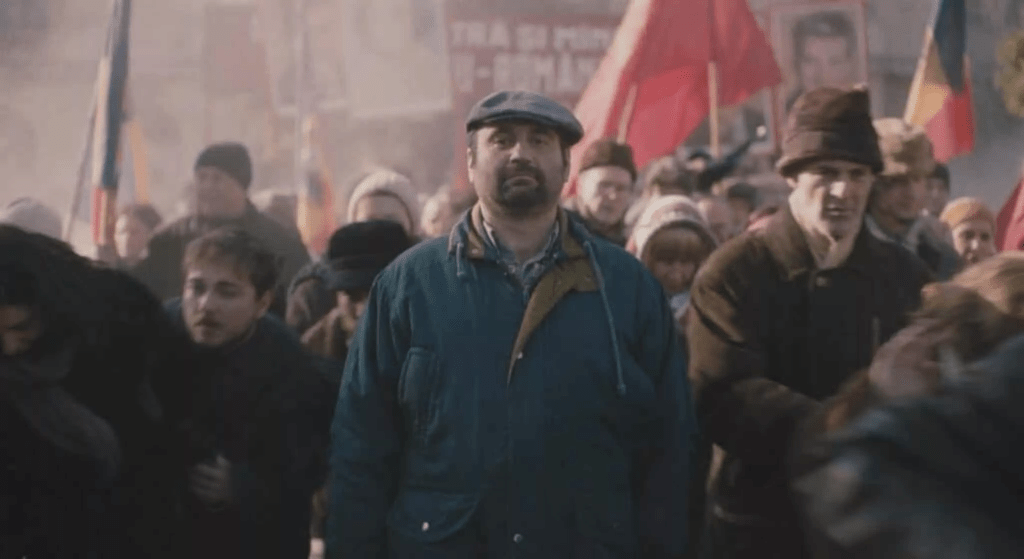
Finally, we have The New Year That Never Came (Grade: B-), a Romanian movie about that favorite topic of Romanian cinema: Nicolae Ceauşescu and the revolution that ended in his execution around December 1989. Later Romanian movies – especially those from prankster-philosopher Radu Jude (Bad Luck Banging or Loony Porn, Do Not Expect Too Much From The End Of The World) – have cast an eye towards contemporary society, though Bogdan Muresanu’s debut leans more towards the absurd comedy with a touch of the realism of a 4 Months, 3 Weeks, 2 Days. It takes quite a bit of time to get up to speed; Muresanu has a lot of characters and plotlines to introduce and not all of them are very interesting or funny. Once things start to escalate towards the inevitable, the jokes start flying and it speeds towards the sort of uproariousness you’d expect from Romanian satire. He’s probably got a good to great movie in him, he just needs more discipline.
Tomorrow: Steve McQueen returns to theatrical narrative for his WWII drama Blitz, and I try to get back on schedule.
We’re officially more than halfway through the festival and surprisingly I don’t feel as run down. A lot of that can be chalked up to the length of so many of this years entries beyond even The Brutalist; less films overall means not as many days get filled up, which is good for me because as of yet I haven’t done a 5-film run at all year (saving that for the weekend).
Freedom Way. Credit: Bluhouse
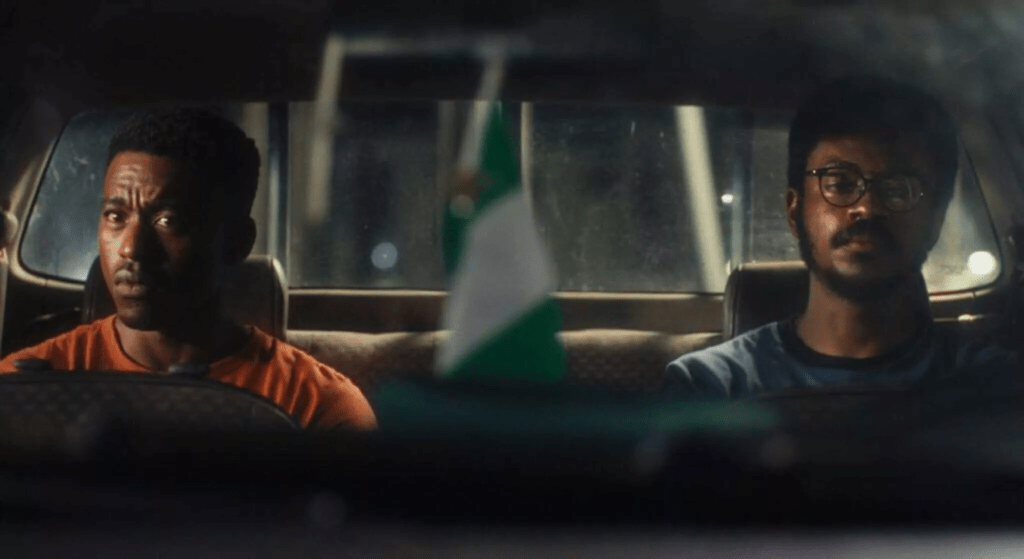
I suppose that can only benefit something like Freedom Way (Grade: B-/B), a Nigerian hyperlink drama of the sort that was popular in the 2000s. Never saw Crash, Babel, or the other famous ones, and I don’t have a huge familiarity with Nollywood, let alone the country as a whole. The big theme of the film centers on corruption as it pertains to Nigerian society, cutting between the founders of an Uber-For-Motorbikes startup, a motorbike rider, a police officer, and various other characters that intersect in one way or another. It can feel a little like a parable at times – especially in a twist at the end – but it’s a vibrant portrait of the country, firmly rooted in that universal feeling that things just keep getting harder for the little guy. Didactic as it may be at times, Olalekan Afolabi is decently skilled with the camera and that’s really all you can ask for.
Superboys of Malegaon. Credit: MGM Studios
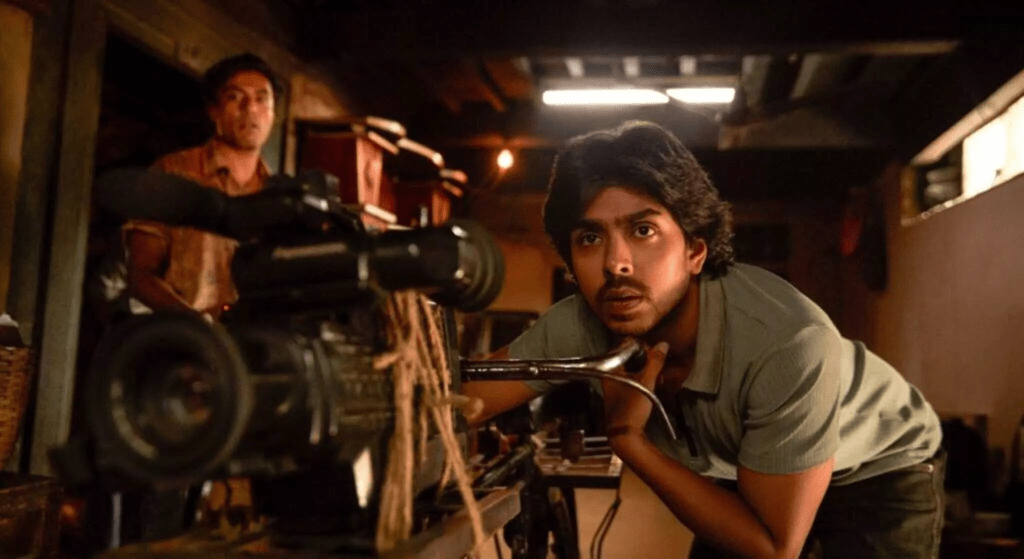
Much better skilled at the camera is Reema Kagti, one of the three women directors in this year’s Focus On India section. Her Superboys of Malegaon (Grade: B+/A-) sounds like fodder for “The Magic of The Movies”, something I don’t tend to be very interested in, let alone “love letters” to movies more generally. This one, though, packs a real wallop that managed to win over even my cold, dead heart. Starting in 1997 (my birth year!) and moving through decade, Kagti’s ode to the cinema follows Nasir (Adarsh Gourav), a movie theater worker attempting to share his love of Jackie Chan and Buster Keaton to mostly indifferent audiences, finding success in editing them together. A shutdown from the authorities inspires him to make his own films, recruiting his buddies and people around town to create their own version of Bollywood classic Sholay (a film I’m ashamed to say I don’t think I’ve seen. Blame my family.)
Kagti locates the heart of the film early on in the ragtag mix of Nasir’s friends – all largely Muslim, which feels like a rarity for Bollywood-adjacent cinema. One of its simplest pleasures is just hanging with these guys as they finagle a bike rig, rehearse lines, poke fun at each other. Those relationships are so finely drawn by both actors and scripts that the inevitable breakdown is a shocking stab to the heart. As the film moves through decades it continues to lean on those relationships, wringing every bit of emotion from betrayal and heartbreak without once seeming anything but clear-eyed. So assured and rooted is it that the final scene threatened to bring tears from my eyes; that Kagti manages it without succumbing to the temptation to go the most obvious and manipulative route highlights how much that moment is earned.
There’s also, yes, the various love letters and shout-outs to Bollywood classics, and I would be remiss if I did not point out the Khabi Kushi Khabi Gham poster featured in the background, because I wore that shit out as a child. You really can’t help but fall in love with a movie like this. Even more surprising? Apparently it’s all based on real guys, something I didn’t know till the credits (the documentary Supermen of Malegoan is thanked in the credits). Sometimes all you need is $2 and a dream.
The Rule Of Jenny Pen. Credit: Shudder
And sometimes, all you need is two old guys squaring off at various stages of maniacal glee. The Rule of Jenny Pen(Grade: B+) is the kind of horror flick I love finding at festivals, and on Shudder (which, of course, is distributing. Trey Shields if you’re reading this please for the love of God put the distributors back in the program, you’re killing me here): simple, a little weird, highly entertaining.
Geoffrey Rush is one of the old guys, Stefan, a judge admitted to an eldercare facility and confined to a wheelchair in the aftermath of a stroke. He believes this is just temporary – his instincts still sound – and he treats most people with the contempt of someone who really really does NOT want to be here. His adversary becomes Dave Crealy (John Lithgow, having the time of his life), who appears to be a strange, withdrawn man constantly wielding a hand puppet named Jenny Pen. What Stefan learns very quickly is that Dave is a sadistic psychopath essentially giving free reign over the place thanks to his performance of a doddering dementia patient, which he uses to enact torture both psychological and physical when he isn’t traipsing around the place at night.
The battle of wills that follows is darkly hilarious and often twisted, thanks to Lithgow’s performance. He plays Crealy as a man indulging in the power he lords over others thanks to his relative health, free because no one will ever be able to convince the nurses of what’s really going on. Director James Ashcroft replicates Stefan’s worsening brain through some evocative editing – occasionally dipping into the ridiculous with a big baby doll – emphasizing more strength difference rather than implying that none of it is really happening. It may not be “scary”, unless the thought of being totally at the whims of a sicko or the prospect of aging terrify you. What it is is entertaining, enough that I want to check out Ashcroft’s previous film Coming Home In The Dark. There’s refuge in audacity here, whether it be a man accidentally setting himself on fire in a wheelchair or a cracked out ritual Crealy engages in. All you need is someone to do something about all this.
Tomorrow: Jude Law and Nicholas Hoult play cop vs. terrorist in Justin Kurzel’s white nationalist thriller The Order.
Ok so I lied a little on the last one. Pedro got pushed to the next showing on Saturday because I didn’t want to have gap with another one today, and because I didn’t feel like seeing Vermiglio. As much as I do try to plan things out, scheduling is an ever-changing thing since I have no one but myself to be held accountable. I promise to do better, it will happen again.
Baby. Credit: Uncork’d
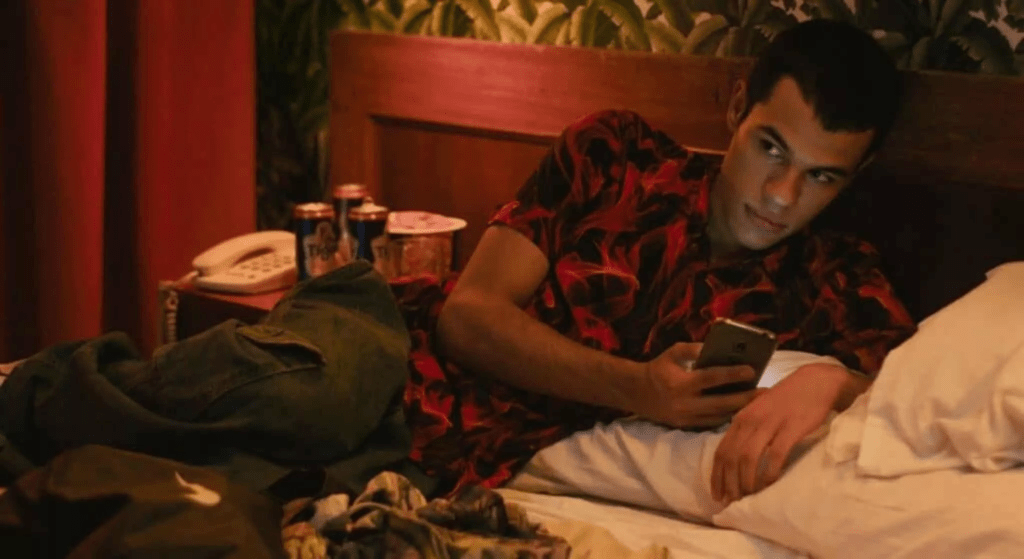
My first movie of the day was one I’d wavered a bit back and forth on. The thing about LGBT films is that – for obvious reasons dramatical, sociological, and historical – they can tend towards the bleaker side if they’re not diabetically saccharine or pitched at that one straight person trying way too hard. Seeing a log-line about a gay teen taking up sex work after a prison stint raises the warning signs of “coming out story” (overdone, boring) and worse “trauma dump” (lazy). Baby (Grade: B+) doesn’t entirely shy away from the dangers of sex work, and generally being gay in Brazil. Thankfully, this Brazillian drama from Marcelo Caetano is much more clear eyed and open to the nuances of gay life and sex work writ large.
The baby of the title is Wellington (João Pedro Mariano) a strikingly beautiful 18-year-old on the streets. A brief miscommunication in a porno theater leads him to Ronaldo (Ricardo Teodoro), a much older man working as an escort who decides to take him under his wing. It’s a sexually explicit kind of love affair in multiple senses and my what senses they are. Caetano depicts their relationship as something beautiful and yes, sexy, with dashes of a mentor-mentee power dynamic ever so precarious. I don’t know that it does anything particularly ground-breaking besides show a younger man in love with an older man that isn’t predatory (though some flashes of jealousy threaten to take it there) but I appreciate something so vibrant and almost cute. If nothing else, the men are very beautiful to look at. God Bless Brazil.
Men of War. Credit: NEON
While I find myself a little more on the forgiving side generally, I’ve started to consider something critic Mike D’Angelo (inspiration/rip-off source for this series structurally, if not occasionally stylistically) often cites of documentaries: could this film have been an article ? Men Of War (Grade: C+) is a perfect example of this to the point where I was surprised it had been picked up by NEON. Directors Billy Corben and Jen Gatien utilize the typical reenactments, stock footage, and talking head techniques to reconstruct the 2020 Venezuelan coup attempt. Their main subject and source is ex-Green Beret and mercenary leader Jordan Goudreau; he’s given quite a bit of screen time to argue that he was fully under the impression it was a US government sanctioned operation along with opposition leader Juan Guaidó.
I suppose the first problem comes there: he – and multiple Trump White House staff – refer to Guaidó as the legitimate ruler of Venezuela, and at least from context one would assume the directors do not – in fact – believe this, and that current president Nicholas Maduro is the rightful ruler. Almost zero context is given to the political situation in the country or even what interests the US might have in staging a coup beyond oil and money. It’s not even clear whether they believe Goudreau or think he’s some mixture of stupid and delusional. By the end they work their way towards pointing out how the government builds people into killing machines and then mostly sets them loose to fend for themselves. Don’t get me wrong, the way we treat veterans in this country is one of our many failings (and the bare minimum). But when the people you’re trying to rescue are in jail because they tried to overthrow the sovereign government of a foreign country, you’re going to have to work a lot harder to get me feeling sympathy for you and your own bad decisions. There’s a thread of the networks of power working overtime to help fascist interests here; the Behind The Bastards episode on Goudreau would be excellent.
Small Things Like These. Credit: Lionsgate
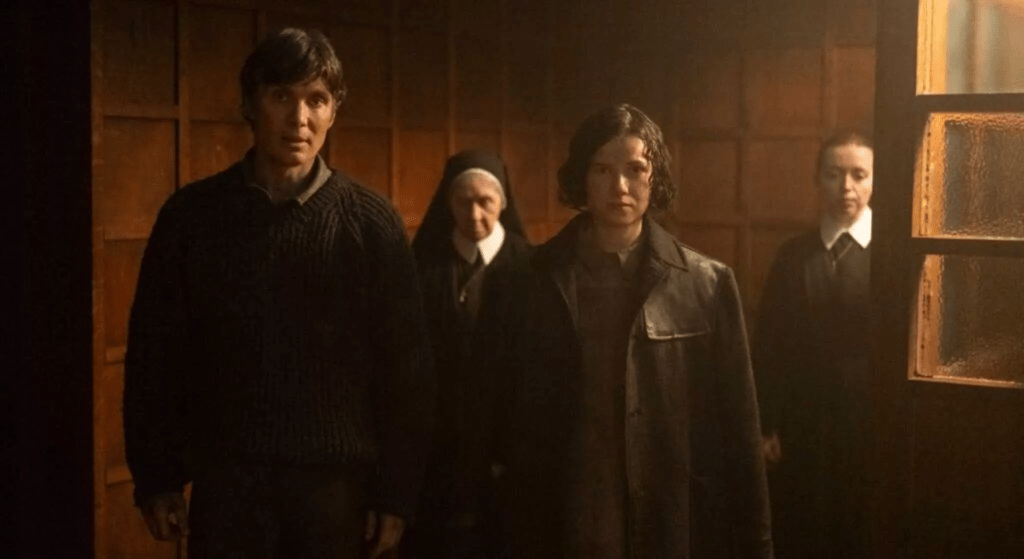
Small Things Like These (Grade: B-) covers the different and more upsetting strain of Behind The Bastards subject matter that is the Magdalene Laundries. To summarize: for nearly 2 centuries in Ireland, women and girls thought to be “fallen” or otherwise unsupported were sent to convents and workhouses where they suffered horrific abuse. I don’t know how the movie would play if you didn’t know that; to me, I saw a movie set in Ireland about secrets at a convent and immediately went there. It’s among the most infamous scandals of the Catholic Church in Ireland (though a quick Wikipedia scan tells me that there were some Protestant ones as well).
Perhaps it plays better for someone from there. I confess the whole thing sort of went over my head in rather abrupt fashion. Cillian Murphy – in his first role post Oppenheimer – plays coal worker Bill Furlong in New Ross, Ireland. You can tell he’s haunted by his general aire, and the way he scrubs his hands vigorously when he comes home (metaphor!). Ostensibly the plot unfolds when he discovers a woman in the convents shed during a delivery, furthered by the sinister behavior of the Mother Superior (Emily Watson). Interspersed are memories of his childhood with what I presume is his single mother. This is a movie in a lot of ways about national guilt; the way Bill’s wife seems to know bad things happen there, a girl fighting as she’s brought in the first time, the mentions of how much power the convent wields in town. All of this is primed for a truly excellent movie. And then I checked my phone thinking there was at least an hour left only to discover it was more like 7 minutes. I haven’t read the book by Claire Keegan so it’s possible this all plays better on the page, or that the third act was cut down significantly. It certainly has all the ingredients to be a solid drama; if only it drew the connections between the past and the present stronger.
Night Call. Credit: Magnet Releasing
I’ve mentioned it a bit before but as good as it is to catch movies months before they’re released, one of the best parts of a Film Festival are the hidden gems. I’d agonized for weeks over whether to pass over The Seed of the Sacred Fig – one of the most acclaimed films at Cannes – for one such film, ultimately deciding that since NEON was handling it I’d eventually see it in Philly at some point. My choice was for Night Call (Grade: B+), a lean and nasty Belgian thriller with impressive chops that for some reason I’d gone into thinking it was about a firefighter. Michiel Blanchart’s debut is an entry into the subgenre of “Person Has The Worst Night of Their Life”. That person is locksmith and student Mady (Jonathan Feltre), on call during a night when Black Lives Matter protests are roiling Brussels. A simple call for a woman named Claire (Natacha Krief) escalates into a fight that ends in a dead man and a mob boss on his tail.
Many such cases, but Blanchart proves an expert in orchestrating brutal action sequences and tense pacing. His script is also rather smart, keeping Mady constantly on his toes but active, dispensing easy ways out and even making great use of a sea of protestors and the tensions with police. For a while, I was thinking it was one of the best of the fest. The set pieces aren’t elaborate but they’re staged beautifully, always hinting at where it’s going to go, never making it too obvious. Unfortunately, Blanchart botches the landing in a way that ripples backwards. It’s not all that interested in politics – though it is keenly aware of how Mady being Black changes this situation for him, enough that Blanchart only has to cut to some distinct objects in an apartment to let us know Mady is about to be in deep shit. One might be able to argue to the ending on political grounds but it’s tricky given the optics at play. Still, man what a ride it is. Programming Director Trey Shields (shout-out) told us before that Blanchart is working on something with Sam Raimi (Evil Dead 2 even makes a cameo) and I think he could be going places. 80% out of 100 ain’t too bad after all.
Tomorrow: Bit of a lighter day for trivia league, but expect a creepy doll and Nigerian film.
Since the Philadelphia Film Society took over the theaters post COVID, the Festival has been conslidated at the three arthouse theaters owned by them: The Film Center on Chestnut, The East over in Old City, and The Bourse by Independence Hall. I get around everywhere nowadays by biking, and if you go straight down Market to get to the next Indego dock, you will inevitably have to walk by the Weitzman National Museum of American Jewish History where a giant Israel flag is plastered on the facade alongside the text “We Stand With Israel”.
This is the context to which I – and a fairly packed house – watched the documentary No Other Land(Grade: A-), described by festival programmer Michael Lerman as “the most important movie of the fest”. I’m inclined to agree. The film follows a period of 3 years of the annexation (or “forced displacement”, if you wanna get specific) of Masafer Yatta in the West Bank, primarily documented by activist Basel Adra. At the start, he is visited and assisted by Yuval Abraham, an Israeli journalist staunchly opposed to the ongoing occupation, to the point that he refused to join the IDF once he learned he would be put into intelligence because of his knowledge of Arabic. Yuval is not simply a means to plead for unity; in fact, several of the subjects engage in debate over the cruelty his country has been enacting, while Basel makes a point of emphasizing the relative freedom he has to move with the land.
And the things Israel enacts are harrowing. No Other Land isn’t so much concerned about the war, so much as war is simply a part of the process of occupation (and that their land has been assigned an IDF training facility). Instead, it’s near singular focus is capturing the vibrancy of life the IDF is attempting to stamp out through wanton acts of spiteful cruelty. How else can you describe the bulldozing of a school, of a chicken coop? Seeing it in front of you eyes – and often enacted by people who are not even from the region – while a man on Israeli TV argues that they had it coming summarizes what it’s felt like to be online this past year. In a festival where one movie was sponsored by a Zionist organization – hell, in a city that mostly leans Zionist with a governor who served in the IDF – it’s bracing just to see the honest fight at stake (and a little bit heartwarming that so much of their tactics resemble BLM protests down to a “Palestinian Lives Matter” sign).
My one reservation mainly concerns the form. Although it features a lot of handheld and phone footage (people are constantly being filmed on both sides), a lot of it consists of scenes between Basel and Yuval talking, with each other, and with people around the village. These are often beautifully shot, but it does occaisinoally make one ponder “who’s filming all this?”, especially when they can’t possibly have scripted a lot of it. It’s not that I think they’re mainuplating per say; perhaps it would’ve served it better to be more a collection of footage, or at least acknowledge the fact of its own making rather than at times resembling a beautiful drama. Thankfully, they do hold back on the more extreme footage that’s been plastered all over social media (though there’s a couple moments where it feels like it could get ugly), a carefully presented and edited argument to one’s humanity. A man outside enthusiastically proclaimed that “the people who need to see this aren’t going to see it”. Unfortunately, given that no US – let alone Western – distributor appears to have picked it up, I think he’s right. I desperately hope that changes. More than the importance, this is an achievement in filmmaking itself that deserves to be seen by everyone and if it changes some minds, even better.
The Black Sea. Credit: Metrograph Pictures
As you can tell from these posts and past coverage, I’m a pretty self-selecting audience for a lot of movies. Generally my rule has been that unless I’m getting paid to cover something or there’s a substantial critical backing, I usually avoid things that look bad or not for me and thus have tended to skew pretty positive. Occasionally that does backfire; it can’t all be winners. This long-winded preamble is my way of saying I did not care for The Black Sea (Grade: C-) very much, and at least among my friends I seem to be a minority. It’s not like it couldn’t be my bag: I was down to follow the story of a black man (co-director and writer Derrick B. Harden) traveling to Bulgaria to meet an older woman only to be sidelined when she dies. Buried within is somethign that I could love quite a lot, especially in the tenative romance that forms between him and travel agent Ina (Irmena Chichikova).
Unfortunately I checked out rather early, when he gets his bag and passport stolen and appears to talk to one singularly unhelpful cop before giving up completely. It’s not that I victim-blame nor do I necessarily expect it to show us everything in backed up fashion, but that there’s a mechanical quality to the plot. Equally unhelpful is the way it spends time bringing him from one dead job to another, leaning on Ugly Americanisms and poorer comedy to the point that it seems lost until the last act. I overheard from someone who was at the Q&A with Harden and co-director Crystal Moselle (of The Wolfpack and Skate Kitchen) that film was apparently shot in 16 days and heavily improvised. I could see it. The Black Sea is not by any means unwatchable so much as unfocused to the point that it gets grating. If only they’d leaned into the rom-com aspect earlier.
Conclave. Credit: Focus Features
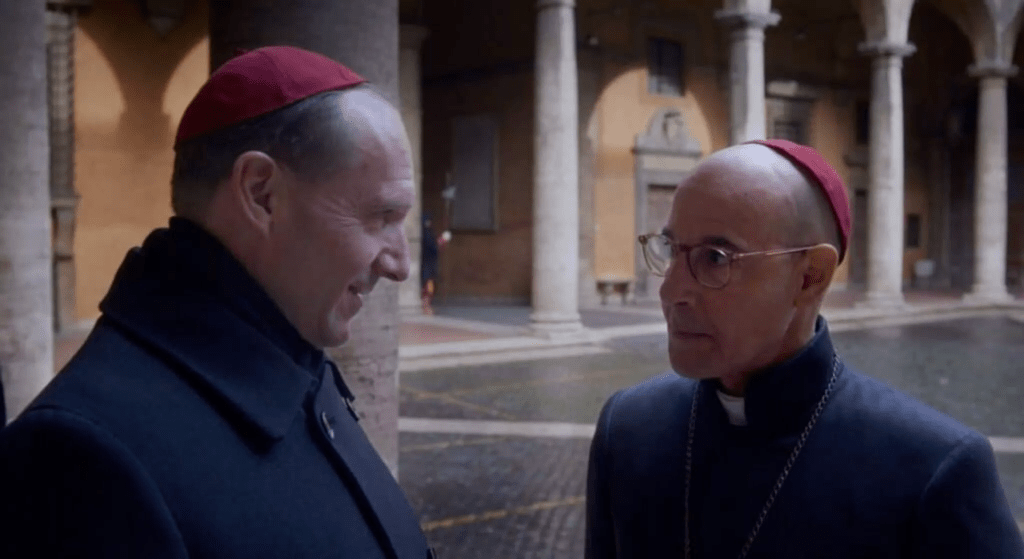
Further on the topic of self-selection are the Centerpieces. This year I’m seeing quite a few thanks to my all-access badge meaning I don’t have to buy separate tickets and thus am free to drop into the stuff usually programmed for big crowds of retirees and the Rittenhouse set. That was how I ended up at Conclave (Grade: B) and honestly, I’m kinda glad I did. Prime Oscar-bait in that it’s a perfectly well-made thriller of the sort that used to be a dime-a-dozen, but also Hot Nonsense in the best way possible. You don’t need to know much other than Ralph Fiennes, Stanley Tucci, and John Lithgow are cardinals voting for a pope while Isabella Rossellini scurries along in the background. All Quiet On The Western Front director Edward Berger seems to know this is all not that serious, his portentous music and ominous framing staying just on the right side of being eye-rolly while loading it with lots of unexpected humor. He gets that deep down these are all Messy Bitches Who Love Drama and it sidelines pretty much any attempt at deeper themes or examinations of the Catholic Church beyond “boy we got some cleaning to do, huh?” and “can’t we all just get along?” A bonkers third act reveal had me and my friends turning to each other with full Pogface, yelling incredulously. That’s the best way to approach it, a silly airport thriller filled with cassocks and Latin.
Dead Talents Society. Credit: Sony International Pictures
One of my favorite things about film festival has always been the programming of lower budget or obscurer genre titles. Many of my favorite discoveries over the years have come from the After Hours or Graveyard Shift sections: Red Rooms, Cam, Knife + Heart. Dead Talents Society (Grade: A-) may not have as much substance as those, but it’s a blast nonetheless. Listen, I’m only a man. You make an extended Ghost in The Shell (complete with triangle!) joke or put not one, but several characters in the Mina get-up from Perfect Blue, I’m gonna laugh very hard. Thankfully, I was on the movie’s wavelength pretty much the entire time. John Hsu’s tale of a mediocre newbie ghost (Gingle Wang) recruited by a fading diva (Sandrine Pinna, mothering) and her manager (Chen Bolin) to become the next greatest scarer or literally fade away is pitched at the level of a cartoon, full of sound-effects and wacky violence. In between, he lovingly skewers decades of East Asian horror tropes, including a finale that’s essentially a slapstick Sadako vs. Kayako along with a bit of good ole “the magic of movie making”. Yeah, there’s mushy found family stuff, and it may not particularly care about the world-building beyond “hey, isn’t fame and social media arduous?” But damned if it doesn’t have a big ole pumping heart. The power of friendship making you feel seen is corny but who cares when you’re too busy rooting for the heroine to throw herself off the roof of a building?
Tomorrow: Pedro Almodóvar’s English-languge debut, a firefighter’s hellish night, and I continue the struggle to keep the reading time under 10 minutes.
My goal for attending PFF has usually come down to shoving as much cinema in front of my eyeballs as humanly possible. The majority of the time, it’s the most acclaimed films I’ve been following throughout the year, and as you can imagine, that’s not always conducive to brain power. Sometimes, you do need something a little light, a little more normal, if only to reset the paradigm. A pallette cleanser, if you will.
Said cleanser came in the form of A Real Pain (Grade: B), the most quintessential sort of crowd-pleasing comedies festivals love to program. It’s got Jesse Eisenberg and Kieran Culkin playing on their most associated character types – anxious nerd and More Psychologically Stable Roman Roy – as the two of them go on a Jewish history tour of Poland in honor of their recently deceased grandmother. This is ostensibly inline with the recurring theme this year of Jewish identity and responses to the Holocaust, which to be fair the movie (written and directed by Eisenberg), does dive into. Specifically, it’s most interested in memory and remembrance, how much trauma a person should have to hold on to and live out. On top of that is a comedy that often veers towards cringe; Culkin is doing his quippy asshole schtick and for the most part it is pretty funny. For me, it passed a time early on from “oh you” Comedy Type to “ohhhhh you” Deeply Damaged, far sooner than the movie wants us to get there. Thankfully, the requisite emotional scenes carry the necessary power to forgive the somewhat standard journey. It’s the nicest movie you’ll see about generational Jewish trauma, no more no less.
Today was an unexpectedly trauma-filled day, though filtered through distance and abstraction of sorts. Perhaps the most thrillingly unexpected of these was Nickel Boys(Grade: A), a movie I didn’t know much about except Colson Whitehead book, the director of Hale County This Morning, This Evening, and reformatory school. Cue trepidation when the opening POV style shots didn’t shift over to regular camera style, leading me to write down “Is it going to be like this the whole time?” Yes, and no. RaMell Ross’ main “gimmick” here is shooting everything from first-person, sort of like the sitcom Peep Show (or Hardcore Henry, for those less cultured), observed totally through the eyes of the main character. Once it introduces the other lead – Turner (Brandon Wilson) – the gimmick becomes less blatant and more like a normal movie, easing whatever dissonance or annoyance may be wrought.
Still, nothing can quite prepare you for the sheer overwhelming power Ross accumulates. The story was inspired by the Dozier School For Boys, a reform school in Florida (shout-out Tallahassee) home to unimaginable horror; unmarked graves were still being found as late as 2019 (the school closed in 2011). While the great temptation is to show us in unflinching detail what happened to these boys that made them want to flee, Ross withholds but in no manner does he shy away. Cutting freely between time, across memories, filled with detours to old films, MLK speeches, and impressionistic montages, Nickel Boys has the feeling of reliving memories, the random bits that get imprinted and conflated, how those times get chopped up and covered up to avoid looking at it directly. Here’s a movie that only needs to show us a fragmented scene of a whipping room and give us hints at boys being disappeared to know that when a boxer accidentally wins a match he’s supposed to throw, whatever becomes of him is going to be terrible (that part, with the camera held close and just off-centered on his face and outstretched arm, his pleas of “I didn’t know!” are stomach churning). By the time it hits a scene later in a bar of a reunion between students, before a montage of such powerful emotional clarity that shines through any abstraction, I knew I was seeing something major. The fact that a major Hollywood studio is willing to fund something so bold and downright experimental is heartening, as is such a beautiful expression of Black art. It will definitely not be for everybody – especially with the POV shots – but it deserves to be seen (and I will be cracking open my Criterion of The Underground Railroad as soon as humanly possible).
Hard Truths. Credit: Bleeker Street
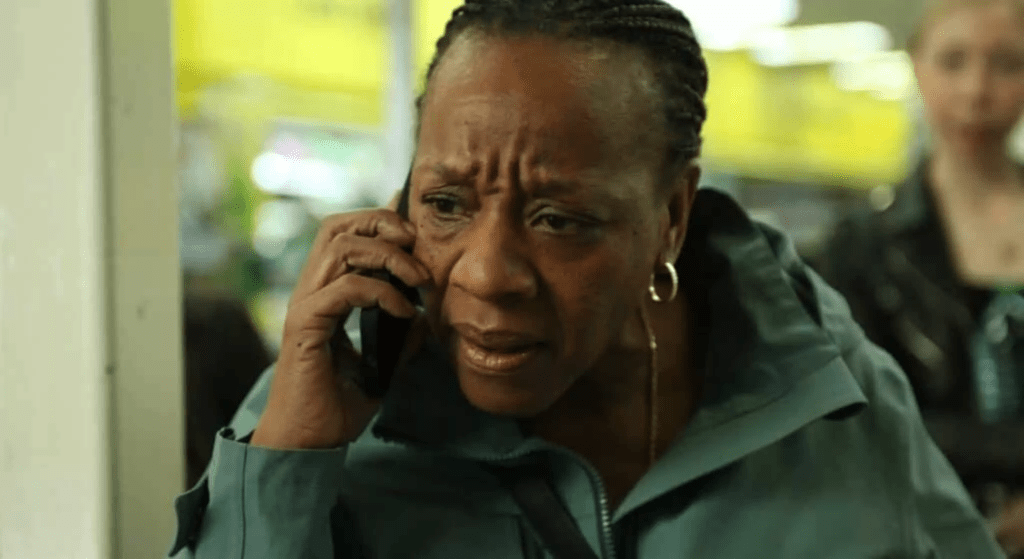
Finally, speaking of studio funding: Mike Leigh! The great filmmaker has always had trouble finding funding thanks in part to his famous method (in short: assemble a group of actors, have them create characters, improvise a series of scenarios and backstory, then write a screenplay) but the situation has been a lot more dire in recent years. His latest got rejected from several big festivals despite having won the main prize at two of them, something that usually guarantees you an out-of-competition slot. Given that Hard Truths(Grade: B+/A-) centers around a black cast – including a reunion with Secrets & Lies star Marianne Jean-Baptiste – it’s not hard to imagine majority white boards from passing on a character as venomous as Leigh’s most infamous creations (ie, Johnny).
Then again, Pansy is an extreme difference from even that Naked lead; at least Thewlis gave him a modicum of charm that suggested why people would put up with his shit. Jean-Baptiste does a near complete 180 from her previous character, draining any and all warmth and even joy to portray a woman so remarkably unpleasant she causes winces from everyone she comes into contact with. She lives in a sterile house, obsessively cleaning when she isn’t sleeping or berating her quiet son Moses (Tuwaine Barrett) and put-upon husband Curtley (David Webber). One of the often celebrated aspects of the Leigh Method is how the actors can really make you feel that hidden backstory the years of these relationships; Barrett and Webber’s faces during an early dinner scene show the strain of having dealt with her all these years.
By contrast, her sister Chantelle (Michelle Austin, aka Hortense’s friend in Secrets & Lies) is much better adjusted – single, but with two daughters each dealing with their own unique strife. It’s enough to make you wonder why Pansy turned out the way she did; in a pivotal scene, Chantelle even asks and the only response is “I don’t know”. Jean-Baptiste’s outbursts are often very funny (when asked if she’s ok, she snaps back “I’m at the doctor’s office!”) but she unveils an awareness that something is wrong within her. Whether it’s a lack of control, some type of childhood trauma, deeper mental illness… Leigh resists giving deeper answers. I think I would’ve appreciated if it had been longer; at 97 minutes its shorter than both Naked and Secrets & Lies and though the former is similarly plotless, there’s a sense of greater development of all the characters. Specifically, I would’ve loved to see more of Moses – a small moment when a girl shares candy with him could’ve powered its own movie, frankly. Lower key Leigh is still masterful, or close to it at least. It’s criminal that no one seems to want to give him money – the hardest truth of all may be the current state of the film industry.
Tomorrow: Palestinian documentary No Other Land, and a thriller about the Pope(s)[?]
Payal Kapadia’s All We Imagine As Light(Grade: A) is a frontrunner for my favorite film I’ve seen all year. Don’t know how to start this off other than just to put it plainly. There may have been no other film I’ve been anticipating all year, at least since the reviews and the Grand Prix award started coming in and it’s clear we’ve got a major talent on our hands. At turns luscious, dreamy, and poetic, Kapadia’s crafted a thing of true beauty, a grand claim for the female voice in Indian cinema.
Her previous film – 2021’s controversial documentary A Night of Knowing Nothing – featured fictional love letters read in voice over between film students interspersed with footage of protests against the Modi government, something which I’m told has gotten the film banned in a few states (and probably had something to do with why the selection committee passed it over at the Oscars, all man board notwithstanding). Here the voiceover returns and paired with the evocative nighttime shots of Mumbai, it’s transcendent – beginning first with a survey of Mumbai’s many languages describing the city, and then featuring everything from poetic dialog to text conversations.
The former centers around nurse straight-laced Prabha (Kani Kusruti). Her husband is away in Germany for work, unseen, represented by a foreign rice cooker she receives one day in the mail. In the thorough of loneliness she starts to fall into some sort of connection with a doctor at the hospital (Azees Nedumangad), though it’s clear to both that as much as they may want it, this is an impossible thing.
She lives with Anu (Divya Prahba), the source of the aforementioned text conversations. Those are for Shiaz (Hridhu Haroon), a handsome man who – more crucially – is Muslim; the forbidden nature of their romance would seem to point more towards her parents but given Modi’s current Hindu nationalist leanings, it’s not hard to read that as a comment on the country at large.
Kapadia’s political leanings don’t stop there either. The scene most reminiscent of A Night of Knowing Nothing features Parvaty (Chhaya Kadam), an older woman being threatened with eviction from her home of 22 years to make way for luxury condos, as she gathers with a group of activists. Her trip back home to her seaside village provides the ostensible plot, and it’s where the film ends in a particularly stunning shot. It can’t be overstated how beautifully shot the film is, awash in the life of the city, capturing its essence. Kusruti’s radiant performance provides the biggest emotional hook, but it’s the interplay with the actresses that provides the film with its beating heart. Here’s one that knows better than to lean into trite female celebration, instead drawing out the much deeper connections between them all, and from us.
Maria. Credit: Netflix
The same can’t really be said about Maria(Grade: C), Pablo Larraín’s capper to an impromptu trilogy about the fraught lives of famous divas. In this case, the diva is Maria Callas, a woman I admittedly know next to nothing about besides the Opera and that one clip of that old queen saying he’s never heard a bad performance from her. Unfortunately you’re not going to learn much of anything about who she was or her life from this.
I rather enjoyed Jackie a lot, Spencer a little less but I still think fondly of it and Kristin Stewart’s performance. Despite also being scripted by Steven Knight, this one is rather inert, almost boring. As La Callas, Angelina Jolie captures what I assume the mannerisms of her are (and looks the part in footage shown in the credits). She never gets into a big screaming match or throws things across the room which I suppose is a small blessing for this kind of biopic. But something about the dialog just kept rubbing me the wrong way; extremely blunt and sounding performative, but with no real insight as to whether she really believes any of that or not. It’s straining to be clever in a way that the last two never reached, with so much emphasis on the distinction between Maria and La Callas but without anything in the sense of differentiation. Larraín introduces a newer stylistic track here from Jackie‘s TV special shooting and Spencer‘s haunted house perfume ad, in this case sequences of a drug-induced hallucination (?) of Kodi-Smit Mc-Phee interviewing Callas and getting precisely zero out of her. There’s lots of clips of Jolie singing and if that’s really her voice she must be commended. At worst, Maria resembles a more traditional biopic, something that could never be said about the others. It’s as if it relies too much on the audience knowing anything about Callas’ past and expecting that to carry through. A late scene featuring her sister shows the better movie hiding in there, but it’s just not enough.
The Brutalist. Credit: A24
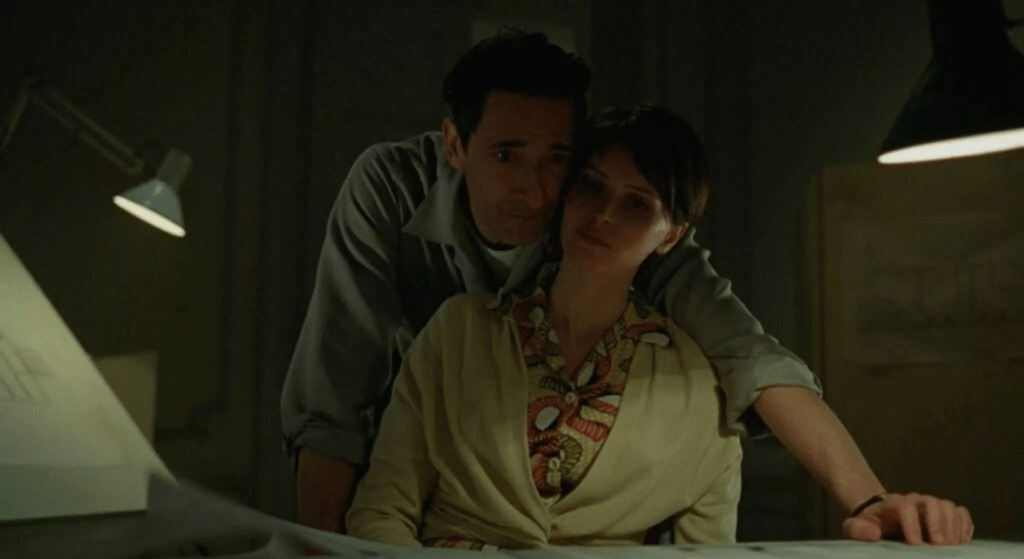
“Too little” is not a word anyone would use to describe The Brutalist(Grade: A-) – all 215 minutes + intermission of it. Brady Corbet’s – erstwhile European arthouse actor turned cold, provocative director of The Childhood of a Leader and Vox Lux – film has been described as an attempt at the Great American Novel and there’s really no other way to describe it in its epic sweep. The brutalist of the title is one László Tóth (Adrien Brody), a Hungarian architect fleeing the Holocaust to come to a little town called Doylestown in Pennsylvania (trust, that got a lot of reaction from the crowd).
Split into two acts covering roughly a couple decades, Corbet and co-writer Monica Fastvold have a lot on their mind: foreignness, Jewish people’s precarious place in society, the promise of America. Largely they mange to pull it off, and moving at quite a clip. By the time we hit the built in intermission I was certain we would be getting more chapters. Guy Pearce – as an industrialist who hires Tóth to construct a community center – injects a big dose of mid-century energy into the proceedings, pulling at threads of power and those who wield it over others. I’m not fully convinced the film has the necessary emotional power befitting of such an epic, and admittedly it does lag a bit in the interminable battle to get the center built. Still, the massive achievement of pacing itself cannot be denied, and I’m sure it will only rise in estimation once I get back around to it.
Finally, quick detour for some behind the scenes info: a big part of scheduling involves looking up US distributors, info that used to be on the program but for a few years now has not been there. If it’s from an A24, a Neon, a Mubi, etc. chances are that it will be coming to Philly, and so I feel much safer about skipping. This is part of how I found myself at the late night screening for Cloud(Grade: B+), a movie I likely would’ve seen eventually but frankly, did not want to take the chance that it would be coming a full year from now.
That aside: this is one of three or so Kiyoshi Kurosawa films in the pipeline this year (one of them, Chime, is on a Web3 platform or something) and Japan’s surprise choice for Best International. It follows Ryôsuke (Masaki Suda, the titular boy of The Boy and the Heron), a factory worker more concerned with his side hustle of reselling goods on the internet. What he’s not too concerned about is whether those goods are legitimate or whether the price he charges is fair. Naturally, this does not endear him to those he does business with, giving Kurosawa the chance to go back to the mode of Cure and Pulse that made him famous in the West. I don’t want to give away too much as to where it goes, other than to say it feels sort of like a Yakuza substory at times, perhaps one where Kiryu has to beat the shit out of someone scamming people. It may take a bit to get to the good parts, and the analysis of internet behavior may not be more than “anonymity (and money) breeds conflict”. But it’s a cracking thriller, uninterested in trying to garner sympathy for the lead but not too concerned with overly punishing him. If anything, it features a gunfight that suggests Kurosawa could make a pretty good action pivot.
Tomorrow: Mike Leigh reunites with Marianne Jean-Baptiste, Jesse and Kieran Go To Europe, and I try to make these things shorter for my own sake.















 Life of the Mind