The Best Films of the 31st Philadelphia Film Festival

"31st Philadelphia Film Festival" text imposed over red theater seats, with "SEE SOMETHING YOU'LL NEVER FORGET, OCTOBER 19-30" in the bottom right corner.

Back at it again.

It feels so good to be back at a festival. For about 5 years or so – pretty much since I started college – I’ve been attending the Philadelphia Film Festival in some form or another; a small blip occurred in 2017 for the 26th edition because of my co-op schedule. And of course, the 29th edition was remote thanks to COVID, while I missed the 30th because I had moved back home temporarily.

But finally, things have come back to some semblance of normality and looking back, it was a pretty great festival. I didn’t really find any new or off-the-radar picks, and there wasn’t a Tremors or a Thoroughbreds – aka, something that really knocked my socks off – but the established greats were still pretty great. Like every year previously, I’ve probably seen enough to formulate my end of year list but that of course will be held off until the other heavy hitters see fit to come to this city. At least one – Nanny – I missed due to technical issues on my first screening, and then the second and third overlapping with ones I’d bought tickets to (Women Talking) or decided to prioritize due to unsure distribution (Huesera).

For now, here’s a rough ranking of the best films I saw at the fest. Some of these are coming out imminently, other the next year. All of them are my definite recommendations.

1. How To Blow Up A Pipeline – dir. Daniel Goldhaber

The second film from Goldhaber (technically a film by Goldhaber, Ariel Barrer, Jordan Sjol, and Daniel Garber) makes good on his promise from Cam to marvelously entertaining effect. Their adaptation of Andreas Malm’s 2021 nonfiction expands it into a heist movie while still retaining the core message of direct action. Like all good heist movies, the cast is distinct and filled out. And Garber’s editing keeps things moving at a steady clip while deftly inserting flashbacks in often thrilling ways. But most importantly, it’s just a damn good film, adaptation or no.

2. Aftersun – dir. Charlotte Wells

One of those films that’s so deceptively simple yet powerful that trying to capture what makes it special in words feels futile. In short: it follows a father and daughter (Paul Mescal and Frankie Corio) on a vacation to Turkey, as filtered through the eyes of the daughter looking back on old camcorder footage. Wells mixes those camcorder segments along with slow-motion footage of the father at an otherworldly rave to capture the feeling of peering through memories trying desperately to understand one’s parents. Mescal is simply stunning, while Corio makes a promising debut, nailing that edge between adolescent and teen. This is a film of deep, emotional power, and when it connects, it hits like a hurricane.

3. Glass Onion – dir. Rian Johnson

While the novelty may have worn off a little bit compared to the first (and – admittedly – some of the satire can be a little cringe), Johnson’s much-anticipated sequel proves to be every bit as good. Riffing off the locked-room mystery, it’s suspenseful but much more of a comedy, and thankfully the hits are high. Most importantly, I’m thankful Janelle Monae finally has a role worthy of the talent she showed off in Moonlight, while Daniel Craig confirms he’s having an absolute blast as Benoit Blanc.

4. All The Beauty And The Bloodshed – dir. Laura Poitras

What could’ve been a standard (yet righteously angry) advocacy doc about the Sackler family’s art world reputation laundering becomes a devastating memoir when combined with Nan Goldin’s own photoslides and voice over. Goldin’s activisim itself is wonderful to see, but it’s this added context – this merging of past and present, of the things she’s lived through and fought against – that give her crusade its overwhelming power. It’s also a marvelous work of queer history, giving a personal look at one person while remembering everyone lost along the way.

5. The Banshees of Inesherin – dir. Martin McDonough

As if McDonough saw the doubts scattered in the wake of Three Billboards Outside Ebbing, Missouri and decided to remind everyone that, no: he is, in fact, the real deal. Returning to his playwright roots and to his home country of Ireland proves a much needed reset, as does the reunion of Colin Farrell and Brenden Gleeson (the former giving what might be a career best). This deeply allegorical tale of a disintegrated friendship is emotional, yes; but it’s also by far one of the funniest films of the year, padded out by wonderful supporting performances from Kerry Condon and Barry Keoghan.

6. Return To Seoul – dir. Davy Chou

Kim Jee-Min is an absolute force as a Korean-born Frenchwoman reconnecting with her biological family in Davy Chou’s second film (inspired by a real life anecdote). She communicates so much with her face alone and flips on a dime while remaining intensely charismatic and watchable throughout the various timejumps of the film. Wanna know what’s crazy? This is her debut performance. Chou’s script – with it’s mix of awkward comedy, luscious nightlife, and split cultures – ain’t too bad either.

7. All That Breaths – dir. Shaunak Sen

Sen’s documentary follows a group of brothers in India who run a makeshift hospital for New Delhi’s black kite population. Frequently lyrical and poetic, with lots of shots of birds flying, garbage strewn around the streets, mosquitos floating above water, it’s as much a sensory experience as it is a portrait of dedication. More that that, it connects India’s political struggles to environmental damage to give a grander picture of a nation itself at odds. Worth it alone for that magnificent bird footage.

8. Burning Days – dir. Emin Alper

Slow burn Turkish political thriller following a prosecutor assigned to a remote village in the midst of a trial over a water crisis. It takes its time setting up the dominoes but once in motion it’s gripping and morally complex, diving into aspects of corruption and toxic masculinity as scandals emerge and the pressure on him increases. A complicated film for sure, with an enticing thread of ambiguity running throughout.

9. Holy Spider – dir. Ali Abbas

I seem to be a bit of an outlier in liking this serial killer/jounrnalism movie so much; which is just as good, considering that I was a bit of an outlier in disliking Abbas’ last movie, the troll fable Border. This one is based off a real life Iranian serial killer and follows a journalist (Zar Amir Ebrahami) as she investigates along with the killer himself, proclaiming he is on a holy mission. It’s blunt about the misogyny at play, but perhaps even more potent is the idea that for the journalist, every man could be just as dangerous as the killer, especially in a society that largely believes he’s done nothing wrong since he’s killing prostitutes. It’s damning, but in more places than some would like to believe.

10. Next Exit – dir. Mali Elfman

My favorite part of film festivals is getting to discover those hidden gems, especially in the genre space. So in lieu of Decision To Leave (Park doesn’t need any help from me), I wanted to spotlight Mali Elfman’s debut feature. Opening a few months after the ghosts are proven – in a similar logline to Charlie McDowell’s The Discovery – the film follows a mismatched pair (Katie Parker and Rahul Kholi) traveling from New York to San Diego to take part in an experiment that will allow them to peacefully commit suicide. There’s a small bit of indie quirk to the proceedings, and it’s a little predictable at times. I was caught off guard by how deeply I’d become invested into the characters by the end, and before you know it, it’s become a slow burn romance that earns it. Can’t say I wouldn’t have liked a more philosophical film, or scenes like one reminiscent of The Leftovers, but it’s a rather promising debut. If anything, see it for Kholi to prove his range.
Spooktober ’22 #1: The Blair Witch Project

An existentialist horror classic

“There’s no one coming to save you! That’s your motivation!”

Thoughts on a horror film every week for the month of October, both new and old.

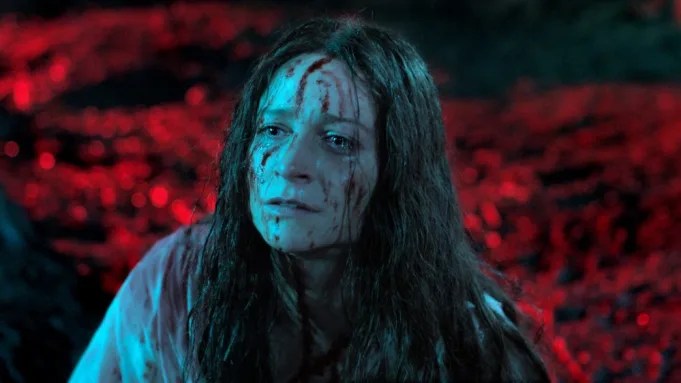
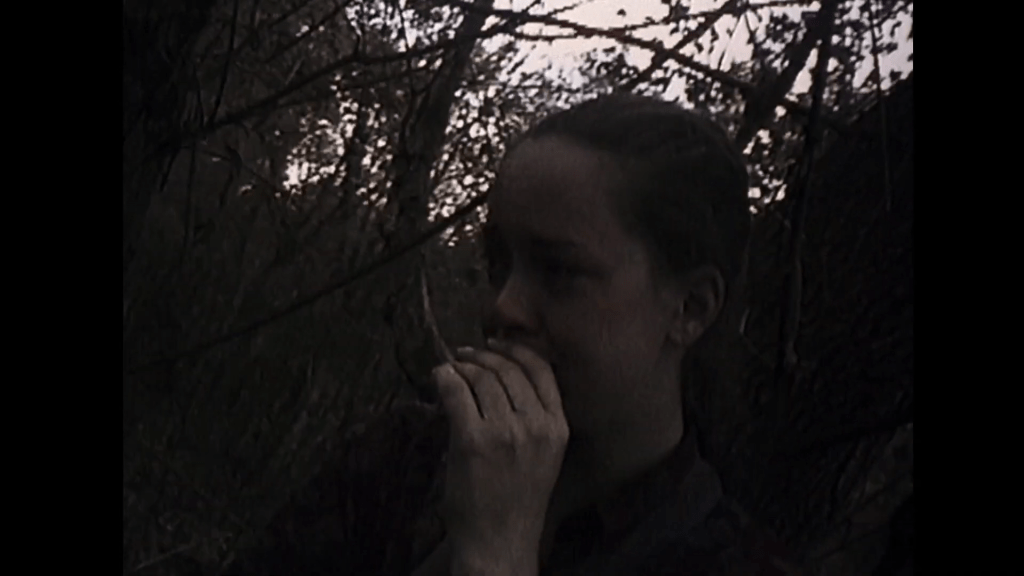
No one will ever be able to replicate The Blair Witch Project. This is true in the broadest sense, in that audiences will no longer believe a movie is truly “found footage”, especially after the myriad rip-offs and knock-offs in the early 10s. But in the most literal sense, the very methods and form used to create the movie have been supplanted both by higher quality video and audio, as well as the fact that, well: the cast was essentially psychologically terrorized over the course of weeks in a sort of “Method filmmaking”, as directors Daniel Myrick and Eduardo Sanchez described. Watching The Blair Witch Project almost 25 years out – long past the hype cycle and a few attempts at turning into a proper franchise – have only strengthened the core of why it still resonates so strongly. Marketing gimmicks are temporary. Bone deep mental disintegration worms its way deep inside your mind and festers.

Of course, not everyone sees it that way. While praised by critics, it’s proven much more divisive amongst audiences in part because of how barebones it is. There aren’t really any overt scares, at least nothing that we can see. We sure hear a lot: snapping twigs, a baby crying, maybe someone being horribly killed. Among the genius of the movie (something that’s been cited time and time again) is how much is really left to your imagination. Even the thing that could be chasing college kids Heather, Josh, and Mike isn’t set in stone. Myrick and Sanchez offer everything from the Blair Witch herself to a child serial killer and even float the possibility of the locals fucking with the kids. One thing’s for certain: there’s something out there, and it means harm.

As we get further and further away from 1999, the idea of reality has only evaporated further and further. So much of the discourse surrounding The Blair Witch Project was the idea that these events actually happened; it was heightened by the actors each using their own names for characters and by staying out of the spotlight once the film debut. There were documentaries, websites devoted to shaping the central myth that what you saw was real, even though it still carries normal credits and disclaimers (not to mention that were it actually true, it would have amounted to a snuff film, and while Hollywood is amoral, it’s not that amoral). Found footage itself has basically lost the veneer of reality through establishing tropes and casting familiar faces. But in a paradoxical way, this makes it easier to slip into the world of the film. The footage is all handheld consumer grade film, the kind college students would be able to get. It looks rawer because it is, all the imperfections and “amateurness” kept in. Cameras have only gotten better and in some sense, we’ve lost this sort of scuzzy feel. The footage just looks too good. But then again… how many times have you scrolled by a video reuploaded through 3 different social media platforms, degraded by compression, showcasing a purportedly real-life event? More things are staged than ever before, so what does it even matter if it’s not real to begin with? Josh calls it a “filtered reality” and later, suggests that Heather keeps filming because it makes it easier to pretend it’s not happening. Judging by the way she screams back “It’s all I have left!”, he may have a point.

What matters is that it’s convincing, and the movie does not work at all if you don’t believe the actors. A recurring criticism (especially of Heather) is that they’re all annoying college kids goofing off but look at the opening scenes. Here, they’re casual, laidback, playful even. There’s an unforced chemistry and charisma to all of them, little touches like zooming into some marshmallows or Heather declaring she hates scotch. These establishing scenes give the later ones when they turn on each other a great impact, because we know that’s not what they’re normally like. Josh’s especially is upsetting, because we see his friendship with Heather earlier on, and his repeated shouts of “There’s no one coming to save you” pour more and more salt into the wounds of her mistakes. Heather herself – it should be said – has proved a competent director, despite what the public opinion says. After all, she got them the interviews, filmed openings, lead them to Coffin Rock. Perhaps she got them lost but if she did, well… there’s also a demonic presence insistent on torturing them, so you can’t blame it all on her. Heather Donohue is willing to make her abrasive as things get worse, but there’s a deep sense that she knows she fucked up and she’s being constantly reminded of it, but she can’t change it as they spiral closer and closer to her doom. Her final confession is iconic in part because of her despair and terror, of seeing how frayed she is and how she wishes she could’ve made a better decision. It’s possible that wouldn’t have helped anyways. Maybe you can’t hate her if you don’t believe that she could exist.

The Blair Witch Project is a psychological drama masquerading as a horror film. It’s not necessarily “scary” so much as it is deeply upsetting and uncomfortable to witness. Part of that is knowing that – yes – the cast really were operating on little sleep and food, being tormented by the directors (one line late in the film could be aimed at either the spiritual presence or the directors themselves). But that weariness translates into a sort of existential dread that comes with knowing you’re deeply lost in the woods and that every day will bring more of the same. It’s in seeing people turn on each other in some of the most vicious ways, clawing at each other while gripping tightly for support. The lines between reality and fiction dissolve as much as their own sanities until by the end we’re seeing pure, animalistic terror. You can’t recapture that. Maybe you shouldn’t try to.

Available on HBO Max, Hulu, and digital rental platforms.

Rebecca Hall Self-Destructs in the Tense, Wild “Resurrection”

The second film from Andrew Semans, available on VOD

Hall gives one of the year’s best performances.

“Trauma” – alongside “grief” – has become something of a trend lately within culture. It comes up in interviews about Marvel properties, it’s the main theme “elevated” horror movies or a new reboot of an 80s property. None of this is new of course: horror is especially fruitful for examining loss or processing something that happened to you. But there is a sense that it’s a little sanitized. The victim is strong; they build defenses and ultimately overcome it.

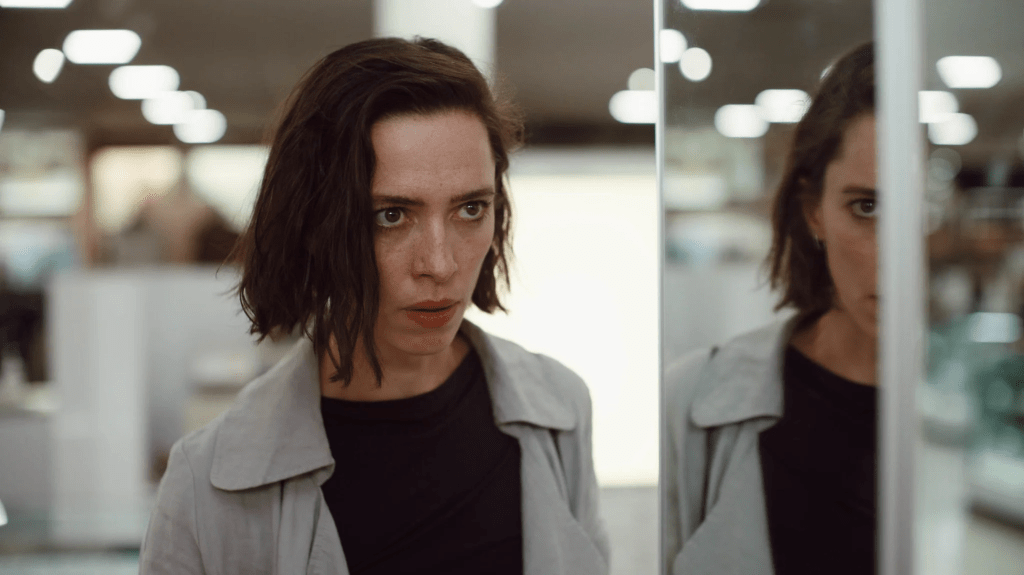
In Andrew Semans’ Resurrection, the trauma of Rebecca Hall’s character manifests itself in a physical reaction. Her character – Margaret, a pharmaceutical executive – is attending a conference, looking bored. She fidgets, attempts to stay awake, turns her head and catches sight of a man sitting a few rows down. Suddenly, her eyes widen and as she stumbles out of the room, she takes off at a run that turns into a sprint. We don’t yet know who this man is but immediately we can tell he’s bad news.

As the movie starts, Margaret is the quintessential image of the high-powered executive. Steely, determined, there’s an intimidating air to her but with a hint of warmth shown as she gives an intern relationship advice. She has a daughter – Abbie (an excellent Grace Kaufman) -17, and about to head off to college. Her love life consists of calling up a married co-worker for no-strings sex that always happens at her place. Hall plays her as a woman in complete control over every aspect of her life, dominant but not domineering. Naturally, this brief moment of panic sends her spiraling as the man (Tim Roth) reappears around her, always from a distance. Something bad has clearly happened to Margaret in the past, but is it going to happen again?

Resurrection follows a similar path of woman-on-the-verge films like Repulsion or Possession by staying ambiguous about Roth’s character. In a stunning 7-minute monologue in which the background slowly fades to black, Hall details a shocking history of violence, gaslighting, and abuse that sounds too insane for anyone to make up. Her performance in this moment is a tour-de-force: completely absorbing and impossible to turn away. That she’s giving this to her intern who reacts in horrified confusion is what turns the movie on a dime. Semans puts us directly into Margaret’s increasingly paranoid headspace through some savvy camera work and an unnerving score from Jim Williams as Hall’s perfect composure crumbles throughout. It’s a gripping performance, matched perfectly by Roth. He plays David as chillingly polite, almost rational; we know he’s a madman but his reserved tone almost makes us fall for his gaslighting as Margaret regresses more and more.

Perhaps the most devastating plot point – and, in my mind, the key to the film – is through Abbie. Margaret exerts more and more control over her as a means of protection, going as far as to do whiskey shots with her to keep her from leaving their apartment. Logically, she should tell her daughter who this mysterious figure from her past is and explain herself, but she can’t. Her behavior manifests as irrational and frightening, for all intents and purposes looking like a complete mental breakdown. Semans doesn’t turn either side into a villain so much as portray how this unexamined trauma can manifest cyclically; it’s heartbreaking because Abbie clearly sees her mother is suffering but in the process is making her unsafe.

For some people, this movie may not hold together. The ending takes a gigantic leap that – although set up – shifts things into an entirely new direction that clashes with the tone of realism from before. Admittedly, there are some scenes I wish were slightly different, if only to keep it on a more symbolic or psychological level. But there’s something to be said about a movie that fully commits to its premise, logic and sense be damned. Hall is the stand-out, of course: it doesn’t work if we don’t believe her, and I believed her. This is a bold feature, a tightly coiled work of anxiety and tension up to its startling climax. When the filmmaking is this good, what do a few flaws matter?

Celebrating 20 Years of Rez

One of my favorite games of all time

8 76 5 4 3 2. 1 <security breached>

In honor of Rez’ 20th anniversary, a repost of something I wrote about it for a Facebook group.

The world wasn’t ready for Rez.

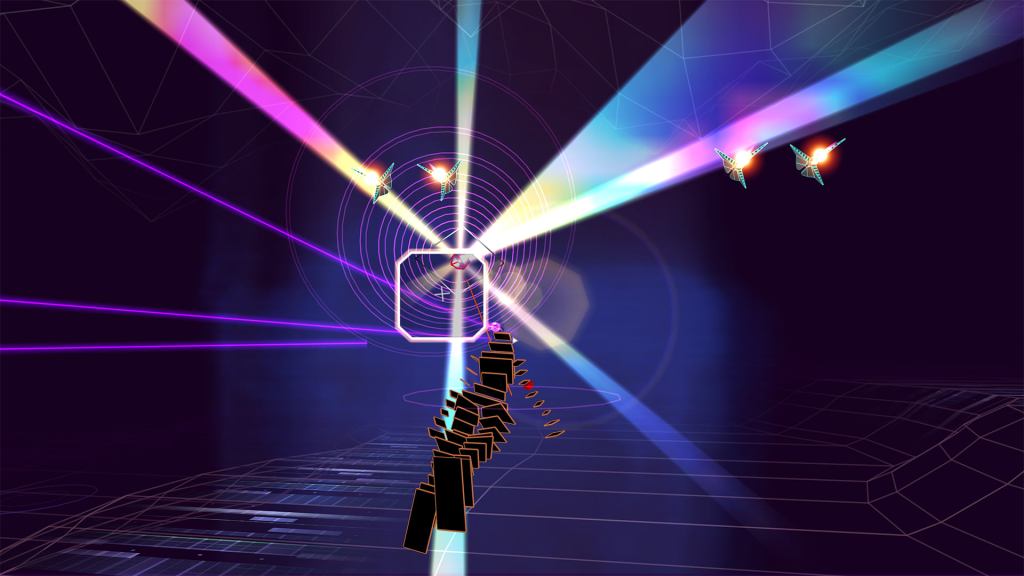
In 2001 with CRTs maxing out at 480p, no one was getting the optimal experience, and even then it probably wouldn’t have been a smashing success coming out on the tail end of the Dreamcast era. It’s a miracle it even came stateside at all – albeit in a PS2 port and without the infamous “trance vibrator”. Rez ended up being Tetsuya Mizaguchi’s last original product for Sega before he decamped to Q Entertainment (his final would be a sequel to Space Channel 5). By all means it should’ve been a weird footnote among the many weird footnotes of that era when Sega was throwing everything at the wall, knowing the end was near. Somehow it managed to get two separate ports and an extra level in the form of Area X (which, sidenote, contains the first official work from Tetris Effect composers Hydelic. It is the platonic ideal of EDM), not to mention a spiritual successor in the form of Child of Eden, made during the Kinect Frenzy of motion gaming. In more ways than one it’s the perfect VR game; it’s certainly the one I think of first if I were to demonstrate it to someone.

The gimmick of it all is that everything you do is tied to a sound in someway: the numbers tick up as you highlight enemies, and shots fire off bloops and tones as they make contact. Locking on to the maximum 8 causes a chorus to sound when you release. Handclaps sound if nothing is targeted. A voice counts down every time you hit the node and the music shifts into the next phase, building as if in a rave. A ship times its shots so that when they release they sound like percussive elements.

Describing Rez to the uninitiated is a bit of a struggle – which perhaps speaks to how Sega clearly didn’t know how to advertise it. Most people describe it as a rhythm game but that’s not entirely accurate. Broadly speaking, it’s a rail shooter: you control an on-screen cursor as a wireframe avatar floats through surreal landscapes, holding down X and moving the left stick to lock on to objects on-screen. Releasing X fires up to 8 shots at enemies on screen. Powerups come in the form of blue spheres that add life, and red spheres that allow you to automatically target everything on screen. Each layer level (as its called) is broken up with a Network Node in the form of a cube you must first break off of, then target with 8 shots.

Unlike a rhythm game where everything is mapped to a specific moment and missing penalizes you, every shot you make stays on beat no matter how late you are targeting or in what order. Rez’ goal is that of synesthesia, like many of Mizaguchi’s other games (Lumines, Tetris Effect). Enemies explode into bursts of color, into hieroglyphics or tigers and lions. They fly by on small bikes, the paths making lines that spiral across your vision. In the background, statues beat in time with the music as does your avatar. More than anything Rez is an ultimate expression of aesthetic art, every action you take heightening the confusion of the senses and pushing you further into a hypnotic state.

Of course, there is a story to Rez but you could be forgiven for not noticing it. The short version is that in the future, an advanced AI named Eden has a mental breakdown due to information overload, threatening the world. You play the hacker that’s sent in to try to free her, battling enemies and taking down bosses in the form of firewalls and security systems that attempt to protect her. While the overall story of world peace and metaphors of life may not pop up until the final level, the hacking motif is all over the game: enemies you target scroll down on the left side with. Getting a new form causes “File system: updated” to sound in a robotic voice. Targeting the cube is called “cracking password”, with the phrase “Security Breached” circling you. In no way is it realistic but it fits in with the charm. It’s like someone decided to make a game out of the hacking sequences in Neuromancer, something you can actually simulate in VR mode with a headset. It’s a more optimistic vision of computer hacking, a very early 2000’s view that’s only got more charming as time goes on.

The best expression of this synesthesia is in Area 1, with the track “Buggie Running Beeps” by Sega in house sound designer Keiichi Sugiyama. It builds like a rave, starting with a droning tone and moving into slow beats before it explodes into a full on party. Elsewhere, tracks like Area 4’s “Rock Is Sponge” from Joujouka nervously drill on until suddenly guitars kick in as you’re flying through an arena, chasing after a running man made out of cubes, a truly mind blowing moment. Area 5’s Fear Is The Mind Killer from Adam Freeland and Coldcut brilliantly matches the title phrase to enemies, speaking the title as you shoot them. Describing Rez in words is honestly rather useless. You have to experience it for yourself, controller vibrating in time, to really get the sensation.

Spooktober #4: Censor

For the good of the people?

Crashing down

I’ve always been bizarrely fascinated with censorship codes. Maybe it’s living in America, where we don’t have that sort of legal control over media unless it’s like, abuse material (historical examples notwithstanding). Of course, it’s not like America’s own censorship board doesn’t wield a large amount of control over theatrical releasing; think about how the NC-17 – supposedly for more “adult” movies that weren’t porn – ended up becoming near exclusively associated with sexual content to the point that it basically doesn’t exist. All this is done in the name of protection, but who is it really protecting? How does one even determine the right amount of vein slashing and rape that’s acceptable for a motion picture? It’s all very technical stuff.

As you can imagine, Prano Bailey-Bond’s Censor was catnip for me, following – as it does – a censor for the BBFC during the 1980’s video nasty moral panic. In brief, “video nasties” were extremely violent (often sexual) exploitation films that burst in popularity when VHS became popular. The credits show that they included everything from more “classy” pictures like Abel Ferrara’s The Driller Killer to infamous faux-snuff film Cannibal Holocaust; it falls in part to Enid (Niamh Algar, in the titular role) to determine if the film is releasable, and what cuts could be made to allow it in. She takes her job extremely seriously; as she tells her parents, she’s not doing it for entertainment but to “protect people”, as much a product of Thatcherite conservatism as it is lingering guilt over the disappearance of her sister. That deeply repressed guilt starts to bubble back up after viewing a film that strongly resembles the circumstances of that disappearance, throwing her off kilter and beginning a descent into mental collapse.

Bailey-Bond’s film is first and foremost about “vibes”, specifically in capturing the specific era of 80’s Britain in the midst of a moral panic. The BBFC offices here are all drab washed out lighting betrayed by the recurring screams from the women in the films the censors watch. These films themselves are shot in a squarer aspect ration complete with VHS grain to recreate that exploitation aesthetic. Interspersed are hallucinatory sequences reflecting her own fractured state of mind, awash in neon lighting, consciously returning back to the scene of the crime. Although it’s critical of the idea that exploitation movies caused a rash of violent, Bailey-Bond and Anthony Fletcher’s script doesn’t argue that they’re totally harmless. After all, the censors themselves have to expose themselves to some truly awful scenes day in and day out, fake though they might be. Enid professes to not be affected by them, treating it purely as a job, but the film suggests she’s internalized more than she wants to admit.

It all comes to a head in a brilliant final act, in which her two worlds collide and her denial comes spilling out. All this time, Algar has become convinced – without much in the way of evidence – that her sister is actually the actress in the film, and without spoiling, it becomes a cutting statement on conservative hypocrisy and the need to convince oneself that they’re the good guy here. Censor could’ve been a touch longer – I personally would’ve loved to see more of the censorship process itself – if only for Bailey-Bond and Fletcher to expand on their ideas more. Still, this is an audacious debut, one that establishes Bailey-Bond as a filmmaker to watch and Algar as candidate for Best Actress.

Spooktober #3: Noroi: the Curse

A movie I haven’t quite been able to get out of my mind.

Ritual

The mockumentary – and, to a lesser extent, found footage – is a surprisingly underrated format when it comes to horror. Perhaps it’s due to the genre’s main association with comedies. Or perhaps the cheapness and extensibility of found footage created a default state for filmmakers. After all, why go to the trouble of drafting a world when you can just pretend someone stumbled upon this horrifying video footage (never mind the question of “who assembled this footage just so”). A true fake documentary holds greater potential, because of the nature of having to assemble something. Think Ghostwatch, where a British television special on hauntings accidentally becomes something realer. Or Lake Mungo – beloved by many, more appreciated by me – which uses a talking head format as a starting point for a ghost story.

Noroi: The Curse commits fully to its premise, presenting itself as an unreleased documentary by paranormal researcher Masafumi Kobayashi. It blends typical documentary footage and in person interviews along with archival footage of variety shows and news reports, all shot on 2005 era video cameras with the according VHS tracking from old tapes. Perhaps it’s just my love of analog horror in general, but I do think found footage and mockumentaries of this nature lose a little something when the quality is too good. Recent found footage films like Gonjiam: Haunted Asylum enhance themselves with corruption or streaming drops where the audio continues while video freezes. The goal in my mind is to look like something conceivably made outside of a studio, save for the clips used from live television. Seen today, the quality of the footage makes things look even eerier, in part because it feels “realer” in a way.

Of course, aesthetics aren’t everything. You can only do so much with low quality cameras and shaky audio before you actually need to provide a story. And this is where Koji Shirashi’s film shines. Initially, we appear to be following three different unrelated tracks: there’s a woman named Junko Ishii who’s neighbors are unnerved by her and her son. There’s Kana Yano, a girl with seemingly legitimate psychic abilities demonstrated on variety shows. Finally, there’s the actress Marika Matsumoto (the voice of Rikku in Final Fantasy X!) – playing herself – who has a terrifying encounter at a shrine.

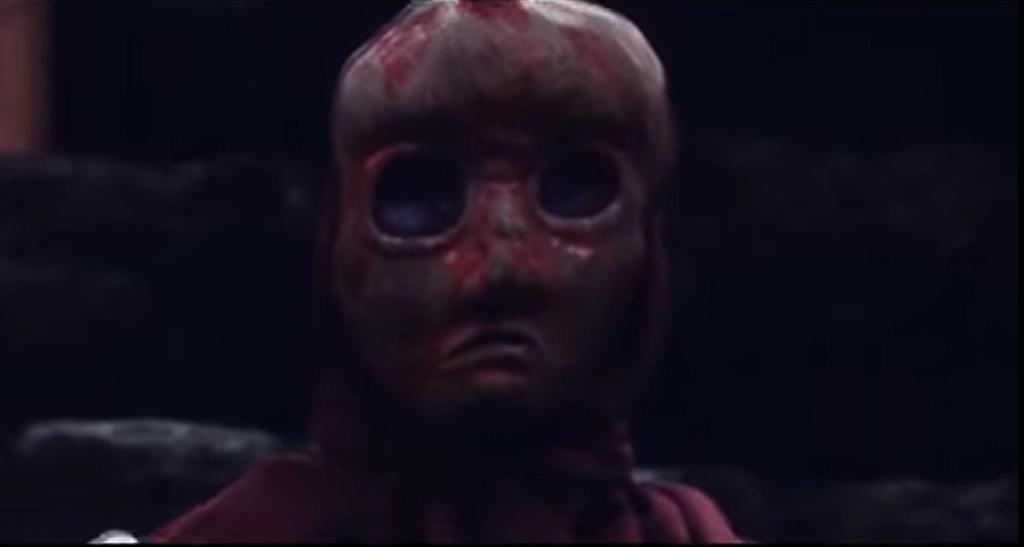
It Slowly, Shirashi and co-writer Naoyuki Yokata begin connecting the strands. There’s a man named Matsuo Hori, a psychic also suffering from some form of mental illness, who had dealings with both Kana and Marika. Strange loops make begin to appear, as do a creepy looking mask. Kobayashi begins to research a demon named Kagutaba, and the trail of death following Junko Ishii, all leading back to a village and a ritual that has gone wrong. While a little long and perhaps prone to highlighting the creepy things in the background (something that could be explained as just Kobayashi’s style), the film casts an unnerving feeling throughout. Once the stories begin intersecting, a sense of dread starts to enter, and it builds it up slowly but steadily. It’s riveting as you put the pieces together, and Shirashi’s style cultivates a genuine feeling of authenticity. There are no winks to the camera, no cheats in the concept. It builds to a finale hinted at in the beginning that explodes in horrifying power, leaving you completely unsettled. If nothing else, you’ll never see masks – or hear a baby’s cry – the same way again.

Spooktober #2: Audition

A movie about lies that is itself a big lie.

One of the most iconic images in horror cinema

Spoilers for Audition, but if you’re reading this you probably already know what’s up. Additionally: Spooktober will take the form of 4 posts about horror films I really love (because a post a day was far too ambitious). Look forward to them!

Audition is a film about deception. There’s, of course, the thrust of the inciting incident of the narrative itself: a producer holding a fake audition to find the perfect wife. More infamously, there’s the structure of the film itself: at this point it’s probably more known for starting out as a serene Japanese drama before suddenly shifting into gory horror. Takashi Miike’s breakthrough film doesn’t exactly lie to the audience, and neither does the marketing. But through near total restraint and careful pacing, Miike and screenwriter Daisuke Tengan take protagonist Aoyama’s ignorance of red flags and implant it into the audience themselves. There are signs sprinkled all throughout that things are not what they appear to be. The fatal flaw is that the characters would rather live in the lie than get off the path to ruin.

Talking about Audition is naturally a little bit hard, but at this point the ending is as infamous as Psycho‘s first grand kill. It’s essentially impossible to view it in it’s pure, first time format unless – as Mike D’Angelo suggested – you hand someone an unmarked DVD containing the film and nothing else and have them watch it right there. In broad strokes, the film is about a widowed producer, Shigeharu Aoyama (Ryo Ishibashi), who – with prodding from his friend – holds a fake casting audition to find himself the perfect wife. He finds this in Asami (Eihi Shiina), who at first appears to be everything he could ask for. There’s just something “off” about her…

Having advanced knowledge actually presents quite an interesting shift in viewing – one that probably occured for all who were familiar with Miike before this film: surprise at how un-Miike like it is. Miike has of course directed over 100 films at this point, ranging from bizarre and violent to family-friendly; in the West – perhaps due to the inherent publicity from controversy over the most extreme of them – he’s famous for violence and a slightly hyper-active style. Audition, by contrast, stays almost completely rooted in a rather naturalistic and quiet mood for the first half or so. This is the key to the whole thing working, and the key to the film itself. Just after the titular audition scene, Aoyama is contacted by another worker, who reveals some mildly troubling news: he can’t seem to find any of the references Asami has left on her application. This is a rather mild slip, but Miike consciously shoots it as an omen of things to come. Time and time again, Aoyama is given an out: his friend even explicitly tells him that something about Asami unnerves him and that it would be a bad idea to continue things further.

Both Aoyama and Asami are, in some ways, lying to themselves as much as they lie to each other. Aoyama would rather believe in the non-existent perfect wife, despite the many deeply troubling signs. Asami – to a lesser extent – is willing to believe him when he says that he will love only her (it’s unclear whether she knows at this point of both his son and his dog). Seen from this angle, Aoyama’s punishment in the finale almost comes across as justified for his hubris: he’s unwilling to believe Asami is anything other than perfectly compliant and submissive, that she could ever be capable of violence until she finally turns it back on him.

Perhaps the greatest deception of all is that Audition is “torture porn”. On the one hand, it’s easy to believe given how infamous (and graphic) the finale is. Strangely enough, that finale is actually kind of bloodless if you compare it to something like Hostel, with all its guts and gore spilling across the place. It helps that Shiina underplays Asami’s psychopathy: she calmly straps herself into an apron, preparing her surgical field with deadpan efficiency. Her manner of speech is as if she’s just administering punishment, not revenge (a point for the “it’s all in his head” team). This isn’t to say there’s no blood, but rather compared to Miike’s reputation, it actually feels somewhat realistic for the actions taken. He even cuts away from the needles entering Aoyama’s eyeballs, letting us see Asami and imagine for ourselves what’s happening.

Miike has never made another film like this, though he surely has it in him from a formal perspective. What makes it so effective after all these years is the sheer nature of it as a deceptive film, tying us back to the characters themselves. We can wish all we want that it’ll end at him waking up, that someone will make different decisions, that it was all just in his head. Reality won’t let that happen, and as Aoyama does, we accept the punishment for thinking things could end any other way.

Spooktober #1: Under The Skin

Kicking off a month of horror with a modern masterpiece

On the hunt

An attempt to publish an article on a horror movie everyday this month, starting with one that may not be “pure”, but is just as unsettling.

Alien perspectives are hard to imagine. We only have ourselves as a frame of reference for what extraterrestrial life could be like, nothing except for our previous interactions with each other to go off of. Despite a limitless imagination, science fiction – when introducing sapient life – tends to default to what we believe is the proper “form” for what living beings should be. With a few small changes, aliens generally tend to behave like foreign countries interacting with each other: a base line familiarity of social interactions and biological functions. But how can we properly depict alien perspective if we can’t even escape our own?

Jonathan Glazer’s Under The Skin is perhaps the first film to truly attempt to answer this question. Its first hour is an assault of images and noise – attempt to learn human speech, English as it sounds to someone who doesn’t understand, the atonal droning and skittering of Mica Levi’s iconic score. This is not the view of someone divorced from reality or alienated (for lack of a better word) from humanity, but someone fundamentally inhuman at their core, intrigued and perturbed by what they see.

The main character has no name but is perfectly embodied by Scarlett Johansen. Her looks and demeanor are key to the whole thing working, with great subtlety in her actions and choices that may not reveal themselves on first glance. Take the various scenes in which she lures men into her void in part by taking off her clothes: she never makes any sort of pose or movement that could be defined as “sexy”. Her body language – while relaxed – remains stiff. She isn’t attempting a seduction so much as mimicking the concept; one could easily imagine her having read or been briefed on the idea, after which she goes through the motions, not because she understands what it is but because she’s been told it’s the best way to gather her prey. Most importantly is the complete lack of emotion she displays all throughout the first half (other than confusion or interest).

This is put to especially disturbing effect when she comes across a foreign swimmer attempting to save a couple who have ran into the sea to recover their dog. When he washes up after a failed attempt, she takes a rock and smashes his head with it, dragging him off to her lair while we’re left with the crying of the couple’s abandoned baby. There’s no manipulation on her part (other than the basic amount needed to convince people she’s normal); it’s best described as a crime of opportunity, the rest simply just noise to her task. We never get a direct explanation or description of what she thinks of her prey. At most we see a fascination with them, a curiosity bordering on amusement that nonetheless is unable to fully comprehend the subject at hand. Unlike most alien invasion stories, in which the assimilation is pretext for taking over the world, she is a hunter, finding game to transport. There’s no malice, no belief that her race is superior to humans (except, perhaps, in the fact that she’s harvesting them in the first place). Her behavior is fundamentally unknowable because we humans are fundamentally unable to imagine a being who doesn’t at least share a little simlarity with our way of thinking. Even as she seemingly abandons her mission – troubled by one particular attempt who chillingly describes the feeling of sinking – and begins maybe identifying with humanity, she never fully gets it. In the end, she’s still mimicking it, until by the end she’s a wild animal, unable to understand why this is happening but reacting on instinct.

It should be noted that none of this is stated within the film itself. Glazer adapted it from a Michael Farber book of the same name, which explicitly makes her an alien who’s goal is to harvest humans in a metaphor for factory farming; in doing so, he jettisoned basically any sort of identifying characteristics or clarity from the story and the characters. That actually enhances the material a lot, even though it’s no longer really an adaptation. By turning almost completely to imagery, Glazer has left the metaphor a lot more open, if you indeed choose to view the film through a symbolic or metaphorical lens. Perhaps the greatest strength of removing any sort of “depth” – as it were – is that all you have left is the experience of the main character. You’re left with a character who feels unknowable, impossible to connect to but who’s behavior still retains some sense of logic and reasoning. In reducing the story to its base elements, the humans themselves become little more than animals, hunting and preying.

Under The Skin would probably be a masterpiece just on a pure audiovisual level. There is truly, simply, nothing on earth like it, and there will never be anything else comparable. It is perhaps cinema as an aesthetic tool, first and foremost; a work that wants to submerse you within a strange new perspective and give you an experience you’ve never had before. One could pull various symbolic threads – the reverse predation of men and women, animal farming, existence itself, and on and on, and none of those would be wrong. But what sticks with me most at the end, are the images. The sound of a baby crying on a cold, stony beach, its parents washed away by the water. An inky black room, into which men are lured and sink into the abyss. Discordant strings and bare percussion highlighting your unease. It may not be a “conventional” horror film, in that it tries to be scary. But through a series of unnerving sequences, and fear of this person, it reaches a new level of unease and consciousness.

A Mea Culpa for The Master

The Master
Surrender to it

When you’re too young to comprehend a film.

I didn’t “get” Paul Thomas Anderson’s The Master the first time I saw it. Or rather, I don’t think I really possessed the skills to appreciate it. My first time was in high school, circa 2014 or so, which was right around when I was really getting into film seriously and checking out lists. I remember drafting an email to Filmspotting because I’d heard them talk enough about it, and asking what it all meant (they were kind enough to respond, so shoutout to them); it wasn’t so much that I thought it was pretentious but that it felt like an series of scenes disconnected from each other, without much meaning. Teenage me really struggled to put it together – and separating it across two nights probably didn’t help much either.

Perhaps it’s one of those movies you need to watch a second time. Perhaps going through college – and also watching quite a lot more films – exposed me to more similar structures. Maybe I just went in with a much open mind, not high off the refrains of “masterpiece” and “Best of the decade”. It might even be that I was mistakenly primed to expect a movie about Scientology, or a two-hander featuring a villainous Philip Seymour Hoffman. Whatever the reason was doesn’t matter anymore. Because now? I get it.

The Master is – in my mind at least – best thought of as a character study of one very specific, very damaged man, Freddie Quell (Joaquin Phoenix). It’s a lot more linear than I remembered it being; while there are some flashbacks (and one moment that takes place solely in his mind), everything you see on screen appears to be pretty much exactly what’s occurring. At first, I actually thought it was about World War I and was going to slot it into the grand theory that “All Works Involving World War I Are About How Fucked Up It Was” before being reminded that no, it’s about the Second one; specifically, the immediate aftermath. One of the key scenes takes place just after we here the announcement of the surrenders on a radio: all the soldiers lining up in formation, traveling up some stairs to hear a speech from a commander. He essentially tells them that the war is over, and they’re going to be reintegrated into society. Civilians will not understand what they’ve been through; it’s possible no one ever will. Crucially, there is no offer of help for these men. These are the ones without prominent injuries, the “normal” ones. They have been through drastic reshapings of their entire personalities, turned into killers, and yet the military expects them to become normal functioning members of society despite having seen the absolute worst that humanity is capable of. Ironically, that’s not too far off from the treatment of veterans in World War I, or even the treatment of veterans today. How can anyone be expected to be normal when your entire state of being has been so altered?

For Freddie, this may have been an impossible task even if he hadn’t been on the frontlines. His first on-screen appearance sees him mimicking sex with a sandwoman, discussing how to get rid of crabs; during a psych eval, he sees every single Rorschach image as genitalia. Soon it will become apparent that he is likely not joking about that. Even if you don’t fully connect with the film as a whole, Phoenix’s performance is still a wonder to witness, with his peculiar way of talking out the side of his mouth, his jerky movements. As charming as he’s capable of being, there’s always the feeling that Freddie is just moments away from violence. This – combined with his habit of borderline poisoning himself – gets him fired from one job and chased off of another.

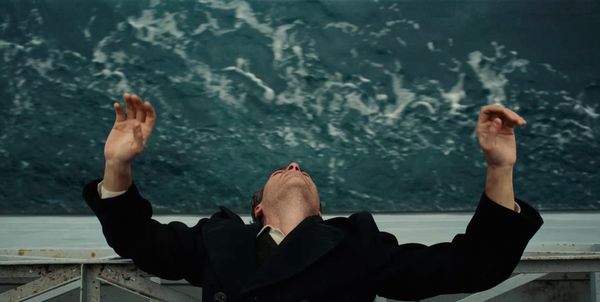
He quite literally stumbles across salvation in the form of Lancaster Dodd, who’s daughter is getting married on a boat Freddie drunkenly runs to after accidentally poisoning a farmworker. While Dodd – of course – is based off L. Ron Hubbard, I think going in with that knowledge may warp your understanding of who he is. Philip Seymour Hoffman’s performance isn’t menacing, per say, nor does it appear to be overly indebted to the father of Scientology. On some level, he’s performing, yes. But watching it again, I feel that Dodd isn’t anything less than completely genuine about his beliefs, or at least his desire to help people. Does he really believe he met Freddie in a past life, as he claims? Does it necessarily matter? Either way, Freddie’s addition to their party comes not from a desire for conversion, but rather because Dodd wants more of his noxious concoctions.

None of that means that Dodd isn’t also an extremely harmful and manipulative presence. The much praised initial Processing scene shows Freddie subjected to a series of questions that soon begin falling into disturbing and highly personal details (much like the way Scientology collects blackmail material). It’s perhaps telling that Freddie at first finds the process “fun”: at first they merely consist of odd questions like “do you linger at bus stations for pleasure” and “are you thoughtless in your thoughts”. In their article proclaiming it the best scene of the year, the AV Club describes it as “designed to break down a subject’s psyche and offer a kind of euphoric relief from his or her problems.” That part comes when Dodd starts asking him about where his parents are (dead and institutionalized), if he’s killed anyone (Japanese in War and possibly the worker), and – most shocking – if he’s had sex with any of his family members (his aunt, 3 times). At the end, Freddie’s crying, perhaps finally having gotten the burden of his sins off his chest. It’s telling that Dodd doesn’t offer him judgement on any of this; he doesn’t ever bring it up even in the climactic jail scene fight. As questionable as these methods are, does it really matter if people find a sense of healing through them?

As great as this scene is, there’s actually a later moment that I found to be the key to unlocking the film for me. The Cause is at a house in Philadelphia (owned by Laura Dern!); Freddie’s “therapy” has begun in earnest through an exercise in which he walks across the room and touches the wall, describing it, then walks to the window and repeats. Dodd makes him do this over, and over, and over. This is about when Freddie has begun to disturb other members of The Cause including Dodd’s wife Peggy, and his daughter Elizabeth through sexual overtures and violent outbursts. Doubt seems to be spreading within Freddie as well, even though he remains devoted to The Cause. The exercise stretches on as Freddie gets more and more frustrated, until the members break for lunch and he ends up slipping into describing the conditions of the frontlines with each pass from the window to the wall. In this moment, it becomes clear that The Master is pretty much all about the various traumas Freddie has been repressing to his overall detriment. It’s the start of when Peggy begins to seed the idea that Freddie is beyond the help of The Cause, maybe even beyond help in general.

That’s the most fascinating idea in the whole film, the thing that keeps it from being a straight up Scientology take down. Lancaster’s efforts are genuine – even if he claims that they can cure leukemia, among other things. He can see that Freddie is in turmoil. But even a sketchy pseudo-religious movement has to recognize when to cut their losses. In the rapidly changing society of post-war America, people are fumbling around for any sort of authority, any meaning out of the violence that’s been done to them. But how do you move on from this trauma when violence and dysfunction is the only thing you’ve ever known?

The world has changed a lot since 2014. I’ve changed a ton. I wasn’t fully aware of how much the military is about forcing someone to change their entire socialization. I hadn’t yet learned about how traumatized WWI left everyone. Perhaps most relevant, I hadn’t experienced films that were content to let you puzzle out their meaning, extract symbols from shots, let the explicit be implicit. The Master, more than anything, asks a lot out of you simply by following it’s own rhythms, its own psyche of sorts. It’s a mood that can feel impenetrable at first, but reveals a wealth of substance once you open up. I have a feeling I’ll be revisiting There Will Be Blood soon. Having acknowledged they’re both character studies rather than battles – and without the latent contrarianism – feels freeing, like a new period of growth. I can’t wait to experience it.

Deltarune: Chapter 2 Review

This might be your daddy’s Undertale

Let’s Heal Together!!

Just when I thought I was out, he pulls me right back in. To be honest I’d kind of forgotten about Deltarune. Well… not forgotten exactly, but it wasn’t anywhere near the top of my brainspace (which is completely occupied by Final Fantasy XIV nowadays). So thanks a lot Toby, because now I’m right back to wanting every episode injected into my veins. If Chapter 1 was cautiously feeling out a new space and warning people expecting Undertale 2, Chapter 2 settles into its new environment by embracing the things we’ve come to expect from Undertale: namely branching paths, insanely deep content, and instantly memorable characters. Fox’s ambition has grown, and with it so has his team.

Simply put, it’s a blast all around.

Where could she be

The number one reason is thanks to The Queen, this chapter’s main antagonist after the previous King (who honestly, I remember almost nothing about). She currently reigns over Cyber World – aka, the Library’s computer lab in the “real world” – and wants to take over the rest of it because it would be fun. I don’t know how he did it but every single line of hers is funny, just pure dlight every time she shows up. Chapter 1 wasn’t lacking for humor, but 2 feels like Fox and co have gotten fully comfortable in this new universe enough to lock on to that particular style of irreverence unique to Undertale. It doesn’t feel like a course correction from the former’s more dour and mundane tone; rather, like the rest of this chapter it’s an expansion of scope and returning to the things that made him so beloved.

Which brings us to the gameplay. I’ll be honest, it knocked me flat on my ass several times, just like Undertale did. So far Deltarune shares a similar problem in that there’s no real way to upgrade your stats for a pacifist run. Certain gear will give you little boosts like enhanced Graze time – and Graze itself provides a new dimension to the bullet hell segments that gives it a little bit of Bayonetta‘s Witch Time, in that putting yourself in danger is a genuine strategy. But when it gets hard, it gets hard, and not even towards the end. That being said, it’s fun as hell. The addition of 2 other party members expands ACTs, changing them from something you spam to strategic attacks all their own. Now you can balance everyone ACTing with having one act, maybe one heal, and then one spare to make things go faster. It’s a fantastic system, and within it are a bunch of different minigames; the whole thing has gotten a little more interactive, like parts where you have to avoid music bars hitting you as you traverse the world.

I’ve only played through it once, and I’m fairly certain I missed a lot of stuff, at least judging from online comments. From what I can tell, there’s an entire genocide route called Snowgrave where you don’t directly cause mass murder, instead forcing another party member to do it. Fox seems to be continuning on the theme of choice, or rather your lack of it. As of this posting, it hasn’t been datamined yet, so who knows what secrets are hiding. The game seems to be going in a much darker direction than Undertale, what with Kris losing control and whatnot, or even Spamton (who, it should go without saying, has an absolute banger of a theme song). Who even knows if your romance choices will play out and be respected? There’s also the fact that you’re collecting enemies like Pokemon, possibly for an army (another reason to keep you playing the battles). I truly have no idea how long Deltarune is going to take. But honestly, I’m excited to see the rest of where this crazy journey goes. I still can’t even fully wrap my head around the implications of theories, something which could be a detriment if more esoteric and hidden stuff starts becoming important. In any case, even if the completed product goes the way of Kentucky Route Zero and takes a decade, I feel like it could be something monumental. At the very least it’ll be funny.