Some Thoughts on YorHa: Dark Apocalypse

Perhaps Final Fantasy XIV raids should stick with Final Fantasy
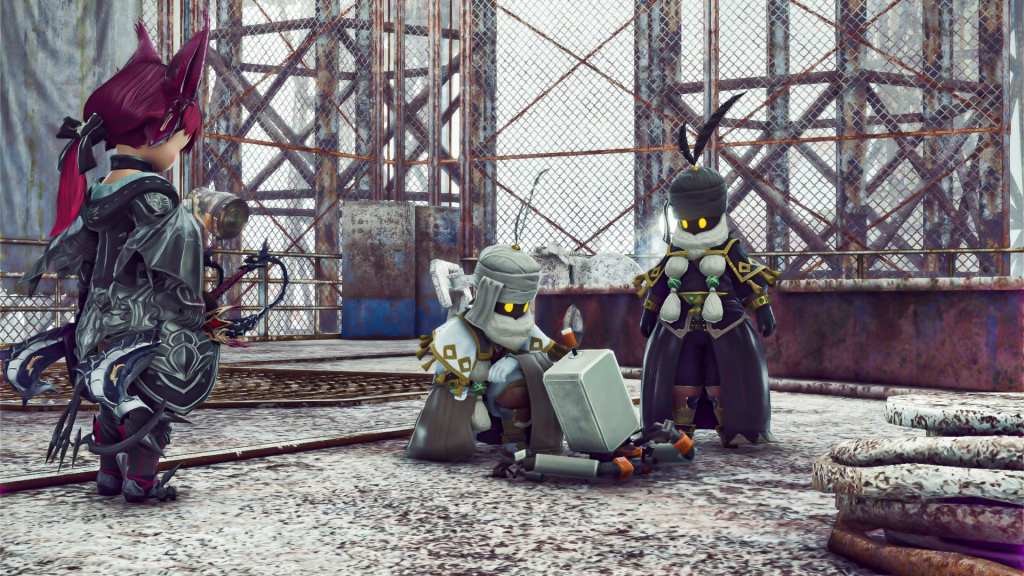
Examining a Pod

I have a feeling Yoko Taro never particularly wanted to do the Nier crossover. I’m sure, going back through his statements, you could find some typically blunt thing saying that it was a cash grab or Square Enix told him to, yadda yadda yadda. And at the beginning of the raid series (which i came to late), that probably just sounded like Yoko being Yoko. After all, he was the director of Nier: Automata! This would be incredible.

Curiously, there seems to be some grumblings within the Final Fantasy XIV community over the raids as the final patch released and the story winds down. Namely, there’s the fact that the story doesn’t really have much of an ending, instead locking off the rest of it in a weekly quest series that gives you more logs which explain things. To be fair, much of Yoko Taro’s work has been somewhat ambiguous, or at least willing to seem disappointing at first glance (as some on Reddit have argued). And of course, the second and third parts of the raid were developed smack in the middle of COVID, which affected development all around and lead to a severe curtailing of priorities and content.

All that being said – the story is definitely one of the weaker elements of the raid overall, if perhaps not the biggest reason it’s fallen in esteem. For refreshment, the main plot follows twin dwarves Anogg and Konogg as they investigate the strange bunker near Komra, leading to all your favorite Nier: Automata characters showing up. It’s hard not to notice how much of it feels like a rehash of that game, down to Anogg losing his mind when his sister appears to be dead. Of course, there’s also the cheeky connection to Devola and Popola, the twins from that game and its prequel who end up sacrificing their lives at the end of Automata. In fact, much like the other raids FFXIV has done, there’s a ton of throwbacks all over the place to Automata, the better to directly advertise a Square Enix property. The problem is that they feel more like copy-pasted amalgamations of things people already played in those games, a bit haphazardly strung together.

It doesn’t help that the conclusion has been shunted off to weekly quests that involve fetch quests around the environments, rather than doing the raids like previous ones. Now, full disclosure, I have not completed these quests, nor have I read all the info provided in the collection. It all just seems like way too much at the time, and a stop gap to learning the conclusion. I’m sure they’ll provide some form of closure if I ever get to it. But all the other raids have concluded their stories once the quest cycle is over. Perhaps players expected the same here.

The final complaint I’ve noticed the most is how disconnected it feels overall, especially the way previous crossovers have been handled. There’s the recently begun FFXV one, for example, which basically consists of Noctis finding out how to get out of Eorzea. More appropriate is the Monster Hunter: World event, which gave us two duties in the form of The Great Hunt and its Extreme counterpart. Similarly, that was presented as something of a side show: not a trial required for the main story, but also not part of The Four Lords series either. It’s entirely self-contained, which, to be fair, the other alliance raids outside of The Crystal Tower have been. However, although they may not directly affect the story, they do still expand the lore of the world or tie back into Final Fantasy‘s history in some way or another. They also integrate themselves into Eorzea somewhat seamlessly, or at least try not to appear to inconspicuous.

YorHa doesn’t really do that. Instead, it really feels as if another game has invaded FFXIV, with a story that doesn’t do a great job of explaining who all these people are, why we should care, or what the impact on the world could be. I have no idea if Square Enix is gonna try this again for another alliance raid, and honestly I wouldn’t be opposed. I guess it’s really more a mismatch between creator and product, something that’s probably not gonna be thought of as highly in comparison to the old ones.
The Best Horror Series of the Last Decade Is About A Game That Doesn’t Exist

Launching a humble little blog with a humble little webseries.

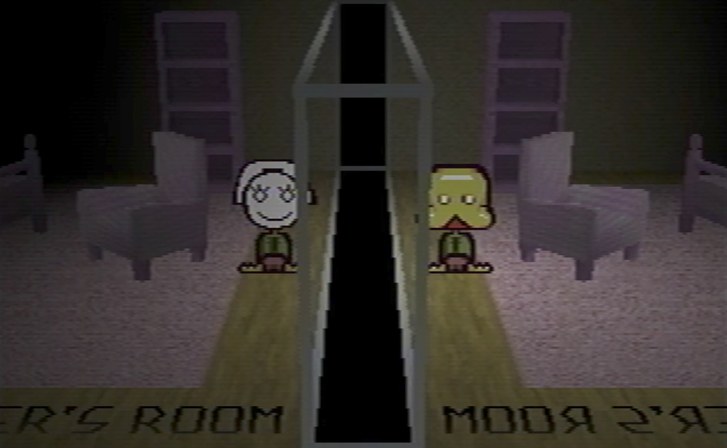
Mirror Room

A repost of an entry I wrote for a Best Television of the Decade series in a Facebook group.

Believe it or not, 2017 had two surreal horror adjacent series that gained a deep following and acclaim from many. The first, of course, was Twin Peaks: The Return. The second was a little thing called Petscop. Although it spawned more from the annals of creepypasta and haunted video games as a lot of horror web series, Petscop distinguished itself almost immediately despite an erratic release schedule and virtually no solid information. It might be the most Lynchian thing David Lynch didn’t direct himself.

Summarizing Petscop is difficult, so we may as well start from the beginning. The first video was uploaded on March 11, 2017 (a few months before The Return would air); a month later, an account named paleskowitz posted a link to the channel in /r/Creepygaming and other than a post in 4Chan’s /x/ (Paranormal) board, this would be the most interaction the creator would have with the outside world. From the opening frame, the series commits full-heartedly to the bit, showing the PlayStation start up sequence, and the boot up of the titular game. The conceit is that the uploader found a copy of the unreleased game Petscop, and can’t seem to find any indication that it, or its developer Garalina actually existed, but there’s some freaky stuff in it. The community calls him Paul after the name he gives the profile. At first, it appears to be a fairly normal – though unfinished – pet collection game. But once Paul inputs a sequence, suddenly it shifts to a new, darker place.

The crux of the series is Paul’s exploration through this place and suffice it to say, there’s a lot of mythology. I won’t even begin to try and untangle the mess of the Newmaker Plane, the various references to adoption and child neglect, various other characters like Care. Petscop‘s refusal to explain itself lends a mysterious air, as if viewing a transmission from another plane entirely. Every question answered raises more questions, even towards the end of the series when it starts giving more solid answers. Combined with the total lack of interaction from the creator (who eventually revealed himself a few months after the last upload), it sent the community into overdrive. But somehow, it never feels frustrating. Instead, the lack of concrete answers makes everything all the more unsettling.

It’s these lack of answers combined with the style that truly makes it worthy of a Lynch comparison. While other creepypastas feed off nostalgia by using famous properties, Petscop is an entirely original thing. Additionally, it is entirely devoid of jump scares in the traditional sense; there’s barely even any blood, gore, or creepy monsters. True to the master himself, Petscop draws unease out of long periods of silence and ellipsis alternated with droning, thumping sound. Most of the series takes place in total darkness, only illuminated by the player character. It makes me think a lot of Lost Highway, in that there’s nothing really all that scary happening on screen, but it combines to make you feel uncomfortable. And although it deals in a lot of heavy themes, Petscop never gets graphic or exploitative (helped by the fact that no one in it is actually real, despite some references). Confusing as it is, there’s nonetheless a sense of logic underpinning every episode, the idea that there are rules for this world that we can’t quite grasp, familiar as they are. It’s the same sort of grounding that runs throughout the original Silent Hill trilogy, this idea that you know you’re in a waking nightmare but that it all feels normal. All of this is combined with an analog horror style (even going so far as to start with the original PlayStation bootup), largely adhering to the stylistic constraints – low quality polygons, rudimentary movements, etc – with just enough deviation that it could be what you remember those games being.

While some of the mystique may have left once the creator revealed himself, there’s no denying that Petscop is an accomplished piece of work. Time will tell if it becomes influential on other series, or if the creator goes on to new things. If nothing else, I admire a single person for creating such an accurate feeling, singular product that made me excited every time a new notification came to my phone. Something tells me this creator has a long career ahead of himself.